
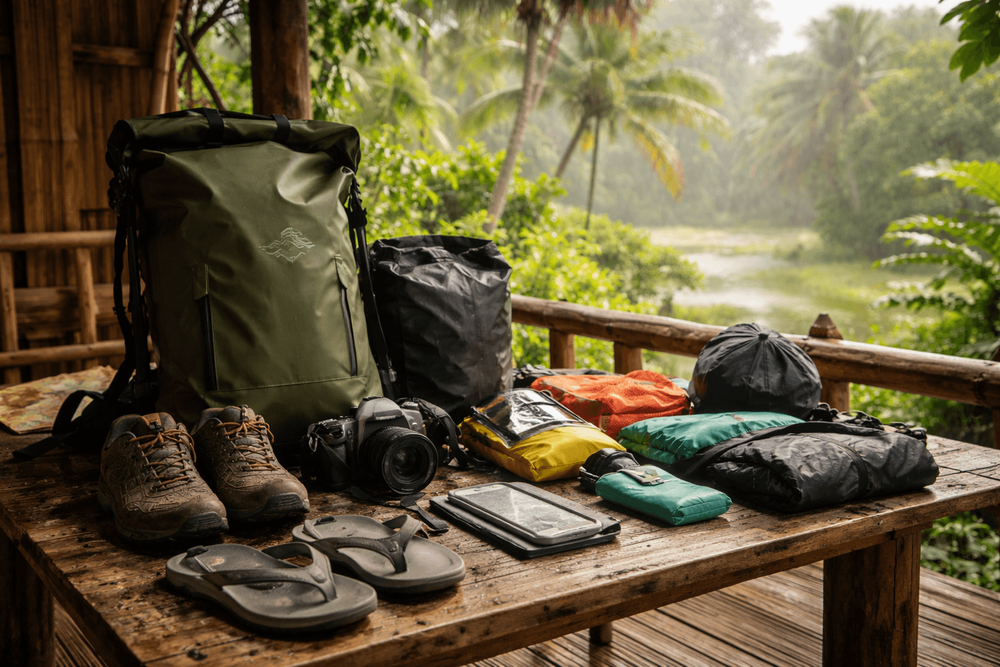
Backpacker Packing List for Thailand for Monsoon Intercity Travel: Dry Storage, Footwear, and Storm-Proof Transit Gear
Stay light and storm-proof. Our Thailand monsoon travel packing list nails dry bags, footwear, and gear so you can hop city to island without soggy regrets.
We step off the bus near Khao San Road and the sky answers with a fat, theatrical crack. In thirty seconds the soi turns to a shallow khlong, flip-flops slapping as tuk-tuks hiss past, incense curling from a spirit house, and that sweet rot of durian ghosting in on the wind. This is why we carry a Thailand monsoon travel packing list that actually works between cities. When the downpour hits as we’re sprinting from Mo Chit bus station to the BTS, or hopping a Chao Phraya Tourist Boat ICONSIAM Pier, we don’t want soggy socks or a drowned phone. We want sanuk, not swamp.
Thailand Monsoon Travel Packing List: Clothes and Footwear That Dry Fast
Monsoon in Thailand doesn’t mean cold. It’s warm rain, heavy humidity, and splashy pavements—so we dress for sweat first, then rain.
Quick-dry clothing that earns its seat on the bus
- 3–4 quick-dry tees or lightweight button-ups: synthetics or blends that don’t cling in humidity. Cotton gets clingy and stays wet.
- 2 pairs quick-dry shorts (one that passes temple modesty when paired with a sarong).
- 1 pair ultralight long pants: for AC-blasted trains and temple visits; look for breathable, fast-drying fabric.
- 1–2 airy dresses/skirts (knee-length or longer) if that’s your style—just as quick-dry as the shorts.
- 1 packable rain jacket or poncho: A jacket with vents beats a sauna-in-a-bag; a poncho covers your daypack. We often carry both: jacket for city walks, poncho for surprise squalls on ferries.
- 1 lightweight long-sleeve sun/rain shirt: doubles as mozzie defense at dusk.
- 4–5 pairs quick-dry underwear; 2–3 pairs moisture-wicking socks.
- 1 packable hoodie or light layer: Thai AC on buses can be arctic.
Street reality check: We’ve dried tees overnight on a balcony off Soi Rambuttri with a warm monsoon breeze and woke up to wearable gear. Cotton? Still damp by lunch.
Footwear: grip, drain, repeat
- Waterproof sandals with tread: not just flip-flops. You want straps for slippery tiles, flooded crosswalks, and boat piers. They drain quickly and don’t smell like a swamp.
- Quick-dry trail runners or mesh sneakers: light, breathable, decent grip on wet temple steps. Leave heavy leather boots at home—they’ll mildew before Ayutthaya.
- Cheap flip-flops: shower sandals, beach, and backup for soaked days.
Foot care tip: A pinch of anti-fungal powder in socks/shoes keeps the monsoon funk at bay. When we crash into a 7-Eleven for a blast of AC and a refill, we often grab little silica gel packs too—more on that in a bit.
Weather-Proof Gear and Transit Accessories That Save Your Day
Bangkok is a game of five-minute sprints between awnings. Ferries slap spray on your bag; VIP buses park in puddles the size of Nana Plaza. Pack armor for your kit.
Keep it dry, keep it moving
- Dry bags (5–10L): One for tech, one for clothes. On intercity hops, we throw all essentials into a 10L and clip it inside our daypack. Street price: 150–300 baht at Chatuchak Market (weekends) or stalls near Khao San.
- Pack liner: A heavy-duty trash bag works as a liner inside your backpack. Belt-and-suspenders with a rain cover.
- Backpack rain cover: 50–150 baht from outdoor shops; keeps road grime and showers off.
- Umbrella vs. poncho: We carry both. A compact umbrella (100–200 baht) for light rain and urban dodging; a poncho for when the heavens open while we’re hexed in traffic on Phahonyothin.
- Waterproof phone case or pouch: Hanging lanyard style for boats and scooter taxis. A zip-top bag works in a pinch, but a proper case is cheap insurance.
- Power bank (10,000–20,000 mAh): Downpours mean you hide in cafes and doomscroll—don’t let your map die when you need a meter-taxi escape.
- Short and long charging cables: long for sleeper trains, short for cafes.
- Universal adapter and mini power strip: Thailand runs 220V, 50Hz, and sockets often take Type A/C. A tiny strip turns one outlet into a charging station for you and your travel buddy.
- Headlamp or tiny torch: power flickers, dark ferry piers, and rural bus stops after rain.
- Microfiber towel: for surprise soakings and hostel laundry.
- Carabiners and a few heavy-duty zip-top bags: clip a wet poncho outside your pack; segregate muddy sandals.
- Compression packing cubes: not just tidy—they keep damp jackets from baptizing clean clothes.
We keep a “storm pocket” near the top of our daypack: poncho, umbrella, phone pouch, and small towel. When the sky growls over the Golden Mount, we’re covered in ten seconds.
Health, Safety, and Comfort in the Rainy Season
Monsoon travel is a sensory buffet—and a petri dish. Keep the sanuk, ditch the ew.
Bite less, burn never, mold nowhere
- Mosquito repellent (DEET or picaridin) and after-bite: Dusk on Phra Athit Road is dreamy until the mozzies discover your farang ankles.
- Sunscreen (reef-safe if you’re beach-bound), brimmed cap, and sunglasses: UV punches through clouds like a tuk‑tuk through traffic.
- Basic first aid: a few plasters, antiseptic wipes, blister pads, pain relief, loperamide, oral rehydration salts. Pharmacies here are excellent—ask a pharmacist if you need something stronger.
- Anti-chafe balm and talc/foot powder: humidity rub is real.
- Hand sanitizer and a few masks: buses and BTS get packed when the rain drives everyone indoors.
- Anti-mold kit: a handful of silica gel packets for your camera pouch, power bank pocket, and shoe corners; air your bag daily. Damp corners of guesthouses can breed fuzz in a week.
Street smarts when everything’s wet
- Watch your step: open drains hide under brown water—follow locals around puddles.
- Taxis: insist on the meter or use Grab. Tuk‑tuks are sanity-savers for short hops, but agree on the price first. The rain surcharge is a vibe, not a rule.
- Cash small: ferries and street food seldom want your 1,000-baht note.
Packing for Cities, Islands, Temples, and Overnight Transport
Monsoon gear shifts a little depending on where we’re chasing noodles or night ferries.
Cities (Bangkok, Chiang Mai)
- Daypack with storm pocket: umbrella, poncho, phone pouch, microfiber towel, and a spare tee.
- Shoes with grip: wet BTS stairs and slick temple tiles are a slapstick trap.
- Light pants and a shawl or sarong: for temple runs—Wat Pho and Wat Arun won’t let bare knees through, rain or shine.
- Laundry flow: In city neighborhoods you’ll find coin laundries (40–60 baht per load) and per‑kilo wash-and-fold (50–80 baht/kg). Rainy afternoons are perfect laundry windows.
If you want a deeper run-down on rain-first essentials, we break it down in our broader wet-season primer here: What to Pack for Thailand’s Monsoon Season: Rain Protection, Quick-Dry Clothes, and Smart Backup Gear.
Islands and beaches (Samui, Phangan, Phuket, Krabi)
- Dry bag every time you step on a long-tail: spray is part of the ticket.
- Reef-safe sunscreen and a spare sun shirt: clouds lie; the UV doesn’t.
- Sea-sickness tabs: Gulf swells and Andaman squalls can surprise you.
- Quick-dry sandals that won’t slide on algae-slick piers.
- Season flip: the Andaman side (Phuket/Krabi) gets hit hardest May–Oct; the Gulf (Samui/Phangan/Tao) is wetter Oct–Dec. If you’re deciding where to hop, this month-by-month overview helps: Thailand Packing List by Month: What to Bring for Hot, Cool, and Rainy Season.
Temples and old towns (Ayutthaya, Sukhothai, Bangkok’s Rattanakosin)
- Respectful layers: shoulders and knees covered. Pack a featherweight wrap or wear breathable long pants.
- Slip-on shoes: you’ll pop them on and off. Wet laces are a mood killer.
- Umbrella etiquette: stash it by the door and use the provided racks, not the floor mats.
Overnight transport (sleeper trains, VIP buses, night ferries)
- Warm layer and socks: AC is set to penguin. A thin beanie can be worth its grams.
- Eye mask and earplugs: bus movies and ferry engines do not care about your REM.
- Dry bag for valuables: passport, phone, power bank, and a tee—so you’re fine if your backpack ends up under a leaky vent.
- Flip-flops for bus stops in rain.
- Light lock/cable: to calm your brain while you nap.
- Arrival kit at the top of your pack: poncho, cap, and small cash for that first taxi or a bowl of boat noodles at Victory Monument.
Dial in your transit-day setup with our focused checklist: What to Pack for Thailand for Monsoon Transit Days: Taxi Hops, Wet Shoes, and Backup Layers.
Practical Tips to Travel Light but Monsoon-Ready
Monsoon packing is a dance: carry little, dry fast, rotate constantly.
Our go-to system
- The 3×3 core: 3 tops, 3 bottoms, 3 pairs of socks—wash one, wear one, dry one.
- Temple-ready always: one long bottom + shawl at the ready so you don’t rent a sad sarong.
- Storm pocket up top: poncho, umbrella, phone pouch, tiny towel, and 100 baht in small bills.
- Elastic clothesline and a handful of pegs: string it in a bathroom, under a balcony awning, or across a hostel bunk frame. Quick-dry fabrics will be done by morning.
- Pack by moisture: wet gear in its own cube or dry bag so it doesn’t curse the rest.
- Skip bulky duplicates: sandals do beaches and showers; trail runners do temples and city walks.
- Buy local, go cheap where it makes sense: 7‑Eleven ponchos (30–40 baht) are fine. If you lose it, no tears.
If you’re building from scratch and want a bigger-picture pack, we’ve mapped out a balanced backpack here: Backpacker Packing List for Thailand.
Know Before You Go: Monsoon Patterns and Getting Around
- When it rains: Bangkok and most of the mainland get their biggest dumps June–Oct (southwest monsoon). The Gulf islands (Samui/Phangan/Tao) often get their heaviest rain Oct–Dec as winds swing. Expect short, dramatic bursts, usually late afternoon or night.
- How to move: In Bangkok, the BTS/MRT are your dry spines; the Chao Phraya Express boat is fabulous when the wind is calm—pack that phone pouch. The Khlong Saen Saep boat splashes like a naughty kid; sit inboard.
- Duck-and-cover strategy: When thunder cracks over Democracy Monument, we sprint for a cafe on Phra Athit or the nearest 7‑Eleven. Order an iced latte, wait ten minutes, and watch the street go from river to road.
- Scams don’t stop for rain: Anyone telling you the The Grand Palace is “closed for holiday” is rehearsing the classic gem detour. Smile, walk away, and trust official signs.
For deeper rainy-season nuances and backup gear ideas, keep this in your tabs: What to Pack for Thailand for Monsoon Season Backpacking: Stormproof, Quick-Dry Essentials.
The Essential Monsoon Intercity Checklist
- Quick-dry tops/bottoms, light long pants, airy long-sleeve
- Packable rain jacket + poncho
- Waterproof sandals with tread + mesh sneakers + flip-flops
- Dry bags (5–10L), backpack rain cover, pack liner
- Compact umbrella, microfiber towel, headlamp
- Phone waterproof pouch, power bank, cables, adapter/mini power strip
- Repellent, sunscreen, first aid, ORS, anti-chafe, hand sanitizer
- Silica gel packs, talc/foot powder, elastic clothesline, pegs
- Sarong/shawl, light hoodie, eye mask, earplugs
- Small bills, photocopies of documents stored dry
Sea to Summit Lightweight Dry Sack
We’ll keep chasing the dry patches between storms together—ducking under awnings on Soi Rambuttri, timing our dash to the pier when the rain lightens, dripping happily over a bowl of boat noodles by the khlong. Pack light, seal it tight, and we’ll meet you under the bougainvillea when the clouds finally shrug and the city starts to steam.
Related Hotels & Places
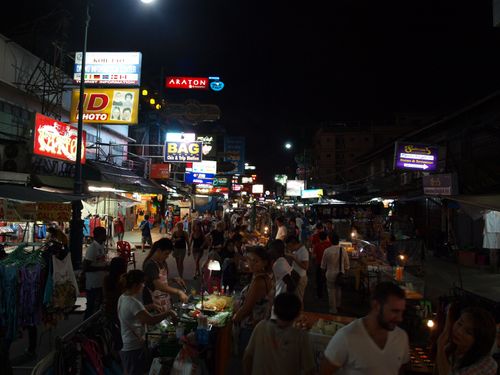
Khao San Road
Attractions
Bangkok’s backpacker carnival: curbside bars, live bands and DJs from 3pm–2am (midnight Sun). Street eats are cheap — pad thai 70–100 THB, mango sticky rice 60–100 THB. Come for wild people-watching; duck into Rambuttri for a calmer beer.
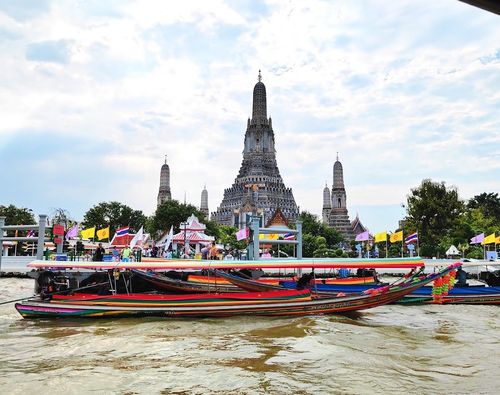
Chao Phraya Tourist Boat ICONSIAM Pier
Services
Hop on the blue‑flag tourist boat at ICONSIAM to cruise Wat Arun, Wat Pho, the Grand Palace and Chinatown. Day pass ~150 THB, boats every ~30 mins, last runs around 7:15pm. Easiest river launchpad via BTS Gold Line to Charoen Nakhon.
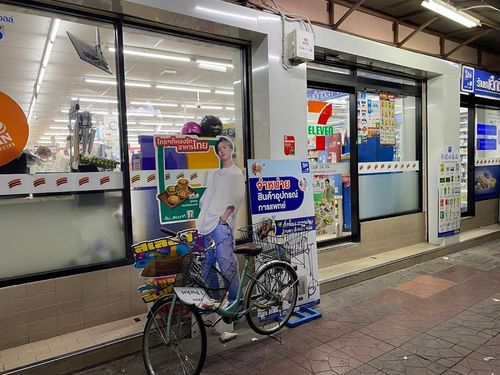
7-Eleven
Shops
Khao San’s 24/7 reset button: ice‑cold A/C, ham‑cheese toasties, All Café iced lattes, water for 7–14 THB, and late‑night supplies from snacks to sunscreen—right by Rikka Inn.
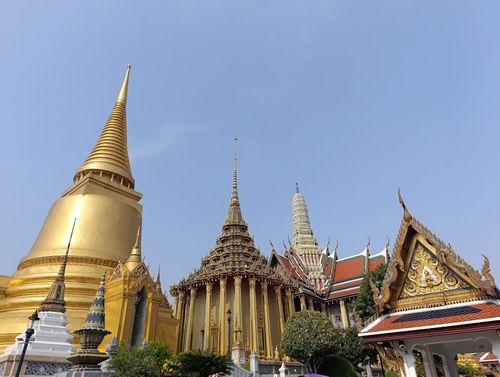
The Grand Palace
Attractions
Bangkok’s royal showpiece a short hop from Khao San: glittering Wat Phra Kaew, Ramakien murals, and gold-on-gold rooftops. Go 8:30am to dodge the heat, dress modestly, and boat to Tha Chang for the prettiest arrival.
Recommended Products
More Khao San Road Guides
- What to Pack for Thailand Backpacking in Monsoon Season: Dry-Weather, Wet-Weather, and Backup Gear
- Backpacker Packing List for Thailand for Monsoon Island Hops: Waterproofing, Quick-Dry Clothing, and Ferry-Day Essentials
- What to Pack for Thailand for Monsoon Season Backpacking: Stormproof, Quick-Dry Essentials
- Backpacker Packing List for Thailand’s Wet-Season City Walks: Umbrella, Shoes, and Quick-Dry Day Gear