
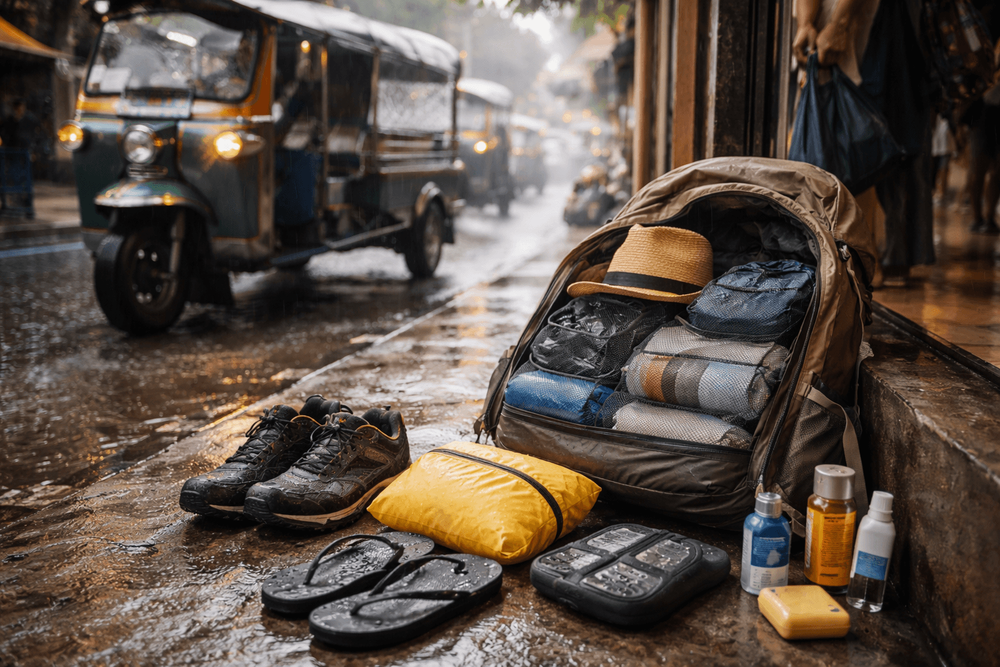
What to Pack for Thailand for Monsoon Transit Days: Taxi Hops, Wet Shoes, and Backup Layers
Stay dry on the move. Smart Thailand monsoon transit packing for taxis, boats, buses, and flights—waterproof systems, quick-dry layers, and backup essentials.
We’ve all been there: the sky over Phra Sumen Fort turns bruise-purple, the first fat drops slap the pavement, and suddenly we’re frog-hopping between flooded soi corners to flag a taxi that isn’t already full. Thailand monsoon transit packing isn’t about looking cute—it’s about keeping our gear dry, our feet fungus-free, and our sanity intact while we sprint from Khao San Road to the Chao Phraya Tourist Boat ICONSIAM Pier, or hustle for a last-seat minivan at Mochit.
Data Freshness + Pricing:
- Prices are approximate and in THB.
- Last checked: June 2026
- Happy hour and promo details change frequently—confirm locally.
What monsoon season means for getting around Thailand
The rains don’t politely wait for us to finish our pad thai on Thanon Ram Buttri Night Market. They hit hard, they hit fast, and they change how we move. Expect ankle-deep curb lakes, tuk-tuks with plastic flaps slapping in the wind, and delays that feel as long as a night train to Chiang Mai.
- Bangkok: Downpours clog intersections and flood low sois; traffic crawls from Victory Monument to Asok. The BTS/MRT become our dry lifelines, while khlong boats on Saen Saep throw up sheets of spray. Chao Phraya ferries still run in most rain but can pause for lightning or heavy squalls.
- Gulf islands (Koh Samui, Phangan, Tao): The heaviest bursts often hit Nov–Jan. Seas can chop up; ferries cancel late or bunch up delays. Long-tail transfers mean wet-shin boardings—everything needs to be sealed.
- Andaman coast (Phuket, Krabi, Phi Phi, Lanta): Peak rains May–Oct. Swell and wind build quickly. Speedboats slam; it’s a dry-bag-or-cry situation.
- North and Isan (Chiang Mai, Pai, Isaan cities): Afternoon storms roll in like a drumline; roads slick up, and motorbike taxis become a no-go unless we’ve got ponchos and nerves of sanuk steel.
Monsoon isn’t constant misery. It’s heat relief, moody skies over temples, and that sweet petrichor wafting up Sukhumvit after a dump. But for transit, it’s a game of minutes, puddles, and smart packing.
Thailand Monsoon Transit Packing: The Game Plan
We pack for the sprint between shelter points: curb to cab, pier to boat, platform to train. Think modular, waterproof, and quick-dry—stuff we can deploy in ten seconds when the clouds crack.
Waterproof the whole system
- Roll-top daypack or rainproof backpack cover: A roll-top daypack keeps the opening off the rain’s bullseye. If we’ve only got a regular pack, add a rain cover (approx. 150–350 THB) and a pack liner inside (heavy-duty trash bag works; approx. 5–15 THB each). Double-layer the liner for confidence.
- Dry sacks in multiple sizes: 2L for wallet/phone/earbuds, 5–10L for clothes or camera, 20L for a laptop. Color-code so we can grab blind in a taxi.
- Zip-top bags: Cheap, everywhere, and perfect for boarding passes, SIM ejector pins, and emergency socks. We tape one flat inside our bag’s top flap.
For deeper dive lists and brand-agnostic picks, we like to cross-check with these packing guides: Thailand Packing List by Season: Dry, Hot, and Rainy Weather Essentials and What to Pack for Thailand’s Monsoon Season: Rain Protection, Quick-Dry Clothes, and Smart Backup Gear.
Clothing that doesn’t sulk when soaked
- Quick-dry tops and shorts: Synthetics or blends dry on a fan in a couple hours. Cotton clings like a sad farang at closing time.
- Light long-sleeve layer: AC on the BTS, in minibuses, and on night trains can be arctic. A featherweight hoodie or button-up saves us from shivers.
- Bottoms with zip pockets: Transit = sit, stand, squeeze. Zip pockets stop passports from taking a swim.
- Footwear rotation: Grippy-strap sandals for wet streets; packable sneakers for “dry-only” windows. Keep a dry pair of socks sealed in a zip-top. Baby powder keeps toes less swampy.
- Rain gear: A throw-over poncho from 7-Eleven (approx. 30–45 THB) beats an umbrella in a street squall. Carry a compact umbrella (approx. 150–300 THB) for polite drizzles and sun.
Electronics and documents: baptize nothing
- Waterproof phone pouch: Touchscreen works through it, photos still look fine, and it hangs from our neck when we’re juggling tickets (approx. 100–250 THB).
- Power bank + short cables: Monsoon delays eat battery. A 10,000–20,000 mAh brick (approx. 400–1,200 THB) is our rainy-day insurance.
- Passport sleeve: Zip-top or TPU case. Keep a photocopy and digital scan. Stash visas/arrival slips in a separate mini-dry bag.
- Silica gel packets: Toss a couple into the electronics sack to fight the Bangkok-funk damp.
If we’re building the full kit from scratch, skim our deeper lists for wet-season gear overlap: Packing for Thailand’s Wet Season: Rain Gear, Footwear, and Laundry Tips and What to Pack for Thailand for Rainy Season Backpacking: Quick-Dry Clothing, Dry Bags, and Wet-Day Essentials.
Packing for common transit types in Thailand (in the rain)
City taxis and ride-hailing (Grab/Bolt)
- Why we like them in storms: Doors, roof, AC. We ask drivers to pop the trunk first so we can toss a pack without baptizing the seats.
- Price vibes: Meter flagfall in Bangkok starts around approx. 40–45 THB; short hops under 3 km often land in the approx. 70–120 THB range, more in gridlock or surge.
- Packing tip: Keep poncho and umbrella on the top of the bag; towel-swipe before we pile in. Put our dripping umbrella head-down on the floor mat, not on the seat.
Tuk-tuks
- The romance ends when rain comes sideways. Plastic flaps help… until they don’t.
- Price vibes: Negotiated; short wet hops near the old city often run approx. 80–200 THB depending on our bargaining and weather leverage.
- Packing tip: Sit back from the edge, keep the daypack on our lap under the poncho, and watch for spray jets off truck tires.
Motorbike taxis (win)
- Look for orange-vest riders at designated stands. Most carry spare ponchos.
- Safety first: Roads get slick with diesel and rain. If it’s bucketing, we wait it out or Grab a car.
- Price vibes: Inner-city zips run approx. 20–100 THB; rain and rush can nudge it up.
- Packing tip: Wear the pack front-side; cinch chest/waist straps. Poncho over both of us and the pack; no dangling straps into the wheel.
BTS/MRT and Airport Rail Link
- Dry, predictable, blessed AC. Peak storm time = sardine time.
- Price vibes: Single rides are usually approx. 16–59 THB depending on distance; ARL into town roughly approx. 15–45 THB for city segments and more for airport runs.
- Packing tip: Light layer for the AC blast. Keep our wet umbrella sheathed before stepping on escalators.
Khlong boats and the Chao Phraya Express
- Khlong Saen Saep boats rocket like they’ve got somewhere better to be; spray is part of the ticket. The river boats are steadier but wind can slosh waves aboard.
- Price vibes: Khlong rides approx. 10–20 THB; Chao Phraya Express lines typically approx. 16–65 THB depending on flag color and distance.
- Packing tip: Mid-boat seats stay drier. Keep phone pouches closed and snap our bag leash to a bench so it can’t bounce underfoot.
Intercity buses and minibuses
- Luggage holds and roof pods aren’t watertight. Windows can drip in squalls.
- Price vibes: Bangkok–Chiang Mai VIP buses hover around approx. 600–1,000+ THB; minibuses to nearby cities like Ayutthaya or Pattaya often run approx. 120–200 THB.
- Packing tip: Everything in the hold gets bag-lined. Keep a small towel handy; AC can be aggressive on damp clothes, so our backup layer earns its keep.
Trains (fan and AC)
- Fan cars with open windows are wonderful… until the squall slants in. AC sleepers are drier and warmer.
- Price vibes: Third-class short hops can be approx. 20–80 THB; longer second-class AC or sleeper routes run approx. 400–1,800+ THB depending on distance and berth.
- Packing tip: Sarong or light blanket stashed dry; electronics in a top bunk pocket. We clip a mini carabiner to hang a poncho to drip-dry by the toilet vestibule.
Ferries, speedboats, and long-tails
- Expect spray even on blue-sky days; in monsoon, assume a soaking. Schedules flex with swell and wind.
- Price vibes: Gulf speed ferries (e.g., to Samui/Phangan/Tao) often run approx. 600–1,200 THB; long-tail transfers between beaches are usually approx. 100–300 THB per person depending on route and number of passengers.
- Packing tip: Daypack on our lap, under the poncho. Keep dry sacks sealed until we’re off the pier. Wear sandals we don’t mind dunking for beach landings.
Domestic flights
- Rain itself rarely cancels flights, but lightning and low visibility cause delays.
- Packing tip: Wet ponchos go in an outside pocket; avoid soaking the overhead bin. Liquids still follow airline rules; keep electronics in a single pull-out dry sack for security.
- Price vibes: Checked bag fees vary widely; assume approx. 300–700 THB per domestic segment for a 15–20 kg allowance if not included.
Rain-season travel habits that make life easier
- Stage the rain kit: Poncho, umbrella, zip-top with cash card + small notes, and phone pouch live in the outer pocket—never buried.
- Liner discipline: Before we leave the hostel, everything sensitive goes into its dry sack—pretend a tuk-tuk rollover into a khlong and pack accordingly.
- Two-shoe strategy: Wear sandals in rain; keep sneakers as the off-duty dry pair. Rotate with newspaper or desiccant overnight.
- Microfiber towel: A palm-sized one (approx. 80–200 THB) earns its luggage space every single storm.
- Cable tidy: Short, labeled cables in a zip pouch. Nothing worse than a spaghetti hunt under a bus seat.
- Money splits: Small bills separate from the main wallet so we’re not peeling soggy 1,000s in a downpour.
- Time cushion: Add 20–40 minutes to any cross-town dash when the sky goes charcoal. BTS queues and taxi scarcity spike.
- Seat smarts: On buses and trains, avoid windows with old rubber seals; grab aisle seats in fan cars when rain angles in.
- Night moves: Puddles hide potholes. Headlamp or phone torch on low; better to look farang than face-plant.
- Quick-dry laundry rhythm: Wash right after arriving; a small fan turns rooms into wind tunnels. A dry line in the bathroom keeps it tidy.
- 7-Eleven saves: Emergency ponchos, umbrella sleeves, silica gel near cameras, and steaming bao to revive morale—plus that glorious AC blast.
Common packing mistakes to dodge (and what to do instead)
- Cotton everything: Soaks, sours, and chills us on AC buses. Pick synthetics or blends.
- One big compartment bag: When the liner gets breached, everything drowns. Use dry sacks like Russian dolls.
- Suede/leather shoes: Gorgeous, doomed. Travel with sandals + quick-dry sneakers instead.
- Umbrella-only strategy: Works in European drizzle, fails in Bangkok sideways rain. Add a poncho.
- Exposed documents: Boarding passes and arrival slips dissolve fast. Seal them in a flat zip-top.
- Trusting bus holds: They leak. Bag-line and dry-sack anything we care about.
- Overpacking layers: It’s hot. One light long-sleeve + one thin extra t-shirt is enough for transit chill.
- Dangling straps on motorbikes: Recipe for wheel-tangle. Tuck and clip everything.
- Wet bag in overhead bins: Drip on everyone’s stuff is bad karma. Sleeve the umbrella; stash the poncho in a pocket.
- No backup socks: The day turns around when we swap into a dry pair at the station.
Know before you go (regional rain patterns and on-the-ground intel)
- Southwest monsoon (May–Oct): Heaviest on the Andaman side (Phuket, Krabi, Trang). Bangkok gets regular big dumps—Khao San’s sois can turn to streams in minutes.
- Northeast monsoon (Nov–Jan): Gulf side (Samui/Phangan/Tao) catches more of it; the Andaman calms down.
- In-between months: Shoulder times can still deliver surprise squalls—the packing plan doesn’t change much.
- Ferries and small boats: Operators can cancel last minute for safety. Keep an eye on the sky and be flexible; we always carry snacks and power.
- Local tips: Ask the orange-vest win guys or pier staff; they read the clouds better than any app. And if a driver says “flooded soi,” believe them.
Where we crash to make transit painless
We like simple stays within a short, covered walk of transport: near MRT stations like Sam Yot or Sanam Chai for Old Town dashes, close to the river piers when we’re ferry-hopping, or a block off Soi Rambuttri when we want Khao San buzz but an easier taxi pickup. Look for places with a lobby umbrella stand, a couple of fans for drying shoes, and reception that doesn’t blink when we turn our room into a temporary laundry line. If you’re island-hopping, pick stays within wheelie range of the pier—hauling a soggy backpack down a beach at low tide is a special kind of character building.
If you’re assembling a full wet-season kit and want more detail beyond transit days, we’ve got you: Thailand Packing List by Month: What to Bring for Hot, Cool, and Rainy Season.
Final word from the puddles
Monsoon travel in Thailand isn’t about dodging every raindrop—it’s about packing so well that we can laugh when the sky opens over Yaowarat Chinatown Heritage Center and our tuk-tuk turns into a mist machine. Line the bag, stage the poncho, keep a pair of dry socks for victory. We’ll see you at the pier, phone in a waterproof pouch and noodles steaming in a plastic bag, waiting out the squall with a grin.
Related Hotels & Places
Phra Sumen Fort
Attractions
1783 riverfront fort on Phra Athit with white battlements, park breezes, and killer sunset views over Rama VIII Bridge. Free entry; best from 5–7pm before the gates close at 9pm.
Khao San Road
Attractions
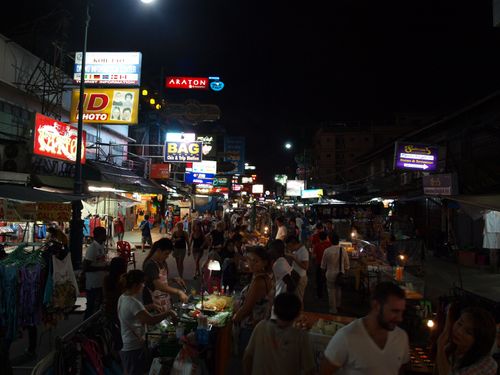
Bangkok’s backpacker carnival: curbside bars, live bands and DJs from 3pm–2am (midnight Sun). Street eats are cheap — pad thai 70–100 THB, mango sticky rice 60–100 THB. Come for wild people-watching; duck into Rambuttri for a calmer beer.
Chao Phraya Tourist Boat ICONSIAM Pier
Services
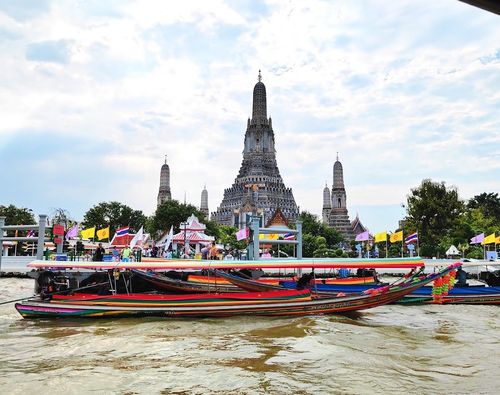
Hop on the blue‑flag tourist boat at ICONSIAM to cruise Wat Arun, Wat Pho, the Grand Palace and Chinatown. Day pass ~150 THB, boats every ~30 mins, last runs around 7:15pm. Easiest river launchpad via BTS Gold Line to Charoen Nakhon.
Thanon Ram Buttri Night Market
Markets
Laid‑back Rambuttri after dark: sizzling street food (50–80 THB), cold beers (80–120 THB), neon cocktail vans, live acoustic bars, and stalls of travel gear and hippie pants — a calmer pregame spot a minute from Khao San, best from sunset till late.
Yaowarat Chinatown Heritage Center
Attractions
Inside Wat Traimit by Chinatown Gate, this tidy museum charts Yaowarat’s Chinese roots with bilingual displays, period photos and short films. Open Tue–Sun 8:30am–4:30pm; closed Mon. Pair it with the Golden Buddha upstairs.
More Khao San Road Guides
- What to Pack for Thailand Backpacking in Monsoon Season: Dry-Weather, Wet-Weather, and Backup Gear
- What to Pack for Thailand for Monsoon Backpacking: Leaks, Mud, and Fast-Drying Layer Basics
- Backpacker Packing List for Thailand for Monsoon Island Hops: Waterproofing, Quick-Dry Clothing, and Ferry-Day Essentials
- What to Pack for Thailand for Rainy Travel Days: Dry Bags, Backup Shoes, and Clothes That Recover Fast