Best Things to See Inside Wat Pho, the Grand Palace, and Golden Mount for First-Time Visitors
Your insider’s guide to Wat Pho, the Grand Palace, and Golden Mount highlights—what to see, when to go, dress code, routes, and photo tips from Khao San side.
We step off Soi Rambuttri into the already-baking Old Town air, grab a 7-Eleven iced latte for courage, and set our sights on the big three. If you’re chasing Wat Pho Grand Palace Golden Mount highlights, we’re about to hit the holy trifecta: reclining calm, royal dazzle, and a breezy skyline finale.
Why These Three Belong on Your First Bangkok Day
They sit in Bangkok’s historic Rattanakosin district, close enough to Khao San Road that we can wander between them with time for a bowl of boat noodles on Phra Athit Road. Together, Wat Pho, the Grand Palace (with Wat Phra Kaew inside), and Golden Mount (Wat Saket) are the city’s tightest crash course in Thai art, faith, and royal pageantry. Expect sizzling woks at Tha Tien market, temple bells on the breeze, and a thousand tiny details: mother-of-pearl inlay, lotus-bud chedis, the soft slap of bare feet on cool tiles.
We’ll break down what to look for at each site—the can’t-miss statues, murals, spires, and viewpoints—then give you practical info and a smooth route to stitch them into one satisfying day.
Wat Pho, Grand Palace, and Golden Mount Highlights: What Not to Miss
Wat Pho (Temple of the Reclining Buddha)
Walk in and the air shifts—cooler under deep eaves, incense sweetening the heat. Wat Pho is more than a single statue; it’s a living campus of chapels, chedis, and traditional medicine pavilions.
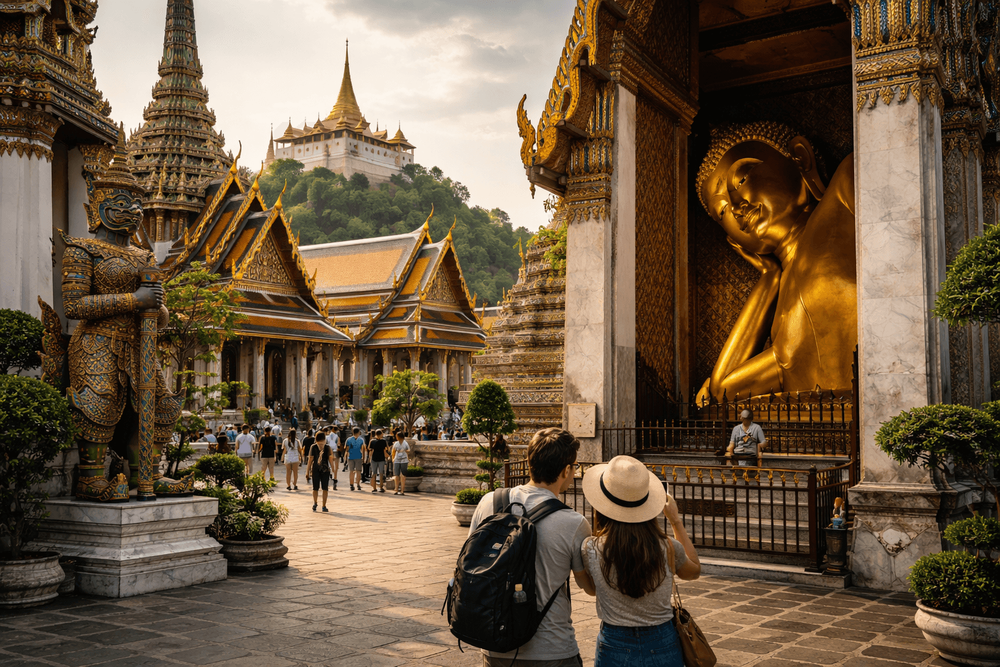
The Reclining Buddha (Phra Buddhasaiyas): We slip off our shoes and pad into the viharn. The 46-meter-long golden Buddha fills the hall like a sunbeam, toes turned with floral mother-of-pearl that begs a close look. Step behind the statue for the rhythmic ping-ping of coins dropped into 108 alms bowls—an easy moment of sanuk (simple fun) and reflection.
Phra Chedi of the Four Kings: Outside, four towering, candy-glazed chedis—each dedicated to a Chakri dynasty king—rise in green, blue, white, and yellow ceramic. Get close; the floral tiles are a kaleidoscope of color and shadow.
Ubosots and smaller viharns: The main ordination hall’s Buddha sits serenely on a tiered altar, framed by muraled walls that map a Buddhist cosmos. Look up: gold leaf and lacquer sparkle like constellations.
Traditional Thai massage school: Wat Pho is the birthplace of Thai massage. Anatomical diagrams line the pavilions, a reminder that healing and spirituality share space here. If we’ve paced ourselves well, a 30–60 minute Thai massage between sights might be the smartest heat hack of the day.
Stone guardians and Chinese statuary: By the gates stand bearded stone giants shipped as ballast on Chinese junks centuries ago—silent bouncers with florid eyebrows and whimsical moustaches.
Why it matters: Wat Pho is where Buddhism, craftsmanship, and everyday life mesh. It’s contemplative, tactile, and gloriously photogenic.
The Grand Palace and Wat Phra Kaew (Temple of the Emerald Buddha)
The Grand Palace is pure spectacle—gilded, mirrored, mosaicked. It’s also busy. We show up early, shoulders covered and patience stocked, and move with the river of visitors.
Temple of the Emerald Buddha (Wat Phra Kaew) Ubosot: Inside this most sacred hall sits the Emerald Buddha, a small, dark-green statue carved from a single block of jade (not actually emerald). The King himself changes the Buddha’s seasonal robes. Photography is not allowed inside; we slow down and let our eyes adjust to the shimmer of gold and glass.
Phra Mondop and the Golden Chedi: The library (Phra Mondop) is a jeweled casket of Khmer-style finials and green-gold mirrored tiles. Nearby, Phra Si Rattana Chedi—glossy gold and iconic—catches every shard of sunlight.
Ramakien gallery murals: A cloister wraps the temple compound with hundreds of panels illustrating Thailand’s national epic, the Ramakien. We follow the story clockwise—monkey armies, demon kings, lotus ponds—and watch a centuries-old comic book unfurl.
Guardians at the gates (Yaksha): Towering yaksha demons with candy-apple skins and curling fangs guard the entrances. Their names are written on plaques—your selfie with Tosakanth feels earned.
Chakri Maha Prasat and royal courtyards: The palace buildings beyond the temple mix European neoclassical bones with Thai roofs—a delightful architectural mashup. Colonnades, green lawns, and marching guards add to the pageantry.
Why it matters: This is the ceremonial heart of Thailand, a masterclass in courtly art and power. The craftsmanship is so fine it feels unreal until you spot a mirrored tile missing here, a soot-smudge there—human hands everywhere.
Golden Mount (Wat Saket)
By afternoon, we angle east. Golden Mount rises like a frosted cupcake above the low-slung Old Town, crowned by a burnished chedi.
The climb: We circle up 300 gentle steps under fans of frangipani. Bells and gongs hang beside the path—give one a respectful tap for luck. Between tiers, we pause for shade and breezes that feel like mercy.
The summit shrine and chedi: At the top, we duck into a compact shrine room pulsing with incense, then step out to a wraparound terrace. Bangkok unspools in every direction: the Rattanakosin rooftops, the cubist spike of Loha Prasat, the snake of the Chao Phraya, and—on a clear day—the shiny seams of Siam’s malls far off.
Seasonal temple fair: If you catch the Loy Krathong temple fair (usually November), the Mount becomes a whirl of lanterns, games, and old-school snacks. It’s loud, it’s crowded, it’s very Thai—and worth weaving.
Why it matters: It’s a breath of perspective. We’ve been nose-to-tile all day; up here, the city resolves into a tidy model, bells marking the hour while the evening cool settles.
Practical Essentials: Hours, Fees, Dress Code, Getting Around
We keep this light so you can stay in the moment; exact opening times and ticket strategies change. For the latest specifics from Khao San side, see: Wat Pho, the Grand Palace, and Golden Mount from Khao San Road: Exact Opening Times, Ticket Strategy, and Best Order to Visit.
Wat Pho:
- Typical hours: roughly 8:00–18:30 (last entry around 18:00)
- Ticket: expect about 200 THB; includes a small bottle of water
- Time needed: 60–90 minutes (longer if you book a massage)
Grand Palace & Wat Phra Kaew:
- Typical hours: 8:30–15:30 (last entry mid-afternoon; it’s strict)
- Ticket: expect about 500–600 THB for foreigners; includes Wat Phra Kaew and select annexes
- Time needed: 2–3 hours, depending on crowd and heat
Golden Mount (Wat Saket):
- Typical hours: about 8:00–19:00; later during festivals
- Ticket: expect around 50–100 THB for the climb
- Time needed: 45–60 minutes, plus sunset lingering
Dress code (temples and palace):
- Shoulders and knees covered; no sleeveless tops, short shorts, or ripped jeans. Wraps at the Grand Palace are sometimes available for rent, but we bring a light scarf or sarong.
- Shoes off in temple buildings. Socks help with hot tiles at midday.
- Hats come off inside sacred spaces; sunglasses too if you want to be polite.
Getting there from Khao San / Soi Rambuttri:
- On foot: 20–25 minutes to the Grand Palace via Sanam Luang; another 10–15 to Wat Pho via Tha Tien; 25–30 to Golden Mount via Bamrung Mueang.
- River route: Walk or tuk-tuk to Phra Arthit Pier and catch the Chao Phraya Express Boat to Tha Chang (Grand Palace) or Tha Tien (Wat Pho). It’s cheap, fast, breezy.
- Khlong boat: For Golden Mount, the Saen Saep canal boat to Phanfa Leelard Pier drops you a short stroll away—gritty, efficient, very local.
- Taxi/Grab: Ask for meter (mi-taa). Tuk-tuks are fun but negotiate clearly; if the price sounds like rooftop-bar cocktails, it’s too high.
Where we crash between sights:
- We like simple guesthouses tucked off Soi Rambuttri for quiet nights and quick temple starts. If you’re splurging, look riverside near Phra Athit for breeze and views. Budget or boutique, a midday dip or blast of AC makes the afternoon crowds more manageable.
Stitching the Trio into One Perfect Day
We’ve tried this a dozen ways. This one almost always wins.
The Early-Bird Royal Circuit
- 8:15–8:30: Grand Palace first. The light is soft, the tour buses are just queueing, and the heat hasn’t turned savage. Move clockwise through Wat Phra Kaew, linger in the Ramakien gallery, then stroll the palace courtyards.
- 10:30-ish: Exit to Tha Tien market for a lime soda or iced cha yen (Thai milk tea). Catch your breath in the shade behind the fish ball stalls.
- 11:00–12:15: Wat Pho. Hit the Reclining Buddha before the late-morning surge, then wander the chedis and medicine pavilions. If we’re flagging, a 30-minute Thai massage here is a reset button.
- Lunch: Street-side noodles at Tha Tien or a curry stall along Maharat Road. Keep it light. The day is long.
- 14:30–15:30: Siesta. Back near Khao San, we power-nap or sit under a fan on Phra Athit with a coconut shake. If you’re staying somewhere with a pool, this is when it pays for itself.
- 16:30–18:30: Golden Mount for golden hour. We take the khlong boat to Phanfa or grab a tuk-tuk and negotiate a fair price (under 100–150 THB from Khao San is reasonable when traffic is light). Climb slow, ring a bell, and watch the city soften toward dusk.
Prefer to walk more and spend less? The Old Town lanes are extremely doable on foot. If you want a step-by-step riverside-and-backstreets plan, our favorite stroll is here: Wat Pho to Golden Mount on Foot: The Best Old Town Walking Route from Khao San Road.
Nightcap: We swing back to Soi Rambuttri for pad thai at a cart where the wok hits with a bassy sizzle, or slip onto Phra Athit for a beer under banyan trees. If we’re not done temple-hopping, we drift along the river to watch the Grand Palace glow like a mirage.
Photography, Etiquette, and Crowd Control
We love a good shot, but we love not being “that farang” even more.
Light and timing:
- Grand Palace: Early morning is king; the mirrored tiles sing in soft light and shadows are manageable. Midday glare is brutal.
- Wat Pho: The Reclining Buddha hall is dim; bump ISO and go wide. Courtyards glow late afternoon when tour groups thin.
- Golden Mount: Golden hour to blue hour. Tripods can be frowned upon on narrow terraces; handheld is safer.
Rules to respect:
- Emerald Buddha hall: No photography inside. Security is serious—phone stays down.
- Shoes off in temple buildings. Don’t point your feet at Buddha images; kneel or sit side-saddle if you’re unsure.
- Quiet signs mean quiet. The echo is real.
Gear tips:
- Pack a fast prime (35/50mm) for interiors, a wide (16–24mm) for tight courtyards, and a microfiber cloth; sweat happens.
- Bring a small plastic bag for shoes when multiple ins-and-outs are likely; easy to carry, keeps dust off.
For deeper angles, specific viewpoints, and photo do’s and don’ts, bookmark: How to Photograph Wat Pho, the Grand Palace, and Golden Mount: Best Viewpoints, Light, and Photo Rules.
Crowd hacks:
- Start at opening for the Grand Palace; save Wat Pho for late morning, Golden Mount for late afternoon.
- Mondays and rainy days are your friends; slip-on shoes make security lines painless.
- Hydrate. 7-Eleven is your temple of electrolytes. The blast of AC is a spiritual experience in its own right.
Scam radar near the Grand Palace:
- If someone says “palace closed today,” smile, wai, and keep walking. Check the official gate yourself.
- Gem shops, “lucky Buddha,” and suspiciously cheap tuk-tuk tours are a no from us.
Extra Context If You’re Temple-Curious
If you want a more checklist-style rundown of can’t-miss details at each site, this piece pairs well with our highlight crib notes: What to See Inside Bangkok’s Big Three Temples: The Key Highlights at Wat Pho, the Grand Palace, and Golden Mount.
What We Pack and Where We Sleep
- Lightweight pants or a wrap skirt, a breathable tee with sleeves, and socks for hot tiles.
- A refillable bottle; taps at some sites aren’t potable, but you’ll pass sellers.
- A tiny towel for sweat, a power bank for photos, and 20- and 50-baht notes for small donations and alms bowls.
We usually base ourselves within a 10-minute walk of Phra Athit Road—quiet by day, lively by night, and an easy hop to the Chao Phraya Express. If you’re on a shoestring, fan rooms tucked in the sois behind Khao San still deliver that backpacker charm. If you’re leveling up, riverside stays let you drift to sleep to the slap of boats on the water.

Final Word Before We Go Ring the Bells
We’ll meet by the river, ride the orange flag boat past gleaming spires, and let the city teach us how to look—tile by mirrored tile, bell by bronze bell. Hit these Wat Pho Grand Palace Golden Mount highlights with open eyes and an easy pace, and Bangkok will reward you with a day you’ll feel in your feet and remember in your bones.
Related Hotels & Places
Khao San Road
Attractions
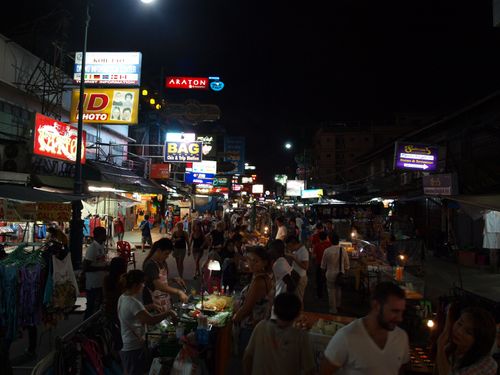
Bangkok’s backpacker carnival: curbside bars, live bands and DJs from 3pm–2am (midnight Sun). Street eats are cheap — pad thai 70–100 THB, mango sticky rice 60–100 THB. Come for wild people-watching; duck into Rambuttri for a calmer beer.
Wat Phra Kaew
Temples
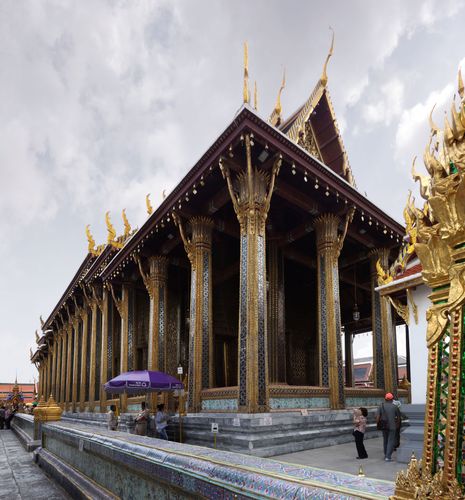
Bangkok’s holiest temple inside the Grand Palace. Go early (8:30am–3:30pm). Buy the 500 THB ticket at Na Phra Lan Rd gate. Dress code enforced. Marvel at Ramakien murals and the tiny Emerald Buddha whose robes change with the seasons. 10–15 minutes’ walk from Khao San.
Recommended Products
More Khao San Road Guides
- Wat Pho, Grand Palace, and Golden Mount for First-Time Visitors: What Each Temple Is Best For
- Wat Pho, Grand Palace, and Golden Mount for First-Time Visitors Who Hate Overplanning: A Simple Temple Day Checklist from Khao San Road
- Bangkok Temple Run for First-Time Visitors: What to See First at Wat Pho, the Grand Palace, and Golden Mount
- What to See at Bangkok’s Big Three Temples: Must-Not-Miss Highlights at Wat Pho, the Grand Palace, and Golden Mount