
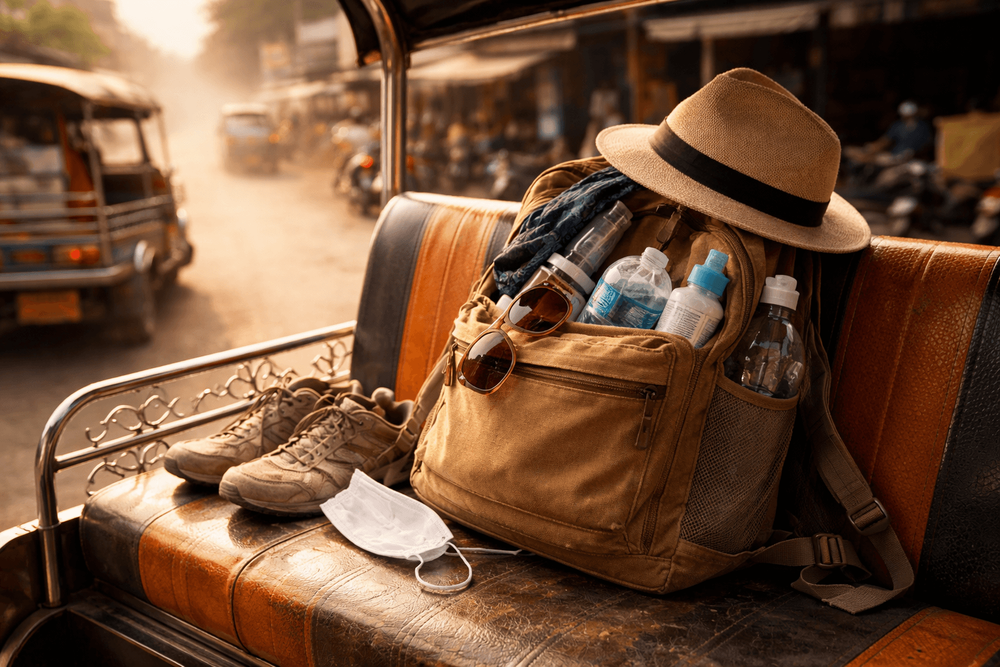
What to Pack for Thailand for Tuk-Tuk and Open-Air Transit: Dust, Dusty Roads, and Quick-Grab Essentials
A street-tested tuk-tuk packing guide: small-bag setup, dust/rain defense, quick-grab cash, and safety tips for Bangkok’s open-air rides.
We slide into the back of a tuk-tuk off Rambuttri, neon bleeding off Khao San Road, the driver’s fan dangling and the two-stroke whine already in our bones. The air hits warm and gritty, spiked with grilled pork smoke and a hint of exhaust. This is where Thailand tuk tuk packing really matters: when your bag lives on your lap, your gear is one gust from the street, and the next turn could be straight into a cloud of canal dust on Phra Athit.
Data Freshness + Pricing:
- Prices are approximate and in THB.
- Last checked: June 2026.
- Happy hour and promo details change frequently—confirm locally.
Why Packing Light Wins in a Tuk-Tuk
A tuk-tuk is a three-wheeled go-kart with a roof, not a trunk on wheels. We’re perched on a narrow bench with open sides; knees kiss the front partition; wind, rain, and street life pour in. Space is tight, the ride can be bouncy over the seams on Ratchadamnoen, and everything you bring must be easy to grip, zip, and stash.
- There’s no under-seat storage. Your stuff is either on your lap or slung across your chest.
- Corners and acceleration can tip loose items toward the street side. If it isn’t zipped, it’s gone.
- Heat ramps up fast when traffic bunches near Democracy Monument. We pack like we’re boarding a longtail on the Chao Phraya: compact, secured, and dust-proofed.
Short hops around Old Town, Yaowarat Chinatown Heritage Center, or between BTS/MRT and your guesthouse? Packing light makes the ride sanuk—fun—without the “where’d my sunglasses go?” panic.
The Essential Thailand Tuk Tuk Packing List
We build our tuk-tuk kit around one small crossbody or sling bag that stays zipped and across our body. Everything else has to earn its spot.
The small-bag setup
- Compact crossbody or sling (2–6 L), ideally with lockable or hidden zips. A simple canvas tote gets flappy; go for something that hugs your body. If you need more, bring a packable tote for after you hop off.
- Phone with wrist lanyard or tether. We use a slim lanyard so if it slips mid–selfie on Yaowarat, it doesn’t meet the asphalt. Lanyards cost approx. 50–150 THB at gadget stalls.
- Power bank + short cable. The wind eats battery faster than you think when you’re mapping and filming. A decent 10,000 mAh brick is approx. 400–900 THB.
- Small cash stack. Keep 20s and 50s separate for quick pay. Typical inner-city hops are approx. 80–150 THB; longer or touristy routes run approx. 150–300 THB. Have coins handy so you’re not flashing a wad of 1,000s.
For bite-sized tactics on quick-access setups that also work for tuk-tuks, we often crib from our motorcycle taxi playbook: What to Pack for Thailand for Budget Motorcycle Taxis and Grab Rides: Small Bags, Security, and Quick Access.
Weather and dust defense
- Lightweight rain poncho. It flaps less than an umbrella and covers the bag, too. 7-Eleven sells ponchos for approx. 30–60 THB.
- Dry bag or roll-top pouch (2–5 L) for electronics. Street splash is real in rainy season; a simple roll-top is approx. 150–300 THB.
- Sunglasses with strap. Dust, bugs, and mystery grit—protect those eyes. Straps are approx. 20–40 THB.
- Buff/bandana or light scarf. Pull it up over nose/mouth when you hit a smoky grill gauntlet on Yaowarat. Approx. 40–80 THB for a bandana; 150–250 THB for a buff.
- Compact microfiber towel to wipe seat spray or your phone screen. Approx. 60–120 THB.
Comfort and hygiene
- Hand sanitizer and wet wipes. Street food means finger food. Travel sizes are approx. 15–30 THB.
- Tissues. Bangkok bathrooms sometimes go BYO. Small packs are approx. 10–20 THB.
- Lip balm + sunscreen stick. Wind + sun at 10 pm is still sun in Bangkok.
- Hair tie or cap with a snug fit. A wide-brim hat loves to take flight.
Safety and visibility
- Reflective strap or clip-on blinkie for night rides. We clip one to the bag so we’re visible hopping in/out curbside. Approx. 20–80 THB.
- Minimal first aid: plasters and a mini antiseptic wipe. Street grit + sandal toe = predictable.
- Tiny flashlight or phone torch set to quick launch. Helpful if you drop something under the seat at Wang Lang Pier.
Nice-to-haves
- Deet or picaridin repellent wipe for riverside dusk (Phra Athit, Memorial Bridge). Approx. 30–80 THB.
- Compact reusable bottle with a leakproof cap (fill after the ride, not during). Water is approx. 10–15 THB at 7-Eleven.
- Packable shopping bag for market finds after you disembark. Keep it folded until you’re off the tuk-tuk.
If you’re carrying pricier kit, read our quick-hit on securing documents and money: What to Pack for Thailand for Carrying Valuables: Anti-Theft, Money, and Document Protection for Backpackers. We borrow half those tricks for tuk-tuk nights.
What Not to Pack (or Wear) in a Tuk-Tuk
Tuk-tuks are unforgiving with loose, bulky, and dangly stuff. We’ve learned, often the windy way.
- Oversized luggage. A big roller swallows the seat and blocks the exit. If you must, sit sideways with the roller upright between your knees and keep one hand on it. Better: take a metered taxi or Grab for airport/bus station transfers.
- Open-top totes and bucket bags. One gust and your lip balm becomes street art. Zips or roll-tops win.
- Dangling jewelry, hoop earrings, or long scarves. They snag on seat edges, buckles, and, worst case, the side frame.
- Loose hats and umbrellas. Hats fly. Umbrellas turn inside out and become javelins. A poncho is your friend.
- Sloshing drinks. Iced Thai tea is great; sticky thighs are not. Finish it before you board.
- Unsecured cameras. A neck strap or wrist tether is non-negotiable. Big tripods and drones can wait for a taxi day.
- Billowing skirts or wide-leg pants. They catch the breeze and the seat edge. If you wear them, hold the fabric down when you step out.
Minimalist is not just chic here—it’s survival for your gear.
Situational Packing: From Airport Dreams to Rainy Reality
We pack differently for different tuk-tuk moments. Here’s how we tune the kit for real Bangkok routes.
Airport transfers
We’ll be straight: tuk-tuks aren’t the move for airports. You’re unlikely to find them at Suvarnabhumi or Don Mueang, and they’re not designed for highway hauls. If you absolutely end up tuk-tuking from a nearby area (say, a last-mile hop to an airport rail link station):
- One small backpack only, plus your sling. Keep weight tight and straps short.
- Expect higher-than-normal fares if drivers consider it an awkward load—approx. 200–400 THB for a short, non-highway assist.
- If you’ve got bulk, skip the novelty and hail a meter taxi or book a ride-hailing car.
For hardcore light-and-tight strategies that make any transfer easier, these reads: What to Pack for Thailand for Pack Light Travel: Minimal Clothing, Compact Toiletries, and Space-Saving Gear and What to Pack for Thailand Backpacking in a Small Backpack.
Day trips and market runs
Think Chatuchak Weekend Market, Talat Noi alley art, or a hop from Golden Mount to Sanam Luang:
- Two-bag trick: sling for valuables + packable tote for finds, but keep the tote folded until you’re off the tuk-tuk.
- Cash low and split: 100s in the front pocket for the driver; larger bills buried.
- Screenshot your map before you ride in case your signal drops inside the steel maze of Chinatown.
Late-night rides
Khao San to Chinatown for oyster omelette, or RCA after midnight:
- Add the reflective clip and keep your phone on lanyard—night wind + potholes are chaos.
- Agree the fare before you sit. Late-night premiums are normal—expect approx. +20–50 THB above daytime.
- Earplugs help when the engine drone and bass from the bars on Khao San play tug-of-war. Foam pairs are approx. 20–50 THB.
Rainy-season sprints
From May to October, cloudbursts can turn Soi Samsen into a splash zone.
- Poncho on first, then board. Trying to wriggle it on mid-ride is slapstick.
- Dry bag for phone/passport. Zip locks help, but roll-top is safer in sustained spray.
- Budget a little extra—drivers may ask more in storms. Add approx. 20–40 THB.
Know Before You Flag a Tuk-Tuk
We love the sparkle and speed, but a couple street smarts make the ride smoother.
- Negotiate first. State the destination and total price. In central areas, short hops run approx. 80–150 THB; 3–5 km is usually approx. 150–300 THB depending on traffic, time, and your bargaining chops. Prices pop in tourist clusters like Grand Palace, Wat Pho, and around Asiatique.
- Fare is per ride, not per person. Confirm if your crew is bigger than two.
- Avoid “super cheap tour” pitches. If a driver proposes detours to a gem shop or tailor, politely decline. It’s the oldest farang bait in the city.
- Keep it local. Tuk-tuks shine for short city hops: Old Town, Yaowarat, Rattanakosin, around Victory Monument, or linking piers on the Chao Phraya Express route.
- Share a quick pic of the license plate with a friend if you’re solo at night. Most rides are uneventful; a tiny step adds peace of mind.
Packing Combos We Actually Use
We don’t carry everything, every time. We pick a combo and go.
Minimalist city hop (Old Town to Phra Athit)
- 3 L sling: phone on lanyard, 100–200 THB in small notes, power bank, tissues, sanitizer, sunglasses + strap, buff.
- Add a reflective clip if after sunset.
Night market run (Wang Lang or Talat Rot Fai)
- 5–6 L sling: above kit + packable tote (folded), mini flashlight, wet wipes, small repellent.
- Screenshot of return route to your stay. If you end up piecing a route via river boat + tuk-tuk, you’ll be happy you saved it.
Monsoon mode (Soi Rambuttri to Chinatown in a storm)
- 3–5 L sling + 2–5 L dry bag inside, poncho, microfiber towel, phone in a zip bag even inside the sling.
- Expect splash at every left turn. Keep the opening of your bag facing inward.
Camera day (Talat Noi murals to Yaowarat snacks)
- 5–6 L sling: mirrorless cam with wrist strap, spare battery in a mini zip, microfiber, buff, sunglasses with strap.
- We ditch the big tripod. A mini tabletop tripod fits and stays out of the wind. For more camera-specific packing angles that translate well to tuk-tuks, we pinch ideas from What to Pack for Thailand for Backpackers Carrying Camera Gear: Protection, Power, and Day-Bag Setup.
Safety and Convenience: Keep It Dry, Visible, and Grab-Ready
- Zip orientation: keep zips facing your body. If you’re sitting curbside, rest the bag on the inside hip.
- One-hand rule: set up your kit so you can grab cash, poncho, or phone with one hand while the other steadies you.
- Tuck loose straps: knot or tuck dangly bits so they don’t whip into the wheel arch.
- Bright is right: a pop-color sling is easier to spot in a dim tuk-tuk than black-on-black.
- Cash decoy: a small change pouch up front, bigger bills deeper. It speeds payment and keeps the rest out of sight.
- Screenshots > signals: save your Thai address in Thai script, plus a map pin. Signals glitchy around dense markets.
- Hydrate after, not during: finish drinks before boarding. We’ve seen a plastic cup leap out like it’s chasing the moon.
- Sit smart: if your bag is heavy, sit inside (away from open traffic side) and wedge the bag toward the driver wall.
- Step down, then pay: hop out safely, then pay curbside with the city behind you—not with scooters whizzing past your elbow.
Where Tuk-Tuks Shine (and How to Catch One)
- Old Town triangle: Khao San/Soi Rambuttri, Phra Athit Road, and the streets around the National Gallery—tuk-tuks buzz like bees.
- Chinatown (Yaowarat/Talat Noi): post-dumpling sprints back toward the river or MRT Hua Lamphong.
- Around Golden Mount and Democracy Monument: quick hops to Sanam Luang, Wat Suthat, or the khlong boat at Phanfa Bridge.
- Wave one down curbside with a palm-down signal; say your destination clearly and show it on your phone in Thai script if possible. If the first price feels spicy, smile, say “mai pen rai” (no worries), and flag the next.
The Thailand Tuk Tuk Packing Mindset
Think breezy but buttoned-up: small, zipped, strapped, and weatherproofed. We love the chaos—the sizzle from a wok on Yaowarat, the sweet rot of a durian cart whispering past, the sudden blessed blast of AC when we duck into 7-Eleven between rides—but we don’t love losing kit to the wind.
Lowepro Slingshot Edge 250 AW Camera Bag
Pack like the city is a river and your seat is a boat. When we jump from Soi Rambuttri to Chinatown for late-night noodles, we run the minimalist city hop kit, poncho in the sling, and small bills up front. Do the same and your next tuk-tuk dash will be all sanuk, zero stress.
Related Hotels & Places
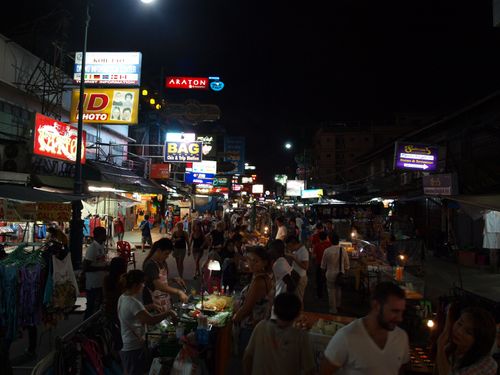
Khao San Road
Attractions
Bangkok’s backpacker carnival: curbside bars, live bands and DJs from 3pm–2am (midnight Sun). Street eats are cheap — pad thai 70–100 THB, mango sticky rice 60–100 THB. Come for wild people-watching; duck into Rambuttri for a calmer beer.
Rambuttri
Markets
Khao San’s calmer cousin: a tree‑shaded lane of VW van cocktail bars, open‑air foot massages, pad thai grills, and easygoing live bands. Best from sunset to 11pm; beers 80–120 THB, cocktails 150–220 THB. One block from the chaos, all the charm.
Yaowarat Chinatown Heritage Center
Attractions
Inside Wat Traimit by Chinatown Gate, this tidy museum charts Yaowarat’s Chinese roots with bilingual displays, period photos and short films. Open Tue–Sun 8:30am–4:30pm; closed Mon. Pair it with the Golden Buddha upstairs.
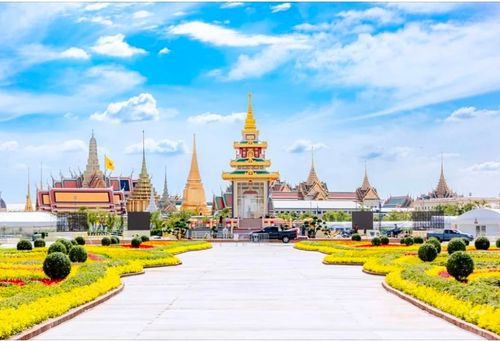
Sanam Luang
Attractions
Bangkok’s royal lawn facing the Grand Palace. Free to wander, ringed by tamarind trees, popular for kite flying (Feb–Apr) and lazy green‑space hangs. A 10‑minute walk from Khao San; come early for soft light and street snacks along Na Phra That Rd.
Recommended Products
More Khao San Road Guides
- Backpacker Packing List for Thailand’s Scooter and Road-Trip Travelers: Helmet-Friendly, Dust-Ready, and Easy-Grab Gear
- What to Pack for Thailand for Scooter and Day Trip Rides: Helmet Comfort, Small-Load Storage, and Ride Protection
- What to Pack for Thailand for Scooter Travel: Safe Riding Clothes, Storage, and Rain Protection
- What to Pack for Thailand for Male Backpackers: Lightweight Clothes and Travel Essentials