
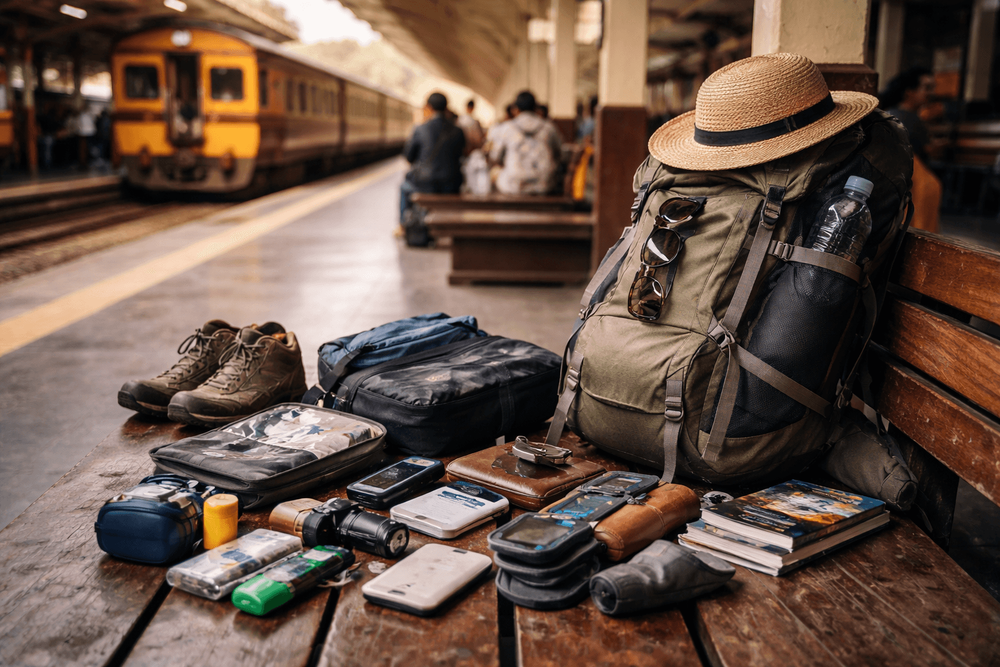
What to Pack for Thailand for Backpackers Using Public Transport: Train, Bus, and Ferry Essentials
Pack light, ride smarter. Our Thailand public transport packing list covers buses, trains, ferries, tuk-tuks, and Bangkok transit—rain, AC, crowds and all.
We’re wedged on the BTS platform at Siam, shoulder to shoulder with office workers and backpackers, the thump of bass from last night’s Khao San Road bar still ghosting our ears. The train doors whoosh; cold AC kisses our sunburn. This is where a sharp Thailand public transport packing list pays off—when you can swing from tuk-tuk to ferry to night bus without fumbling for coins, sweating through cotton, or sacrificing your sanity to an overstuffed pack.
If you want a more bite-size checklist you can scan on your phone while hustling from บ้านสวนนวดเพื่อสุขภาพ สาขายโสธร to the Chao Phraya Tourist Boat ICONSIAM Pier, we also put together a streamlined version here: What to Pack for Thailand for Backpackers Using Public Transport: Easy-Carry Essentials for Buses, Trains, and Taxis.
Thailand Public Transport Packing List: The Essentials
Let’s pack for the way we actually move: short city hops, long-haul trains, last-minute minivans, orange-flag river boats, and the glorious chaos of a Bangkok taxi meter. We’re aiming for sanuk (fun) without the schlep.
Bags and carry setup
- 40L–50L soft backpack (no hard-shell suitcases). Soft packs slide into bus holds and train racks. Add a bright rain cover—you’ll spot it in a heap of black bags at Mo Chit 2.
- 15–20L daypack or sling with two zips. Keep it in your lap on buses and ferries; never overhead if you can help it.
- Packable tote (stuff-sack style). For sudden 7‑Eleven runs, wet clothes, or food you swore you wouldn’t buy and definitely did.
- Compression or packing cubes. One cube becomes your “bus bag”: hoodie, earplugs, snacks, power bank, tissues. You’ll bless this at 2 AM outside Surat Thani.
- Small padlock + short cable. Lock zips together and loop through bus rack slats. It’s deterrence, not Fort Knox.
Documents and money
- Passport in a slim zip pouch, plus paper copies of passport photo page and entry stamp. Keep digital copies in your email/cloud too.
- 1–2 cards (separate them), and at least 1,000–2,000 THB in small bills/coins. BTS/MRT tickets, ferries, and songthaews love exact change; keep a coin purse.
- Local SIM or eSIM. Data means maps, translation, and hailing rides when the taxi meter mysteriously “broken.” Expect 150–300 THB for a basic plan; top up at 7‑Eleven.
Clothing that works with heat, rain, and Arctic AC
- Light quick-dry tops and one long-sleeve layer. Trains and long-haul buses are meat lockers; pack a thin hoodie or UNIQLO-style air jacket.
- Quick-dry shorts and one pair of long pants. For temples and unexpected chill. Zip-offs if you must—no judgment on a night bus.
- Footwear: breathable trainers or sandals with a heel strap (think longtail-boat landings in knee-deep water). Flip-flops live in the side pocket.
- Sarong or light scarf. Doubles as blanket, temple cover, and emergency towel.
Tip: If AC layers are your nemesis, our separate breakdown on staying comfy in sub-zero buses is here: Thailand Packing List for Backpackers in Air-Conditioned Transport: Bus, Train, and Flight Layering Tips.
Rain, sun, and splash control
- Packable poncho (30–60 THB at FamilyMart). Ponchos beat umbrellas in crowds and on windy ferries.
- Roll-top dry bag (5–10L). Cameras and passports stay dry on longtails and during sideways monsoon squalls.
- Cap or brimmed hat + reef-safe sunscreen. We burn fastest on open-deck ferries and river piers.
Tech and power
- Power bank (10,000–20,000 mAh). Night buses lie about USB ports. Take your own certainty.
- Short charging cables + dual USB wall plug. Outlets are 220V; sockets often take A/C/“universal,” but a compact adapter saves the day in older guesthouses.
- Offline maps downloaded. Bangkok’s khlongs (canals) and sois play tricks with GPS.
Comfort and hygiene
- Earplugs + sleep mask. Necessary evil when your seat neighbor loves luk thung at full volume.
- Pocket tissues + wet wipes. Rest stops and rural stations can be, uh, rustic.
- Refillable water bottle. Water is 10–15 THB at 7‑Eleven; refill when you can, sip constantly.
- Snacks that don’t melt: peanuts, seaweed, dried mango. You’ll still buy grilled pork on a stick outside Hua Lamphong, won’t you?
Safety and common sense
- Money belt or flat neck pouch (worn under clothes) for passport and spare card.
- Luggage tag inside and out. Bus baggage holds get swap-happy at 5 AM.
- Tiny first-aid: motion-sickness tabs, paracetamol, plasters, rehydration salts.
Practical Gear for Comfort, Safety, and Convenience
We measure every item by how it performs from Phra Athit Road to a ferry ramp in Chumphon. Heat, rain, crowds—Thailand brings them all. Your kit should shrug and keep moving.
Beating Bangkok’s heat and icebox AC
- Dress cool for the street, warm for the seat. That’s our mantra. A thin hoodie weighs little and staves off the train’s enthusiastic AC. If you run cold, pack light socks for overnight rides and ferries.
- Microfiber towel (small). Doubles as AC blanket or sweat mop after a mad dash up the stairs at Sala Daeng.
- Deodorant wipes. You’ll be glad after squeezing into a rush-hour MRT car at Sukhumvit.
Rain on cue: what survives a monsoon dump
- Poncho on top, dry bag inside. Quick-dry clothes mean you’re never soggy for long. Wrap electronics and your passport pouch in the dry bag before boarding a longtail at Railay.
- Zip-top bags for tickets and receipts. Paper QR tickets wilt fast in Thai humidity.
Crowds and tight spaces
- Mini carabiner clips. Dangle your hat, flip-flops, or tote off your daypack when the floor’s grimy.
- Slim waist pack worn cross-body in front. Your phone, coins, and card live here where your eyes can see them—even when those Khao San night vibes go late.
Ferries and longtails
- Headlamp or tiny torch. Night piers on Koh Phangan can be patchy lit; two seconds of light beats one twisted ankle.
- Dry sandals with tread. Boat decks get slick. Save the cute leather slides for Soi Rambuttri dinners.
Trains and buses
- Inflatable neck pillow. Packs to nothing, rescues a wobbly head on Highway 4.
- Light cable lock to loop your daypack to a rail when you doze. Not paranoia—just peace of mind.
- Small trash bag. Keep your seat area clean when vendors sell sticky rice and sweet grilled bananas you can’t refuse.
If you’re planning proper overnight rides, we’ve road-tested a fuller comfort kit here: What to Pack for Thailand for Long Bus and Train Trips: Overnight Comfort, Security, and Easy-Access Essentials.
Documents, Cash, Cards, Apps, and Tickets
Money mechanics that actually work
- Always carry small bills (20s, 50s) and coins. BTS/MRT machines, river boats, and songthaews appreciate exact change.
- Taxi meters in Bangkok start around 35 THB. If a driver “forgets” the meter, hop out politely. Tuk-tuks are fun but quote before you sit—short hops 50–150 THB, more if you’re crossing the river or it’s late. Bargain with a smile.
- Keep 100–300 THB easy-access for fares so you’re not revealing your whole wallet in a crowded carriage.
Cards and transit media
- Single-journey tokens work fine for BTS/MRT. Stored-value cards (like Rabbit for BTS) are handy if you’re bopping around town for days, but not essential for short stays. Machines and counters accept cash; stations get busy at rush hour.
- Ferries (Chao Phraya Express, orange flag) take cash at the pier—expect roughly 16–20 THB for common hops. Keep your ticket dry.
Phones and the magic of apps
- Grab and Bolt cover taxis and motorbike taxis in major cities; sometimes one is cheaper or has more drivers than the other. If a driver cancels, we shrug and try the other.
- Google Maps offline for Bangkok, Chiang Mai, and the islands you’re heading to. Download on Wi‑Fi at your guesthouse.
- Google Translate with Thai downloaded. Show drivers a Thai-script address; you’ll get where you’re going faster than playing “guess the soi.”
Tickets and proof
- Many bus and ferry operators accept QR codes on your phone; keep a power bank so you can actually show it. Screenshot everything. If you do get a printed ticket, don’t fold the QR.
- Some minivans ask to check your big bag; slap a tag on it and photograph the claim ticket and bus number.
Regional and Seasonal Considerations
Bangkok’s transit is its own beast, but Thailand is big. What you pack flexes with where we’re going.
City days: Bangkok, Chiang Mai, and friends
- Daypack discipline: wallet pouch, phone, compact umbrella or poncho, water, small towel, power bank, and coins. That’s it—keep it light for the BTS crush at Asok.
- River hacks: Chao Phraya Express orange-flag boats are the budget artery. For Khao San or Soi Rambuttri, hop off at Phra Arthit pier and wander down Phra Athit Road under banyans.
- Air quality in northern cities can dip Feb–Apr. Pack a light mask if you’re sensitive; buses and songthaews kick up dust.
Islands and coasts: Gulf and Andaman
- Dry bag is non-negotiable. Phones, passports, and your “bus bag” move together between songthaews, piers, and longtails.
- Reef-safe sunscreen, rash guard, and a sarong. Ferries mean salt, sun, and splash. Motion-sickness tabs for choppy crossings to Koh Tao or Koh Lanta.
- Headlamp helps on dark piers and beach paths where the only light is moon and the occasional motorbike.
Mountains and cool snaps: North and Isan
- Evenings in Chiang Mai, Pai, or Nan can cool down November–January. Toss in a thin fleece if you feel the chill.
- Minivans to Pai snake through the hills. If wavy roads wobble you, pre-pack the motion tabs and sit forward.
Monsoon math
- Southwest monsoon (roughly May–Oct) means heavy afternoon bursts, especially on the Andaman side. Ferry schedules can flex; keep your rain kit in the top pocket and a dry bag ready.
- Quick-dry shirt, shorts, and backup socks live in your daypack. Nothing beats slipping into dry socks on an over-air-conditioned bus after a downpour.
For multi-border rambles or slow overland loops, we break it down here: What to Pack for Thailand for Overland Backpacking: Buses, Trains, Ferries, and Border Crossings.
Know Before You Go: How We Carry It All
- Two-bag method. Big pack rides in the hold; daypack never leaves our lap. If we conk out somewhere between Chumphon and Surat Thani, the important stuff stays attached to us.
- Color and labels. Bright rain cover, loud luggage tag, name and Thai phone number inside. If a farang grabs the wrong black pack at dawn, you’ll sort it fast.
- Snack timing. Buy water and bites before boarding. Prices at rest stops can creep; a big bottle is 15–20 THB at 7‑Eleven on Soi Rambuttri.
- Temple-ready. Keep a scarf/sarong handy. Hopping off the Chao Phraya at Tha Tien for Wat Pho or climbing the Golden Mount (Wat Saket) is more fun when you’re dressed right and not scrambling.
Common Packing Mistakes to Avoid When Relying on Public Transport
Hard-shell suitcases. They dominate tiny aisles, don’t squeeze into racks, and invite curses on a full Orange Flag boat. Go soft.
Overpacking clothes. Laundry is everywhere—80–120 THB per kilo, next-day. Pack for five days, not five weeks.
No small change. You’ll hold up the BTS line with a 1,000 THB note. We keep a coin pouch ready.
Trusting bus USB ports. Half are dead, the other half are loose. Bring your own power.
Forgetting rain gear. One 10-minute Bangkok cloud tantrum will baptize your bag and your unread novel. Poncho on top, dry bag inside.
Flashy backpacks with dangling bits. Straps catch on ferry rails and tuk-tuk bars. Streamline with carabiners and tuckables.
Skipping a hoodie. Thailand is hot; the transport AC is not. Night bus veterans know the chill.
Leaving valuables in the hold. Passport, phone, cash, and cards stay on you. Always.
Ignoring scams with a sigh. Tuk-tuk “tours” that detour to gem shops? Politely nope. Taxis refusing meters at tourist hotspots? Step out and try another or use an app.
Not printing anything. Phones die. Screenshot and, for big hops, print the QR ticket. Old-school saves the day more than you think.
Sample Day: How This Kit Moves Through Bangkok
- Morning: Airport Rail Link to Phaya Thai (about 45 THB). We keep a hoodie stuffed in the daypack for the cool carriage, coins at the ready for a BTS token.
- Midday: BTS to Saphan Taksin, down to the river. We buy a Chao Phraya Express ticket at the pier, dry bag primed for spray as we skim past Wat Arun, wind in our face.
- Afternoon: Hop off at Phra Arthit, stroll Phra Athit Road to Khao San and Soi Rambuttri for pad thai and a cold Leo. The daypack still holds the essentials; the rest is back at the guesthouse.
- Evening: Metered taxi back across town (flagfall around 35 THB). If traffic snarls, we bail near an MRT stop and finish underground in blessed AC.
Final Pack Check Before You Roll
- Passport + copies
- Phone with data, tickets screenshotted, power bank topped up
- Hoodie, sarong, poncho, dry bag
- Coins and small bills
- Earplugs, eye mask, tissues, snacks, water
- Daypack zipped, big pack rain-covered and labeled
We’ll see you at Saphan Taksin pier under the orange flag, poncho stuffed in the side pocket, hoodie rolled tight, and coins ready for the ticket window. Bangkok moves fast; with the right kit, we move faster—and with a smile.
Luggage Scale Portable Digital Hanging Scale
Further reading if you’re cutting a tight connection or stringing buses and trains like a pro: What to Pack for Thailand for Backpackers Using Public Transport: Easy-Carry Essentials for Buses, Trains, and Taxis, What to Pack for Thailand for Long Bus and Train Trips: Overnight Comfort, Security, and Easy-Access Essentials, and What to Pack for Thailand for Overland Backpacking: Buses, Trains, Ferries, and Border Crossings.
Related Hotels & Places
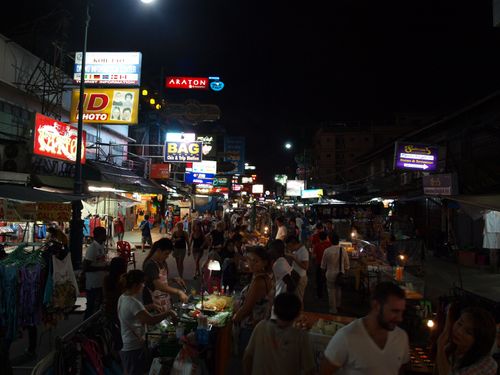
Khao San Road
Attractions
Bangkok’s backpacker carnival: curbside bars, live bands and DJs from 3pm–2am (midnight Sun). Street eats are cheap — pad thai 70–100 THB, mango sticky rice 60–100 THB. Come for wild people-watching; duck into Rambuttri for a calmer beer.
บ้านสวนนวดเพื่อสุขภาพ สาขายโสธร
Massage
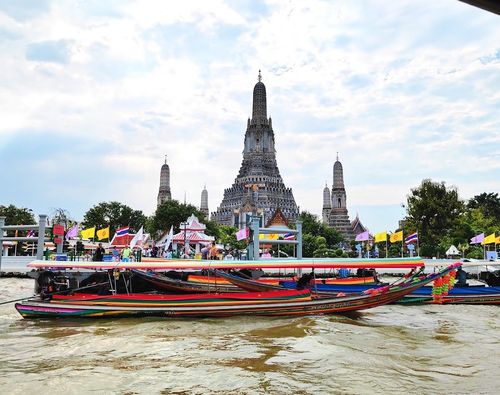
Chao Phraya Tourist Boat ICONSIAM Pier
Services
Hop on the blue‑flag tourist boat at ICONSIAM to cruise Wat Arun, Wat Pho, the Grand Palace and Chinatown. Day pass ~150 THB, boats every ~30 mins, last runs around 7:15pm. Easiest river launchpad via BTS Gold Line to Charoen Nakhon.
Recommended Products
More Khao San Road Guides
- What to Pack for Thailand for Backpackers Using Public Transport: Easy-Carry Essentials for Buses, Trains, and Taxis
- What to Pack for Thailand for Backpackers Using Public Transport and Local Buses
- What to Pack for Thailand for Train and Bus Backpacking: Overnight Transit, Platform Comfort, and Easy Access Items
- What to Pack for Thailand for Overland Backpacking: Buses, Trains, Ferries, and Border Crossings