
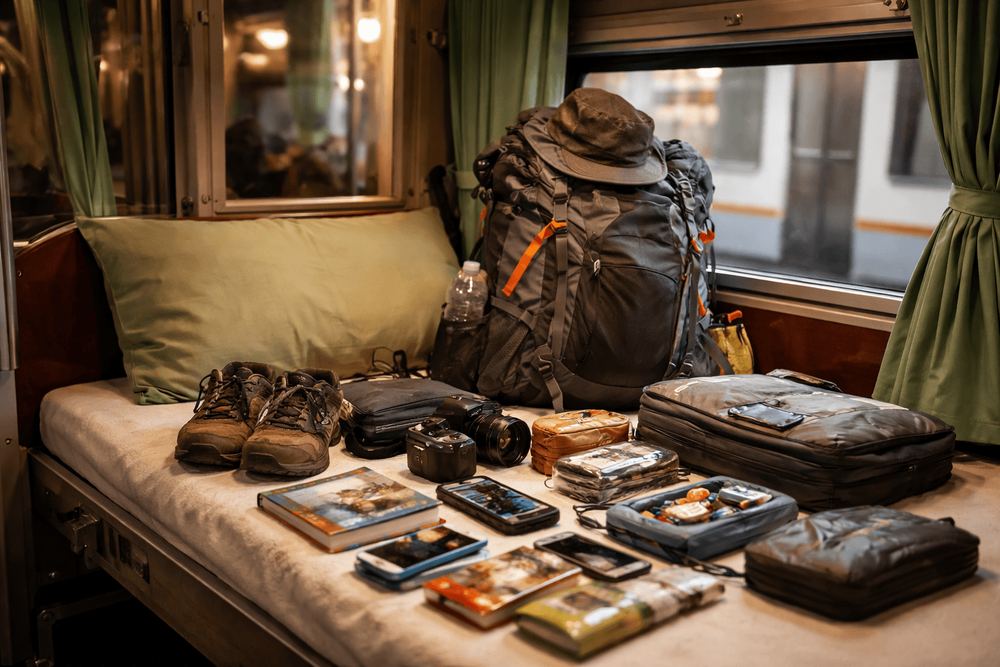
What to Pack for Thailand for Backpackers Taking Night Trains and Overnight Ferries
The exact Thailand night train packing list we use—sleep gear, security, snacks, and arrival-ready tricks—by Bangkok locals who actually ride these routes.
We’re standing on the platform as the night air hangs heavy with diesel, chili oil, and that sweet rot of durian from a nearby cart. A whistle blows, fans whir, and the carriage doors of the northbound sleeper yawn open. This is where a smart Thailand night train packing list earns its keep—because once we roll out past the khlongs and neon, there’s no popping back to 7-Eleven for a forgotten hoodie.
Thailand Night Train Packing List: The Non-Negotiables
We love rolling sleepers from Bangkok to Chiang Mai, Nong Khai, or Surat Thani, but the ritual is the same: pack light, think layers, keep valuables close. Here’s what we actually use.
Documents and Tickets
- Passport and a photo of it on your phone (plus a cloud backup). The conductor will check names against tickets.
- E-ticket PDF saved offline. SRT’s e-tickets are fine on your phone, but a printed copy saves battery and arguments.
- Small pen for forms or scribbling platform numbers.
Money and Bits You’ll Reach For All Night
- Small bills and coins (5–10 THB coins for station toilets; some charge 5–10 THB). Vendors on platforms love exact change.
- Debit/credit card plus a little emergency USD or EUR stashed separately.
- A slim waist pouch or neck wallet for passport, phone, and a few notes—worn under clothes when you sleep.
Sleep and Comfort
- Light hoodie or sweater: AC carriages can be arctic at 2 AM.
- Socks and a thin scarf/sarong. Sarongs double as privacy curtains or a pillowcase.
- Eye mask and earplugs. You’ll thank us when the carriage lights stay on until the beds are made.
- Inflatable travel pillow if you’re in seats. In sleepers, bedding is provided, but a small pillow booster helps.
Clean-Up Crew
- Toothbrush, small toothpaste, floss, and a pocket mouthwash.
- Wet wipes and hand sanitizer. The sinks splash; soap can be a rumor.
- Tissues/toilet paper in a Ziploc. Toilets may or may not be stocked.
- Mini deodorant, face wash or micellar pads, and a tiny moisturizer—AC air is drying.
Food and Hydration
- Refillable water bottle (fill at your guesthouse or buy 600 ml water for 12–15 THB from What to Pack for Thailand for Overnight Trains: Sleep Gear, Security, and Comfort Essentials before boarding).
- Snacks with substance: sticky rice with grilled pork (moo ping), bananas, nuts, or a What to Pack for Thailand for Night Buses and Sleeper Trains: Sleep, Security, and Comfort Essentials tuna sandwich. Dining car meals run roughly 80–150 THB if your train has one.
- Ginger candies if you get motion-sick.
Entertainment and Power
- Phone with downloaded playlists/podcasts and offline maps.
- E-reader or paperback. Trains sway; choose something light.
- Power bank (10,000–20,000 mAh), short cable, and a plug adapter. Outlets are limited and sometimes communal at carriage ends.
Little Lifesavers
- Cable lock or thin chain to secure your big bag to the rack. Peace of mind is sanuk, too.
- A couple of big Ziplocs or a dry bag for rain bursts between tuk-tuk and platform.
- Flip-flops for bathroom runs; trainers for boarding and arrival.
If you want a train-specific master checklist with more detail, we also break down station-day hacks and sleeper comfort in our dedicated guide: Backpacker Packing List for Thailand’s Train Travel: Sleeper Comfort, Security, and Station-Day Essentials.
What to Bring by Seat and Sleeper Class
Not all carriages are created equal. Let’s pack like we booked it on purpose.
3rd Class Fan Seats (Short Hops or the Purist’s Choice)
- Expect open windows, overhead fans, and hard seats. It’s a slice of real Thai rail life, with vendors hopping on at stations.
- Pack: extra water, a cushion or inflatable pillow, bandana to tame hair in the breeze, and hand wipes (dust + chili = face you’ll regret rubbing).
- Storage: overhead racks for big packs; keep valuables on your lap or in a waist pouch.
2nd Class AC Seats (Budget Overnight Gambit)
- It’s doable, but you’ll be vertical for hours. Lights may be on late; AC can be fierce.
- Pack: neck pillow, eye mask, hoodie, socks, and a light blanket or sarong. Earplugs are mandatory.
- Storage: overhead racks are fine; cable-lock your pack to the rack.
2nd Class AC Sleepers (Our Go-To)
- Berths are made up by staff around 8–9 PM with sheets, pillow, and a blanket. Curtains give semi-privacy.
- Lower berth is wider and a touch pricier; upper is cozier and can sway more.
- Pack: hoodie, socks, eye mask, earplugs, small pouch with nightly essentials so you’re not clambering around after lights-out.
- Storage: big bags fit on overhead racks or under the lower seat. We lock ours to the rack with a cable. Keep passport/phone in-bed with you.
1st Class Sleepers (Two-Bed Cabins With a Door)
- Lockable cabin, shared or private. More space, more calm.
- Pack: the same basics but you can skip the eye mask if you control lights. Still bring a hoodie and socks—the AC doesn’t read the room.
- Storage: luggage fits under seats or on dedicated shelves; still lock the big bag and keep valuables on your person while you sleep.
Women-Only Sleepers (When Available)
- A good option for solo travelers. Same packing as 2nd class sleepers, with a bit more peace of mind.
We dig deeper into overlapping bus and train gear—especially for back-to-back routes—in our cross-transport guide: Thailand Packing List for Backpackers on Overnight Trains and Buses.
Clothing and Personal Care for Long, Cold Carriages
Bangkok at 6 PM is a sauna. Your carriage at 2 AM? Feels like sitting inside a refrigerator at Soi Thanon Ram Buttri Night Market’s 7-Eleven. Pack for both.
- Base: a breathable T-shirt or quick-dry top. Cotton is fine if you don’t mind a little cling.
- Layer: light hoodie or thin fleece. If you run cold, a Uniqlo-style packable down jacket isn’t overkill.
- Bottoms: shorts for day boarding; switch to light trousers or joggers after the beds are made—warmer and more modest for midnight strolls to the loo.
- Feet: flip-flops for the aisles, socks for warmth. Those AC vents love ankles.
- Modesty: a sarong or shawl is gold—curtain, blanket, or temple-ready on arrival.
- Toiletries: keep a zip kit in your daypack. Train bathrooms are functional but bouncy—do your face and teeth at non-peak times (after boarding, before lights-out, or right after dawn).
- Contacts vs glasses: we swap to glasses—saves fumbling with lenses in a rocking sink.
Safety, Valuables, and Travel-Prep Tips
Trains are generally safe, but good habits keep the journey smooth.
- Split and stash: keep a day’s cash and your passport on your body; backup cards and extra cash in your big pack’s hidden pocket.
- Soft lock-up: cable-lock your big bag to the rack; small TSA lock on zippers deters curious fingers.
- On-body at night: phone in airplane mode and under your pillow; waist pouch worn to bed or clipped inside the berth.
- Tickets and ID: match your passport name exactly on the ticket. Screenshot the QR/e-ticket and save offline.
- Food and drink etiquette: alcohol is officially banned aboard Thai trains. Save the beers for after you arrive.
- Platform hustle: ignore “helpful” touts who insist your train moved platforms. Check boards or ask uniformed staff—“sawadee krub/ka, platform thîi năi?” works.
- AC reality: it can be loud and cold. Earplugs + hoodie = real sleep.
- Dusk-to-dawn hygiene: wash hands more than you think, especially before snacking.
If you’re chaining a night train with a night bus or vice versa, the security and comfort overlap a lot. We’ve packed those lessons into this bus-focused piece, handy for mixed itineraries: What to Pack for Thailand for Night Buses and Sleeper Trains: Sleep, Security, and Comfort Essentials.
Helpful Extras for Common Night-Train Situations
We’ve learned these the rattly way, somewhere between Lopburi’s monkey-lit platforms and the dawn palms of Surat Thani.
- Charging drought: bring a fully charged power bank and a short cable you can keep under your pillow. Carriage outlets can be scarce or already claimed.
- Snack strategy: platform stalls sell pad krapow-in-a-bag and sticky rice; onboard dining, when available, is simple, hot, and fine. If you’re picky, pack your own. Budget 80–150 THB for a meal set; water is cheaper if you bring it (12–15 THB for 600 ml from 7-Eleven vs onboard markups).
- Motion and tummy: ginger chews, bland crackers, and a small pack of rehydration salts help if your belly goes farang on you.
- Arrival kit: small SPF, sunglasses, and a hat ready to deploy as you step into tropical glare at 7 AM.
- Wet season backup: light rain jacket or poncho; a dry bag for your daypack so your tech survives the tuk-tuk splash.
- Ferries too: doing a train-to-ferry combo for the islands? Add a dry bag, seasickness bands, and a quick-dry towel. Deck spray laughs at cotton.
- Respect the bins: keep your food trash sealed; no one loves a carriage perfumed with yesterday’s som tam.
Know Before You Go: Stations, Boarding, and Timing
- Where to board: most long-distance services now run from Krung Thep Aphiwat Central Terminal (Bang Sue), a bright, AC-blasting giant that makes old Hua Lamphong look like a postcard. Some local/commuter trains still use Hua Lamphong—check your ticket.
- Getting there from Khao San Road/Soi Rambuttri: the simplest is a metered taxi or Grab (about 120–200 THB depending on traffic, meter starts at 35 THB). On a budget, take a tuk-tuk or bus to the MRT Blue Line (Sam Yot or Sanam Chai stations), ride to Bang Sue, and walk/signpost your way into the terminal. Allow 45–75 minutes in rush hour.
- Early birds: arrive 30–45 minutes before departure. Enough time for platform confirmations, snacks, and a calm boarding.
- Food sweep: stock up near Phra Athit Road or on the station concourse. Water from 7-Eleven is cheaper than onboard; we carry 1–1.5 liters per person overnight.
- Platform etiquette: staff will convert seats into berths after the train rolls; let them work their magic. Keep the aisle clear.
Packing Light but Right: Our One-Bag Setup
- Big bag (lockable zips): clothes, spare shoes, bulk toiletries, and a packable jacket. Cable-lock this to the rack.
- Daypack or sling (never leaves your body): passport, phone, wallet, snacks, water, charger, wipes, tissues, hoodie, eye mask, earplugs, sarong.
- Clothing capsule: 2–3 quick-dry tees, 1–2 shorts, 1 light trouser/jogger, 3–4 underwear, 2–3 socks, 1 swimwear (for when that guesthouse pool calls), 1 light rain layer.
Etiquette and Expectation Setting
- Lights and beds: attendants usually make up berths a bit after departure; go with the flow and be ready to stash your day gear quickly.
- Noise: it’s a train—clanks, brakes, chatter. Earplugs buy you eight hours of pretending it’s a lullaby.
- Bathrooms: you’ll often find both squat and Western toilets; bring your own tissue and sanitizer. Aim true in the sway.
- Security checks: some routes have occasional police ID checks. Smile, “sawadee krub/ka,” show the passport, and you’re done.
Arrival Readiness: Stepping Off into a New City
- Chiang Mai: arrivals drop you a quick songthaew ride from the Old City. Agree the fare before hopping in (30–60 THB per person is common, more if you’re solo or very early).
- Surat Thani: watch for touts; use official counters for bus/ferry combos to islands. Prices are posted—walk past the “helpers” if the quote feels inflated.
- Nong Khai: border runs to Vientiane start early; have your visa game sorted and small USD/THB ready for fees.
- First hour rule: we hydrate, sunscreen, coffee, then think big thoughts. Everything is easier after a 20-minute reset.
A Quick Word on Overnight Ferries
If your route runs rail-to-sea (hello, Gulf of Thailand), your train kit mostly holds. Add:
- Dry bag for all the tech.
- Quick-dry towel and a spare tee—you’ll appreciate a salt-free change.
- Extra seasickness strategy: bands, ginger, or your preferred meds.
- Headlamp or phone torch—decks get dark.
Our Pre-Train Ritual
We like to fuel up near Phra Athit Road—pad krapow that bites back, a lime soda that hisses, then that blessed blast of AC when we duck into 7-Eleven for water and a backup snack. We roll out to the station with time to spare, snag a window seat before it turns into a bed, and tuck our daypack under the curtain like a dragon hoarding treasure. Tomorrow’s city can wait; tonight, the rails sing us north.
If you’re craving an even deeper checklist sensibility (especially for tighter itineraries and station-day hacks), keep this one handy too: What to Pack for Thailand for Night Buses and Overnight Trains: Comfort and Security Essentials.
Lewis N. Clark RFID-Blocking Neck Stash Travel Pouch
Ready? Grab the hoodie, zip the Ziplocs, and let’s chase dawn past the rice fields together.
Related Hotels & Places
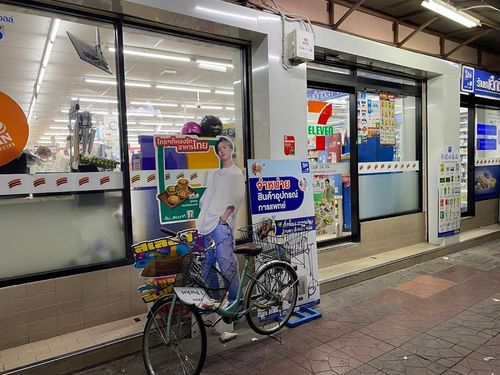
7-Eleven
Shops
Khao San’s 24/7 reset button: ice‑cold A/C, ham‑cheese toasties, All Café iced lattes, water for 7–14 THB, and late‑night supplies from snacks to sunscreen—right by Rikka Inn.
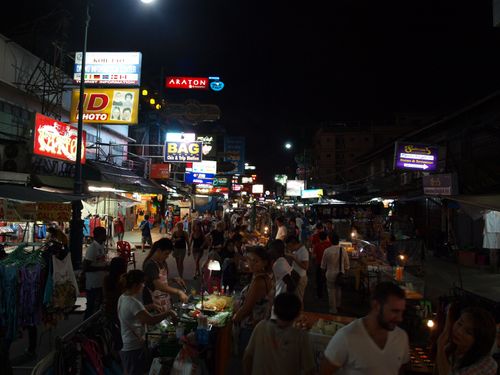
Khao San Road
Attractions
Bangkok’s backpacker carnival: curbside bars, live bands and DJs from 3pm–2am (midnight Sun). Street eats are cheap — pad thai 70–100 THB, mango sticky rice 60–100 THB. Come for wild people-watching; duck into Rambuttri for a calmer beer.
Thanon Ram Buttri Night Market
Markets
Laid‑back Rambuttri after dark: sizzling street food (50–80 THB), cold beers (80–120 THB), neon cocktail vans, live acoustic bars, and stalls of travel gear and hippie pants — a calmer pregame spot a minute from Khao San, best from sunset till late.
Backpacker Bar
Bars
Recommended Products
More Khao San Road Guides
- What to Pack for Thailand for Overnight Trains: Sleep Gear, Security, and Comfort Essentials
- What to Pack for Thailand for Night Buses and Sleeper Trains: Sleep, Security, and Comfort Essentials
- Backpacker Packing List for Thailand’s Night Bus and Train Itinerary: Sleep, Security, and Easy-Access Travel Gear
- What to Pack for Thailand as a Backpacker for Budget Night Buses and Sleeper Trains: Sleep Comfort, Security, and Overnight Essentials