
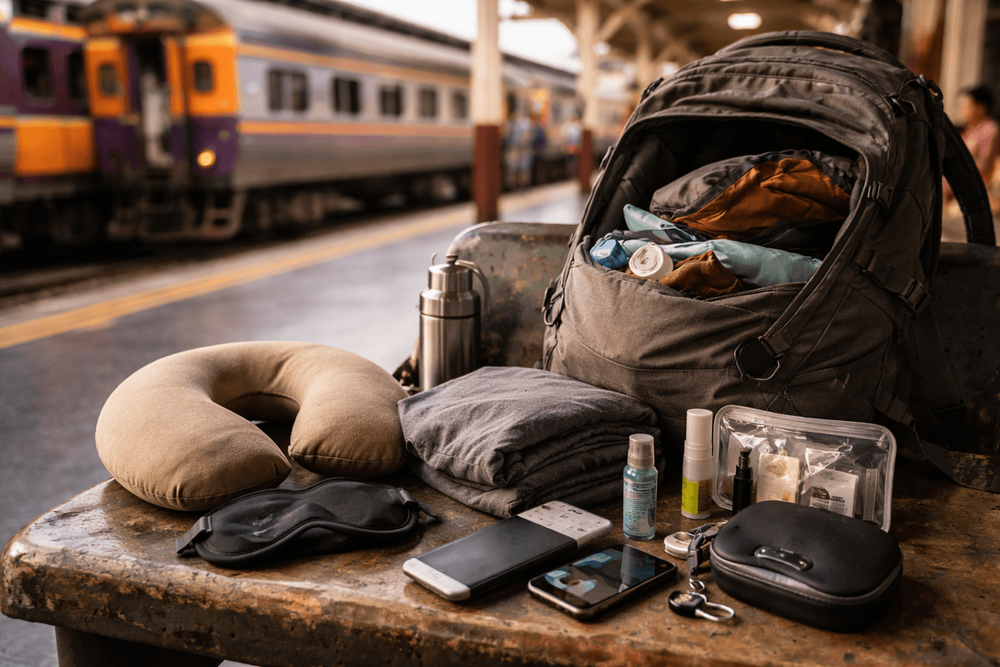
What to Pack for Thailand for Night Buses and Overnight Trains: Comfort and Security Essentials
A field-tested overnight travel packing list for Thailand’s night buses and trains—comfort, security, and smart carry-on tips to arrive fresh at dawn.
We’re shoulder-to-shoulder under the fluorescent glow at Mochit Bus Terminal, plastic stools clacking, pork skewers smoking on a cart, and the intercom mumbling something we never quite catch. The bus doors hiss, a slab of Arctic air spills out, and we do the pat-down: passport? phone? snacks? This is where a tight Thailand overnight travel packing list pays for itself—no fumbling, no drama, just slide into your sleeper and let the night roll by.
The Thailand Overnight Travel Packing List
Here’s exactly what we stash when we board an overnight train from Krung Thep Aphiwat (Bang Sue) or a night bus out of Ekkamai, Sai Tai Mai, or Mochit. We’ve road-tested this on the Chiang Mai sleeper, the Surat Thani run for the islands, and too many VIP buses to count.
Clothing and layers
- Light hoodie or thin sweater: bus and train AC can turn khlong-cold at 3 AM
- Long, breathable pants or leggings: good for temples the next day and against mosquitoes
- T-shirt plus a spare: quick-dry fabric wins in tropical humidity
- Lightweight scarf or sarong: doubles as a blanket or temple cover-up
- Socks: essential if your toes freeze under the vent
- Flip-flops or slides: quick bathroom runs, easy on/off
Toiletries and freshen-up kit
- Toothbrush, small toothpaste, floss
- Facial wipes or a tiny bottle of micellar water + cotton pads
- Hand sanitizer and tissues (bus loos run out—often)
- Deodorant and a travel-size sunscreen (reef-safe if you’re beach-bound)
- Lip balm; tiny tube of moisturizing lotion
- Compact microfiber towel if you’re straight into a morning beach transfer
Documents and money
- Passport (plus a photo of the ID page on your phone)
- Ticket/QR code screenshot and hotel address in Thai and English
- Cash: small bills (20s/50s/100s) for snacks and tuk-tuks; keep bigger notes separate
- Local SIM or eSIM active with data for Grab/Bolt at arrival
Electronics and power
- Phone + charging cable
- Power bank (10,000–20,000 mAh). Trains have sockets, buses often don’t or they’re dodgy
- Universal adapter: most Thai sockets take two flat (Type A) or two round (Type C) pins; 220V/50Hz
- Headphones for sanity; download playlists and shows offline before boarding
Sleep and comfort
- Inflatable neck pillow or a squishy scarf-bundle
- Eye mask and earplugs (7-Eleven sells foam ones for a few baht)
- Thin sleep sack if you’re particular about sheets
Health and mini first-aid
- Motion sickness tablets if you’re ferry-hopping after a night bus
- Painkillers and antihistamines
- Tiger Balm or menthol stick for headaches and dubious bus smells
- Band-aids and a tiny antiseptic wipe
Security
- Small crossbody or neck pouch for passport, phone, and cash
- Cable lock to tether your bag to the seat/berth (we sleep better with it clipped)
- Mini padlock for zippers
Snacks and hydration
- Big water (15–20 THB at 7-Eleven) or a reusable bottle you can refill
- Salty snacks for the AC bloat; fresh fruit; sticky rice and moo ping for the win
- Oral rehydration salts if you’ve had a spicy Pad Krapow detour
Use this Thailand overnight travel packing list as your base. Add or subtract by trip length and where you’re waking up tomorrow.
Thailand-Specific Considerations: Heat, Rain, Temples, Long Rides
Bangkok heat is a wall by day, but Thai buses and trains swing hard in the other direction. That blast of AC when we duck in from Soi Rambuttri feels like a polar expedition. Layers matter.
- Tropical humidity: quick-dry tees and undies keep life less swampy. Cotton gets clingy after a sprint to the platform.
- Monsoon rain: a packable rain jacket or poncho and a dry bag for phone/passport are clutch. A rain cover for your big pack keeps it from arriving soggy in Surat Thani at 5 AM.
- Temple dress code the morning after: shoulders and knees covered. That scarf or sarong saves the day at Wat Pho or the Golden Mount.
- Long rides: the bus “VIP 24” seat names lie sometimes. We’ve had legroom fit for a farang center-forward and we’ve had none. Trains are more honest: second-class AC sleepers are the sweet spot for value and comfort.
What Goes in the Small Overnight Bag (and What Stays Behind)
We travel with a main pack in the hold or rack and a small daypack on us. If it’s not in the daypack, assume you won’t see it until morning.
Keep with you in the daypack
- Passport, phone, wallet, tickets
- Power bank + cable, headphones
- Hoodie, socks, eye mask, earplugs
- Toiletries pouch (toothbrush, wipes, sanitizer, tissues)
- Water and snacks
- Cable lock and mini padlock
- Rain shell or poncho if storms are on the radar
Stow in the main bag (rack or bus hold)
- Spare clothing and shoes you won’t need overnight
- Full-size toiletries and liquids
- Souvenirs, beach gear, bulky stuff
Pro tip: On buses, luggage goes in the undercarriage. We label our bag and snap a photo before it disappears into the abyss. Valuables never go down there. On trains, we slide the big bag under the lower bunk or into the rack above, then tether it with a cable lock.
Safety and Convenience: Little Things That Make a Big Difference
- Power and plugs: trains may give you a single communal socket per berth row. Bring a short splitter if you’re traveling as two. On buses, assume nothing works and charge before boarding.
- Mosquito strategy: repellent with DEET or picaridin, plus bite cream. We’ve had rogue mozzies hitch rides even in AC cars, especially when doors open at small stations.
- Reusable water: Bangkok’s tap isn’t for drinking, but you’ll find water refill machines and cheap big bottles everywhere. A collapsible bottle or a filter bottle keeps plastic down.
- Hygiene hacks: a ziplock with tissues and a small soap sheet helps when a bus bathroom is more concept than reality.
- Cash flow: street food and station snacks are cash-first. Keep a few 10-baht coins for lockers and public toilets.
- Map it old-school: screenshot station exits and your guesthouse pin. The Chao Phraya Express boat at sunrise is a vibe, but at 5 AM with no data, a map screenshot is gold.
Packing for Different Overnight Travel Styles in Thailand
City-to-city sleepers (Bangkok ↔ Chiang Mai, Nong Khai, Hat Yai)
- Second-class AC sleeper: best value. Top bunks are cooler and a bit bouncier; bottom bunks are wider and more private behind curtains.
- Add: thin layer for AC, eye mask, earplugs, and socks. We keep a small snack stash for the 10 PM munchies.
- Morning plan: if you’re rolling into Chiang Mai early, pack a clean tee and toothbrush up top so you can hit a cafe by Tha Phae Gate looking human.
Beach runs and island hops (Surat Thani/Chumphon to Gulf islands; Krabi/Phuket ferries)
- Pack a dry bag or at least a heavy ziplock for phone/passport on boat transfers. Spray happens—sometimes a lot.
- Motion sickness tablets if catamarans are in your future.
- Reef-safe sunscreen, quick-dry towel, and a light long-sleeve for sun.
- Flip-flops reign. Keep them accessible for dawn pier shuffles.
Budget buses and minivans
- Expect meat-locker AC, neon lights, and snack stops at 2 AM with blaring luk thung. Eye mask and hoodie are non-negotiable.
- Keep your daypack at your feet with a strap looped around your ankle. It’s sanuk until it’s not.
- If the driver cranks the volume, noise-cancelling headphones will feel like a miracle.
Northern loops (Chiang Mai, Pai, Mae Hong Son)
- Nights can be cool from November–February. Pack a light fleece or a proper hoodie.
- Winding roads = motion tablets for the Pai minivan. Ginger chews help too.
City stays (Bangkok, Chiang Mai)
- You don’t need much: one change of clothes, toiletries, and comfort gear. There’s a 7-Eleven every half-block for anything you forgot. The blast of AC when you duck in? Chef’s kiss.
- For Khao San and Soi Rambuttri nights, earplugs are your best friend. The thump of bass doesn’t respect check-out times.
Know Before You Go: Tickets, Terminals, and Real-World Logistics
- Major Bangkok train departures: Krung Thep Aphiwat Central Terminal (Bang Sue) handles most intercity trains now. Hua Lamphong still sees some services, but don’t assume—check your ticket.
- Bus terminals: Mochit (north/northeast), Ekkamai (east), Southern Bus Terminal/Sai Tai Mai (south/west). Khao San-area agencies sell tickets too, but stick to reputable companies.
- Prices: second-class AC sleepers to Chiang Mai typically 800–1,200 THB; VIP night buses 500–1,100 THB depending on route and class.
- Scams happen: if someone tells you a train is “full” and tries to redirect you to a bus you don’t want, smile, say “mai pen rai,” and confirm at the official counter.
- Food on board: trains usually have a dining car or staff taking orders; we still bring our own snacks. Buses stop at 24-hour road stations serving rice dishes, noodle soups, and mystery fried things—tasty and cheap.
- Arriving early: have your guesthouse address ready in Thai. If you show up pre-dawn, many places will hold your bag and let you nap in a corner. A polite sawadee and a smile go a long way.
If you want a broader gear check beyond the bus-and-train focus, our master list for new backpackers is here: Thailand Packing List for First-Time Backpackers: What to Bring and What to Leave Behind. For a weeklong sprint where every gram counts, this lean kit is our go-to: What to Pack for Thailand for a One-Week Trip: A Compact Backpacker Checklist. And if you like to compare versions, we keep a living, seasonal rundown too: Backpacker Packing List for Thailand.
Quick Grab-and-Go Checklist (Copy This Into Your Notes)
- Passport + ticket screenshots + hotel address in Thai/English
- Phone, cable, 10–20k mAh power bank, adapter
- Hoodie/light layer, long pants/leggings, socks, scarf/sarong, flip-flops
- Toothbrush, wipes, sanitizer, tissues, deodorant
- Eye mask, earplugs, inflatable pillow
- Repellent, bite cream, painkillers, motion tablets, Tiger Balm
- Cable lock, mini padlock, crossbody/neck pouch
- Reusable bottle or big water, snacks, ORS
- Rain jacket/poncho, dry bag/ziplocks
Lewis N. Clark RFID Blocking Neck Stash
Pack this way and overnight transport in Thailand shifts from ordeal to ritual: a little street food at the station, that first breath of frosty AC, lights dim, curtain drawn, and we’re rolling north past sleeping towns. See you in the morning—coffee by the river on Phra Athit Road is on us.
Recommended Products
More Khao San Road Guides
- What to Pack for Thailand for Night Buses and Sleeper Trains: Sleep, Security, and Comfort Essentials
- What to Pack for Thailand for Overnight Buses and Sleeper Trains: Comfort, Security, and Easy Access
- What to Pack for Thailand for Night Buses and Early-Morning Arrivals: Sleep, Security, and Quick-Access Gear
- Backpacker Packing List for Thailand for Night Buses and Overnight Trains: Sleep, Security, and Small-Bag Essentials