
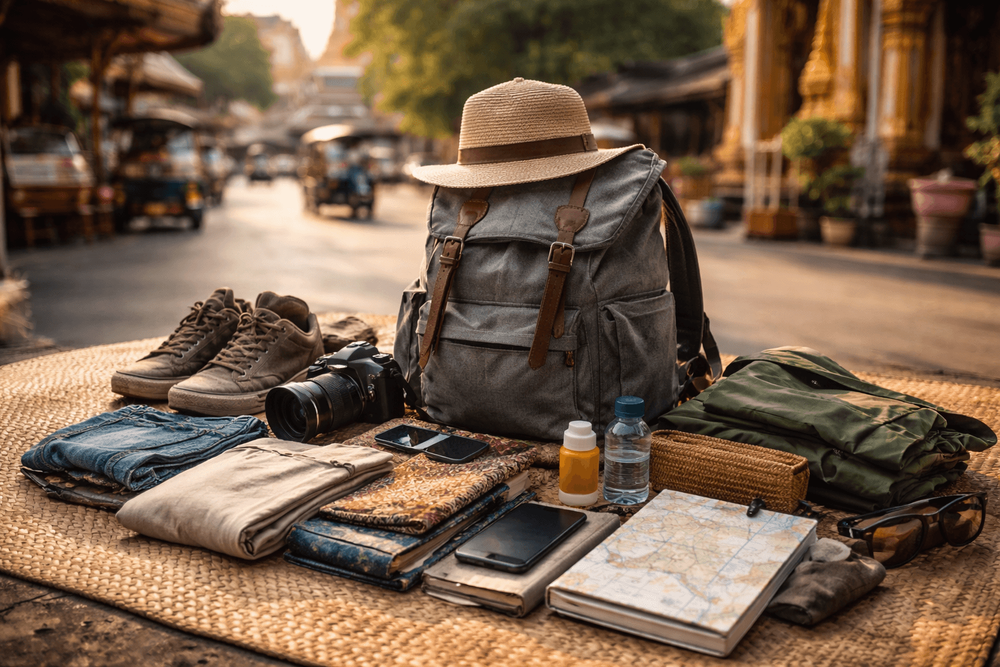
What to Pack for Thailand for Urban Backpacking Days: City Walks, Markets, and Temple Hopping
A smart, light thailand city backpacking packing list for hot walks, temples, and night markets—respectful, rain-ready, and easy to wash on the go.
We step out of the guesthouse on Soi Rambuttri and the air hits us like a hair dryer on “jungle.” The wok down the lane is hissing, the tuk-tuk uncle is already revving, and the 7-Eleven’s blast of AC is whispering sweet nothings from across the street. This is where a dialed thailand city backpacking packing list earns its keep—light enough to float through a market, respectful enough for a temple, rain-ready when the sky flips the switch.
Data Freshness + Verification
- Prices are approximate (THB). Last checked: July 2026.
- For venue facts (name, hours, closures, boat/bus schedules), avoid absolutes; give typical ranges and add "confirm same-day locally."
- When citing any price, include neighborhood and, if known, source type (menu, recent visitor, operator site).
Concrete Planning Details
- Mini food crawl near Tales Khaosan (Cafe & Hostel)/Phra Athit (3–4 stops):
- Chao Phraya Express boat to Phra Arthit Pier (N13) for sunset on the river; stroll Phra Athit Park. Orange Flag boats typically run roughly 06:00–19:00 daily—confirm same-day at the pier; fares about 16–20 THB (Old City, operator board).
- Roti Mataba on Phra Athit Road for roti and massaman; expect about 80–150 THB per dish (Banglamphu, menu). 5-minute walk from the pier.
- Thipsamai on Maha Chai Road for flame-kissed pad thai; lines move fast; 120–200 THB (Samran Rat, menu). 20–25 minutes on foot from Phra Athit, or 8–12 minutes by tuk-tuk; agree on 60–120 THB fare up front (Old City, typical haggle range).
- Nattaporn Ice Cream on Phra Sumen Road for palm sugar or coconut scoops; 25–40 THB (Banglamphu, menu). 12–15 minutes’ walk back from Thipsamai.
- Travel times: Khao San ↔ Phra Arthit Pier: 8–10 min walk. Khao San ↔ Giant Swing area (near Thipsamai): 20–25 min walk or 10–15 min tuk-tuk depending on traffic.
Booking Suggestions (if relevant)
- Basing in Banglamphu? Check availability a day or two ahead for a guesthouse with a pool; mid-range spots near Phra Athit sell out in cool season weekends—book a spot early if the pool is non-negotiable.
- Planning to ride intercity trains or overnight buses? Grab tickets a day ahead at Hualamphong or at official counters; avoid street touts around Khao San’s bus agents.
Thailand City Backpacking Packing List: the short version
- Wear/pack 3–4 breathable tops, 2 shorts, 1 light long pant or skirt/pants for temples, 1 packable rain layer, 1 light scarf/sarong, 4–5 pairs quick-dry socks, 4–5 underwear, 1 swimsuit.
- Footwear: cushioned walking sneakers + sandals with a heel strap; flip-flops for hostel showers.
- Day bag: 15–20L pack, refillable bottle, electrolytes, compact umbrella or poncho, wet wipes/tissues, sunscreen, insect repellent, hand sanitizer, small power bank, earplugs, mini first-aid.
- Docs & money: passport + digital copies, travel insurance, 1–2 cards, small cash (20s/50s), padlock, RFID-free wallet optional.
- Tech: unlocked phone with Thai SIM/eSIM, USB-C/Lightning cables, universal adapter, 10,000–20,000 mAh power bank, earbuds.
If you want a deeper dive on heat-smart clothing and daily carry, we’ve laid it out here: Backpacker Packing List for Thailand for Bangkok City Days: Heat-Smart Clothing, Cash Access, and EDC Basics and here: Backpacker Packing List for Thailand for Daily Carry and Daypack Setup.
Essential clothing and footwear for hot, humid, occasionally soggy cities
Bangkok, Chiang Mai, Chiang Rai, Ayutthaya, Khon Kaen—same rules, different sois. We sweat, the sidewalks steam, and then a ten-minute squall turns the khlongs glassy. We pack for breathability, respect, and quick-dry recovery.
- Tops: 3–4 moisture-wicking tees or airy button-downs. Ultralight cotton, linen blends, or synthetics work. Dark colors hide street grit; light colors stay cooler under that noon sun on Phra Athit Road.
- Bottoms: 2 pairs of shorts (mid-thigh or longer is more temple-friendly), plus 1 pair of lightweight long pants or a flowy skirt/trousers for wats. Elastic waistbands help after pad thai round two.
- Rain layer: A compact umbrella or a packable rain jacket. Cheap plastic ponchos (30–60 THB in Banglamphu 7-Eleven, shelf tag) are clutch; we toss one in the daypack as backup.
- Warm layer: Malls and night buses can be meat-locker cold. One light long-sleeve or a thin fleece keeps the BTS chill at bay.
- Footwear:
- Walking sneakers with breathable uppers for pounding pavements from Soi Rambuttri to Chinatown’s Yaowarat Chinatown Heritage Center.
- Sandals with heel straps for wet streets and temple slip-ons.
- Flip-flops for hostel showers or dashes to 7-Eleven.
- Socks & underwear: 4–5 pairs quick-dry socks; 4–5 pairs underwear. Sink-wash friendly fabrics dry overnight on a balcony rail.
- Sun armor: Crushable hat or cap, UV lip balm, and a light scarf to drape across shoulders in the midday blast.
- Temple etiquette: Shoulders and knees covered, no see-through tops. Pack one scarf/sarong in your day bag for sudden Wat Phra Kaew detours.
Laundry is everywhere. Self-serve washers and coin ops are common; drop-off is easy. Expect roughly 40–80 THB/kg in Banglamphu (menu board), often ready same or next day—confirm timing.
For a city-specific approach to garments and cash-on-the-go setups, see Backpacker Packing List for Thailand’s Cities: Staying Cool, Respectful, and Ready for Transit.
Travel documents, money, health, and safety basics for city-to-city hops
We keep the admin tight so we can focus on sanuk—the fun stuff.
- Passport + copies: Digital and one paper copy. We stash a photo on the cloud and one on the phone. A second ID (driver’s license) can help for SIM registration.
- Visas/entries: Rules change; check official sources before you fly. Keep onward proof handy at the airport if your route looks squishy.
- Insurance: Phone in a rice bowl won’t fix a farang hospital bill. Screenshot your policy and emergency numbers.
- Money: ATMs abound but often charge a 220–250 THB fee per withdrawal; we pull larger amounts less often and use cash for markets, QR PromptPay for cafes, card for malls. A slim coin pouch is magic for boats and buses.
- Card strategy: One main card + one backup, stored separately. Many minimarts accept cards but may set a 200–300 THB minimum—check the till sign.
- Padlock & cable: A small combo lock for hostel lockers. A slim cable lock can lash your bag to train racks.
- Health kit:
- Sunscreen 30–50 SPF (200–450 THB at 7-Eleven on Rambuttri, shelf tag).
- Insect repellent (DEET or picaridin) 80–200 THB (Boots/Watsons in Old City, shelf tag).
- Oral rehydration salts, 10–15 THB per sachet (7-Eleven, shelf tag).
- Plasters, ibuprofen/paracetamol, antiseptic, motion tabs for twisty canal boats, basic meds for tummy wobble.
- Hand sanitizer and pocket tissues—malls are great; some street loos are… aspirational.
- Masks: For smoky season up north (roughly Feb–Apr in Chiang Mai), we carry a couple of KN95s. Check air quality before heading north.
- Safety vibe: Crowded markets and night streets are generally chill but keep zips closed and phones tight, especially in crushes like Chatuchak (9–18 Sat–Sun typical, confirm same-day). If a tuk-tuk ride sounds too cheap, it’s usually a gem shop detour. We walk away with a smile.
Electronics, chargers, and useful city tech
A little tech turns chaos into choreography.
- Phone: Unlocked, with Thai SIM or eSIM. Tourist SIMs from AIS/DTAC/True are easy at the airport or malls; expect roughly 149–599 THB depending on data/days (Sukhumvit mall kiosks, operator signage). Keep passport handy for registration.
- Power bank: 10,000–20,000 mAh. Street food waits for no outlet.
- Cables: 2 USB-C, 1 Lightning if needed, plus a short spare. A tiny pouch keeps the spaghetti tamed.
- Adapter: Thailand uses 220V and sockets that fit Type A/C (and often B). Many hotels have universal sockets, but we still carry a compact adapter with 2–3 USB ports (150–250 THB at MBK, stall tag).
- Earbuds + earplugs: For BTS rides, bus naps, and the thump from that Khao San bar that didn’t get the memo about bedtime.
- Offline maps + translation: Download your city in Google Maps and keep Thai offline; “khop khun krub/ka” goes even further when you can read a street sign.
- Mini fan (optional): Scoffs at noon heat on Dinso Road.
- Camera: If you’re carrying one, add a rain cover; storms roll in faster than gossip on Soi Cowboy.
Day bag essentials for temples, markets, nightlife, and long walks
Our daypack is a 15–20L softie that hugs close on busy sois.
- Refillable bottle: 600–750 ml. Water is 13–20 THB for 600 ml at 7-Eleven (Banglamphu, shelf tag), but we refill when we can.
- Electrolytes: One ORS sachet in the morning after a sweaty Chinatown wander and you’re golden.
- Sun and rain: Hat, sunglasses, pocketable umbrella or poncho. The rain ends as fast as it begins; don’t let it end your afternoon.
- Temple kit: Light scarf/sarong and thin socks (cool tile floors scorch at noon). Knees and shoulders covered gets you into most wats without drama.
- Hygiene: Wet wipes and tissues for street loos, hand sanitizer for post-satay fingers.
- Snacks: A banana or a packet of peanuts saves you from the 15:00 grumps between Saphan Phut and Wang Lang.
- Power: Phone, power bank, short cable in an outer pocket.
- Wallet: Small bills (20s, 50s), coins for boats/buses. Keep bigger notes buried.
- Night mode: Crossbody sling with a zipper if we’re hopping between Soi Rambuttri and Phra Athit bars; nothing ruins sanuk like a lost phone.
Need a deeper EDC breakdown? Hop over to Backpacker Packing List for Thailand for Daily Carry and Daypack Setup.
Mini Itinerary: Khao San/Phra Athit food crawl you can actually do tonight
We time this for golden hour, when the river goes bronze and the scooters ease up a notch.
- Stop 1: Grab the Chao Phraya Express (Orange Flag) toward Phra Arthit Pier (N13). Boats typically run roughly 06:00–19:00; fares around 16–20 THB (Old City, operator board). Ten minutes on the water beats thirty in a tuk-tuk.
- Stop 2: Roti Mataba on Phra Athit Road. Crispy roti with massaman curry is our pre-game; 80–150 THB (Banglamphu, menu). 5-minute walk from the pier.
- Stop 3: Wander to Thipsamai on Maha Chai Road. Yes, it’s famous; the wok fire is worth it. 120–200 THB (Samran Rat, menu). It’s a 20–25 minute walk skirting the Golden Mount’s neighborhood or an 8–12 minute tuk-tuk ride—agree on 60–120 THB upfront.
- Stop 4: Nattaporn Ice Cream on Phra Sumen Road. Old-school Thai ice cream since forever. 25–40 THB (Banglamphu, menu). 12–15 minute walk back, and you’re perfectly placed for a riverside beer on Phra Athit.
Pack note: This crawl is why we wear breathable shoes, carry a tiny umbrella, and keep a scarf in the bag—temples by day, noodles by night.
Seasonal and packing tips just for Thai cities
The calendar here isn’t just months—it’s a mood.
- Cool(ish) season (Nov–Feb): Best walking weather. Nights on Phra Athit get breezy; a light long-sleeve helps against mall AC.
- Hot season (Mar–Apr): Streets shimmer. Electrolytes daily, hat always. Songkran (mid-April) turns cities into water parks—stash your phone in a zip bag and carry a dry bag if you’re anywhere near Silom, Khao San, or Chiang Mai’s moat.
- Rainy season (May–Oct): Downpours are intense and short. Umbrella + quick-dry clothes. Sandals win; sneakers dry with newspaper stuffed inside overnight.
- Northern smoke (roughly Feb–Apr in the north): Chiang Mai/Chiang Rai can haze up. Bring or buy a KN95 and consider limiting outdoor marathons on bad-AQI days.
- Laundry strategy: We rotate 3 tops/2 bottoms and wash nightly. Detergent sheets or a tiny zip of powder makes sink washes easy. Coin laundry is common near guesthouses; drop-off in Old City runs about 40–80 THB/kg (menu board)—confirm turnaround.
- Packing cubes and a spare tote: One cube for clean, one for humid-in-progress, one for dirties. A foldable tote helps when markets seduce you into buying that elephant-print something.
If you’re stretching the trip into weeks, we’ve got a slow-travel angle here: Thailand Packing List for Backpackers on a Long Stay or Slow Travel Trip.
Know before you go: city transit, phones, and everyday flow
- City transit:
- Bangkok’s BTS/MRT typically runs from around 06:00 until close to midnight—check same-day for maintenance windows. River boats wind down around sunset for non-commuter lines. Buses are frequent but slow; grab the 15 baht-ish coins and take your time.
- Metered taxis are good value; insist on the meter. Tuk-tuks are fun; settle the fare first and skip “special tour” offers.
- SIMs & data: Buy at the airport or malls like MBK/Siam. Plans vary; budget roughly 149–599 THB for a week+ of data (Siam area kiosks, operator signage). Keep hotspot ready for map fails.
- Cash vs. card: Street food and markets lean cash; malls and chain cafes take cards/QR. Always keep small change for ferries and buses.
- Opening hours: Malls are predictable; mom-and-pop shops do their own thing. We avoid absolutes and confirm on the day, especially around public holidays and festivals.
Why this thailand city backpacking packing list works
Because cities here flip from temple serenity to monsoon sprint to night-market crush in the span of a soi. Our kit keeps us respectful at Wat Suthat Thepwararam Ratchaworamahawihan, nimble on Chinatown’s slick tiles, and comfortable when the bass thumps from a Khao San bar at 2 AM. Carry less, sweat less, smile more.
If you’re still dialing the mix, our city-days primer helps you trim grams and stay cool: Backpacker Packing List for Thailand for Bangkok City Days: Heat-Smart Clothing, Cash Access, and EDC Basics.
We’ll be the ones by the river, shoes off, breeze in our face, plotting tomorrow’s market run. Pack light and come find us at dawn on the Chao Phraya—or under the neon of Yaowarat after dark.
Related Hotels & Places
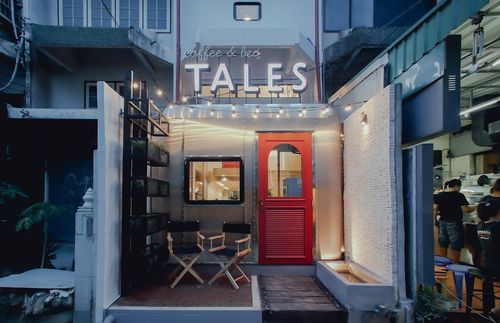
Tales Khaosan (Cafe & Hostel)
Cafes
Railcar‑themed cafe–hostel a few steps from Khao San. Coffee 8am–4pm; reception to 11pm. Clean bunks and a couple privates, plus handy extras: luggage storage and showers for non‑guests (100 THB). Quiet sleep inside, party outside.
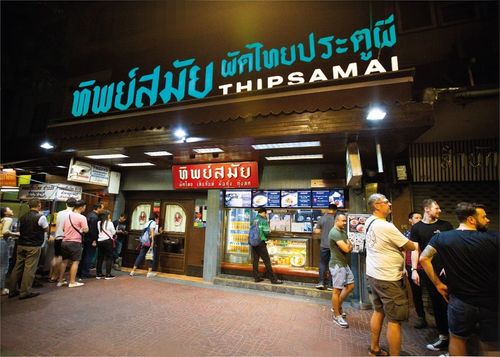
Thipsamai Padthai Pratoopee
Restaurants
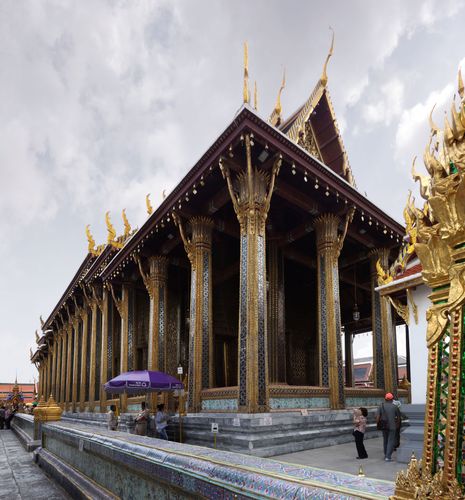
Wat Phra Kaew
Temples
Bangkok’s holiest temple inside the Grand Palace. Go early (8:30am–3:30pm). Buy the 500 THB ticket at Na Phra Lan Rd gate. Dress code enforced. Marvel at Ramakien murals and the tiny Emerald Buddha whose robes change with the seasons. 10–15 minutes’ walk from Khao San.
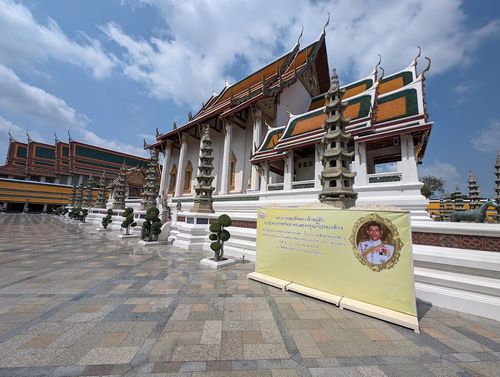
Wat Suthat Thepwararam Ratchaworamahawihan
Temples
Serene counterpart to the Giant Swing: a soaring hall, Sukhothai‑era 8 m bronze Buddha, and some of Bangkok’s finest murals. An easy 15‑minute walk from Khao San; open daily till 8pm for golden‑hour visits.
Yaowarat Chinatown Heritage Center
Attractions
Inside Wat Traimit by Chinatown Gate, this tidy museum charts Yaowarat’s Chinese roots with bilingual displays, period photos and short films. Open Tue–Sun 8:30am–4:30pm; closed Mon. Pair it with the Golden Buddha upstairs.
More Khao San Road Guides
- What to Pack for Thailand for Mixed-Activity Trips: Temples, Beaches, and Night Markets
- Backpacker Packing List for Thailand for Full-Day Market and Walking Trips: Heat, Rain, and Hands-Free Comfort
- Backpacker Packing List for Thailand’s Full-Day City Touring: Comfort Items for Long Walking Routes and Temple Hops
- What to Pack for Thailand as a Backpacker for City Days in Bangkok: Daypack, Cash, Footwear, and Heat-Ready Basics