
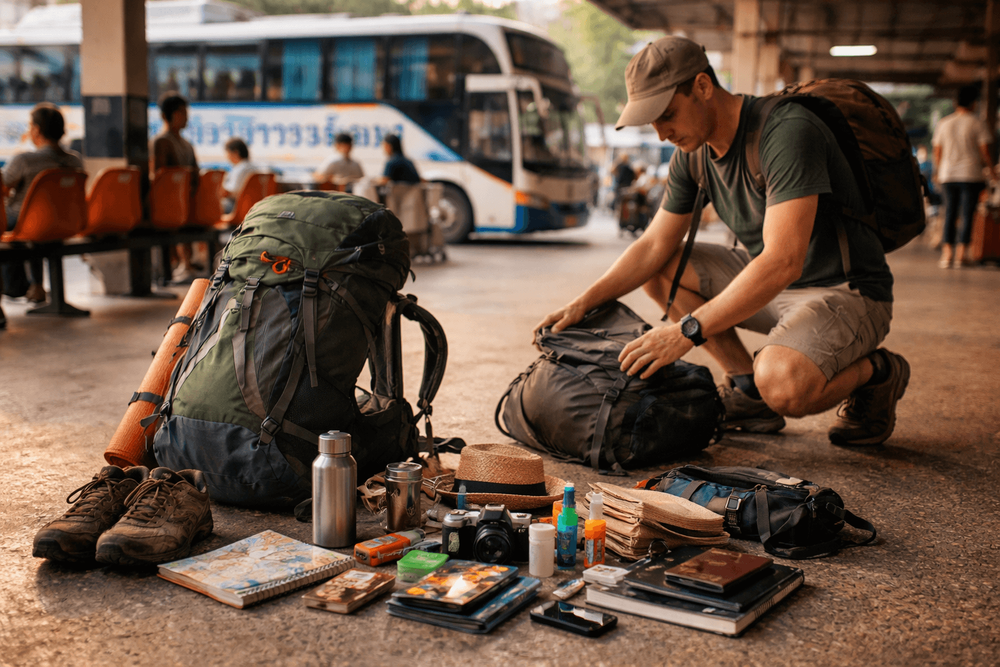
Backpacker Packing List for Thailand’s Bus Station and Overnight Terminal Stops
Thailand bus station packing list done right: tickets, cash, comfort, snacks, and security for Mo Chit, Ekkamai, and beyond. Breeze through terminals, stress-free.
We’re shoulder-to-shoulder in the queue at Ekkamai, sweat beading under fluorescent lights while a wok hisses somewhere behind the food court and a security guard whistles at a tuk-tuk blocking the curb. This is the real start of the journey—the bus station. And if you’ve ever boarded parched, phoneless, or missing your ticket, you already know why a Thailand bus station packing list can save a trip before it even begins.
Why This Thailand Bus Station Packing List Matters
The station is its own ecosystem: signboards in Thai and English flipping destinations, the sweet rot of durian drifting from a fruit cart, the blessed blast of AC from 7-Eleven, and the slow creep of departure times. We’re not packing for the ride yet—we’re packing for the hours before it. When the printer at Counter 42 jams. When the platform changes. When your stomach growls but the only thing open is a stall selling mystery skewers for 10 baht.
This thailand bus station packing list is the kit we actually carry. It’s what gets us through Mo Chit’s endless concourses, Ekkamai’s quick getaways to the islands, and Sai Tai Mai’s late-night southern hauls. Use it to glide past the chaos with sanuk intact.
Essentials We Don’t Walk Into a Thai Bus Station Without
We keep these in a small daypack on our body, not buried in the big rucksack headed for the luggage hold.
- Ticket and itinerary: Printed AND on your phone. Some counters want to see a printout. Screenshot your QR code in case data dies.
- Passport and ID: Keep in a zip pocket. Domestic travelers: Thai ID or driving license works; farang, bring your passport.
- Cash in small notes: 20s and 10s for toilets (3–10 baht), snacks (10–60 baht), and left-luggage if available. ATMs exist but can be down.
- Phone, charger, and power bank: Outlets are rarely where you want them. A 10,000–20,000 mAh bank keeps you topped up.
- Cables and a short multi-USB lead: Share one outlet without fighting. If you’ve got a Thai plug adapter, toss it in.
- Water: 1–1.5L bottle from 7-Eleven (13–20 baht). Refill when you can.
- Snacks: Banana roti, sticky rice, nuts, fruit, or seaweed sheets. Food courts fluctuate; your blood sugar shouldn’t.
- Light layer: Bus AC blasts. A hoodie, scarf, or sarong solves hot platform/cold coach whiplash.
- Rain poncho or compact umbrella: Monsoon storms don’t wait for boarding calls.
- Face mask: Useful for crowded halls or diesel-heavy platforms.
- Tissues and wet wipes: Some bathrooms are BYO. Add hand sanitizer.
- Earplugs and eye mask: Thump of bass from a nearby TV, fluorescent lights that never die—sleep when you can.
- Mini first-aid: Plasters, ibuprofen/paracetamol, motion-sickness pills, electrolytes. A couple of rehydration sachets can save a day.
- Pen and tiny notebook: For jotting Thai bus company phone numbers, gate changes, or your platform in Thai numerals.
- Tiny luggage scale: Optional, but handy if your operator enforces weight limits.
- Security: Small combination lock and a thin cable lock to loop through zipper pulls or a chair leg if you doze.
Pro tip: We treat the station as pre-flight. If we wouldn’t go through an airport without it, we don’t roll into Mo Chit without it.
Long-Distance Bus Reality Check: Comfort, Baggage, and Valuables
Night buses across Thailand are a rite of passage—part lullaby, part lukewarm coffee. Pack like you’re sleeping in a cold movie theater on wheels.
Baggage Limits and Tagging
- Under-bus luggage: Most operators allow one big bag (think 20–30 kg), but limits vary. Your bag usually gets a tag; you get a stub—don’t lose it.
- Overhead bags: Small daypack only. If it’s overstuffed, it’ll end up on your lap.
- Fragile or food items: Keep them with you. The hold can be bumpy and humid.
- Excess fees: Some companies charge for extra or overweight bags. Budget a little cushion rather than arguing at the counter.
Overnight Survival Kit
- Neck pillow or compressible jacket as pillow
- Cozy socks and a light layer
- Toothbrush, paste, and a quick face wipe for rest stops
- Eye mask and earplugs (again, because the aisle light is relentless)
- Offline playlists, podcasts, and a downloaded map of your arrival area
If you’re building out a full overnight setup beyond the station, we’ve laid out longer-haul gear in our night transport guide: What to Pack for Thailand for Night Buses and Overnight Trains: Comfort and Security Essentials.
Keep the Good Stuff on You
The classic rookie mistake is stowing valuables in the under-bus hold. Don’t. Keep passport, wallet, phone, camera, and medications on your person, ideally in a slim crossbody you can wear while napping. We loop our daypack strap around a leg or use a tiny cable lock via the armrest during snoozes. Paranoid? Maybe. Effective? Absolutely.
Station-Specific Smarts: Signs, Food Courts, Toilets, and Last-Minute Buys
Thai bus terminals are their own mini-cities. Here’s how we move.
Finding Your Counter and Gate
- Counters are grouped by region/destination and operator. The same city might be sold by five different companies. Ask for the city name followed by “pai…?” (going to…). Example: “Pai Chiang Mai, gate nai?”
- Signboards flip Thai/English. If you can’t find your destination, scan for the province in Thai script too; it’s often bigger than the English.
- Platform changes happen. Check again 30 minutes before departure.
Toilets and Small Coins
Most terminals charge a small fee for bathrooms—think 3–10 baht, sometimes with a turnstile and an auntie guarding change. Keep tissues handy. Bigger stations have showers; don’t expect free towels.
Food and Water Without Regrets
- Food courts: Expect rice plates at 40–70 baht, noodle bowls 40–60 baht, grilled skewers from 10 baht. Buy a stored-value card at some courts; cash it out if unused.
- 7-Eleven and FamilyMart: Open long hours, sometimes 24/7. Water, instant noodles, triangle kimbap, and the sweet chill of the AC when you can’t face the heat.
- Coffee and tea: 30–60 baht for iced cups. Skip the crash—add a bottle of water too.
Last-Minute Supplies
- Chargers, cheap earphones, and SIM cards are often sold at kiosks near entrances. Prices have a “terminal tax,” but beats being uncharged and unconnected.
- Motion-sickness meds and plasters show up at pharmacy stalls. If you need something specific, grab it before you arrive.
Weather Buffer: Heat vs. AC
Outdoor platforms can be punishing at midday. Inside, AC swings between “glacial” and “is this even on?” A thin layer solves both. A sarong doubles as a seat cover if you land a bench that’s seen too many curry spills.
Different Travelers, Different Kits
We all need the basics, but certain extras make life smoother depending on how you roll.
Backpackers
- Compression cubes and a dirty clothes bag: Keep the rummaging quick.
- Carabiner + mini cable lock: Clip your daypack under benches while you catnap.
- Quick-dry towel: For shower stalls or a sweaty wipe-down.
- Flip-flops: For station bathrooms and breezing through rest stops fast.
If you’re stringing together buses, trains, and ferries, our multi-transit checklist helps you stay nimble: What to Pack for Thailand for Buses, Trains, and Ferries: Comfort, Security, and Easy-Access Essentials.
Families
- Kid-specific snacks and leak-proof water bottles. Count on a sugar crash otherwise.
- Coloring pads, stickers, or a few tiny toys in a clear pouch. One per child saves sibling warfare.
- Wipes, extra tissues, and a change of clothes in the daypack.
- Meds: Children’s paracetamol/ibuprofen and a small thermometer.
- Stroller? Compact umbrella style, tagged and gate-checked; bring a baby carrier for boarding chaos.
Solo Travelers
- Slim crossbody or money belt you can wear while dozing.
- Two-factor auth backups: Printed or written passcodes tucked away.
- Offline maps and a “share location” plan with a friend when you roll into late-night arrivals.
Connecting From Bangkok or Regional Hubs
- Bangkok Ekkamai (Eastern): On BTS Sukhumvit Line. Easy for Pattaya, Rayong, Chanthaburi, Trat. Pack light and move quick—they turn buses fast here.
- Bangkok Mo Chit/Chatuchak (Northern/Northeastern): BTS Mo Chit or MRT Chatuchak Park plus a short taxi/Grab. Huge terminal; add 20–30 minutes buffer to find your gate.
- Bangkok Sai Tai Mai (Southern): On the Thonburi side. Usually taxi/Grab. Expect sprawl; food options vary by hour.
- Chiang Mai Arcade: Multiple buildings. Screens are better than announcements—watch them.
- Phuket Bus Terminal 2: Out of town; plan a tuk-tuk/Grab cushion for traffic.
If you’re shifting onto a true long-haul night route after your station time, layer in the comfort upgrades from our bus-specific guide: What to Pack for Thailand for Backpackers Using Public Transport and Local Buses.
Getting There Smoothly From Bangkok
- From Khao San Road/Phra Athit: Metered taxi or Grab is easiest, especially with bags. We budget 45–70 minutes in traffic to Mo Chit or Sai Tai Mai; 25–45 to Ekkamai off-peak. Tuk-tuks are fun for short hops but not great with luggage.
- From Sukhumvit: BTS to Ekkamai is a dream. For Mo Chit, take BTS to Mo Chit or MRT to Chatuchak Park and switch to a short taxi/Grab. For Sai Tai Mai, taxi/Grab wins.
- Arrival buffer: Be the uncool kid who’s early. 45–60 minutes cushion covers ticket hiccups and platform roulette.
- Scams to sidestep: Touts waving “VIP bus” slips near Khao San—buy from official counters or reputable agencies only. If a driver insists your daypack goes in the hold, no thanks.
Common Packing Mistakes We Still See at Thai Bus Stations
- Valuables in the hold: Don’t do it. Ever.
- Only digital tickets: Phones die. Screenshots + printout = peace.
- No small change: Toilets and snacks want coins. Break a 100 at 7-Eleven early.
- Overpacking the daypack: If you can’t sit with it comfortably for an hour, you’ll hate it on the bus.
- Forgetting layers: AC is enthusiastic. Socks and a scarf make a world of difference.
- Leaving meds in the big bag: Motion-sickness doesn’t wait until the first rest stop.
- Skipping water: Thai heat is sneaky. We aim for a full bottle before boarding.
- Ignoring platform checks: Gate changes happen quietly. Re-check 30 minutes and 10 minutes pre-departure.
Quick Reference: Your Bus Station Go-Bag Checklist
- Documents: Passport, ticket (print + phone), insurance details
- Money: Small notes and coins, ATM card as backup
- Tech: Phone, charger, power bank, cables, headphones, offline maps
- Comfort: Light layer, neck pillow, socks, eye mask, earplugs, sarong
- Health: Tissues, wet wipes, sanitizer, meds, electrolytes, plasters
- Food & drink: 1–1.5L water, solid snacks
- Security: Small lock, cable lock, luggage tag
- Weather: Poncho/umbrella, sunscreen, hat
One More Thing Before You Board
A thailand bus station packing list doesn’t need to be epic—just intentional. We keep this kit staged in the top of the pack so a last-minute route change or a moody ticket counter can’t throw the day. If we’ve got an extra hour, we grab a 40-baht bowl of boat noodles, stake out a seat under the fan, and watch the neon timetables flicker. When they call our gate, we’re topped up, zipped up, and already halfway there.
If you’re chaining an overnight bus with a morning train, this hybrid list saves the shuffle: What to Pack for Thailand for Long Bus and Train Trips: Overnight Comfort, Security, and Easy-Access Essentials. See you at the platform—sawadee and safe travels.
Related Hotels & Places
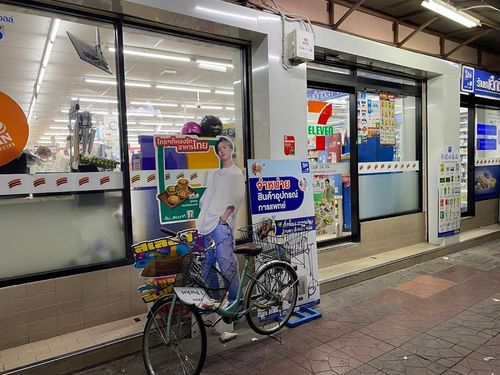
7-Eleven
Shops
Khao San’s 24/7 reset button: ice‑cold A/C, ham‑cheese toasties, All Café iced lattes, water for 7–14 THB, and late‑night supplies from snacks to sunscreen—right by Rikka Inn.
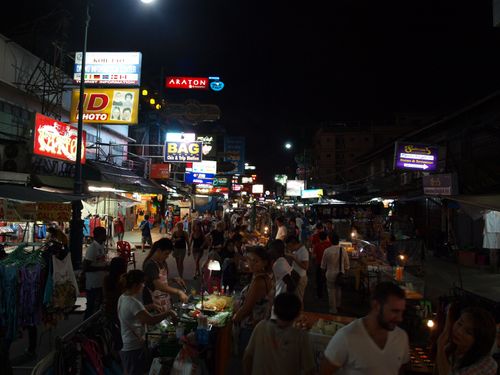
Khao San Road
Attractions
Bangkok’s backpacker carnival: curbside bars, live bands and DJs from 3pm–2am (midnight Sun). Street eats are cheap — pad thai 70–100 THB, mango sticky rice 60–100 THB. Come for wild people-watching; duck into Rambuttri for a calmer beer.
More Khao San Road Guides
- Backpacker Packing List for Thailand for Long-Haul Bus Travel: Overnight Comfort, Security, and Ride Essentials
- Backpacker Packing List for Thailand’s Night Buses and Sleeper Trains
- Backpacker Packing List for Thailand’s Southeast Border Trips: Beach, Jungle, and Small-Town Basics
- What to Pack for Thailand Backpacking for Long Bus and Train Days: Comfort, Security, and Overnight Ride Essentials