
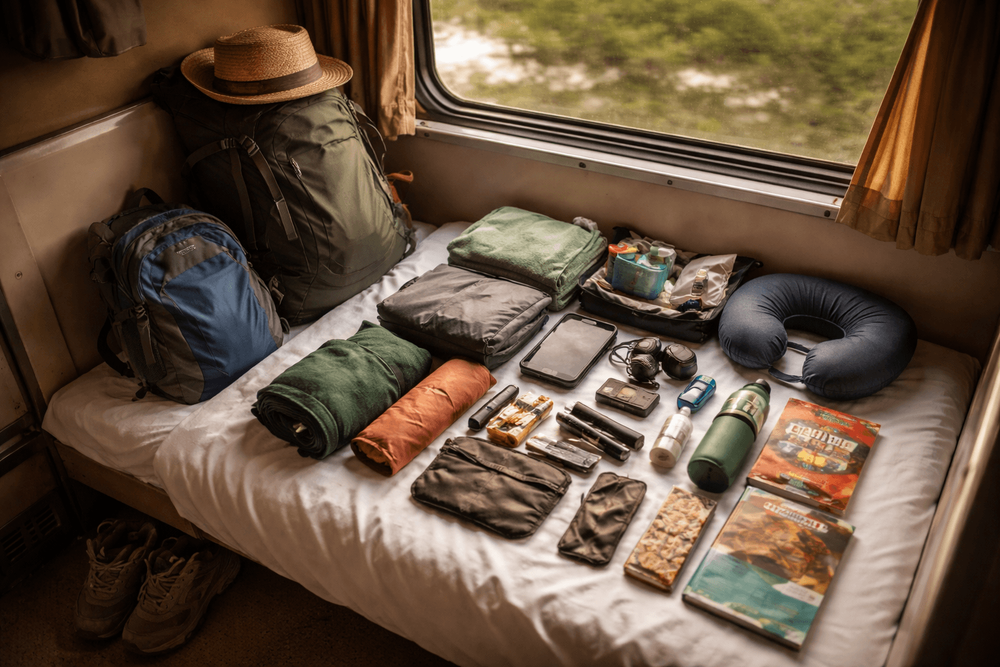
Backpacker Packing List for Thailand’s Night Buses and Sleeper Trains
Dial in your Thailand sleeper train packing list: layers, locks, snacks, and comfort hacks for AC cars and fan coaches—real prices, station tips, zero fluff.
We’re standing under the high vault of Krung Thep Aphiwat Central Terminal — the station most folks still call Bang Sue — the air smelling faintly of diesel and fried chicken from a kiosk, our shirts damp from Bangkok’s heat until the AC hits like a temple bell of mercy. Train boards flip from Thai script to English. A chai yen vendor rattles ice. This is where the night begins. If you’ve searched for a Thailand sleeper train packing list, you’re already on the right track; let’s make sure your bag is dialed so you sleep, snack, and roll off at sunrise feeling almost smug.
Data Freshness + Pricing:
- Prices are approximate and in THB.
- Last checked: June 2026.
- Happy hour and promo details change frequently—confirm locally.
Thailand Sleeper Train Packing List: Essentials to Keep Handy
We keep the true non-negotiables in one quick-grab pouch. When the conductor comes by saying “tickets, please,” or you need coins for the restroom, you shouldn’t be excavating your big pack on a rocking carriage.
Documents and tickets (front and center)
- Passport and visa/entry stamp: keep the photo page accessible. Many conductors won’t ask, but immigration checks can happen near borders (think Nong Khai for Laos, Padang Besar for Malaysia).
- E-ticket and carriage/berth details: screenshot the QR/barcode and the itinerary. Note the train number (like Special Express 9 to Chiang Mai), carriage, and upper/lower berth. Phone batteries die; print a copy if you’re old-school.
- Travel insurance details: a PDF on your phone and a note card with the policy number.
- Local address in Thai: the name and address of your first-night stay, written in Thai if possible. Makes the tuk-tuk or songthaew ride smoother when you roll in at dawn.
For deeper train-only sleep and security ideas, we also keep this handy: Backpacker Packing List for Thailand’s Train Travel: Sleeper Comfort, Security, and Station-Day Essentials.
Money moves: small bills win
- Cash: a mix of small notes (20s, 50s, 100s). Station bathrooms can be approx. 3–5 THB, platform snacks around 20–50 THB, and a hot Thai tea about 20–35 THB.
- Coins for lockers and bathrooms: left-luggage at bigger stations can run approx. 70–150 THB per item per 24 hours; some counters take only cash.
- One backup card: stashed separately.
Security kit that’s simple and sane
- Small combination padlock: lock your main zippers.
- Cable lock or light strap: loop your bag to the lower-berth bar or luggage rack while you sleep. You’re not Fort Knox; you’re just not the easiest target.
- Slim belt pouch or neck wallet: for passport and spare cash when you leave the berth.
Power and phone setup
- Power bank (10,000–20,000 mAh): not every berth has an outlet, especially on older coaches. Don’t gamble.
- Short charging cables + one long cable: long for reaching awkward outlets, short to keep things tidy in your bunk.
- Offline maps and tickets: download before rolling out of Wi-Fi.
Clothing and Comfort for AC Cars and Tropical Platforms
We step from Bangkok’s soup-thick air into that crisp carriage chill — fan clacking above, fluorescent lights humming — and we’re always grateful for layers. Thailand’s second-class AC sleepers can feel like a shopping mall at midnight.
The right layers
- Light hoodie or thin fleece: AC in sleepers hovers cool; blankets are provided but can be thin. A scarf or lightweight pashmina doubles as pillowcase or eye cover.
- Long pants or leggings for sleeping: comfy, breathable, not jeans. Fisherman pants or joggers are perfect for that roll-out-of-bed-in-a-station-at-5-am vibe.
- Socks: yes, even in the tropics. Train floors get cold and questionably clean.
- T-shirt or merino base: dries fast after the platform hustle.
Sleepwear and small comforts
- Eye mask: overhead lights don’t always dim as much as you’d like.
- Earplugs: the lullaby is clacks, coughs, and the occasional yelping phone video. Foam plugs are gold.
- Compact travel pillow or inflatable neck pillow: lower berths tend to feel wider; uppers appreciate extra neck support.
- Sarong: instant privacy screen, sheet, or makeshift curtain.
Footwear strategy
- Slip-on sandals/flip-flops: easy for bathroom runs; keep them in a plastic bag or mesh pocket.
- Light sneakers: for station sprints or arrival day exploring around Soi Rambuttri or Phra Athit Road before check-in time.
If you’re bouncing between deep-freeze buses, trains, and budget flights, peek at our layering deep-dive: Thailand Packing List for Backpackers in Air-Conditioned Transport: Bus, Train, and Flight Layering Tips.
Hygiene, Health, and Personal Care: Keep It Fresh at 60 km/h
Toilets sway, sinks gurgle, and your bunk becomes your everything-bubble. A tight hygiene kit makes the carriage feel more like your rolling room.
Wash kit (leak-proof and tiny)
- Toothbrush + travel paste, face wipes, and a small bar/solid soap or decanted body wash.
- Hand sanitizer and pocket tissues: station bathrooms often charge a few baht and may not stock paper.
- Wet wipes: your best friend when the sink runs dry or the train hits a bend.
- Deodorant and a small fragrance-free lotion: the AC dries you out.
- Quick-dry microfiber towel: not for showers (rare on Thai trains), more for face, hands, and spills.
Health and comfort
- Basic meds: paracetamol/ibuprofen, motion-sickness tablets (even if trains sway less than buses), rehydration salts for the post-heat crash.
- Plasters/band-aids and a tiny first-aid kit.
- Menstrual products or cup; pack a few extra zip bags for discretion.
- Insect repellent: handy on fan-coach windows or drafty stations, less critical inside AC sleepers.
- Face mask: useful if your neighbor’s got a cough or the AC blasts dust.
Food, Drinks, and the Sanuk Factor: Snacks and Entertainment That Save You
We grab moo ping (grilled pork skewers) and sticky rice outside the station, a 7-Eleven cold brew for the ride, and stash emergency snacks so we’re never at the mercy of a sleepy dining car.
Snacks and drinks that work
- Water: at least 1–1.5 liters per person for an overnight run. Bottled water is approx. 10–20 THB at 7-Eleven.
- Electrolyte sachets: clutch after sweating through Bangkok before boarding.
- Easy, no-mess snacks: bananas, mandarins, onigiri, crackers, seaweed, nuts. Cup noodles are fine if you have access to hot water; confirm with the carriage staff.
- Avoid durian and super-pungent foods: your bunkmates will thank you (and durian’s often banned on transport anyway).
- Instant coffee or tea bags + collapsible cup: some trains offer hot water, but not guaranteed. A small thermos is a flex.
Entertainment and time-killers
- Downloaded playlists, podcasts, and shows: Thai coverage drops in the gaps between cities.
- Kindle or paperback: there’s a special joy in reading while the khlongs and rice fields whip by.
- Cards or a tiny travel game: we’ve met more train friends over Uno than in any hostel bar on Khao San Road.
- Journal and pen: great for planning that morning’s temple crawl up Golden Mount or a Chao Phraya Express boat hop.
Practical extras
- Headlamp or phone torch: when lights go out and you’re hunting for earbuds that jumped ship.
- Zip bags and a mini trash bag: corrals peels, wrappers, and wet stuff.
- Micro carabiners: hang gear on the berth hook.
If you’re mixing trains with night buses, grab our bus-and-train crossover tips here: What to Pack for Thailand for Night Buses and Sleeper Trains: Sleep, Security, and Comfort Essentials. And for a bigger master list built for budget sleepers, see: Thailand Backpacking Packing List for Budget Travelers Sleeping on Night Buses and Trains.
Seasonal and Route-Specific Packing: Class, Destination, and Coach Type
Not all sleepers are created equal. Your thailand sleeper train packing list flexes a bit depending on where you’re headed and what kind of berth you booked.
First-class sleeper (AC, lockable cabin for two)
- What you get: two berths (upper and lower) in a private cabin, sheets, blanket, and usually at least one outlet.
- What to pack differently: fewer security worries (still lock zips), a small multi-port charger to share, maybe a compact game or downloaded movie if you’re with a friend. The cabin can get quite chilly — bring thicker socks.
Second-class AC sleeper (open car with curtained berths)
- What you get: upper/lower berths along the aisle, curtains for privacy, bedding, and sometimes outlets near the window or under the seat; not guaranteed on every coach.
- Pack for: temperature swings. A hoodie, socks, and eye mask are non-negotiable. A cable lock keeps your big pack leashed to the frame while you snooze.
Second- or third-class fan (seats or basic sleepers on some routes)
- What you get: fans on the ceiling, open windows on older cars, and all the tropical night air you could ask for.
- Pack for: heat and dust. Light sheet/sarong, wet wipes, and hydration salts. If it’s seats-only, add an inflatable pillow and maybe a light blanket or big scarf.
Northbound to Chiang Mai
- Even in hot season, dawn can feel crisp when the train snakes into the mountains. A thin fleece pays off. In cool season (Nov–Feb), consider a second warm layer and those cozy socks.
Southbound to Surat Thani, Chumphon, or Hat Yai
- More humidity, more sweat. Double down on wet wipes and a spare tee. If you’re ferrying to the islands, pack a dry bag for the pier shuffle and sudden squalls.
East and Isaan runs (Ubon Ratchathani, Udon Thani, Nong Khai)
- Dry heat for much of the year; fans can swirl dust on older coaches. A buff or light mask helps, plus eye drops if you’re sensitive.
Monsoon season (roughly May–Oct)
- Rain jacket or poncho and a dry bag/liner inside your pack. Train doors and vestibules can drip; stations collect slick puddles. Pack a spare pair of socks in a zip bag.
Festival timing and late arrivals
- Songkran (mid-April) means water fights in half the kingdom. Waterproof your phone and documents. Late-night arrivals? Pre-download a map pin for your stay and keep 100–200 THB in small notes handy for a tuk-tuk.
Getting There + Station Savvy
Bangkok departures mostly run from Krung Thep Aphiwat Central Terminal. Some services still touch Hua Lamphong, the old beauty — but assume the big night trains leave from the new hub.
Reaching Krung Thep Aphiwat (Bang Sue)
- MRT Blue Line: ride to Bang Sue MRT and follow signed walkways to the main terminal. Easy even with a big pack.
- From Khao San Road/Soi Rambuttri: a metered taxi or Grab is approx. 120–200 THB off-peak (20–35 minutes), more in rush hour. Tell the driver “Krung Thep Aphiwat — Bang Sue,” and show the Thai name on your phone.
Station services and small spends
- Left-luggage: approx. 70–150 THB per item for 24 hours at larger stations. Snap a photo of the claim ticket and pickup closing time.
- Bathrooms: usually approx. 3–5 THB; keep coins ready.
- Food: 7-Eleven and kiosks sell rice boxes (approx. 35–60 THB), snacks (10–40 THB), and drinks (10–40 THB). We like to board with a full snack kit; dining cars can be hit-or-miss.
Boarding rhythm
- Train numbers are king: match yours to the big board. Platform changes happen. If a staff member in SRT uniform waves you along, smile and double-check the carriage number.
- Stow your pack: lower berths are great for tucking the big bag under the seat frame. Use your cable lock. Keep the day pouch in the bunk with you.
Quick-Grab Checklist (Save This)
- Passport, e-ticket screenshots, local address in Thai, travel insurance
- Cash in small notes and coins; one backup card
- Padlock + light cable lock; slim belt/neck pouch
- Power bank (10k–20k mAh), long + short charging cables
- Hoodie/fleece, long pants/leggings, tee, socks, sarong
- Eye mask, earplugs, compact pillow
- Slip-on sandals + light sneakers
- Toothbrush, sanitizer, tissues, wet wipes, deodorant, small towel
- Basic meds, rehydration salts, menstrual supplies
- 1–1.5L water, electrolytes, no-mess snacks, instant coffee/tea
- Zip bags, mini trash bag, carabiners, headlamp/phone torch
- Dry bag/pack liner in monsoon; rain jacket or poncho
Smart Habits on the Rails
- Screenshot everything: schedules shift, Wi-Fi ghosts you at the worst time.
- Pack for AC and for sweat: Bangkok station heat, carriage chill — dress for both.
- Guard your zips, not your soul: most folks are kind; your job is to be inconvenient to opportunists.
- Be snack-sufficient: trains run late; your blood sugar shouldn’t.
- Keep it sanuk: say sawadee to your carriage neighbors, share mango chips, trade playlist tips — a little Thai rail karma goes a long way.

When the carriage lights dim and the thump of wheels settles into a lullaby, you’ll be zipped into your cocoon — hoodie up, socks on, snacks within reach, bag leashed — the exact kind of prepared that makes travel feel easy. If you see us on platform 5 with a bag of moo ping and a mischievous grin, come say sawadee and we’ll trade sleeper hacks before your next run north to Chiang Mai or south to Surat.
Related Hotels & Places
Recommended Products
More Khao San Road Guides
- Backpacker Packing List for Thailand’s Train Travel: Sleeper Comfort, Security, and Station-Day Essentials
- Thailand Packing List for Backpackers on Overnight Trains and Buses
- Backpacker Packing List for Thailand’s Night Bus and Train Itinerary: Sleep, Security, and Easy-Access Travel Gear
- Backpacker Packing List for Thailand for Train Station and Platform Days: Heat, Waiting, and Easy-Carry Essentials