Best Thai Desserts and Sweet Street Snacks in Bangkok for First-Time Visitors
Your first-timer’s guide to Bangkok street desserts: what to order, where to find it (Khao San, Yaowarat, markets), prices, hygiene tips, and seasonal must-eats.
We’re shoulder-to-shoulder on Yaowarat Chinatown Heritage Center Road, neon winking off steel ladles, when a wok hisses and a cloud of caramelized coconut hits us like a hug. A street cart flips paper-thin khanom buang, the Thai crêpes snapping crisp as meringue. Down the soi, a roti guy slaps dough on a hot plate while sweetened condensed milk paints the air. This is the sweet, noisy heart of Bangkok street desserts—messy, fragrant, and exactly the kind of sanuk we came for.
What Counts as Bangkok Street Desserts: Classics to New-School
Bangkok street desserts are a living sugar rush—old recipes passed down in battered pans sharing sidewalk space with fusion stalls that could headline a night market in Seoul. First-time visitors, here’s how to navigate the sweet spectrum.
Coconut Classics (the soul of Thai sweets)
- Khanom krok: Little half-moon coconut–rice pancakes, crisp outside, pudding-soft inside. Often topped with sweet corn, spring onion, or taro. Expect 20–40 baht a tray, hot off a cast-iron pan. Follow the smell; it’s like toasted coconut and rain.
- Khanom tuay: Two-tone coconut custards steamed in tiny ceramic cups. Gently sweet, salty finish. Usually 20–30 baht for a set.
- Khao lam: Sticky rice with coconut milk roasted inside bamboo tubes. Smoky, sticky, and perfect for bus rides. Around 40–80 baht depending on size.
Griddled, Crisp, and Street-Theater Sweets
- Khanom buang: Thai crêpes filled with whipped meringue and sweet (foi thong—golden egg threads) or savory bits (shrimp floss). 10–20 baht each; you’ll want three.
- Roti: Muslim-style roti slathered with butter, sugar, banana, Nutella—whatever your night-self craves. 30–60 baht per roti. Watch the dough flip like a silk scarf.
- Pa thong ko: Bangkok’s answer to donuts—golden, airy Chinese-style crullers. Dipped in sangkhaya (pandan–coconut custard) or soy milk. 5–10 baht a piece, mornings only.
Icy Bowls and Spoon Sweets (your heat survival kit)
- Tub tim krob: “Red rubies”—water chestnuts in ruby tapioca pearls, bobbing in sweet coconut milk with shaved ice. 30–50 baht.
- Lod chong (lot chong): Fragrant pandan worms over ice with coconut milk and palm sugar. Earthy-sweet and wildly refreshing.
- Nam kaeng sai: Build-your-own shaved ice. Pick toppings (grass jelly, sweet corn, black beans, palm seeds), drizzle with syrups or coconut milk. 30–50 baht, cash only.
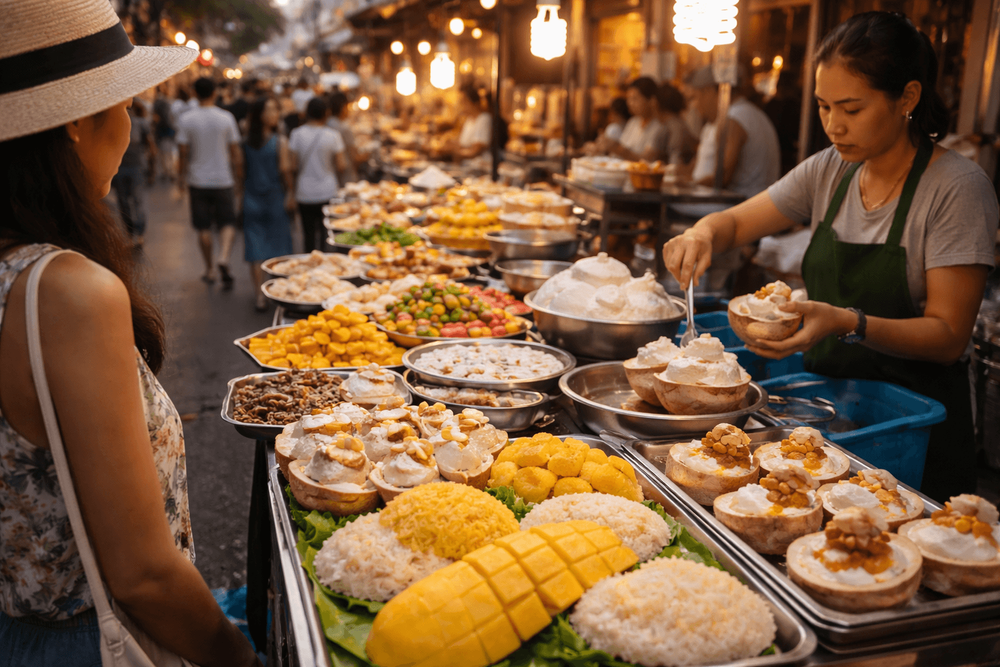
- Coconut ice cream: Scooped into a coconut shell and crowned with sticky rice, sweet corn, roasted peanuts, and a splash of coconut milk. 30–60 baht; heaven in a half-shell.
Sticky Rice Royalty
- Mango sticky rice (khao niew mamuang): Ripe mango, salted-sweet coconut sticky rice, sesame or mung beans for crunch. In season (Mar–Jun), fruit is peak; off-season, it can still hit. Expect 60–120 baht near Khao San, 80–150 baht in malls. For obsessives, we keep a short list of Old Town must-stops here: Best Mango Sticky Rice in Bangkok: Khao San Road, Old Town, and Dessert Stalls Worth the Detour.
Fruit, Spices, and the Sweet-Heat Curveball
- Green mango and guava with prik klua (chili-salt-sugar). Sweet, salty, spicy—snacking as Bangkok intended. Ask “mai phet?” if you want it mild; “phet nit noi” for a little heat. 20–40 baht a bag.
- Durian sticky rice (khao niew durian): Brash, buttery, and polarizing. If you smell sweet rot and caramel in the air, follow it.
Modern Fusion and Instagram Candy
- Charcoal bubble waffles with Thai tea soft-serve, pandan crème brûlée torched on the curb, and mochi-filled anything. Prices run 70–150 baht; not always better than the classics, but often fun.
Where to Find Bangkok Street Desserts (and When to Go)
Desserts pop up wherever Bangkok gets hungry, which is everywhere. These neighborhoods make it easy for first-timers to graze.
Khao San Road, Soi Rambuttri, and Phra Athit
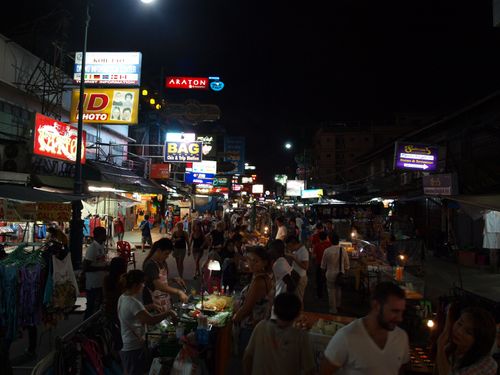
- Vibe: Backpacker carnival meets Old Town charm. Roti stands thwap dough till 2 AM, banana-Nutella scent colliding with reggae bass from a Khao San bar. On Soi Rambuttri, khanom krok bubbles beside lantern-lit bars; Phra Athit Road is calmer, with indie cafés and riverside breezes.
- What to try: Late-night roti, coconut ice cream carts, seasonal mango sticky rice. For a deeper dive (and sugar map), check our local sweet-tooth roundups: Bangkok Street Food for Dessert Lovers: Thai Sweets, Snacks, and Late-Night Treats Near Khao San Road and Best Dessert Cafes Near Khao San Road for Pancakes, Cakes, and Thai Sweets.
- When: 7 PM–late for the full neon-and-roti spectacle; mornings for pa thong ko if you’re up.
Chinatown (Yaowarat Road)
- Vibe: Bangkok’s night-stall Olympics. Flames, cleavers, gold shop signs, and sidewalks that forget they’re sidewalks. The city’s densest dessert hunt.
- What to try: Khanom buang stands, chestnut roasting carts, durian vendors, Chinese herbal jellies (chao kuai), sesame balls, and towering shaved ice bowls.
- Getting there: MRT Blue Line to Wat Mangkon, then follow the crowd to Yaowarat.
- When: 6 PM–midnight, Fri–Sun the most electric.
Wang Lang Market (Thonburi side)
- Vibe: Student-and-hospital crowd near Siriraj; narrow alleys stuffed with cheap eats and traditional desserts.
- What to try: Khanom tuay by the stack, lod chong in enamel bowls, and old-school Thai puddings you won’t see on Khao San.
- Getting there: Chao Phraya Express boat to Wang Lang (Prannok) Pier; come hungry and early. Best 10 AM–2 PM.
Phetchaburi Soi 5 and Pratunam
- Vibe: Office workers and aunties with laser-focused snack agendas.
- What to try: Evening dessert carts with mango sticky rice, khanom krok pans humming, milk tea stalls.
- Getting there: BTS to Chit Lom or Phaya Thai, then a short taxi or walk.
- When: 6 PM–10 PM weekdays.
Chatuchak and Or Tor Kor
- Vibe: Weekend market chaos versus produce-hall precision.
- What to try: At Chatuchak, coconut ice cream in shells and Thai tea gelato. At Or Tor Kor (across the khlong), premium fruit—mangoes so perfect you’ll think Photoshop did it.
- Getting there: BTS Mo Chit/MRT Chatuchak Park for Chatuchak; walk to Or Tor Kor via MRT Kamphaeng Phet.
- When: Chatuchak only on weekends; Or Tor Kor daily till late afternoon.
Night Markets (Talat Rot Fai Srinakarin, Ratchada’s reincarnations)
- Vibe: Retro signs, sneaker stalls, and dessert hawkers with ring lights.
- What to try: Waffles, bingsu-style mountains, and Thai tea custards. Pricier than backstreets but fun with friends.
If you’re more of a “show me the stall types” person, we break down carts, skewers, and grab-and-go setups here: Bangkok Street Food by Food Stall Type: Cart Classics, Skewers, Soups, and Grab-and-Go Meals.
How to Spot the Good Stuff: Freshness, Quality, and Street Smarts
The best stalls don’t shout—they sizzle. Here’s how we pick winners.
- Crowds over influencers: A steady line of office workers, students, or aunties beats a selfie queue every time. Turnover means fresher batter, hotter pans, and safer ice.
- Heat and texture cues: Khanom krok should be crisp at the rim and wobble in the middle. Khanom buang shells must snap clean when broken. Roti dough gets paper-thin and blistered—if it sits limp, skip it.
- Coconut milk clues: Fresh coconut milk smells grassy-sweet, not sour. If the tub looks curdled, walk away. Salty-sweet balance is a sign of care.
- Ice matters: Look for sealed bag ice or blocks cut with clean tools. If the ice bin looks like a rain gutter, maybe don’t.
- Fruit ripeness: Mango should be fragrant and give lightly; vendors will usually let you sniff or taste. Durian pros pry a pod to show custard you can spoon, not gluey strings.
- Clean hands, clean tools: Tongs for toppings, separate knives for durian, and a vendor who wipes the board often. Bangkok isn’t sterile, but you can read effort.
Know Before You Go: Ordering, Hygiene, and Payment
Bangkok rewards the bold, but a few simple rules make dessert runs easier—and cheaper.
- Prices you can trust:
- Khanom krok: 20–40 baht per set
- Khanom buang: 10–20 baht each
- Roti: 30–60 baht (add 10–20 for banana/cheese)
- Mango sticky rice: 60–120 baht street, 80–150 baht market/mall
- Icy bowls (lod chong, tub tim krob, nam kaeng sai): 30–60 baht
- Coconut ice cream: 30–60 baht
- Pa thong ko: 5–10 baht each, or 20–30 for a bag
- Cash rules: Most carts are cash-only. Keep small bills (20s, 50s) and coins. Some accept PromptPay QR—handy if you’ve got Thai banking.
- Language hacks: “Mai wan maak” means not too sweet; “wan nit noi” is a little sweet. For chili-salt fruit, “mai phet” avoids the fire.
- Heat strategy: Eat fried or griddled treats immediately; they fade fast. Icy desserts are best right there on a plastic stool. If you must walk, get the coconut milk in a separate bag.
- Allergens and diets: Many Thai sweets use coconut milk (dairy-free), but egg threads (foi thong), condensed milk, and peanuts appear often. Ask “mi nuea sat/khai/thuua mai?” (meat/egg/peanut?) or point and mime—works wonders.
- Hygiene baseline: Busy stalls, hot pans, and fresh-cooked wins over pre-packed. For shaved ice, pick stainless-steel shavers and covered toppings.
- Taxis and tuk-tuks: If a driver insists a market is “closed,” it’s the oldest Bangkok scam. Smile, hop out, and try a Grab or the nearest MRT/BTS.
Getting There: Your Sweet Tooth Transport Plan
- Chao Phraya Express boat: To chase Khao San, hop off at Phra Arthit Pier (N13) and wander Soi Rambuttri and Khao San Road. For Wang Lang Market, ride to Wang Lang (Prannok) Pier.
- MRT and BTS: For Chinatown, MRT Wat Mangkon. For Pratunam/Phetchaburi Soi 5, BTS Chit Lom or Phaya Thai. For Chatuchak/Or Tor Kor, BTS Mo Chit or MRT Kamphaeng Phet.
- Walk the last soi: The best carts often sit one side-street off the main drag—listen for the sizzle.
If you need a sugar-and-AC intermission around Khao San, we’ve mapped a few comfy sit-down spots here: Best Dessert Cafes on Khao San Road for Cake, Smoothies, and Sweet Treats.
Seasonal and Must-Try Dessert Highlights
Bangkok never really cools off, but dessert seasons swing with the fruit and festivals.
- March–June: Mango season. Mango sticky rice goes from good to transcendent. Look for Nam Dok Mai and Ok Rong varieties—silky and perfumed.
- April (Songkran): Heat peak. Icy lod chong and tub tim krob become survival tools. Vendors ramp up shaved ice stations; go wild with toppings.
- May–August: Durian mania. Try khao niew durian if you’re brave; ask vendors to pick a “mai aow mun”—not too mushy—pod for you.
- September–November: Mooncakes in Chinatown; sesame and lotus paste fill the windows. Prices are higher (120–250 baht), but sharing one with tea on Phra Athit is a vibe.
- December–February: Cooler evenings, perfect for wandering markets without melting. Warm coconut custards and freshly roasted chestnuts taste extra cozy.
- Festivals and pop-ups: Night markets rotate vendors—watch social feeds, but your nose is the only algorithm you need.
Must-try short list if you’re on a 24-hour sugar sprint:
- Khanom krok from a cast-iron pan on Soi Rambuttri
- Mango sticky rice anywhere the mango smells like sunshine
- Tub tim krob or lod chong on ice after a Chinatown lap
- Roti banana-egg with extra condensed milk at 1 AM on Khao San
- Pa thong ko with pandan custard before a riverboat ride
The Downsides (and Why We Still Go)
- Heat makes everything sweat—including you. We duck into 7-Eleven for the blast of AC between stalls.
- Crowds crush: Chinatown sidewalks become a slow-moving buffet. We roll with it, eyes on the prize.
- Prices creep up in tourist zones. If someone quotes 200 baht for a basic roti, that’s a hard no. Bangkok rewards polite pushback and smiles.
- Not every Insta-famous snack tastes great. We’d take a 20-baht khanom buang over a 150-baht rainbow chimera nine nights out of ten.
Where to Sleep Between Sugar Runs
We like to stay walking distance to Soi Rambuttri and Phra Athit so late-night roti is a life choice, not a taxi ride. A simple guesthouse with a pool is gold after a Chinatown sprint. If you’re mixing Old Town temples by day (Wat Pho, Golden Mount) with desserts by night, the Khao San/Phra Athit zone is unbeatable for convenience and budget. Closer to the BTS, Pratunam puts you near Phetchaburi Soi 5 and a quick train to anywhere.
One Perfect Sweet Night: Our Move
We’d start at sunset on Phra Athit, grab pa thong ko with sangkhaya, then drift to Soi Rambuttri for khanom krok eaten standing, fingers hot. From there, tuk-tuk to Yaowarat and chase tub tim krob with a crackly khanom buang or two. If the durian smell calls, we answer at least once. Back in the Old Town breeze, coconut ice cream from a cart is the nightcap. Bangkok street desserts don’t just end a meal—they become the whole evening. See you under the next neon, spoons ready.
Related Hotels & Places
Khao San Road
Attractions
Bangkok’s backpacker carnival: curbside bars, live bands and DJs from 3pm–2am (midnight Sun). Street eats are cheap — pad thai 70–100 THB, mango sticky rice 60–100 THB. Come for wild people-watching; duck into Rambuttri for a calmer beer.
Yaowarat Chinatown Heritage Center
Attractions
Inside Wat Traimit by Chinatown Gate, this tidy museum charts Yaowarat’s Chinese roots with bilingual displays, period photos and short films. Open Tue–Sun 8:30am–4:30pm; closed Mon. Pair it with the Golden Buddha upstairs.
More Khao San Road Guides
- Best Thai Street Snacks to Try in Bangkok: Sweet, Crispy, and Grab-and-Go Favorites
- Best Thai Street Food Dishes to Try in Bangkok: A First-Timer’s Guide to Noodles, Rice Plates, and Skewers
- Bangkok Street Food for First-Time Visitors: What to Order, How to Eat, and Where to Go Beyond Khao San Road
- Bangkok Street Food for First-Time Visitors: What to Order, How to Spot the Best Stalls, and What a Fair Price Looks Like