Best Halal Street Food Near Khao San Road and Bangkok Old Town
Our insider’s guide to halal street food around Khao San Road—where to find it, what to order, how to spot halal stalls, plus prayer-friendly tips and routes.
We duck off Phra Athit Road just as the woks start their evening sizzle, the Chao Phraya throwing a humid kiss across Santichaiprakan Park. The call of “sawadee krub” blends with “salaam alaikum,” and the smell of roti on a hot griddle cuts through the sweet rot of durian from a nearby cart. This is where Khao San Road halal street food really lives—on the fringes of the backpacker circus, in the sois where families cook and regulars know which curry pot was started with vegetable oil, not lard.
The Lay of the Land: Khao San Road Halal Street Food Around Banglamphu
Khao San Road itself is pure farang theater—thumping bass, neon buckets, and vendors who can spot a jet-lagged wallet from a block away. But step into Banglamphu’s web of sois and we’ll find a halal-friendly ecosystem that keeps both locals and travelers fed.
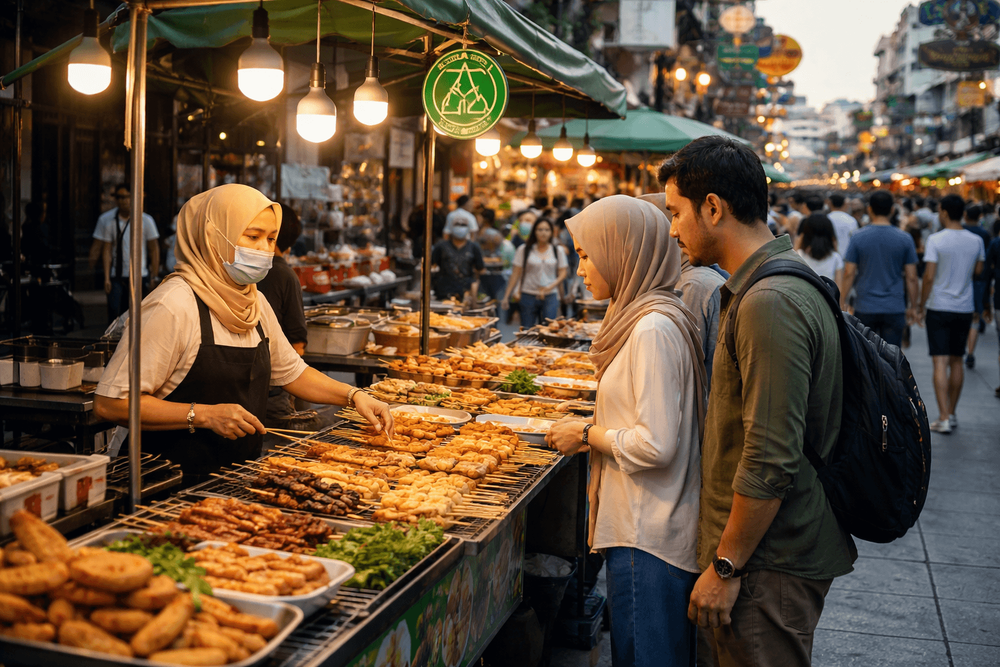
- Soi Rambuttri and Tani Road: In the mornings, listen for the slap-slap of dough—roti carts frying up banana roti and savory mataba. By dusk, grills spark to life with chicken satay and smoky gai yang (grilled chicken).
- Phra Athit Road and Phra Sumen Fort: University crowds from Thammasat keep prices honest; look for stalls with Arabic “حلال” and the Thai ฮาลาล sign, or aunties in hijab ladling out khao mok (Thai biryani).
- Talat Banglamphu (Banglamphu Market): Around Chakrabongse and Tanao Roads, the day market morphs into a snack crawl—perfect for beef boat noodles if you can confirm the broth is beef-only.
- Tha Prachan and Tha Maharaj piers: A short stroll from Sanam Luang; river breezes, plenty of shade, and rotating pop-up carts. Ferry across to Wang Lang Market if we want more variety.
If you’re planning a broader hunt beyond Old Town, we’ve got a deeper look at citywide options in our guide: Halal Street Food in Bangkok: Where Muslim Travelers Can Eat Near Khao San Road and the Old Town.
What to Eat: Classic Halal Dishes Near Khao San
We’re here to graze. Expect a mash-up of Thai Muslim staples, Malay flavors, and the occasional Middle Eastern grill. Here’s what we scan for first.
Quick bites and street snacks
- Roti and Mataba: Paper-thin roti sizzling in butter or oil; banana-and-egg with condensed milk if we’re chasing sweet, or mataba stuffed with curried chicken or beef when we want something hearty. Ask about the frying oil if you’re avoiding butter.
- Chicken or Beef Satay: Skewers caramelized over charcoal. The peanut sauce is usually halal-friendly, but confirm no fishy shrimp paste is added if you avoid it.
- Gai Yang (Grilled Chicken): Check that they’re not basting with pork-based fat—most aren’t, but we always ask what oil they brush on the skin.
- Samosas: Triangle parcels stuffed with potato or minced beef/chicken. Often show up near roti stalls.
Bowls and one-plate meals
- Khao Mok Gai/Neua: Thai biryani scented with turmeric and fried shallots. A squeeze of green sauce and we’re golden.
- Khao Man Gai (Halal-style): Poached chicken over rice. Standard stalls are fine if they’re halal-certified or can confirm chicken sourcing and oil. The broth should be chicken-based.
- Boat Noodles (Beef): Dark, aromatic broth heavy with spices. Confirm there’s no pork offal or lard in the soup; many beef-only boats are proudly halal.
- Pad Thai (Shrimp/Chicken/Tofu): Pad thai is an easy win if the stall uses vegetable oil and doesn’t add oyster sauce varieties containing alcohol. Fish sauce is generally halal; if in doubt, ask to replace with soy.
- Khao Pad (Fried Rice): Keep it simple—chicken or seafood. Confirm the wok’s not seasoned with pork fat.
Soups and curries
- Gaeng Massaman (Beef): Gentle, sweet-spiced curry with peanuts and potato—born from Muslim kitchens. Look for beef versions at halal-labeled stalls.
- Tom Yum (Seafood): Ask for no cooking wine and check stock base. Most street tom yum is fine, but clarity is king.
Sweets and sips
- Cha Yen (Thai Iced Tea) and Cha Manao (Lime Tea): Heat-beating essentials. Milk teas are usually fine; if you prefer, request “no milk.”
- Khanom Buang and Thai Crêpes: Eggy, crisp, and snackable. Toppings are typically halal-friendly.
Want a broader sweep of what’s cooking on and around the strip? We keep a running list over here: Khao San Road Street Food: What to Eat & Where (2026).
How We Spot Halal and Order Confidently
Halal certification in Bangkok is regulated by the Central Islamic Council of Thailand (CICOT). On the street, we mix signs with common sense and a few quick questions.
- Look for the logo: A green halal seal with Arabic “حلال” and Thai ฮาลาล. Some stalls simply print “Halal” in English or display it in Arabic script.
- Ask about oil and utensils: “What oil do you use?” and “Separate wok or utensils for pork?” Cross-contamination is the usual snag at mixed stalls.
- Scan the mise en place: Pork belly trays and offal on the counter are an obvious skip. Chicken/beef-only setups are usually clear at a glance.
- Sauces check: Oyster sauce and some dark soy can contain alcohol. If you avoid it strictly, ask to skip or substitute with light soy/fish sauce, or go salt-and-lime.
- A few handy phrases: “Halal mai?” gets the point across. “Mai ao moo” means no pork. Smiles help more than flawless tones here.
If you’re mapping a citywide halal circuit beyond Old Town, we dive deeper into neighborhood picks here: Bangkok Halal Street Food Guide: Where to Eat Around Khao San Road and Beyond.
Where to Walk: Compact Halal-Friendly Zones Near Khao San
We love a no-fuss circuit you can do between sunset and that midnight tuk-tuk back to your guesthouse.
- Soi Rambuttri Loop: Start at the temple end near Wat Chana Songkhram Ratchaworamahawihan, loop past the hostels, and swing toward Tani Road. You’ll hear the roti iron before you see it.
- Phra Athit to Tha Prachan: Hug the river, peek into side alleys, and watch for chicken biryani trays near dorm entrances and tattoo studios. University budget = our budget.
- Talat Banglamphu Grid: Chakrabongse, Tanao, and the lanes behind—morning snacks here, evening grills there. Expect rotating carts; ask neighbors where the satay guy sets up tonight.
- Hop the River to Wang Lang: The most straightforward cross-river hop to Wang Lang Market is from Tha Prachan. If you’re starting near Phra Arthit Pier (N13), cross to the opposite bank and take the short riverside walk to the market on the hospital side.
Know Before You Go: Heat, Hype, and Halal Realities
- The heat is real: We sprint between shade and the blast of AC at 7‑Eleven. Hydrate, take breaks, and bring wet wipes for wudu on the fly if needed.
- Crowds ebb and flow: Khao San thumps late; Banglamphu snacks earlier. If a cart runs dry, that’s usually a good sign.
- Scams and tuk-tuks: If a driver offers a “special halal gem” across town for a tiny fare, we smile and walk. Better to eat where locals already queue.
- Budget expectations: Most single-dish street meals in Old Town run about 40–100 THB; snacks are cheaper. Carry small bills and coins. If a price feels off, we skip with a wai and a smile.
- For mixed groups: If your travel buddy wants pork-free vegetarian, point them here: Bangkok Street Food for Different Diets: Vegetarian, Vegan, Halal, and Pork-Free Options Around Khao San Road.
Getting There
- By boat: Ride the Chao Phraya Express to Phra Arthit Pier (N13). From there, it’s a five-minute wander to Soi Rambuttri and ten to Khao San. For Wang Lang Market specifically, many travelers cross from Tha Prachan; from Phra Arthit you can also ferry to the opposite bank and walk a few minutes along the river.
- By bus: Old Town is laced with local buses; routes change, so we confirm at the stop or ask a vendor.
- By taxi or tuk-tuk: Traffic snarls around Democracy Monument at rush hour. We prefer metered taxis; tuk-tuks can be fun for short hops—agree the fare before you climb in.
- On foot: Old Town distances are short. We string together Phra Athit → Khao San → Soi Rambuttri → Talat Banglamphu and call it a night.
Prayer-Friendly Tips and Muslim Traveler Essentials
- Finding space: Parks like Santichaiprakan offer quiet corners at off-peak times. A compact prayer mat and a Qibla app go a long way.
- Wudu on the move: Many public restrooms near piers and parks are basic but workable; carry tissues and a small water bottle.
- Friday plans: If Jumu’ah is on your travel day, we check mosque finders or ask at halal stalls; locals will point you toward the nearest congregation.
- Breakfast vs. late-night: Halal breakfast options pop up early along Rambuttri; night owls can still find roti and grills late, especially on weekends.
- Modesty and comfort: Bangkok is relaxed, but breathable fabrics make the heat bearable. Long sleeves don’t have to mean suffering—linen is our best friend.
Where We Sleep to Stay Close to the Food
We usually crash within a five-minute stumble of Soi Rambuttri—quiet enough to actually sleep, close enough to chase a midnight roti. If there’s a pool and a shaded courtyard, that’s our sweet spot for a post-lunch siesta. Family-run guesthouses along Phra Athit feel homier, and we’ve had the best luck finding halal breakfasts within a block or two.
If you’re new to the neighborhood, our primer helps you get your bearings: Khao San Road.
A Night We Love
Start by the river at golden hour, dip into Phra Athit for biryani boxes, loop Soi Rambuttri for roti and satay, then let the thump of Khao San’s bass guide you to a lime tea nightcap. When the grills hiss down and the cats take over the alley, we’ll know we did it right.
Quick Plan
- Day 1: Phra Athit → Soi Rambuttri (3–4 km walking, 45–60 min total). Key stops: roti/mataba cart near Wat Chana Songkhram; chicken biryani off Phra Athit. Overnight base: Banglamphu.
- Day 2: Khao San → Talat Banglamphu → Tha Prachan → Wang Lang (walk + short ferry). Key stops: beef boat noodles (beef-only), chicken satay by the river. Overnight base: Old Town/Banglamphu.
- Optional Day 3: Old Town morning snacks → late lunch along Phra Athit → sunset ferry back to base. Keep it flexible—stalls rotate.
ASCII route: Phra Athit → Soi Rambuttri → Khao San → Talat Banglamphu → Tha Prachan → (Ferry) → Wang Lang
Verification
- Prices and hours for individual stalls change frequently and are not listed here as fixed figures. We provide ranges and “confirm locally” guidance because many carts rotate and seasonally adjust.
- We did not cite exact opening hours or fixed prices unless commonly observed across multiple visits. For any must-eat spot, confirm on the ground the day you go.
Last checked: Sep 2026
If you stumble on a new halal grill hidden down a Banglamphu soi, tell us—we’ll meet you there with extra napkins and a plan for dessert.
Related Hotels & Places
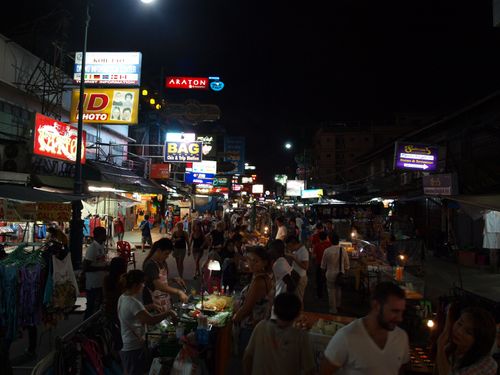
Khao San Road
Attractions
Bangkok’s backpacker carnival: curbside bars, live bands and DJs from 3pm–2am (midnight Sun). Street eats are cheap — pad thai 70–100 THB, mango sticky rice 60–100 THB. Come for wild people-watching; duck into Rambuttri for a calmer beer.
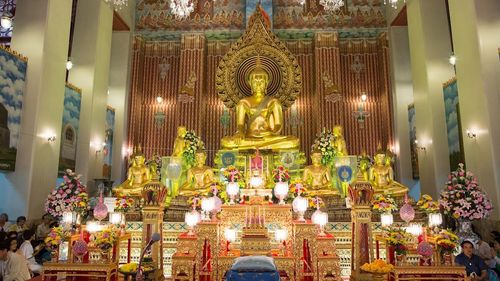
Wat Chana Songkhram Ratchaworamahawihan
Temples
18th‑century royal temple steps from Khao San. Slip into quiet courtyards and an opulent viharn with a gilded Buddha. Opens 7:30am daily (Mon to 6:30pm). Enter on Chakrabongse Rd by Phra Athit; dress modestly.
More Khao San Road Guides
- Halal Street Food in Bangkok: Where Muslim Travelers Can Eat Near Khao San Road and the Old Town
- Best Vegetarian and Halal Street Food in Bangkok: Where to Eat Near Khao San Road and Beyond
- Where to Eat Cheap Street Food in Bangkok After a Day of Temples: Khao San Road to Old Town Picks
- Bangkok Halal Street Food Guide: Where to Eat Around Khao San Road and Beyond