Bangkok to Chiang Mai by Self-Drive: Route, Costs, and Who It Suits
Turn the Bangkok–Chiang Mai haul into a road trip: routes, real costs, rental tips, and the best stops for ruins, noodles, and mountain views—without the crowds.
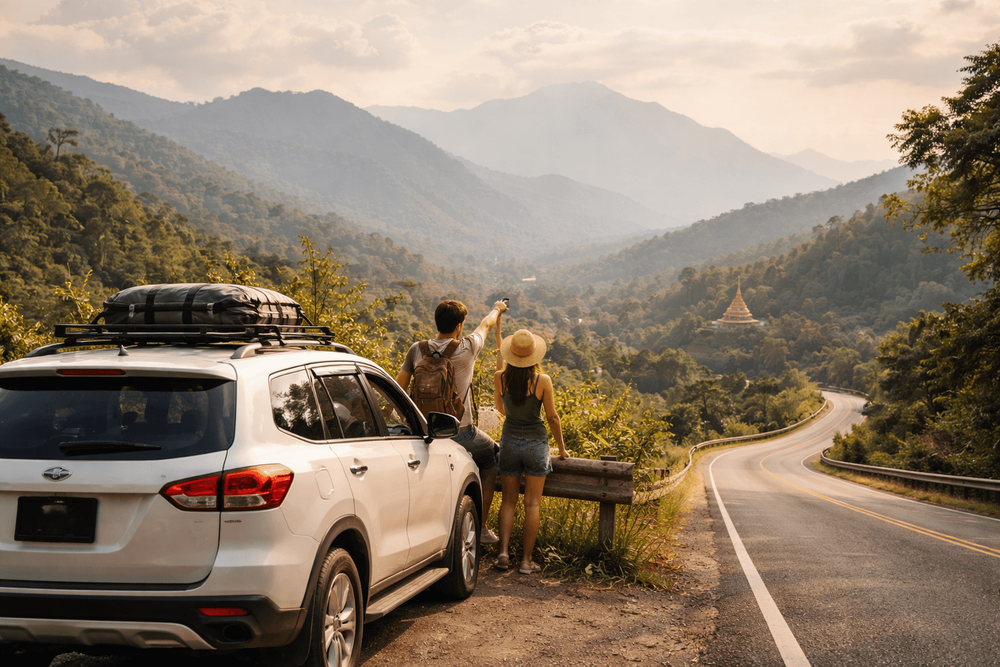
We roll out of Banglamphu just before dawn, a paper cup of gas-station coffee warming our hands, Rambuttri still yawning from last night’s sanuk. The city’s neon fades into the soft gray of Phahonyothin Road, and Bangkok’s humidity gives way to long straight asphalt and rice fields that smell like wet earth. If you’ve ever wanted to trade the airport shuffle for your own steering wheel, a Bangkok to Chiang Mai by car makes the whole northward journey feel like part of the trip—not a chore to get past, but a ribbon of highway, rest-stop snacks, and detours you’ll be talking about for years.
Bangkok to Chiang Mai Self Drive: The Big Picture
- Distance: roughly 690–720 km depending on route
- Wheel time: 8.5–10 hours without long stops; with food and photo breaks, plan 10–12 hours or split it over 1–2 nights
- Why drive: flexibility to stop for temple ruins, noodle bowls, a viewpoint over the Ping River at golden hour—and to bring half of Chatuchak Market in your trunk without baggage fees
We choose a self-drive when we want ultimate control: an early start to beat Bangkok traffic, a late lunch in Sukhothai’s old town, and a swing through Lampang’s quiet teak houses before rolling into Chiang Mai after the rush. If you’d rather someone else do the driving but still want that door-to-door ease, consider a private transfer instead; we break down costs and timing here: Bangkok to Chiang Mai by Private Car or Taxi: Cost, Travel Time, and When It Makes Sense. For a full pros/cons against trains, buses, and flights, this comparison is solid reading: Bangkok to Chiang Mai by Train, Bus, Flight, or Private Car: Which Option Is Best for Your Trip?.
The Best Routes North (And What the Roads Are Like)
Thailand drives on the left, and the main northbound highways are modern, wide, and straightforward. You’ll spend most of your time on divided four- to six-lane roads with frequent fuel stations (PTT, Bangchak, Shell) and almost comically reliable 7-Elevens for iced Thai tea and emergency ponchos.
Fastest and Simplest: AH2/32 → 1 → 11 (via Lampang)
- Bangkok to Nakhon Sawan: Take the Don Mueang Tollway/expressways to reach Highway 32 (Asia Highway, AH2). After leaving the city, there are no more tolls, just long, well-marked lanes.
- Nakhon Sawan to Lampang: Merge onto Highway 1 (Phahonyothin Road), passing Kamphaeng Phet and Tak provinces.
- Lampang to Chiang Mai: Switch to Highway 11 for the mountain stretch to Lamphun and Chiang Mai.
Why we like it: minimal navigation and steady cruising. Expect the prettiest driving between Lampang and Lamphun—gentle curves, forested slopes, occasional mist if you hit it early.
Culture-Rich Detour: 32 → 117 → 11 (via Phitsanulok and Sukhothai)
From Nakhon Sawan, take Highway 117 to Phitsanulok, then Highway 12 west to Sukhothai for a UNESCO fix. Continue north via Highway 101 to Si Satchanalai if you’re feeling it, then rejoin Highway 11 near Den Chai for Lampang and Chiang Mai.
Why we like it: perfect if you’re breaking the trip with a night or two. Sukhothai at sunset—brick chedis reflected in lotus ponds—makes the drive worth it on its own.
Quiet Backroads Variant: 1 → 106 (Thoen–Li–Lamphun)
North of Thoen, peel off Highway 1 onto Highway 106 through Li to Lamphun. It’s slower but greener, with fewer trucks and more village life. Best for those who don’t mind an extra hour and want to dodge the busier 11 near Lampang.
Road Conditions, Tolls, and Safety
- Tolls: You’ll pay 100–200 baht getting out of Bangkok if you use the elevated expressways. After that, highways 32/1/11 have no tolls.
- Surfaces: Generally smooth. Watch for construction zones around province capitals and occasional ripples at bridge joints.
- Speed limits: Observe posted signs—often 100–120 km/h on divided highways, lower near towns. Police speed cams are common.
- U-turns: Thailand loves a median U-turn. Anticipate sudden braking near U-turn slots and use your mirrors.
- Trucks and buses: Keep space. They can drift on descents and take their time overtaking.
- Rain: In monsoon months (roughly May–Oct), downpours can turn the world into a gray sheet in seconds. Hazard lights are commonly used here to signal reduced visibility. Slow down and keep a long gap.
- Night driving: Not our first choice. Stray dogs, dimly lit stretches, and fatigue are a rough combo. If you must, take more breaks and watch for unlit scooters.
For a deeper cost breakdown of fuel, drop fees, and when driving beats flying, we’ve run the numbers here: Bangkok to Chiang Mai by Car: Driving, Fuel, Stops, and When It Makes Sense.
Self-Drive Requirements and Rental Tips
Licenses and Documents
- License: Bring your home-country driver’s license plus an International Driving Permit (IDP). Many rental desks will hand over keys with just your license, but police at checkpoints may ask for an IDP. It’s a cheap headache-avoidance.
- Passport: Keep the original with you or an accessible copy and the photo page on your phone.
- Rental paperwork: Contract, insurance summary, and the car’s registration copy (the agency provides this). Keep them in the glovebox.
Insurance You Actually Want
Thailand’s compulsory insurance (Por Ror Bor) only covers minimal third-party injury. For a Bangkok to Chiang Mai self drive, make sure you have:
- CDW/LDW with a manageable excess (we aim for 5,000–15,000 baht excess)
- Third-party liability at least in the millions of baht
- Glass, tire, and underbody coverage if available—construction debris and potholes happen
Declining insurance to save a few hundred baht a day is false economy if you wind up with a scratched bumper in Lampang’s market parking.
Picking the Right Car
- Size: A compact sedan or hatchback is perfect for two to three people and luggage. Families will appreciate a small SUV for ground clearance.
- Transmission: Automatics dominate. If you want a manual, request well in advance.
- Fuel type: E20 (gasohol) is widely available and cheaper than pure 95. Diesel is everywhere if you’re in a pickup.
- Navigation: Your phone plus a decent windshield mount wins. Pre-download maps and Thai language packs if you’re going offline.
Costs You’ll Actually Face
- Daily rental: roughly 900–1,500 baht for an economy automatic; 1,500–2,500 baht for a small SUV, depending on season and pickup location
- One-way drop fee (Bangkok pickup, Chiang Mai drop): 2,000–4,500 baht
- Fuel: 700 km at 12–15 km/L equals 47–58 liters. At typical rates, budget about 1,800–2,800 baht
- Tolls out of Bangkok: 100–200 baht
- Extras: Child seats 100–200 baht/day; additional driver 100–200 baht/day
If you’re still deciding whether to rent or not, our road-trip angle on rentals and routing has more examples: Bangkok to Chiang Mai by Rental Car: Road Trip Route, Driving Time, and Stopover Ideas.
Where to Stop: Food, Temples, and Views Worth the Detour
We drive north not just to get there, but to graze—on ruins, river views, and bowls of noodles.
Early Hours: Ayutthaya for Ruins and Coffee
Slip off Highway 32 into Ayutthaya for a stretch and a caffeine fix. The island old town is ringed by khlongs (canals) and dotted with brick chedis. It’s easy to park near the historical park and wander for an hour. Grab a roti sai mai (flossy sugar wrapped in warm roti) for the glovebox.
Nakhon Sawan: Where Rivers Meet
Pak Nam Pho is where the Ping and Nan rivers become the Chao Phraya. If the timing hits, drive up to Wat Kiriwong’s hilltop for a panoramic sweep of city and river. In town, look for grilled river fish with nam jim seafood that hums with lime and chili.
Kamphaeng Phet and Sukhothai: Sister Cities of Stone
Kamphaeng Phet Historical Park is like Sukhothai’s quieter, moodier cousin—ruins in a teak forest with birdsong and the smell of hot laterite brick after rain. If you’ve got a full day, push on to Sukhothai Historical Park. Sunset here is magic: the lotus ponds blush, the air cools, and you can hear bicycle bells and cicadas in call-and-response.
Food tip: Hunt down Sukhothai noodles—a porky, peanuty broth with thin rice noodles and a squeeze of lime. Expect 50–70 baht a bowl in local shops.
Phitsanulok: Buddha and Boat Noodles
Wat Phra Si Rattana Mahathat (Wat Yai) houses one of Thailand’s most revered Buddha images. The market along the river does a mean kuay tiew ruea (boat noodles). The broth is inky, star anise-tinged, and exactly what you need after hours of steady throttle.
Lampang: Quiet Lanna Charms
Trade highway roar for horse carriages and old teak shophouses. If you swing by Wat Phra That Lampang Luang, the viharn woodwork and green tiles feel like time travel. Pick up a “chicken bowl” ceramic as a trunk-friendly souvenir.
Between Lampang and Lamphun: Green Miles and Coffee Stops
Highway 11 unfurls through rolling hills, with mom-and-pop coffee shacks perched at scenic pullouts. This is where we roll down the windows and let the air pine up our car. Doi Khun Tan National Park sits off this stretch if your legs itch for a short hike; even a half-hour wander under the canopy resets your brain after the straightaways.
Rest Stops Worth a Break
- PTT stations: clean toilets (often free, sometimes a 2–5 baht tray for donations), Amazon Cafe for a 45–70 baht iced americano, food courts with rice-and-curry plates around 50–80 baht
- 7-Eleven: grilled ham-and-cheese panini, yakult shots, and a blast of AC that feels like mercy from the gods
- Weekend markets: If your timing is serendipitous, provincial night markets deliver skewers, fried chicken, and sticky rice for pocket change
Driving Tips: Timing, Weather, and Rolling Into Chiang Mai
When to Leave (and When to Avoid)
- Early start: Wheels turning by 5:00–6:00 a.m. gets you past Don Mueang and Rangsit before rush hour, and buys you cooler temps.
- Holidays: Songkran (mid-April) and New Year see the “Seven Dangerous Days” spike in accidents. If you’re driving then, double down on breaks and patience.
- Rainy season: Expect squalls that vanish as quickly as they hit. Keep a microfiber towel handy for fogged windows and a dry shirt in the backseat.
Comfort and Sanity
- Two-hour rule: Swap drivers or stop every 2–3 hours. Stretch, hydrate, let the road noise fade.
- Snacks: Stock mango, sticky rice, and a bag of Tao Kae Noi seaweed. We don’t make the rules.
- Playlists and podcasts: Download ahead. Between provinces, reception can get patchy.
Police Checkpoints and Etiquette
- Checkpoints are common and typically routine. Smile, “sawadee khrab/ka,” hand over license/IDP, and you’re usually waved along.
- No drink-driving, full stop. Random breath tests happen.
- Seatbelts: Front seats are mandatory; rear belts are a good idea regardless of enforcement.
Parking and Arrival in Chiang Mai
As you roll in on the Superhighway (Hwy 11), choose your angle of attack:
- Old City: Narrow sois, one-way streets, and red-white curbs (no parking). Look for temple lots with donation boxes, small paid lots, or street parking on non-marked curbs where permitted.
- Nimmanhaemin and Santitham: Easier street parking and boutique stays with on-site spaces. Great food and coffee within walking distance.
- Riverside and Night Bazaar: Hotels often include gated parking; traffic is busier at market hours.
Fill up before returning a car at Chiang Mai Airport—fuel stations cluster along the Superhighway and on the approach via Canal Road (Hwy 121).
If you’re doing a loop and keeping the car, plan for day trips to Doi Inthanon, Mae Rim, or the Mae Sa valley. Roads are windy but well-kept; just keep an eye out for songthaews pulling over without much warning.
What to Budget (Realistically)
- Car rental (2 days to allow a stopover): 1,800–5,000 baht depending on class and insurance
- One-way drop fee (if applicable): 2,000–4,500 baht
- Fuel: 1,800–2,800 baht for a compact sedan; more for SUVs
- Tolls leaving Bangkok: 100–200 baht
- Food and coffee en route: 300–600 baht per person for generous grazing
- Parking in Chiang Mai: many spots free; temple lots and private car parks 20–50 baht
Prices swing with season, festivals, and car class, but these ranges will keep you honest.
Know Before You Go
- SIM and data: A tourist SIM makes life easier for live traffic reroutes and calling a roadside mechanic if needed.
- Dashcam: Not essential, but handy if you have one.
- Tyres and spares: At pickup, check tire tread, the spare, and that the jack is present. Snap photos of existing scratches.
- Fuel types: Green nozzle is gasohol; yellow is diesel. Double-check the sticker on your fuel door.
- Paying for tolls: Cash lanes at Bangkok expressways are easy. Some rentals have toll tags; if so, ask how charges are settled.
- Breakdown: Pull off safely, put the hazard triangle behind the car, and call your rental’s roadside number. Locals are surprisingly quick to help a farang with a clueless face and open hood.
Sample Overnight Itineraries
One-Night Classic (History + Hills)
- Day 1: Bangkok → Ayutthaya coffee stop → Sukhothai for ruins and sunset → sleep in Sukhothai old town
- Day 2: Sukhothai → Lampang lunch → Chiang Mai by mid-afternoon
Slow-and-Scenic (Backroads + Temples)
- Day 1: Bangkok → Kamphaeng Phet park wander → Phitsanulok river dinner → sleep riverside
- Day 2: Phitsanulok → backroads via Den Chai → Lamphun coffee → Chiang Mai
Where to sleep en route: you’ll find clean, parking-friendly hotels and guesthouses near every provincial capital. We usually pick places with on-site parking, breakfast included, and a quiet soi—nothing kills road-trip bliss like a karaoke truck at 2 a.m.
Who Self-Drive Suits (and Who Should Skip It)
Say yes if you:
- Like setting your own pace and detouring on a whim
- Don’t mind 8–10 hours behind the wheel, split with breaks
- Want to carry bulky gear—golf clubs, camera rigs, half of Chatuchak’s ceramics stall
Maybe not if you:
- Prefer to nap, scroll, and arrive without thinking about U-turn slots or fuel gauges
- Are traveling during peak holiday chaos and don’t handle stop-start traffic well
- Have only one day—fly or let someone else drive you
If you bail on driving after all that, no judgment—here’s a good overview of alternatives: Bangkok to Chiang Mai: The Best Ways to Travel.
Final Kilometer

By the time the moat of Chiang Mai appears on your left and the Old City’s crumbling gates warm up in the afternoon sun, the car smells like kaffir lime hand spray, coffee, and a little victory. That’s the charm of a Bangkok to Chiang Mai self drive: you don’t just arrive—you collect a reel of flavors, roadside shrines, and small-town smiles along the way. Grab a northern sausage, find a guesthouse with easy parking, and we’ll toast the drive with something cold on Phra Sing’s backstreets before plotting tomorrow’s mountain roads.
Related Hotels & Places
Recommended Products
More Khao San Road Guides
- Bangkok to Chiang Mai by Self-Drive: Route, Stops, Drive Time, and Road Trip Planning
- Bangkok to Chiang Mai by Self-Drive: Driving Route, Stops, and Road Trip Planning
- Bangkok to Chiang Mai by Private Transfer or Car: When a Road Trip Makes Sense
- Bangkok to Chiang Mai by Rental Car: Road Trip Route, Driving Time, and Stopover Ideas