
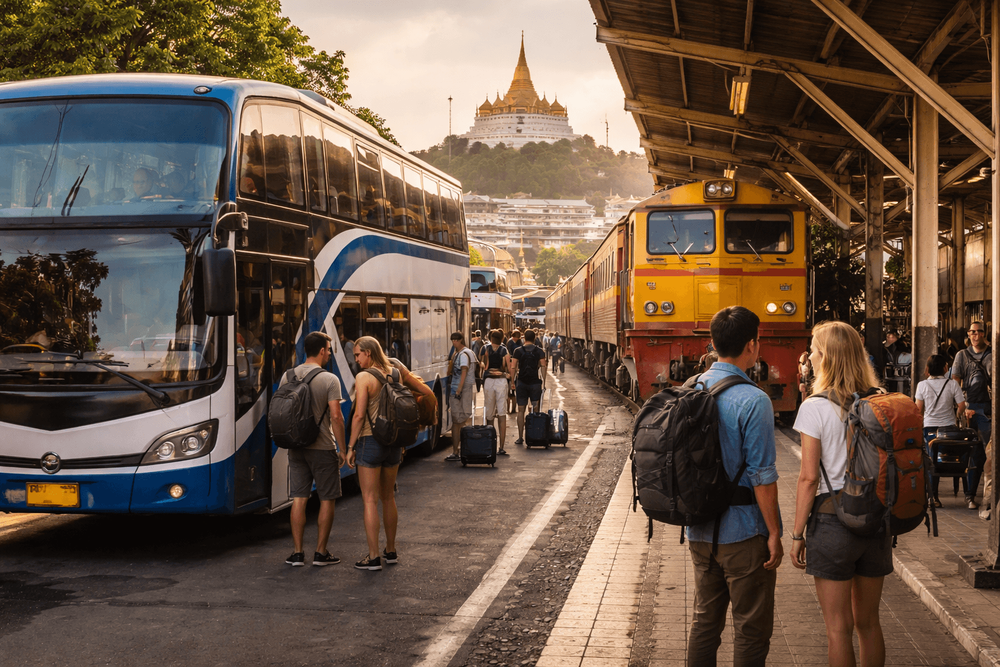
Bangkok to Chiang Mai by Bus vs Train: Which Route Is Better for Time, Sleep, and Budget?
Bus or train from Bangkok to Chiang Mai? We weigh time, sleep, comfort, and cost—plus stations, booking tips, and who each option suits best.
We step out of the blast-chilled MRT at บริษัท กระบี่ เดอะ สตีล จำกัด and the station yawns open—bright, cavernous, and humming with Northern Line energy. On the other side of town, Mo Chit Bus Terminal clatters with snack carts, luggage wheels, and that late-night chorus of farang questions and Thai answers. Bangkok to Chiang Mai bus vs train isn’t just a question of wheels or rails—it’s about how you like to spend a long night, what you value most (time, sleep, or baht), and how much sanuk you want baked into the ride.
Quick Plan
- Day 1: Bangkok → Chiang Mai (~700 km)
- By train: 10–14 hours depending on service; scenic in daylight, better sleep in sleepers
- By bus: 9–11 hours depending on traffic/operator; faster on paper, variable sleep
- Key “stops” (train): Ayutthaya rice plains, Lampang hills, Khun Tan Tunnel views by day
- Overnight base: Old City/Tha Phae or Nimmanhaemin once in Chiang Mai
ASCII route: Bangkok → Ayutthaya → Lopburi → Nakhon Sawan → Phitsanulok → Lampang → Lamphun → Chiang Mai
Fares and Fees at a Glance (THB)
- Bangkok → Chiang Mai train (seat vs sleeper): Expect fares to range from the low hundreds to just over a thousand baht depending on class and season; 2nd-class AC sleepers and 1st-class cabins sit at the higher end (confirm locally)
- Bangkok → Chiang Mai bus (standard/VIP/VIP24): Expect low-hundreds up to around a thousand-plus depending on tier and date (confirm locally)
- National park/attraction fees (if adding side trips):
- Doi Inthanon: 200–300 THB for foreign adults; vehicle fee extra (confirm locally)
- Wat Phra That Doi Suthep: small entrance fee applies; cable car small fee (confirm locally)
- Last checked: Oct 2026
Bangkok to Chiang Mai bus vs train: the quick answer
- If you want real sleep: Train wins. A proper 2nd-class AC sleeper (lower berth if you can snag it) gives you horizontal rest and gentle track sway. Buses recline but you’ll still feel every brake and bump over the khlong bridges.
- If you want the fastest land option: Bus usually edges it. Many VIP buses run 9–10 hours overnight door to door. Trains are scheduled 10–14 hours depending on service and stops.
- If you want scenery and legroom: Train, especially a day train through Lampang’s green hills and the Khun Tan Tunnel. We bring snacks, watch the fields blur, and let the cha yen (iced tea) do its job.
- If you’re squeezing baht: Standard buses can be cheapest, but promo rail seats and fan-cooled 2nd class can match them. Both options have wide price ranges—think roughly low hundreds to just over a thousand baht depending on class and season (confirm locally).
The nuts and bolts: time, comfort, frequency, and price
Travel time
- Train: Roughly 10–14 hours. Special Express night trains can clock closer to 10–12 hours on paper; local and rapid services take longer. Add transfer time to/from stations.
- Bus: Roughly 9–11 hours depending on traffic, roadworks, and rest stops.
Comfort and sleep quality
- Train: 2nd-class AC sleepers convert from seats to bunks after dusk; curtains, reading lights, and that whispery clack of the rails. Lower berths are wider and more stable. 1st-class sleepers (on select trains) are private cabins with true door-closed privacy. Toilets and a dining car or trolley service keep things civilized. Light sleepers: bring earplugs and a layer—Thai AC can be Antarctic.
- Bus: VIP and “VIP24” (2+1 seating) have deep recline, leg rests, blankets, and snack boxes. Some double-deckers have a small onboard toilet. Lights and music videos sometimes run late; drivers rotate, but braking and cornering can interrupt sleep. We keep valuables on us and use a neck pillow.
Frequency and availability
- Train: Fewer daily departures than buses but reliable schedules. Night sleepers are popular and can sell out, especially around weekends and holidays (Songkran, Loy Krathong). Book ahead.
- Bus: Many departures daily from late morning through night, multiple operators. Easier to find last-minute seats outside peak holidays.
Price ranges
- Train: Seats on day services are generally the cheapest; add a sleeper surcharge for night trains. 2nd-class AC sleepers cost more than fan-cooled options; 1st-class costs the most. Expect overall fares from budget-friendly seats to pricier sleepers and cabins, spanning the low hundreds to just over a thousand baht depending on class and date. Confirm locally for exact fares.
- Bus: Standard to VIP24 tiers. Standard is cheapest, VIP adds legroom and fewer seats per row, with prices stepping up accordingly. Expect low hundreds up to around a thousand-plus depending on tier and season. Confirm locally.
Where you actually go: stations and terminals
Bangkok departures
- Train: Krung Thep Aphiwat Central Terminal (Bang Sue). It’s connected to the MRT Blue Line, so we hop off to a blast of AC and follow clear signs for the Northern Line. Some travelers still show up at Hua Lamphong out of habit—don’t be that person. If you must pick up paper tickets there, build in extra time to transfer.
- Bus: Bangkok Northern Bus Terminal (Mo Chit 2). Despite the name, it isn’t on the BTS platform—you’ll need a taxi, bus, or a short rideshare from Mo Chit BTS/Chatuchak Park MRT. Inside: sprawling ticket counters, plastic seats, aunties ladling rice porridge, and 7-Elevens beaming cold air. You’ll also see Khao San Road “tourist buses” marketed by travel shops; they’re convenient from Soi Rambuttri/Phra Athit, but baggage security can be iffier. We prefer reputable operators at Mo Chit for night rides.
Chiang Mai arrivals
- Train: Chiang Mai Railway Station (Rot Fai), east of the Ping River on Rot Fai Road. It’s mellow: red roofs, coffee stalls, sleepy soi dogs. Red songthaews queue out front; fixed prices are posted but can creep up late at night—ask first. Grab works well if you’ve got data. Old City takes ~15–20 minutes depending on traffic.
- Bus: Chiang Mai Arcade Bus Terminal (Terminal 2/3) on Kaeo Nawarat Road. Expect a web of ticket booths, roti sizzling on griddles, and a flurry of red trucks. It’s a short hop to Old City or Nimman. Some VIP services make a secondary stop; confirm your exact drop-off.
Practical differences that matter
Overnight travel
- Train sleepers let you lie flat-ish and cocoon behind a curtain. Lights dim, staff flip seats into bunks with practiced speed, and the carriage hums. We book lower berths if possible; uppers are narrower and a tad bouncier.
- Buses recline and get dark, but the road is the road. Expect a 20–30 minute rest stop at a fluorescent-lit food court somewhere near Nakhon Sawan at 2 AM. Good for a bathroom break; bad for deep REM.
For pure rest, train wins.
Luggage allowance
- Train: Generous for backpacks and medium suitcases. Overhead racks fit carry-ons; larger bags slide under lower berths or tuck near carriage ends. Keep valuables on you.
- Bus: Large suitcases often go in the undercarriage hold. Tag your bag, photograph it, and avoid storing passports or laptops there—especially on tourist buses that swap vehicles en route.
Safety
- Train: Fewer accidents, predictable tracks. Keep your curtain clipped and valuables close. We use a simple cable lock to tether bags at night.
- Bus: Reputable operators maintain fleets and rotate drivers, but road fatigue and weather are variables. Choose VIP or top-tier standard operators and avoid no-name outfits hawked curbside.
Seating and sleeper options
- Train: Day seats (fan or AC), 2nd-class AC sleepers (upper/lower), 1st-class private cabins on select services. Dining car availability varies by train.
- Bus: Standard 2+2, “VIP” 2+2 with better pitch, and “VIP24” 2+1 with wider thrones. Some include blankets, snacks, and onboard loo.
Booking
- Train: Book directly at stations or online via official channels and established agents. Night sleepers can sell out days ahead in peak periods.
- Bus: Buy at Mo Chit terminals or through agents/online. For Khao San pick-ups, confirm operator name, seat class, and destination terminal.
If you’re on the fence about flying instead, we’ve compared all three options here: Bangkok to Chiang Mai by Train vs Flight vs Bus: Which Option Is Best for Budget, Comfort, and Arrival Time?
Who should pick which?
- Budget backpackers: Go bus if you’re happy to snooze in a recliner, or grab a day-train seat and save your sleeper money for khao soi on arrival. In low season, train seats can be a steal.
- Light sleepers: Train sleeper, lower berth. Bring earplugs and a hoodie. We’ve tried to “VIP bus” our way to dreamland—still woke up at Phitsanulok with noodle soup envy and a crick in the neck.
- Families: Train all the way. Space to move, toilets that don’t sway, and the novelty of bunks. A 1st-class cabin is worth the splurge if your kids are grabby with curtains.
- Short-on-time travelers: Overnight bus gets you there earlier on average, but if arriving rested matters, train sleeper may still beat arriving at dawn bleary-eyed.
- Comfort-first: VIP24 bus or 1st-class train cabin. If we’re celebrating, we book the cabin and stash snacks like it’s a tiny rolling condo.
- Scenic souls: Day train. From Lopburi’s sunflower fields (in season) to Lampang’s misty hills, the north opens like a slow film roll.
Know before you go
- Stations vs terminals: Krung Thep Aphiwat is on the MRT; Mo Chit Terminal requires a taxi/rideshare from Mo Chit BTS/MRT—don’t mix up BTS “Mo Chit” with the terminal itself.
- Holiday crush: Songkran and Loy Krathong sell out fast. Book sleepers a week or more in advance when possible.
- Seats matter: Lower berth on trains; “VIP24” on buses if you can. Ask operators about the exact config (2+1 vs 2+2) and onboard toilet.
- Security: Keep valuables on you, especially on tourist buses loading bags into the hold. On trains, keep bags zipped and tethered lightly overnight.
- AC reality: Thai AC can be arctic. Hoodie, socks, light blanket—even on trains with provided bedding, we like an extra layer.
- Food: Trains often have dining cars or trolley service; buses include snack boxes and stop at food courts. We stash fruit, a water bottle, and something spicy—because why not.
Common mistakes (and how to dodge them)
- Going to the wrong station: Long-distance trains use Krung Thep Aphiwat. Verify your platform and departure time.
- Assuming the bus terminal sits on the BTS station: It doesn’t. Budget 15–25 minutes extra to get from Mo Chit BTS/MRT to the actual terminal.
- Booking “VIP” without checking layout: VIP isn’t standardized. Confirm seat width, pitch, and if it’s a VIP24 (2+1) or just extra legroom.
- Packing valuables in the bus hold: Keep passports, cash, and electronics with you.
- Expecting Old City drop-offs: Buses go to Arcade; trains to Chiang Mai Station. Factor in a 15–20 minute ride into town.
- Ignoring festival calendars: Trains and buses sell out; so do guesthouses near Tha Phae Walking Street. We often base ourselves near Soi Rambuttri before departure for easy Khao San snacks and a quick taxi to Mo Chit if we’re busing.
If you’re a night-owl traveler, you’ll like this deeper dive: Bangkok to Chiang Mai at Night: How to Choose Between Bus, Train, and Flight
Departures, arrivals, and the texture of the trip
- The train platform fills with that steam-and-metal perfume, vendors sling iced coffee in plastic bags, and we slide into a bunk while neon Bangkok blurs out past Dusit. Past midnight the carriage hushes, and you wake at dawn to jungle-green hills before Lamphun.
- The bus terminal thumps with suitcase wheels and moped beeps; we tuck into moo ping skewers while a neon-lit double-decker idles. Hours later, the smell of morning roti hits as you roll into Arcade at gray light, the mountains a shadowy wall to the west.
Planning tips from the road
- Book early for sleepers and VIP24 seats. Weekends fill first.
- Lower berth hacks: If only uppers remain, ask staff on board if any lowers open up—sometimes solo travelers swap.
- Bring small bills for station snacks and red trucks in Chiang Mai; drivers appreciate exact change.
- In Chiang Mai, consider staying inside the Old City for temples and markets, or Nimmanhaemin for cafes and late-night craft beer. We usually crash near the moat so we can wander to the Sunday Walking Street without committing to a tuk-tuk.
- If you’re tempted to detour, add a day and ride the slow local up to the wooden station at Khun Tan, then continue onward—it’s rail-nerd heaven.
Want to compare every angle including flights? See our full three-way breakdown: Bangkok to Chiang Mai by Train vs Plane vs Bus: The Best Route for Your Budget and Schedule
Bottom line: pick your priority and book accordingly
- Sleep and space? Train sleeper.
- Slightly faster overland arrival? VIP bus.
- Cheapest seat today? Either—depends on class and promos, so check both.
We’ll never turn down the romance of a night train north, but if we’ve got an early cooking class near Wat Chiang Man, we’ll take a VIP24 and grab a power nap under a fan at a guesthouse on Ratchadamnoen. Either way, we’ll meet you by Tha Phae Gate for khao soi and a coffee that tastes like the hills you just rode through.
Where to stay
Stays we list in Chiang Mai, Lampang, and Ayutthaya. Each place page includes the Agoda booking link.


Flights to Chiang Mai
Compare flight options on Expedia.
More Khao San Road Guides
- Bangkok to Chiang Mai by Train vs Flight vs Bus: Which Option Is Best for Budget, Comfort, and Arrival Time?
- Bangkok to Chiang Mai by Train vs Plane vs Bus: Which Way Is Best for Your Budget, Time, and Comfort?
- Bangkok to Chiang Mai by Train vs Bus: Which Option Is Better for Your Trip?
- Bangkok to Chiang Mai by Train vs Bus vs Flight: Which Route Is Best for Your Trip?