Bangkok Temple Run for Wheelchair Users and Limited Mobility: Accessible Entrances, Walkability, and Transfer Tips from Khao San Road
Rolling the wats from Khao San: ramps, gates, tides, taxis, and AC pit stops for wheelchair users and limited mobility travelers hitting Bangkok’s big temples.
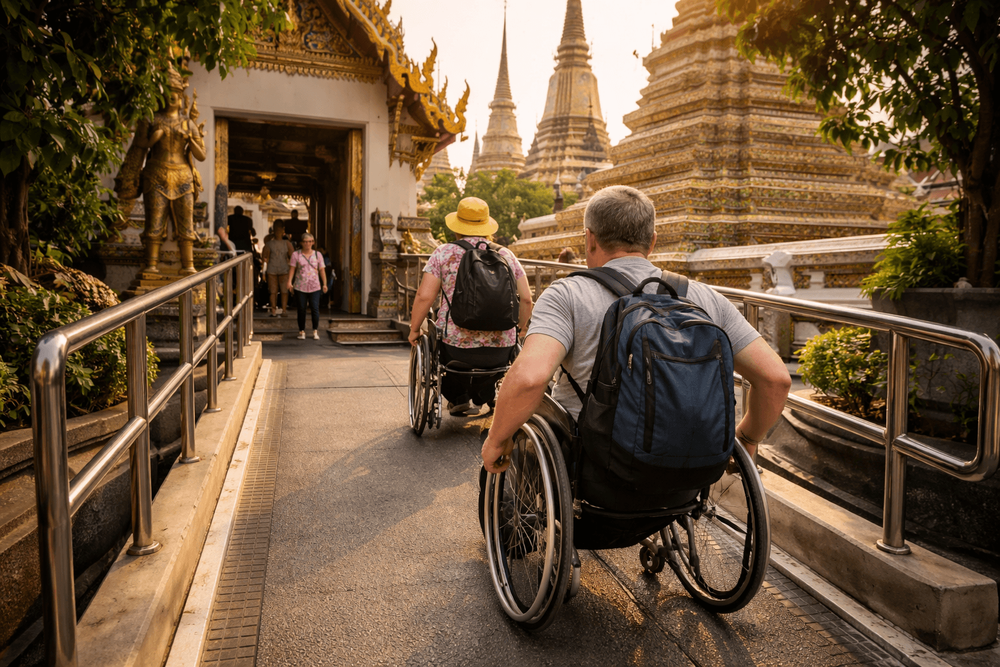
We roll out just after sunrise, when Rambuttri is still wiping sleep from its eyes and the air hasn’t turned into a sauna. A tuk-tuk rattles past, a wok snaps with morning pad krapao, and we steer toward the river with iced coffee in hand. If you’re planning a day of Bangkok temple accessibility wheelchair logistics from Khao San Road, we’ve got the lay of the land: where the ramps are, where they aren’t, which gates work, and how to keep the day sanuk without getting trapped by a flight of stairs or a tide-shy pier.
Bangkok temple accessibility for wheelchair users: the basics
Bangkok’s temples are old souls. That means carved thresholds, polished marble, raised platforms, and the occasional surprise step. Accessibility is getting better, but it’s uneven—literally and figuratively. Here’s what we watch for at major wats:
- Entrances and gates: Many complexes have multiple gates; at least one is usually step-free or can be made so with a portable ramp. Security staff often know the smoother route—smile, offer a quick “sawasdee krub/ka,” and ask.
- Ramps and thresholds: Expect small lips at doorways (1–3 cm) and occasional single steps into ubosots (ordination halls) and viharns (assembly halls). Portable ramps appear during busy hours at some sites, but don’t count on them.
- Door widths: Most temple doorways are wide enough for standard wheelchairs, but older halls sometimes narrow at the threshold. If you’re in a larger power chair, plan on viewing some interiors from the doorway or courtyard.
- Surfaces: You’ll meet smooth marble, pebbled concrete, glossy tiles, uneven bricks, and sandy courtyards. Wide front casters or anti-tip wheels help on the bumpy bits. Gloves save hands on hot metal rims.
- Shoes: Most interiors require shoes off. If you transfer, keep socks handy. If you stay seated, staff will usually allow your chair wheels to remain “shod,” but try to keep footplates clean and be mindful of sacred spaces.
- Shade and heat: Courtyards can be blindingly bright and hot underfoot by 11:00. Plan shade breaks—7-Eleven AC blasts are a rite of passage—and hydrate like it’s your job.
For deeper, route-by-route options from Khao San, we keep this bookmarked: Accessible Bangkok Temple Run from Khao San Road: Wheelchair-Friendly Routes, Rest Stops, and Easy-Access Tips.
Practical tips for a smooth temple day
- Go early, finish before the heat: Be at your first temple at opening (often 8:00–8:30). Crowds thin, ramps are clearer, and the marble isn’t lava yet. We aim to be on a shady lunch break by 12:30.
- Talk to staff at the gate: Guards and ticket staff are gatekeepers to ramps, side doors, and shaded waiting spots. A quick “rao chai wheelchair” (we use a wheelchair) breaks the ice.
- Bring a lightweight doorstop: Wedge it at heavy doors while you pass the threshold, then pull it through with a strap.
- Pack a small towel: For drying hands after ritual ablutions and for hot push rims.
- Transfer strategy: If you transfer into a manual chair for tighter interiors, bring a foldable transfer board and a discreet sling. Some interiors remain tight; we often enjoy them from just inside the doorway.
- Watch for festival days: Buddhist holidays bring huge crowds and temporary structures that can block the usual step-free route.
- Carry small bills: Entry fees vary—some around 50–200 baht, the Grand Palace higher. Keep 20s and 50s ready; ticket windows can be tiny.
- Hydration and shade cadence: Every 30–45 minutes, we punctuate with shade. Courtyard benches, cloister galleries, and riverside malls are perfect reset points.
For first-timers juggling tickets and dress codes, this primer helps streamline the chaos: Bangkok Temple Run for First-Time Visitors: Tickets, Dress Code, and Time-Saving Tips from Khao San Road.
Accessibility by temple: what to expect
The Grand Palace & Wat Phra Kaew (Emerald Buddha)
- Terrain and flow: Expect security screening, then a sequence of courtyards. The main grounds are largely level but broken by thresholds and occasional steps into key halls. Shade is limited in the main court.
- Entrances: The main visitor gate is busy and can be chaotic. Staff can direct you to smoother paths and, when available, portable ramps at tricky thresholds.
- Interiors: The Emerald Buddha chapel sits on a raised platform with steps. Many visitors in wheels enjoy the exterior and surrounding galleries, which offer excellent sightlines to the murals and rooflines.
- Facilities: Look for larger restrooms near the ticketing and museum areas. Signage is improving; if in doubt, ask a guard.
- Timing: Arrive at opening and plan 60–90 minutes. It gets punishingly hot and crowded by late morning, and the complex often closes mid-afternoon.
Wat Pho (Temple of the Reclining Buddha)
- Terrain and flow: Flat courtyards with stone pavers make for relatively friendly rolling. Cloister galleries offer shade and places to pause.
- Entrances: The complex is ringed by multiple gates. Some are flatter than others; staff at ticket booths usually point to the smoothest roll.
- Reclining Buddha hall: The main attraction sits inside a long hall with a few threshold changes and usually at least one step. Doorways are wide, but turning radii are tight with crowds. If steps block entry, the surrounding courtyards still deliver great atmosphere.
- Facilities: Restrooms sit near the main ticket area; larger stalls aren’t guaranteed but do show up more often here than at smaller wats.
Wat Arun (Temple of Dawn)
- Getting there: The cross-river public ferry from Tha Tien is the classic hop (just a few baht), but pier ramps can be steep at low tide and gangways have small gaps. If the tide’s not friendly, taxi to the Wat Arun side gate instead.
- Terrain and flow: Ground-level cloisters and pavilions are the highlight for wheels. The iconic central prang is a no-go—its stairs are famously steep even for the spry—but the sculpted demons, porcelain blossoms, and riverside breezes are accessible from below.
- Shade: Plenty under the cloisters. We linger here when the sun starts biting.
Wat Saket (The Golden Mount)
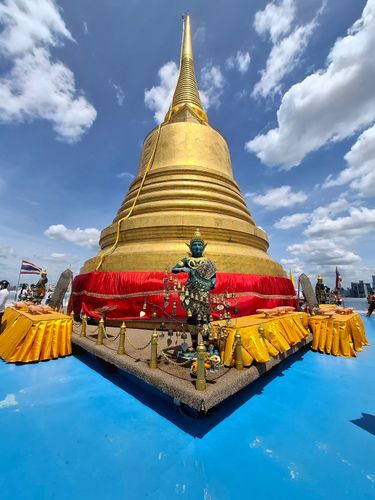
- Terrain and flow: The mount is 300-plus steps of spiral walkway—romantic, but not wheelchair-friendly. The good news: the lower temple compound at Wat Saket is flat and atmospheric, with shady trees and bells you can gently ring for merit.
- Views: For skyline fixes without stairs, consider pairing your day with a riverside cafe or a low-floor rooftop near Phra Athit Road instead of the summit.
Wat Traimit (Golden Buddha)
- Terrain and flow: Modernized complex on the Chinatown edge. The main hall sits on a raised terrace with steps; museum areas often have lifts, but access depends on staff routes. Expect helpful, if variable, assistance.
- Strategy: Save this for days when you have extra energy or a companion—Chinatown footpaths between here and Yaowarat can be tight.
Wat Benchamabophit (The Marble Temple)
- Terrain and flow: Smooth marble courtyards, shallow gradients, and wide spaces—great for wheels. Expect a step or two into inner halls; courtyards and cloisters are the showstopper anyway.
- Bonus: Late afternoon light turns the marble honey-gold. Worth the timing if the day allows.
Wat Suthat and the Giant Swing
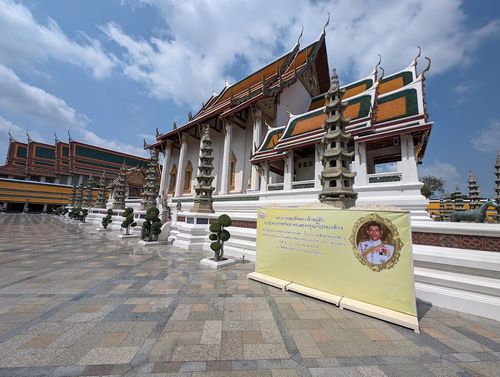
- Terrain and flow: The main viharn sits atop a raised platform with several steps, so interior access is limited. The outer courtyard and the Giant Swing plaza are rollable and photogenic, with cafes nearby for recovery breaks.
If you want a plug-and-play route with rest stops from the backpacker quarter, we’ve mapped common pain points here: Bangkok Temple Run for Mobility-Limited Travelers: Accessible Routes, Rest Stops, and Taxis from Khao San Road.
Getting from Khao San: taxis, boats, and trains
Taxis and ride-hailing
- Reliability: From Khao San, flagged taxis remain the least-friction option. The meter starts at 35 baht; most temple hops land between 70–150 baht depending on traffic. Politely insist on the meter (“meter dai mai, krub/ka?”) or use a ride-hailing app to skip negotiations.
- Drop-off points: Ask for drop-offs at smoother gates—“Wat Pho, Chetuphon Road gate,” “Grand Palace, Na Phra Lan Road,” or “Wat Arun side entrance.” When in doubt, show the Thai name on your phone and let the guard wave you to the flat bit.
- Vehicle type: Regular sedans can fit a collapsible chair in the trunk. If you use a power chair, you’ll likely need a larger car from an app and a companion for loading.
Chao Phraya Express boat
- Why we love it: Cheap (often 16–30 baht), breezy, and fast. Phra Arthit Pier is a short roll from Khao San/Phra Athit Road and has a relatively smooth approach.
- Caveats: Ramp angles shift with the tide; crews are friendly but this is not a dedicated accessible service. Avoid rush hour crushes, and skip days with choppy water. We often boat south to Tha Chang/Tha Tien, then taxi back north when the sun is mean.
MRT and BTS connections
- MRT Sanam Chai: A gift to wheels. This museum-like station near Wat Pho has elevators, wide gates, and clean restrooms. It’s a handy cooldown stop and a bailout to taxis if you’re flagging.
- BTS Saphan Taksin: Elevator access and a direct walk to Sathorn Central Pier. From there, boats fan out up and down the river.
- Reality check: Khao San lacks direct train lines. Expect a multimodal day—short taxi to a pier or MRT, boat hop, then roll or ride.
For door-to-door ease, this breakdown helps pick the fastest combo from the backpacker zone: Bangkok Temple Run by Taxi: The Fastest Way to Visit Wat Pho, the Grand Palace, and Golden Mount from Khao San Road.
On-site amenities, rest stops, and etiquette
Restrooms and cool-downs
- Temple facilities: Larger wats increasingly signpost accessible or roomier stalls near ticketing or museum wings. Bring your own tissue; soap is hit-or-miss.
- Reliable pit stops near the river: Modern riverside malls like Tha Maharaj offer elevators, wide corridors, and clean restrooms—perfect for AC resets between the Grand Palace and Phra Athit. Food courts mean easy wheelchair seating and affordable bites (60–120 baht dishes).
- MRT stations: Sanam Chai’s facilities are spotless, with elevator access and wide gates.
Shade, seating, and pacing
- Cloister galleries: Most temple cloisters ring the main courtyard, offering shade, breezes, and long, rollable stretches. We time water breaks here.
- Benches and low walls: Scattered but useful. Always check surfaces—marble can fry eggs at noon.
- Companion support: A second set of hands helps with gangways, thresholds, and door holds. If solo, don’t be shy about asking staff for the best path.
Respectful etiquette from a chair
- Line of sight: If you stop near doorways to view interiors, keep the path clear so worshippers can pass.
- Head and feet: In Thai culture, the head is sacred and feet are lowly. Keep footplates pointed away from images of the Buddha.
- Photos: Check signage—some halls allow photos, others don’t. Flash is almost always frowned upon.
- Donations: Many shrines have donation boxes accessible from wheelchair height; coins and small notes are welcome. If you can’t reach, companions or staff are happy to assist.
For more step-free specifics and rest-stop intel on the classic temple trio from the Khao San bubble, see: Accessibility Guide to Wat Pho, the Grand Palace, and Golden Mount from Khao San Road.
A sample day from Khao San Road
- 07:30 – Roll out via Soi Rambuttri toward Phra Arthit Pier; coffee in hand, breeze on cheeks.
- 08:15 – Wat Pho at opening. Enjoy the quiet cloisters and shaded courtyards before the tour buses.
- 09:45 – Taxi or short roll/ride to the Grand Palace. Hit the murals and rooflines, then retreat before the midday crush.
- 11:30 – AC break and lunch at a riverside mall or cafe—curries and khao man gai for 60–120 baht, refill water, restroom stop.
- 12:30 – Cross-river to Wat Arun if tides and energy cooperate; otherwise, glide to a riverside viewpoint and soak the skyline from shade.
- 14:00 – Head back to Khao San/Phra Athit for a slow mango sticky rice victory lap.
What to bring (and what to skip)
- Do bring: Refillable bottle, hat, sunscreen, light scarf for shoulders/knees, small towel, doorstop, wet wipes, power bank, and a roll of tissue.
- Maybe bring: Compact umbrella for portable shade.
- Skip: Heavy security gear—some complexes use detectors. Keep it minimal to breeze through checks.
Know before you go
- Dress code: Shoulders and knees covered. Temples sometimes offer rental wraps (20–50 baht deposit). Lightweight trousers/skirts keep you cooler anyway.
- Tickets and cash: Entry fees range widely; the Grand Palace is the priciest (around 500 baht), while many other wats charge 50–200 baht or are free. Small bills speed everything up.
- Scams: Anyone telling you a temple is “closed” and steering you to a gem shop is playing the classic farang trap. Smile, roll on, or check with uniformed guards.
- Weather swing plan: If the sky opens, marble turns into an ice rink. Slow down, shelter under cloisters, and let the storm drum the rooftops while you snack.
Where to base ourselves
We like staying near Phra Athit Road or on the quieter end of Soi Rambuttri—flat sidewalks by Bangkok standards, quick rolls to the river, and an easy glide to Khao San’s food and pharmacies. Pools help after a heat-soaked day, and ground-floor rooms or lifts make morning departures painless. If you’re splurging, river-facing stays with ramps and wide corridors add a lot of calm between temple bursts. If you’re budgeting, prioritize proximity to Phra Arthit Pier and shaded sois over fancy extras—you’ll feel the difference at noon.
Final word from the river’s edge
Bangkok will throw heat, uneven bricks, and the occasional “how-is-this-a-step-free-route?” puzzle at us—but it also gives back in gold leaf and river light. Start early, chat with guards, pace the day, and let the cloisters be your compass. We’ll save you a shady spot by the bells at Wat Saket and a cold bottle from the 7-Eleven—meet us there, and we’ll plot the next sanuk roll together.
Related Hotels & Places
Rambuttri
Markets
Khao San’s calmer cousin: a tree‑shaded lane of VW van cocktail bars, open‑air foot massages, pad thai grills, and easygoing live bands. Best from sunset to 11pm; beers 80–120 THB, cocktails 150–220 THB. One block from the chaos, all the charm.
Khao San Road
Attractions
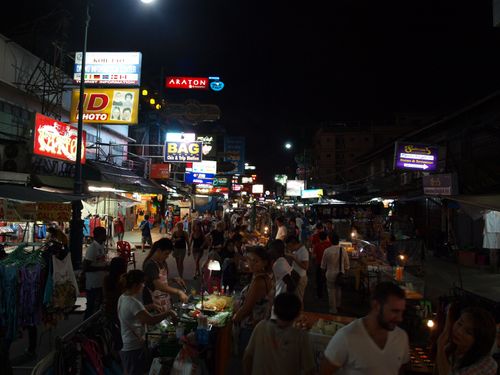
Bangkok’s backpacker carnival: curbside bars, live bands and DJs from 3pm–2am (midnight Sun). Street eats are cheap — pad thai 70–100 THB, mango sticky rice 60–100 THB. Come for wild people-watching; duck into Rambuttri for a calmer beer.
Wat Phra Kaew
Temples
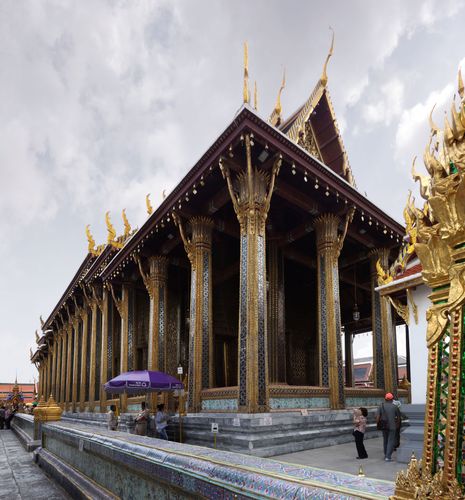
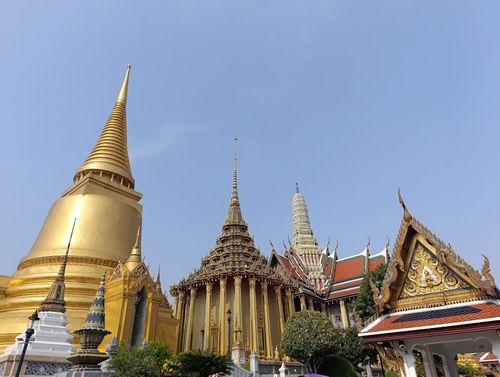
Bangkok’s holiest temple inside the Grand Palace. Go early (8:30am–3:30pm). Buy the 500 THB ticket at Na Phra Lan Rd gate. Dress code enforced. Marvel at Ramakien murals and the tiny Emerald Buddha whose robes change with the seasons. 10–15 minutes’ walk from Khao San.
The Grand Palace
Attractions
Bangkok’s royal showpiece a short hop from Khao San: glittering Wat Phra Kaew, Ramakien murals, and gold-on-gold rooftops. Go 8:30am to dodge the heat, dress modestly, and boat to Tha Chang for the prettiest arrival.
Wat Arun Ratchawararam Ratchawaramahawihan
Temples
Wat Saket Ratchawora Mahawihan
Temples
Wat Suthat Thepwararam Ratchaworamahawihan
Temples
Serene counterpart to the Giant Swing: a soaring hall, Sukhothai‑era 8 m bronze Buddha, and some of Bangkok’s finest murals. An easy 15‑minute walk from Khao San; open daily till 8pm for golden‑hour visits.
More Khao San Road Guides
- Bangkok Temple Run for Mobility-Challenged Travelers: Wheelchair Access, Elevators, and Low-Stair Options from Khao San Road
- Bangkok Temple Run for Accessibility: Wheelchair, Stroller, and Low-Walking Options from Khao San Road
- Bangkok Temple Run for Mobility-Limited Travelers: Accessible Routes, Rest Stops, and Taxis from Khao San Road
- Accessible Bangkok Temple Run from Khao San Road: Wheelchair-Friendly Routes, Rest Stops, and Easy-Access Tips