Bangkok Temple Etiquette Mistakes to Avoid at Wat Pho, the Grand Palace, and Golden Mount
Skip the cringes. Real-world tips to avoid Bangkok temple etiquette mistakes at Wat Pho, the Grand Palace, and Golden Mount—what to wear, do, and not do.
We slip out of the shade of Sabai Sabai at Sukhumvit into the baking Old City heat, incense drifting from a tiny shrine by the tuk-tuk stand. Bells tinkle somewhere behind Wat Chana Songkhram Ratchaworamahawihan, and a monk in saffron floats past like an orange sail. It’s easy to get swept up in the sanuk of Bangkok—until we step into a temple and commit one of those Bangkok temple etiquette mistakes that makes the whole room go silent. We’ve made them so you don’t have to.
This is the no-cringe, first-timer-friendly guide to behaving at Wat Pho, The Grand Palace, and the Wat Saket Ratchawora Mahawihan with grace. The vibe: authentic respect, minimal sweat, maximum awe.
Bangkok Temple Etiquette Mistakes We See All the Time
Clothing that seems “fine” on the soi but fails at the gate
We love a breezy Khao San Road tank top as much as the next farang, but many halls (especially at the Grand Palace) won’t allow:
- Bare shoulders, low-cut tops, or visible midriffs
- Shorts above the knee (men and women)
- Ripped jeans, see-through fabrics, or beachwear
- Sarongs thrown over spaghetti straps at the Grand Palace—they often won’t count
Do this instead:
- Wear lightweight pants or a long skirt and a T-shirt that covers shoulders
- Bring a thin shawl only as backup at smaller wats; don’t rely on it for the Grand Palace
- Pack breathable fabrics—Bangkok will marinate you
If you want the full breakdown on what flies at each temple gate, save our detailed dress guide: Bangkok Temple Day Dress Code and Etiquette from Khao San Road.
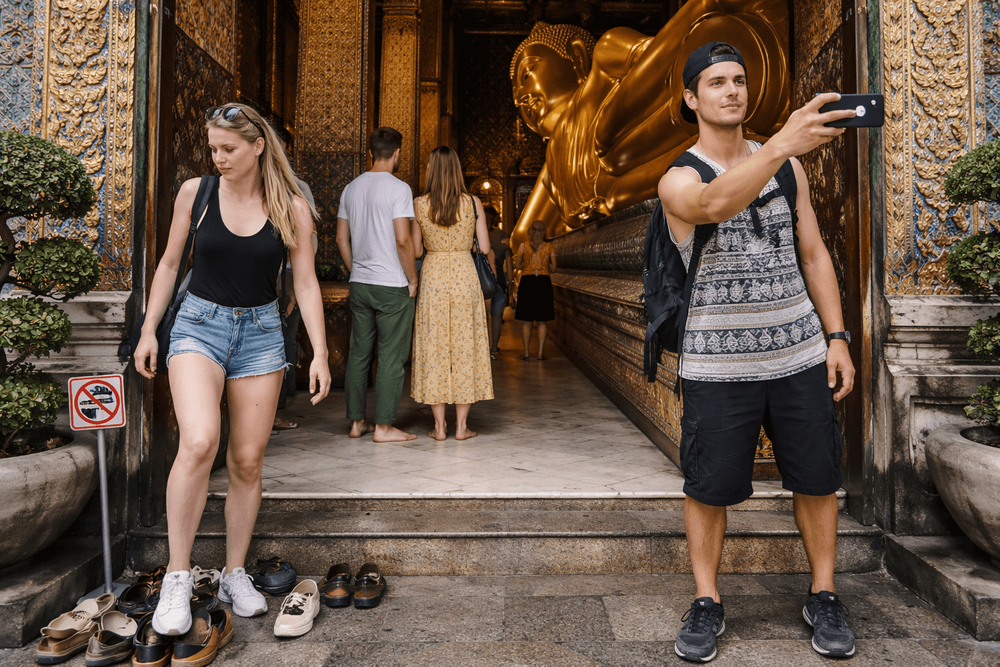
Shoes off—yes; socks? Highly recommended
Nothing is more Bangkok than the sizzle of bare feet on sun-hot tiles. The rule: remove shoes before entering main halls (ubosot, viharn) and some side chapels.
- Don’t step on the raised wooden or stone threshold—lift your foot over it
- Keep shoes neat; don’t block the doorway with flip-flops
- Thin socks help on hot floors and protect against mystery stickiness. If you’re a planner, peep: What to Pack for Thailand for Temple Etiquette Beyond Clothing: Shoes, Socks, and Respectful Extras
Pointing feet where they don’t belong
In Thai culture the head is highest, the feet are lowest. Pointing your soles at a Buddha image or a person is a fast way to look clueless.
- When seated on the floor, tuck legs to the side or sit kneeling with feet behind you
- Avoid stretching long legs straight at the altar
Volume, hats, and sunglasses
- Remove hats and sunglasses inside halls—treat it like a living sacred space, not a sun-shelter
- Keep voices low; whisper if you must
- Leave the speakerphone calls for the 7-Eleven blast of AC afterwards
Photography without permission or awareness
We all want the shot. But:
- Watch for “no photo/no flash” signs, especially around the Emerald Buddha and reclining Buddha
- Don’t pose with your back pressed against Buddha images or climb pedestals—ever
- Ask before photographing monks or worshippers
- Drones? Hard no on temple grounds
Treating monks like tourist props
Monks aren’t mascots. A few rules keep everyone comfortable:
- Women should avoid physical contact with monks; if giving something, place it on a cloth or offer table
- Don’t block a monk’s path
- Offer your seat on boats and buses—especially at rush hour on the Chao Phraya Express
Food, drinks, and fumes
- No eating inside halls; water is fine outside but keep bottles closed
- Smoking and vaping are not allowed on temple grounds
- Avoid bringing durian—its sweet rot doesn’t pair well with incense
PDA, posing, and playing around
- Keep public affection discreet—hand-holding is fine, kissing and cuddling inside temple areas isn’t
- Don’t sit on balustrades, chedi bases, or naga stair rails for photos
Touts and temple “helpers”
A classic around the Grand Palace: “Closed today, my friend!” It’s almost never true. This isn’t strictly etiquette, but being lured to a gem shop while dressed for a temple day is a particular Bangkok rite we’d skip. For the layout of entrances and legitimate ticket windows, keep this handy: Bangkok Temple Run Without Getting Lost: Ticket Counters, Entrances, and Common Tourist Mistakes from Khao San Road.
Respectful Behavior Inside the Wat: Monks, Buddha Images, and Prayer Areas
Inside the main hall (ubosot/viharn)
- Enter calmly, shoes off, hat off, sunglasses pocketed
- Sit lower than the Buddha image; don’t turn your back to the main altar for selfies
- If a ceremony is happening, stand or sit quietly at the back until it finishes
- Avoid stepping between a person and the Buddha image when crossing a room—swing wide behind seated worshippers
Around monks
- Wai (palms together) if a monk acknowledges you; don’t force it—some will simply nod
- Don’t sit higher than a monk in a small prayer hall; kneel or sit lower if possible
- On boats or buses, give up your seat
Buddha images, amulets, and donation boxes
- Don’t touch or rub statues unless it’s clearly part of the ritual area
- Slip donations into the labeled boxes; avoid balancing coins on ledges or statues
- If you receive a blessed string (sai sin), treat it respectfully—don’t rip it off moments later for photos
Alms (tak bat) at dawn
- Keep distance; don’t crowd monks collecting alms for morning rituals
- If you offer, be sincere—no staged selfies mid-hand-off
Why These Rules Matter: The Cultural Grounding
Bangkok’s wats aren’t theme parks—they’re living centers of Thai Buddhism and neighborhood life. A few cultural anchors explain the “why” behind the rules:
- Hierarchy of the body: The head is the most sacred, the feet the lowest. This is why touching heads (especially of children) is a no-go, and pointing soles is offensive.
- The sacredness of space: An ubosot isn’t just a pretty room; it’s consecrated for ordinations and important rites. Inside, behavior shifts to hush and humility.
- Monastic precepts: Monks follow vows that affect how they interact. Women avoiding physical contact helps monks keep their precepts without awkwardness for either side.
- Merit-making (tham bun): Donations maintain the wat, from chedi repairs to the water bill. Dropping coins in a box isn’t a ticket price; it’s you participating in the upkeep of a shared sacred space.
- Community first: Many temple grounds are neighborhood lungs—trees, shade, a quiet bench. Acting with care lets locals keep using them as intended.
Understanding this turns “rules” into respect. You’ll move through Bangkok’s temples with the same grace the city gives you.
Acceptable vs. Unacceptable: Real-World Scenarios
We’ll walk it together—Khao San to Wat Pho to the Grand Palace to Golden Mount—and call the plays as we go.
Wat Pho: Reclining Buddha, reclining ankles
- Unacceptable: Flopping cross-legged and pointing your toes straight at the Reclining Buddha while angling for a TikTok. Flash on, backpack sprawling into the aisle.
- Acceptable: Kneeling or side-sitting with feet tucked back, flash off, at the perimeter of the hall. Quick, quiet photos from the designated line, then we step aside for the next awe-struck human.
- Insider tip: The courtyard stupas (chedi) are photogenic and less crowded. Keep off the bases; tiles are fragile.
Grand Palace & Temple of the Emerald Buddha: Dress code supreme
- Unacceptable: Tank top plus scarf and above-the-knee shorts, arguing at the dress checkpoint because it worked at another wat.
- Acceptable: Light trousers or a long skirt, covered shoulders, closed shoes or sandals—neat and modest. Move with the flow; it’s crowded.
- Insider tip: If anyone outside the gates says “closed,” smile, sawadee, and keep walking to the official entrance. For the play-by-play (where to queue, how security works, and common pitfalls), see: Bangkok Temple Run for First-Time Visitors: How to Avoid Common Mistakes at Wat Pho, the Grand Palace, and Golden Mount.
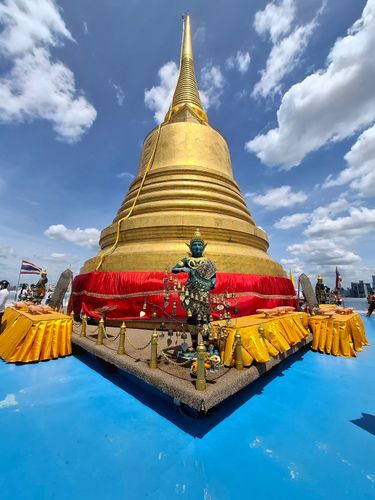
Golden Mount (Wat Saket): Steps, bells, and a breeze up top
- Unacceptable: Blasting music on a portable speaker as we climb, ringing every bell like it’s a carnival, then parking on the stupa base for a shoe-shot with your soles in frame.
- Acceptable: Slow, steady climb; a single gentle ring if you’re participating; quiet at the summit shrine. Sit on benches, not railings.
- Insider tip: The breeze is a gift—use it to cool down instead of peeling your shirt off at the top.
Prayer spaces and side chapels
- Unacceptable: Cutting across a kneeling worshipper’s sightline to shave five seconds off the route to the exit.
- Acceptable: Circling the back or waiting five beats for a respectful gap. Nobody minds an extra minute in the shade.
Around the grounds
- Unacceptable: Dropping empty coconut husks by the koi pond, or feeding temple dogs spicy sausage.
- Acceptable: Bin it. If a resident temple cat claims your lap, lucky you—gentle strokes only.
Photos with monks or novices
- Unacceptable: Grabbing a monk’s sleeve for a selfie or blocking a novice’s path on a narrow walkway.
- Acceptable: A polite request and a quick photo if they agree—no touching, keep space, wai afterwards to say thanks.
Getting There from Khao San Without the Headache
- Chao Phraya Express boat: From Phra Athit Pier, ride the orange-flag boat downriver. For the Grand Palace, hop off at Tha Chang; for Wat Pho, Tha Tien puts you steps from the river entrance. The orange-flag boats are cheaper than the tourist boats and run frequently.
- On foot: From Khao San to the Grand Palace is a hot but doable walk via Na Phra Lan Road. Golden Mount is reachable by cutting along Ratchadamnoen Klang and slipping into the lanes behind Wat Ratchanadda—shade where you can.
- Tuk-tuk: Sanuk, but agree on a fair price beforehand and decline any “special stops.” If a driver insists the Palace is closed, we hop out and find another.
We usually base ourselves within a five-minute wander of Soi Rambuttri or Phra Athit Road for temple days—easy boat access, mellow evenings, and plenty of late-night noodles when you stumble back after sunset.
Know Before You Go: Quick Reminders Checklist
Before we cross a temple gate, we run this mental list:
- Dress: Shoulders and knees covered; nothing ripped or sheer. Grand Palace is strict.
- Shoes: Easy-on sandals or sneakers; socks in the daypack for hot tiles.
- Sunscreen and water: Shade is patchy—hydrate and reapply.
- Phone: Silent mode. No speakerphone or loud videos in any hall.
- Photos: Check signs; no flash in sacred interiors. Don’t pose on pedestals or railings.
- Money: Small notes and coins for donation boxes and incense/birdseed stands. Donate, don’t barter.
- Body language: Don’t point feet at Buddha images or people. Step over thresholds, don’t stomp on them.
- Space: Give monks and worshippers room. Offer your seat on boats and buses.
- Smoking/vaping: Not on temple grounds—save it for outside the gate.
- Time of day: Early morning or late afternoon beats the heat and the tour-bus crush.
If you’re piecing together a full temple run in one go (Wat Pho → Grand Palace → Golden Mount), this walk-through helps with tickets, queues, and dress expectations across all three: Bangkok Temple Run Ticket and Dress Code Guide.
Little Things That Win You Smiles
- Wai softly when thanked or blessed—palms together at chest height is plenty
- Learn a quick “sawadee krub/ka” and “khop khun krub/ka” (hello/thank you) with the right ending for your gender
- Let the city set the pace—move slowly in sacred spaces, fast outside if you must
- Share shade and benches; it’s everyone’s heat we’re living in
After the Wats: Reward Yourself
Temple days start early, so we plan our crash pad within flip-flop range of Khao San or Phra Athit—quiet side sois for sleep, nightlife when we want it. A quick cannonball in a modest guesthouse pool, a bowl of boat noodles on Phra Athit, and a lazy stroll back along the khlong as the city hums—perfect reset for tomorrow’s adventure.
We’ll meet you at dawn by the river, sleeves on, soles tucked, ready to do Bangkok’s beauty the respect it deserves—no Bangkok temple etiquette mistakes, just the good stuff: bells, breeze, and that first lungful of incense as the city wakes.
Related Hotels & Places

Sabai Sabai at Sukhumvit
Hotels
A 3.5-star hotel in Bangkok.
Wat Chana Songkhram Ratchaworamahawihan
Temples
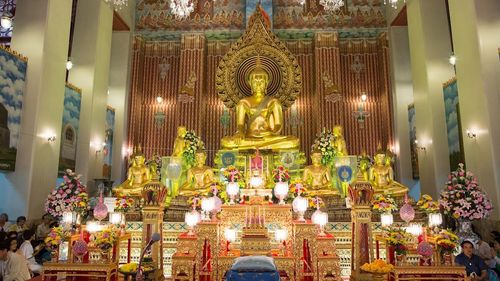
18th‑century royal temple steps from Khao San. Slip into quiet courtyards and an opulent viharn with a gilded Buddha. Opens 7:30am daily (Mon to 6:30pm). Enter on Chakrabongse Rd by Phra Athit; dress modestly.
Khao San Road
Attractions
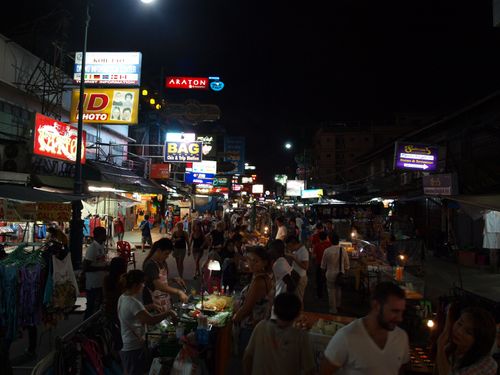
Bangkok’s backpacker carnival: curbside bars, live bands and DJs from 3pm–2am (midnight Sun). Street eats are cheap — pad thai 70–100 THB, mango sticky rice 60–100 THB. Come for wild people-watching; duck into Rambuttri for a calmer beer.
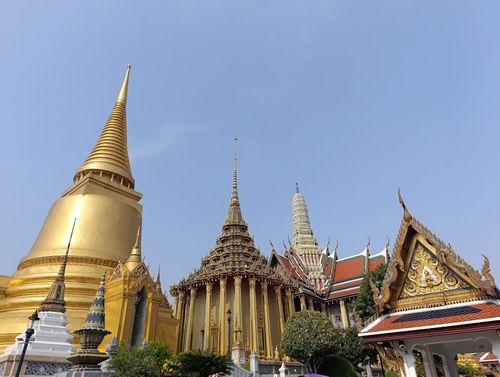
The Grand Palace
Attractions
Bangkok’s royal showpiece a short hop from Khao San: glittering Wat Phra Kaew, Ramakien murals, and gold-on-gold rooftops. Go 8:30am to dodge the heat, dress modestly, and boat to Tha Chang for the prettiest arrival.
Wat Saket Ratchawora Mahawihan
Temples
More Khao San Road Guides
- Bangkok Temple Etiquette Guide for Visiting Wat Pho, the Grand Palace, and Golden Mount from Khao San Road
- Bangkok Temple Run for First-Time Visitors: How to Avoid Common Mistakes at Wat Pho, the Grand Palace, and Golden Mount
- Bangkok Temple Run Essentials: Tickets, Opening Hours, and Entry Rules for Wat Pho, the Grand Palace, and Golden Mount
- Bangkok Temple Fees, Donations, and Ticket Rules: What to Budget for Wat Pho, the Grand Palace, and Golden Mount