
Thailand Visa Runs from Bangkok: A Complete Guide
Thailand Visa Runs from Bangkok: A Complete Guide — your insider guide to the best of Khao San Road.
Thailand Visa Runs from Bangkok: A Complete Guide Date: 2026-04-03
Overview If you’re in Bangkok and need more time in Thailand, a visa run is one way to stay legal. This guide explains how visa runs work, your options from Bangkok (same-day border bounces, overnight consulate trips, and flight runs), how to prepare, typical costs and timelines, and common pitfalls. Rules change often and depend on your nationality, so always confirm current requirements with Thai Immigration and the Thai Ministry of Foreign Affairs before you go.
Quick facts
- A “visa run” means exiting Thailand to reset a visa-exempt stay or to apply for a new Thai visa at a consulate/embassy abroad.
- Many nationalities receive visa-exempt entry; length varies by nationality and entry mode. For many, it’s around 30 days by air or land. Confirm for your passport.
- You can often extend a visa-exempt or tourist visa once inside Thailand for 30 more days at Immigration (fee: 1,900 THB), avoiding a run.
- Land border entries for visa-exempt travelers are typically limited (commonly two per calendar year). Air entries may be treated differently. Enforcement varies.
- Overstay is expensive (fines typically 500 THB/day up to 20,000 THB) and can lead to bans. Don’t risk it.
- Border officials can deny entry if they suspect long-term stays via repeated runs, if you lack funds, onward travel, or accommodation proof.
First, decide what you actually need
- Just more days quickly: Consider a 30-day extension at Bangkok Immigration. If you’ve already extended or can’t, a same-day border bounce may reset time if you’re visa-exempt and allowed another entry.
- A formal visa for a longer stay: Leave Thailand and apply for a visa (e.g., Tourist TR single-entry or multiple-entry) at a Thai embassy/consulate abroad. This generally takes 1–3 working days, sometimes longer, and often requires an online application/appointment.
- Switching to a non-tourist status: For study, marriage, work, retirement, long-term resident, or Thailand Elite options, consult official requirements. Many require documentation and may be easier if applied from your home country or with a visa agent/lawyer.
Option 1: Extend in Bangkok (no border run)
- What it is: A 30-day extension of a visa-exempt entry or a TR tourist visa.
- Where: Immigration Bureau, Division 1 (Bangkok) or provincial offices if you’re outside Bangkok.
- What to bring: Passport with valid entry stamp, completed application form (TM7), one passport photo, photocopies (photo page, latest entry stamp), proof of address (e.g., TM30 or hotel booking), and 1,900 THB fee. Appointments may be available; walk-ins are common but queues can be long.
- Pros: Cheapest and easiest; no travel abroad.
- Cons: Only adds 30 days; not available to everyone in every status.
Option 2: Same-day border bounce (reset a visa-exempt stay) Popular from Bangkok when you just need to exit and re-enter quickly. Always verify the border’s current hours and any closures.
Cambodia via Aranyaprathet/Poipet
- Travel time: About 4–6 hours each way by bus/van from Bangkok.
- Process: Exit Thailand at Aranyaprathet, obtain Cambodian entry (often requires a visa-on-arrival or pre-arranged e-visa, fee varies by nationality), enter Cambodia, then turn around and re-enter Thailand at Poipet.
- Pros: Typically the quickest and most accessible land route from Bangkok.
- Cons: Long queues at peak times; border touts; you may have to buy a Cambodian visa even for a quick turnaround; officials may scrutinize frequent runners.
- Tips: Bring USD cash for Cambodian visa if eligible, a pen, and patience. Avoid “helpful” fixers.
Myanmar via Ranong/Kawthaung (check status)
- Travel time: 7–9 hours by bus/van from Bangkok to Ranong, then a short boat ride to Kawthaung.
- Caveat: Border policies for Myanmar can change quickly due to local conditions; some crossings may be closed or limited to local traffic. Confirm current status before you go.
- Pros: Historically a smooth same-day run when open.
- Cons: Distance from Bangkok; possible closures; additional local fees.
General notes for border bounces
- Land entry limits: Many visa-exempt nationals are limited to a small number of land entries per calendar year. Don’t plan on unlimited bounces.
- Proof of funds/onward ticket: You may be asked to show funds (e.g., 10,000 THB per person or equivalent) and onward travel/accommodation. Airlines can deny boarding without onward proof when you return by air.
- Hours: Most land borders keep daytime hours; confirm times to avoid being stranded.
Option 3: Apply for a Thai visa at a nearby consulate (overnight run) If you need more than a short reset, apply for a tourist visa (TR) or another category outside Thailand. Expect to spend 2–4 days total including travel, application, and pickup (or wait for approval if e-visa only).
Common destinations from Bangkok
Laos (Vientiane or Savannakhet)
- Vientiane: Travel by overnight train/bus to Nong Khai then cross the Thai–Lao Friendship Bridge, or fly to Vientiane.
- Savannakhet: Bus to Mukdahan then cross; smaller and sometimes less crowded but schedules/quotas vary.
- You’ll likely need a Laos entry visa (many can get VOA; fees vary by nationality).
- Pros: Well-trodden route with many guesthouses and agents who understand the process.
- Cons: Appointment quotas, evolving e-visa requirements; lines at peak times.
Malaysia (Penang or Kuala Lumpur)
- Fly from Bangkok; many nationalities are visa-free to enter Malaysia.
- Pros: Efficient transport, good consular facilities, English widely spoken.
- Cons: Higher travel cost than a land run; appointments often required.
Vietnam, Singapore, others
- Fly in, apply at a Thai mission if they accept your case and nationality (many require you to be a resident in that country or to use Thailand’s online e-visa platform).
- Pros: Reliable flights, strong infrastructure.
- Cons: Policies vary widely by location; always check that mission’s rules before booking.
Important: Application methods and requirements
- Online e-visa and appointments: Many Thai embassies/consulates now require applications via thaievisa.go.th and scheduled appointments or submission windows. Some issue electronic approvals without a physical sticker; others still place a visa in your passport. Read the exact instructions for your chosen mission.
- Typical documents for a Tourist (TR) visa:
- Passport with sufficient validity and blank pages
- Recent passport photos
- Completed application (online or paper as required)
- Proof of funds and accommodation
- Onward or return flight
- Travel insurance and additional documents if requested
- Fee (varies by visa type and location; confirm current amount and accepted currency)
- Processing time: Usually 1–3 working days after submission if documents are complete; can be longer during peak periods or if additional checks are required.
Option 4: Fly out and back (same day or overnight)
- What it is: Exit Thailand by air to a nearby country and return with a new entry stamp (visa-exempt if eligible, or on a visa you already obtained).
- Popular destinations: Kuala Lumpur, Penang, Singapore, Ho Chi Minh City, Phnom Penh, Hong Kong.
- Pros: Fast, predictable, avoids land entry limits in some cases.
- Cons: More expensive than buses; airlines may require proof of onward travel and adequate funds for re-entry to Thailand.
Costs (typical ranges; verify current fees)
- Bangkok 30-day extension at Immigration: 1,900 THB.
- Border transport (same-day run): 1,000–2,500 THB round trip by bus/van, more if booking a private vehicle or a package run.
- Third-country entry visas:
- Cambodia: Tourist visa fee commonly in the USD 30–40 range; e-visa also available for some nationalities.
- Laos: VOA fee commonly USD 30–45 depending on nationality and day of week.
- Malaysia/Singapore: Often visa-free for many, but not all, nationalities.
- Thai visa fees abroad: Vary by mission and visa type (TR single-entry, METV, etc.). Check the specific consulate. Bring the exact currency they require.
- Flights for air runs: 2,500–8,000 THB+ round trip depending on destination and timing.
Documents and prep checklist
- Passport: At least 6 months’ validity and multiple blank pages.
- Photos: 1–2 recent passport-size photos (check size requirements per mission).
- Copies: Passport photo page, latest Thai entry stamp, departure card (if issued), and any TM30 proof of address.
- Proofs: Onward/return flight, hotel bookings, bank statements or cash to show funds if asked.
- Cash: Local currency and small USD bills for border visas; Thai baht for transport; card for flights/hotels.
- Phone and data: Keep digital copies of documents and confirmation emails; download offline maps.
- Pen and small folder: Speeds up forms and keeps paperwork organized.
- Clothing and timing: Dress neatly; arrive early for consulates and border posts; avoid weekends and Thai/Lao/Cambodian/Malaysian public holidays when offices are closed.
Sample timelines
- Quickest legal option if eligible: 30-day extension in Bangkok
- Day 1 morning: Go to Immigration with complete documents, pay 1,900 THB.
- Outcome: Passport returned same day with 30 extra days.
- Same-day border bounce to Cambodia (Aranyaprathet/Poipet)
- 05:30–06:30: Depart Bangkok by bus/van.
- Late morning: Exit Thailand; get Cambodian entry (visa/e-visa if needed); immediately proceed to re-enter Thailand.
- Afternoon: Return to Bangkok. Build in buffer for delays.
- Vientiane Thai tourist visa run (2–3 days)
- Day 0 evening: Overnight train/bus to Nong Khai (or fly to Vientiane).
- Day 1 morning: Cross to Laos; submit Thai visa application per the consulate’s instructions (often online pre-application plus in-person document check, depending on current rules).
- Day 2: Collect visa or wait for e-visa approval; return to Thailand the same day or next morning.
Border and airline realities
- Discretion: Admission to Thailand is never guaranteed. Frequent short stays, lack of funds, and no clear travel plan can raise flags.
- Onward ticket: Airlines often enforce proof of onward travel within your allowed stay. Have a refundable ticket or a real plan.
- Funds: Be prepared to show cash/statement consistent with Thai requirements for your entry type.
- Accommodation: A booking for your first nights helps.
Common mistakes to avoid
- Cutting it too close: Start extension or run planning at least a week before your stamp expires.
- Ignoring holidays: Embassies/consulates close on both local and Thai holidays; check calendars.
- Assuming old rules still apply: Appointment systems, e-visa platforms, and quotas change frequently.
- Overstaying: Even one day costs money and can affect future entries.
- Relying solely on “visa run packages”: Some are reputable; others cut corners. You’re responsible for your own legal status.
Alternatives to repeated runs
- Education (ED), Marriage (O), Retirement (O-A/O-X), Work (Non-B with Work Permit), Long-Term Resident (LTR), or Thailand Privilege (formerly Elite) options may provide longer, more stable stays if you qualify. These require documentation and, in many cases, sponsorship or financial thresholds.
- If you work remotely, explore visas legitimately permitting it; Thai rules around remote work and income source matter. Don’t work illegally on a tourist status.
Safety and ethics
- Border areas can attract touts. Decline unsolicited help and use official counters only.
- Keep your passport on you at all times; don’t hand it to strangers.
- Respect visa conditions. Using tourist entries to live long-term without proper status can lead to denial at the border.
Frequently asked questions
How many times can I do a land border run in a year? Policies commonly limit visa-exempt land entries (often two per calendar year). Officers have discretion. Air entries may be treated differently. Always check the current rule for your nationality.
Can I apply for a Thai visa in a country where I’m not a resident? Some missions accept applications from non-residents; others don’t. Many now require online applications via thaievisa.go.th and may ask for proof of residence. Check the specific mission’s rules before traveling.
Do I need an onward ticket to re-enter Thailand? You may be asked by airlines and sometimes by Immigration. Having an onward ticket within your permitted stay is safest.
How long does it take to get a Tourist (TR) visa? Often 1–3 working days after submission if documents are complete, but timing varies by mission, workload, and whether the process is fully electronic.
Is Ranong–Kawthaung still open? It has been subject to change. Verify current status with Thai Immigration and local transport operators before planning this route.
Can I convert my visa inside Thailand? Some conversions are possible but not guaranteed and require specific documents and eligibility. Consult Immigration or a qualified visa professional.
Official resources (check for the latest rules)
- Thai Immigration Bureau: immigration.go.th
- Ministry of Foreign Affairs (Thai e-Visa): thaievisa.go.th
- Royal Thai Embassies/Consulates: directory via mfa.go.th
Bottom line
- If you just need a bit more time, extend in Bangkok for 30 days if eligible.
- For a quick reset, a same-day border run to Cambodia is the most common from Bangkok; Myanmar runs may be possible but are variable.
- For a longer stay, plan an overnight consulate run (Laos, Malaysia, etc.) and use the official e-visa system and appointment requirements.
- Carry complete documents, proof of funds, and onward travel. Start early, avoid overstays, and verify current requirements for your nationality before you go.
Related Hotels & Places
Khaosan Bar Ayutthaya
Bars
Khao San Road
Attractions
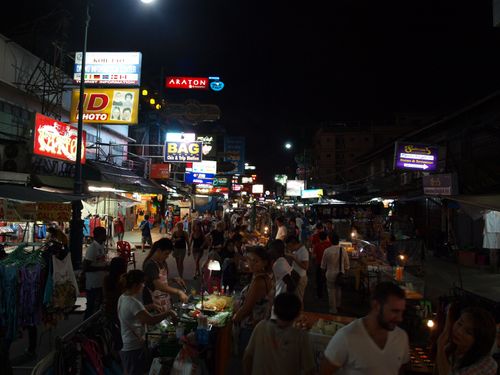
Bangkok’s backpacker carnival: curbside bars, live bands and DJs from 3pm–2am (midnight Sun). Street eats are cheap — pad thai 70–100 THB, mango sticky rice 60–100 THB. Come for wild people-watching; duck into Rambuttri for a calmer beer.
Khao San Road Police Station
Services
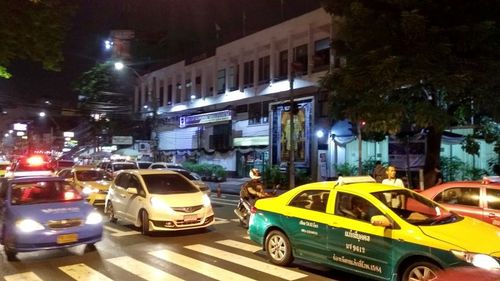
Tourist police station at the corner of Khao San Road and Chakrapong Road. Assistance for travelers 24/7.
Khaosan Palace Hotel
Hotels
Khaosan Palace Hotel provides flawless service and all the necessary facilities for visitors. Stay connected with your associates, as complimentary Wi-Fi is available during your entire visit. The hotel offers reception amenities including concierge service, luggage storage and safety deposit boxes
Khaosan Cozy Hostel
Hotels
A 2-star hotel in Bangkok.
Khaosan Social Capsule Hostel
Hotels
A 5-star hotel in Bangkok.
Khaosan Station
Hotels
At Khaosan Station, exceptional service and top-notch amenities create a memorable experience for guests.Complimentary internet access is available in the hostel to ensure you stay connected during your visit. Continuously receive the support you require through front desk amenities such as luggage
Khaosan Art Hotel
Hotels
At Khaosan Art Hotel, exceptional service and top-notch amenities create a memorable experience for guests.Complimentary internet access is available in the hotel to ensure you stay connected during your visit. Arrange your trips to and from the airport using the hotel's convenient transportation se