
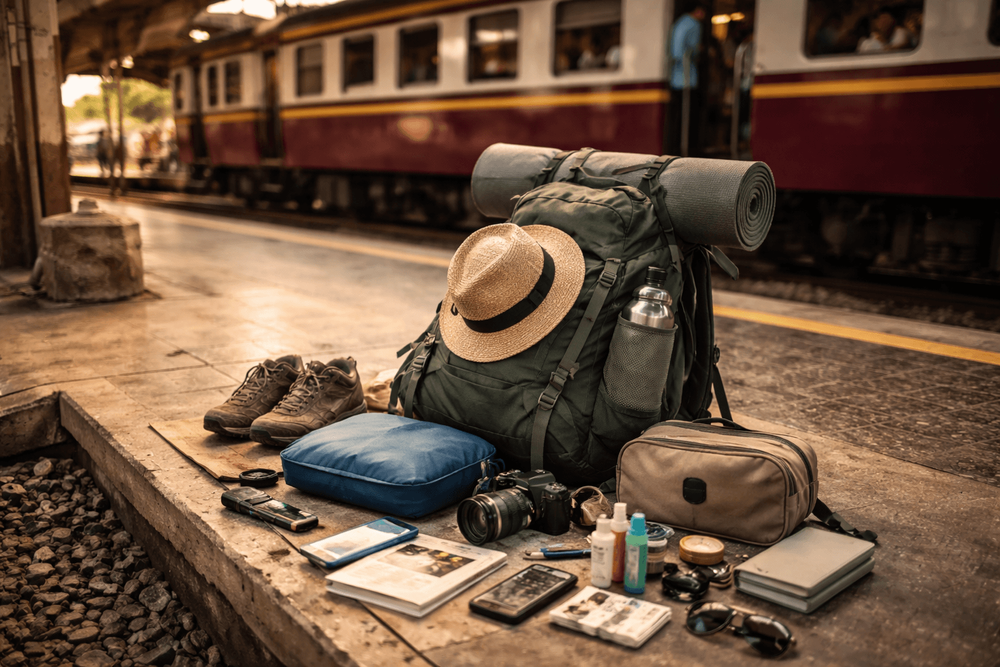
Backpacker Packing List for Thailand’s Train Travel: Sleeper Car Comfort, Security, and Station-Stop Basics
Pack Thai trains like a Bangkok local: sleeper comfort, security, and station-stop essentials for overnight and long rides across Thailand.
We’re shoulder to shoulder on the platform, the PA crackling in Thai and English as a Special Express slides in. Outside the station it smells like grilled moo ping and two-stroke tuk-tuks; inside, the air-con kisses our sweat-slicked necks like a blessing from the 7-Eleven gods. This is where a smart Thailand train travel packing list earns its keep—when you’ve got exactly what you need for an overnight Chiang Mai run, a sweaty day hop to Ayutthaya, or a Surat Thani sleeper headed for the islands.
Let’s pack like Bangkok old hands: light, secure, and ready for whatever the rails throw at us.
Thailand Train Travel Packing List: The Essentials
If we bring nothing else, it’s these. Keep the must-haves together in a quick-grab pouch—we like a small zip cube or sling that never leaves our body.
Tickets, ID, and Money
- Train ticket or e-ticket: Screenshot it. Twice. Battery dies, we’re still golden.
- Passport: Required if the conductor asks; a photo of the ID page is handy but not a substitute.
- Cash: Small bills (20s/50s) for water, snacks at station stops, and meals onboard. ATMs live at big stations, but we don’t bank on them. Budget 200–400 baht for snacks/drinks on a long ride.
- Backup card: Stash a spare debit/credit card in a separate pocket.
Phone, Power, and Connectivity
- Phone + long cable (2–3 meters): Sleeper outlets aren’t always where you want them.
- Power bank: 10,000–20,000 mAh. Some coaches have no sockets or flaky ones.
- SIM/eSIM with data: We like having Google Translate when we’re ordering in the dining car.
Water and Bite-Size Fuel
- 1–1.5L refillable bottle: Cold water is 10–15 baht for 330ml and 20–25 baht for 600ml at the station 7-Eleven.
- Packable snacks: Fruit, nuts, sticky rice, grilled chicken skewers. Dining car meals can be 120–200 baht; vendors hop on at stops with 20–40 baht snacks.
Station-Stop Basics
- Tissues + wet wipes: Train toilets rarely stock TP.
- Hand sanitizer: Self-explanatory.
- Face mask: For dusty platforms and AC chills.
Clothing and Comfort for Sleeper and Day Trains
The trick is respecting the climate outside and the meat-locker AC inside. We dress like we’re temple-hopping by day and burrowing into a cool cave at night.
Layers That Actually Work
- Lightweight pants or joggers: For sleepers, long pants feel better than bare knees on shared seats. They also help with mozzies when windows are open on older coaches.
- Breathable tee + long-sleeve layer: A thin hoodie or Uniqlo-style UV shirt covers all bases under AC.
- Sarong or light travel blanket: Doubles as a modesty wrap and extra warmth if the AC is arctic. Sheets/blankets are provided on most air-con sleepers, but an extra layer is comfort gold.
- Socks: One pair for the berth; we don’t like bare feet in the corridor.
- Eye mask: Overhead lights and corridor foot traffic never fully sleep.
- Earplugs: Night trains thrum, clack, and brake with feeling. Foam plugs or silicone molds make magic.
Footwear Strategy
- Slip-on sandals: Easy for toilet runs and station dashes.
- Lightweight sneakers or walking shoes: For arrival mornings when we’re hoofing it to a Backpacker Packing List for Thailand’s Train Travel: Sleeper Comfort, Security, and Station-Day EssentialsRambuttri or up Phra Athit Road.
Health, Hygiene, and Safety Onboard
We treat Thai rail like a mobile hostel dorm with more scenery and fewer plugs.
Sleep and Cleanliness
- Travel sheet or silk liner: Optional in AC sleepers, essential peace of mind if you’re squeamish or on a fan coach.
- Microfiber towel: Handy for a face wash and those rare station shower rooms (usually 20–50 baht when available).
- Toothbrush, paste, and a small face wash: Feels glorious before sunrise roll-in.
- Deodorant + light body spray: Not to fumigate the carriage—just a reset after a sweaty tuk-tuk to the station.
Food, Stomachs, and Hydration
- Rehydration salts or electrolyte tabs: Game-changer after hot station waits.
- Motion-sickness tablets: Some routes have bends and braking that turn bellies.
- Reusable utensils + collapsible cup: We skip plastic and still manage instant oats or fruit.
Bugs, Cuts, and the Random
- Insect repellent: Especially on older, fan-cooled cars with open windows.
- Mini first-aid: Plasters, ibuprofen, antihistamines, tiger balm. Nothing heroic—just basics.
- Toilet kit: A single-serve soap sheet, tissues, wet wipes, and a little zip bag for used TP if bins are overflowing.
Security Without Paranoia
- Small cable lock or retractable cable: Loop your big bag to the rack/berth frame.
- TSA padlock: For zips.
- Money belt or neck wallet: We stash passport, spare card, and big bills here, not in the daypack.
- Luggage tracker (AirTag/Tile): Extra peace of mind; not essential but satisfying to ping.
Bags and Packing Strategy for Thai Trains
Thai trains reward soft-sided, nimble luggage. Berths and overhead racks aren’t built for steamer trunks, and we avoid being that farang wedging a 30-inch spinner into a 28-inch space.
- Main pack: 40–60L backpack sits well on overhead racks; heavier ones tuck under the lower berth. If you’re rolling, keep it medium—something you can lift chest-high without a gym PR.
- Daypack or sling: Stays with you at the seat/berth with valuables, snacks, and warm layers.
- Compression cubes: They tame chaos when a midnight Chiang Mai boarding means sorting layers by aisle light.
- Rain cover/dry bag: Monsoon khlong air sneaks everywhere; platforms can flash-flood. We keep electronics in a small roll-top dry bag.
- Quick-grab kit: Ticket, passport, wallet, phone, power bank, tissues, and a pen—for arrival forms or doodling scenery.
Space reality check:
- Overhead racks: Think 40 cm deep. A crammed 70L pack can fit but might hog space.
- Under-berth: Lower berths often have room for a large backpack or medium suitcase; upper berths rely more on overhead.
- Aisles must stay clear: Conductors and snack carts pass through; bulky bags get nudged.
Optional Extras by Train Type and Trip Style
Different routes and cars change the packing calculus. We tweak the kit depending on the ride.
AC Sleeper (Bangkok–Chiang Mai/Surat Thani/Ubon/etc.)
- Hoodie or pashmina: AC can be frosty.
- Eye mask + earplugs: Musts.
- Flip-flops: For midnight dashes.
- Small pillow: Provided, but if you’re picky, bring a packable one.
- Snacks you actually like: The dining car exists on many trains, but our taste buds prefer our own stash after midnight.
If you’re planning a long overnight, cross-check with our deeper sleeper-focused advice in What to Pack for Thailand for Overnight Trains: Sleep Gear, Security, and Comfort Essentials (/articles/thailand-overnight-train-packing-list).
Fan Car / Ordinary or Rapid Trains
- Hand fan or folding fan: Low-tech, high joy.
- Neck buff: Dust, wind, and sun-blocker when windows are open.
- Extra water: It goes faster than you think.
- Seat cushion: Third-class benches can be… character-building.
Day-Tripping (Ayutthaya, Lopburi, Nakhon Pathom)
- Sun hat + sunscreen: Platforms roast at midday.
- Compact camera or phone strap: Open windows mean easy drops.
- Lightweight rain jacket: Clouds roll in fast in rainy season.
- Small tote: For fruit and snacks you pick up at stops.
Island Runs via Surat Thani or Chumphon
- Dry bag: Ferry connections can be splashy.
- Quick-change pouch: Stash a clean tee, toothbrush, and sunscreen for the transfer.
Planning a bigger overland loop with buses and ferries layered in? We’ve bundled multi-leg wisdom in What to Pack for Thailand for Overland Backpacking: Buses, Trains, Ferries, and Border Crossings (/articles/thailand-overland-packing-list).
Digital Nomad Add-Ons
- Multi-port charger: One wall plug, many devices.
- Keyboard/trackpad sleeve: A train table isn’t guaranteed.
- Offline playlists and maps: Reception fades between provinces.
If you’re mixing in long bus segments with your rail itinerary, save yourself the sore neck and check What to Pack for Thailand for Long Bus and Train Trips: Overnight Comfort, Security, and Easy-Access Essentials (/articles/thailand-bus-train-packing-list).
Know Before You Go: Stations, Scams, and Sanuk
- Which station? Many long-distance services typically use Krung Thep Aphiwat Central Terminal (Bang Sue Grand Station). Some services may still originate or terminate at Hua Lamphong. Always check your ticket’s departure station and platform.
- Buying tickets: Official SRT counters and the SRT online system are safest. Be wary of touts saying “sold out” and herding you to a travel agency. Sleeper berths, especially lower bunks, do sell out on weekends and holidays (Songkran, New Year). Book ahead when you can.
- Station food: 7-Eleven saves the day—water, rice burgers, instant coffee. Street stalls near the station often do 40–60 baht plates of khao man gai or pad kra pao that put the dining car to shame.
- Time cushion: We like 30–45 minutes buffer at big stations. Lines move, platforms change, and we always need “one more” snack.
- Platform etiquette: Announcements can be soft; staff in brown uniforms are helpful. A quick “sawadee krub/ka” and your train number gets you pointed the right way.
- Taxis and tuk-tuks: Use meters or ride-hailing at big stations. Around tourist zones like Khao San Road, tuk-tuks sometimes quote party prices—laugh, counter, or walk. From Khao San to Bang Sue, expect roughly 120–220 baht by Grab depending on traffic; late nights surge.
- Luggage safety: Lock big bags to racks, keep passports/phones on you. AC sleepers feel safe, but we still cable the pack—it’s easy and cheap insurance.
Getting There: From Khao San to Your Carriage
- Old City (Khao San/Soi Rambuttri/Phra Athit): The cleanest move is Grab or a metered taxi straight to Krung Thep Aphiwat—20–40 minutes outside rush hour, more if it’s raining and the khlongs are swelling. If you travel super light, a quick taxi to the MRT (Sam Yot) and then Blue Line to Bang Sue works too.
- Sukhumvit/Silom/Sathorn: BTS or MRT to the Blue Line, then straight to Bang Sue. Factor in 10–15 minutes of station walking and escalators.
- Hua Lamphong vicinity: If your train leaves from here, you’re golden—walk or short taxi. If not, hop the MRT one stop to Wat Mangkon and keep rolling to Bang Sue.
We often overnight in the Old City before an early train—easy breakfast on Soi Rambuttri, a last stroll along Phra Athit to catch the Chao Phraya breeze, then a taxi to the station. If you’re arriving late at night, consider a guesthouse near the river or around Chinatown; rolling straight from the Golden Mount at dawn to your platform feels like a small Bangkok miracle.
How We Pack It: A Sample Setup
- On-body: Passport, cards, phone, power bank, tickets, 1,000 baht in small bills, tissues, hand sanitizer.
- Daypack (under seat): Hoodie, sarong, snacks, water, toothbrush kit, earplugs, eye mask, meds, charger + long cable, reusable utensils.
- Main pack (overhead/under berth): Clothes in cubes, sandals, towel, repellent, rain jacket, first-aid, spare locks, dry bag.
Quick Packing Checklist
Essentials
- Ticket/e-ticket (screenshotted), passport, cash, backup card
- Phone, long cable, power bank, SIM/eSIM
- Water bottle, snacks, tissues, wet wipes, sanitizer
Comfort and Clothing
- Lightweight pants, tee, long-sleeve/hoodie
- Sarong/travel blanket, socks
- Eye mask, earplugs
- Slip-on sandals, walking shoes
Health and Hygiene
- Toothbrush/paste, face wash, deodorant
- Microfiber towel, repellent
- First-aid basics, motion-sickness tabs, electrolytes
Security and Bags
- 40–60L main pack + daypack/sling
- Padlock + cable lock, luggage tracker (optional)
- Rain cover/dry bag, packing cubes
Optional by Train Type
- Seat cushion (third class)
- Hand fan (fan cars)
- Small pillow (picky sleepers)
Final Word from the Tracks
Pacsafe Coversafe X100 RFID Blocking Body Pouch
Pack like we ride: light, layered, and a little bit smug about the sarong that becomes a blanket when the AC cranks down to “Bangkok mall at noon.” We’ll grab grilled pork on a stick outside the station, slide into our berth with earplugs in, and wake to sunrise rice fields rolling past. That’s the sanuk of Thai rail—simple, timeless, and just a packing list away.
Related Hotels & Places
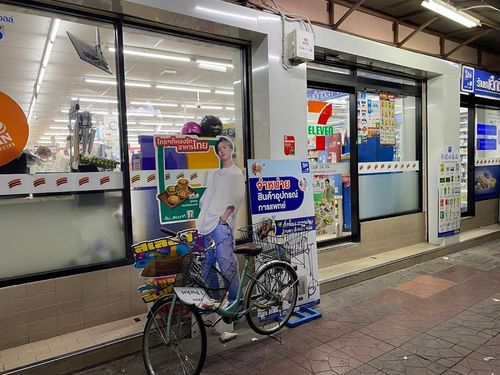
7-Eleven
Shops
Khao San’s 24/7 reset button: ice‑cold A/C, ham‑cheese toasties, All Café iced lattes, water for 7–14 THB, and late‑night supplies from snacks to sunscreen—right by Rikka Inn.
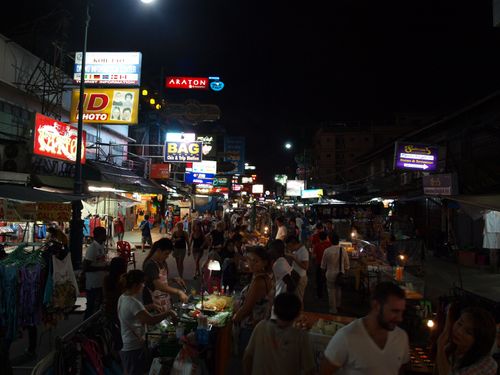
Khao San Road
Attractions
Bangkok’s backpacker carnival: curbside bars, live bands and DJs from 3pm–2am (midnight Sun). Street eats are cheap — pad thai 70–100 THB, mango sticky rice 60–100 THB. Come for wild people-watching; duck into Rambuttri for a calmer beer.
Rambuttri
Markets
Khao San’s calmer cousin: a tree‑shaded lane of VW van cocktail bars, open‑air foot massages, pad thai grills, and easygoing live bands. Best from sunset to 11pm; beers 80–120 THB, cocktails 150–220 THB. One block from the chaos, all the charm.
Recommended Products
More Khao San Road Guides
- Backpacker Packing List for Thailand’s Train Travel: Sleeper Comfort, Security, and Station-Day Essentials
- What to Pack for Thailand for Overnight Trains: Sleep Gear, Security, and Comfort Essentials
- What to Pack for Thailand for Train and Bus Backpacking: Overnight Transit, Platform Comfort, and Easy Access Items
- Backpacker Packing List for Thailand for Train Station and Platform Days: Heat, Waiting, and Easy-Carry Essentials