
What to Pack for Thailand for Food Tour and Street Food Travel: Comfort, Cleanliness, and Small Essentials
Pack smart for Thailand food tours: breathable clothes, comfy shoes, hygiene kit, water, power bank, and small cash. Eat more, stress less, spill-proof.
We’re perched on a plastic stool on Yaowarat Chinatown Heritage Center, elbows slick with chili-lime sweat, trading bites of grilled squid skewers while scooters skim our knees. The wok sizzles, the durian cart drifts by with that sweet rot perfume, and we’re trying not to baptize our shirt in tom yum. This is exactly why we came—and exactly why a smart Thailand food tour packing list matters. When we’ve got the right gear, we can chase bowls from Wang Lang Market to Talat Phlu without worrying about blisters, belly, or busted phone batteries.
Your Thailand Food Tour Packing List: The Essentials
Clothing and footwear for long walking days
Bangkok feeds best on foot. We’ll crisscross sois and markets, hop the Chao Phraya Express boat, and duck into alley grills where tables wobble and the chili hits like a cymbal crash. Pack light, breathe easy, and keep it respectful if a temple detour sneaks into your route.
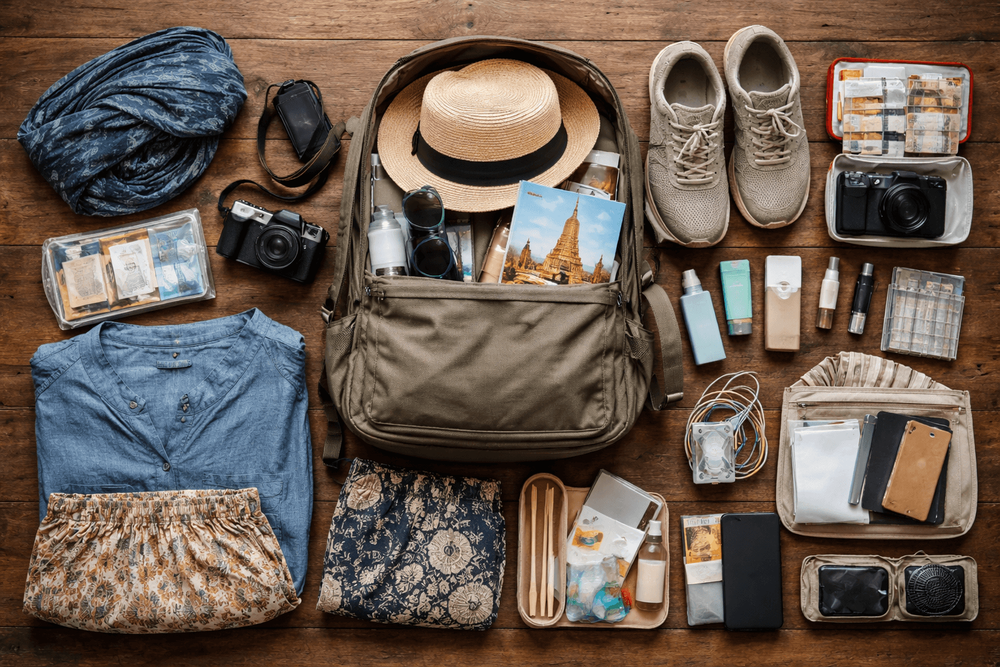
- Breathable tops: Lightweight cotton or moisture-wicking tees and loose button-downs. Quick-dry fabrics forgive splashes from noodle broth and afternoon downpours.
- Airy bottoms: Linen-blend or quick-dry shorts for day markets (mid-thigh or longer feels better on plastic stools). Pack at least one pair of light trousers for cooler mall AC and temple-adjacent eats.
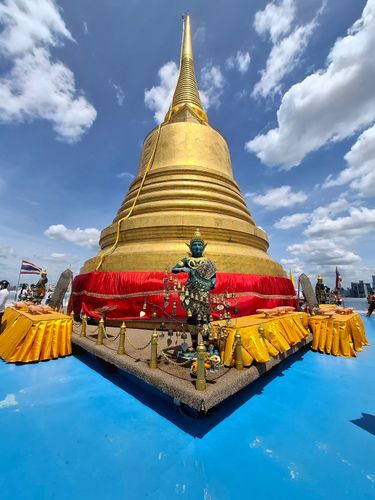
- Modest layer: A thin scarf or light long-sleeve for when street snacks lead to a shrine or you wander past Wat Saket Ratchawora Mahawihan (the Golden Mount) and decide to climb for the breeze. If temples are on your menu, see our dedicated advice in Thailand Packing List for Backpackers Visiting Temples, Shrines, and Royal Sites (/articles/thailand-packing-list-backpackers-temples-shrines-royal-sites).
- Footwear: Cushioned, breathable sneakers for big market days (Chatuchak, Or Tor Kor). For wet evenings around Chinatown, a supportive sandal with backstrap and decent tread beats flip-flops. Think “can I stand in a queue for 30 minutes and dart across slick tiles?”
- Socks: Quick-dry ankle socks—markets kick up dust and a pair of dry socks at midday feels like a spa treatment.
- Light rain shell or packable poncho: Afternoon storms happen fast; you’ll thank yourself on Phra Athit Road when the sky just dumps.
- Sun gear: Pack a crushable hat and polarized sunglasses for that white-glare soi sprint between shady awnings.
Practical note: Laundry’s easy. Guesthouses and coin-op machines near Khao San and Soi Rambuttri make a two- or three-outfit rotation totally workable. If you’re squeezing it into carry-on only, peek at our Thailand Packing List for Backpackers on a Short Trip: 3 to 7 Day Carry-On Checklist (/articles/thailand-short-trip-packing-list-carry-on-3-to-7-days).
Must-haves for food safety and comfort
We eat where the smoke looks right and the line of aunties is long. Still, a little hygiene kit keeps the sanuk rolling.
- Hand sanitizer (60%+ alcohol): A travel bottle on a carabiner so you can sanitize after handling cash. About 40–60 baht at 7-Eleven.
- Tissues and wet wipes: Napkins are tiny; some stalls have none. A slim pack of tissues plus a few alcohol wipes handles spills and sticky mango-fingers. Keep a backup in your day bag.
- Oral rehydration salts (ORS) or electrolyte tablets: The heat plus chili equals sweat math. ORS sachets cost ~10–20 baht each at pharmacies; bring a few for long days.
- Stomach kit: We carry bismuth tabs, ginger chews, and a few loperamide capsules for emergencies, plus any personal meds. Chat with your doctor before you go.
- Collapsible water bottle (750 ml–1 L): Tap water isn’t for drinking; refill at your hotel or use water stations when you find them. A reusable bottle saves baht and plastic—cold bottled water runs ~10–15 baht at 7-Eleven if you’re topping up on the fly.
- Compact towel or bandana: Mops sweat, functions as an impromptu placemat on a shared table.
- Tiny trash bag or ziplock: For lime peels, skewer sticks, or a rogue chili when bins are scarce.
- Lip balm and pocket SPF: We swear by stick formats—no leaks, quick swipes.
- Blister plasters: Chinatown to Hualamphong and back is fun until your heel protests.
If you’re dialing in a budget buy list and want to know what’s worth grabbing locally versus bringing from home, we’ve laid it out in Thailand Packing List for Backpackers on a Budget (/articles/thailand-packing-list-for-backpackers-on-a-budget).
Day bag, documents, and money: move like a local
We bounce between soi-side grills, fresh markets, and casual shophouses. A tidy carry system means eyes on the wok, not on your pockets.
- Sling or crossbody day bag: Lightweight, water-resistant, with a zip top you can slide to the front in crowds on Yaowarat or at Wang Lang Market. 8–12 liters is the sweet spot.
- Flat money belt or neck pouch (optional): Useful for passports on transit days; otherwise, leave passports locked at the hotel and carry a paper copy plus a digital scan.
- Cash strategy: Most stalls are cash-only. Keep small bills (20s, 50s, 100s) handy; break 500/1000 at 7-Eleven. A coin purse saves you fumbling while balancing boat noodles.
- Cards and ATMs: ATMs are everywhere; fees vary. Bring at least two cards stored separately.
- Passport copy and travel insurance details: Paper and digital. If you buy a local SIM (AIS/True/DTAC), you’ll need your passport at registration.
- Lightweight tote: For fruit runs at Or Tor Kor or a bag of curries to take back to your room.
- Tiny pen and notepad: For jotting stall names, spice levels, or that auntie’s special order—“moo krob, mai phet” (crispy pork, not spicy) if you’re easing in.
Safety reality check: Crowds are part of the fun and the risk. Keep zips closed, avoid back pockets, and use common sense in tuk-tuks at night. If something feels off, we bounce to the next cart—there’s always another bowl around the corner.
Tech and accessories to find the next bowl
The best khao man gai might be down a khlong-side lane you’d miss without a little digital help.
- Unlocked phone + local eSIM/SIM: AIS, True, and DTAC all work well in Bangkok. Data helps with Grab rides, translation, and map pins for hard-to-spot stalls.
- Power bank (10,000–20,000 mAh): Night markets devour battery. Keep a short USB-C/Lightning cable coiled and ready.
- Universal adapter: Thailand runs on 220V, 50 Hz, with common sockets accepting Type A/B (flat pins) and Type C (round). Many hotels have universal outlets, but not all.
- Offline maps: Download Bangkok areas for when you’re underground on MRT or deep in market canyons.
- Translation app: Google Translate with Thai offline pack saves the day for menu boards. Learn a few phrases—“sawadee” (hello), “aroy mak” (very delicious), “mai phet” (not spicy), and “pet nit noi” (a little spicy).
- Ride-hail apps: Grab is the standard; Bolt can be cheaper. We still love river hops—Chao Phraya Express boat to Tha Wang Lang for lunch, then back up to Phra Arthit with the sunset breeze.
- Noise-isolating earbuds: Street beats hit hard; nice to tame the thump from a Khao San bar when you’re plotting your next snack.
- Camera or phone lens cloth: Chili oil smears are inevitable.
Optional add-ons for specific food missions
We don’t bring all of this every day, but some missions demand extra tools.
- Rain gear: Packable umbrella or poncho for monsoon months (roughly May–October). Markets keep sizzling in the rain; you just stay drier.
- Insect repellent: DEET or picaridin for riverside feasts—Wang Lang, Tha Chang, and night bites near the khlongs can buzz.
- High-SPF sunscreen: SPF 50+ and reef-safe if you’re touring coastal markets after Bangkok.
- Cooling towel or mini fan: Peak-afternoon slogs from Soi Rambuttri to Phra Athit are less melty with a quick neck-cool.
- Reusable utensil set: A spoon/fork combo and collapsible chopsticks cover nearly everything. Thailand is mostly spoon-and-fork territory; chopsticks for noodles.
- Collapsible food container: For bagging a bonus mango sticky rice or crispy pork for later without adding plastic to the pile. A small leakproof tub works.
- Lightweight picnic mat: Park meals by Santi Chai Prakan Park on Phra Athit are an underrated joy.
- Microfiber laundry line and soap leaves: For de-chili-fying shirts in your bathroom sink between markets.
- Compact first-aid: Antihistamines (for rogue prawn allergies), paracetamol/ibuprofen, and small antiseptic.
Know before you go: street-food realities we love (and plan for)
- Heat management: Bangkok heat is a character in this story. We chase shade, sit under fans, and drink water before we’re thirsty. That’s the job.
- Clean stall clues: Big queues, high turnover, and one cook per station are green flags. We avoid pre-cooked dishes sitting lukewarm.
- Ice and drinks: Ice is generally purified in the city; we say yes unless we’re far-flung and unsure. Bottled water is cheap if you skip ice.
- Spice calibration: “Thai spicy” is a beautiful trap. Start with “pet nit noi” and work upward as bravery returns.
- Cash flow: Most markets are cash-only. 300–500 baht in small notes fuels an entire evening of grazing.
- Etiquette: Don’t seat-jack a table if a stall’s system is queue-first, seat-later. Return bowls and trays to the counter if you’re not sure; mimic the locals.
- Tuk-tuks vs. taxis: Tuk-tuks are for short, sanuk hops; agree on a price upfront. Taxis should run meters—ask politely.
- Restrooms: Markets often have pay toilets (3–5 baht). Keep tissues and coins.
If you’re building your big-picture kit beyond food touring—hammocks, temple clothes, the whole shebang—bookmark What to Pack for Thailand as a First-Time Backpacker: The Essential Gear Checklist (/articles/what-to-pack-for-thailand-as-a-first-time-backpacker-essential-gear-checklist).
Packing it all: a sample day-trip loadout
Here’s what we actually toss into our bag for a night graze down Yaowarat, a quick skip to Saphan Taksin pier, and back up the river to Phra Athit for beers.
- On body: Breathable tee, quick-dry shorts, cushioned sneakers, hat, sunglasses.
- In the sling: Passport copy, 500–800 baht in small notes, coin purse, phone with local data, power bank + short cable, sanitizer, tissues + wet wipes, ORS sachet, lip balm/SPF, collapsible water bottle (half-full to start), pen + notepad, compact towel/bandana, blister plasters.
- Optional that night: Packable poncho (rain clouds brewing), reusable fork/spoon, tiny trash ziplock, mini fan.
That setup sees us through grilled pork skewers near Odeon Circle, peppery boat noodles at Victory Monument, and a final roti down a sleepy soi off Phra Athit—with zero stress and minimal sauce casualties.
Where to base yourself between bites
Pick your home base by appetite:
- Chinatown (Yaowarat/Soi Nana): Step outside and you’re in the sizzle. Great for late-night grazers.
- Khao San, Soi Rambuttri, and Phra Athit: Backpacker vibes, river breezes, and easy boat access to Wang Lang and Tha Chang markets.
- Silom/Sathorn: Close to BTS, Mahanakhon views, and street eats under Sala Daeng’s neon.
- Ari/Victory Monument: Sleepier residential streets with cult noodle spots and coffee to reset between feasts.
If you’re debating whether to go ultralight or upgrade a few items, our Backpacker Packing List for Thailand (/articles/backpacker-packing-list-for-thailand-2026-05-08) breaks down durable basics that survive chili splashes and coin-op laundry.
Final bite
Bangkok rewards the prepared belly. Pack for sweat, spice, and spontaneity, and we’ll hunt bowls together—from morning pig’s blood soup in Nang Loeng to midnight oysters under Chinatown’s red lanterns—light on our feet, clean hands, and room for one more skewer every time.
Related Hotels & Places
Yaowarat Chinatown Heritage Center
Attractions
Inside Wat Traimit by Chinatown Gate, this tidy museum charts Yaowarat’s Chinese roots with bilingual displays, period photos and short films. Open Tue–Sun 8:30am–4:30pm; closed Mon. Pair it with the Golden Buddha upstairs.
Wat Saket Ratchawora Mahawihan
Temples
Chatuchak Haus
Hotels
A 5-star hotel in Bangkok.
More Khao San Road Guides
- What to Pack for Thailand for Street Food and Wet Markets: Clean Eating, Cash, and Spill-Proof Gear
- What to Pack for Thailand Backpacking for Food-Focused Trips: Stain Control, Hygiene, and Appetite-Ready Essentials
- Backpacker Packing List for Thailand’s Budget Food Travel: Clean Eating, Spice Control, and Reusable Meal Gear
- Backpacker Packing List for Thailand’s Bangkok Street Food Trip: Napkins, Wet Wipes, Water Bottle, and Small Comforts