
What to Pack for Thailand for Dive Trips and Snorkeling Days: Water Gear, Dry Storage, and Boat Comfort
What to pack for scuba and snorkel in Thailand: bring-vs-rent gear, dry bags, docs, and boat-day comforts tailored for Phuket, Koh Tao, and the Similans.
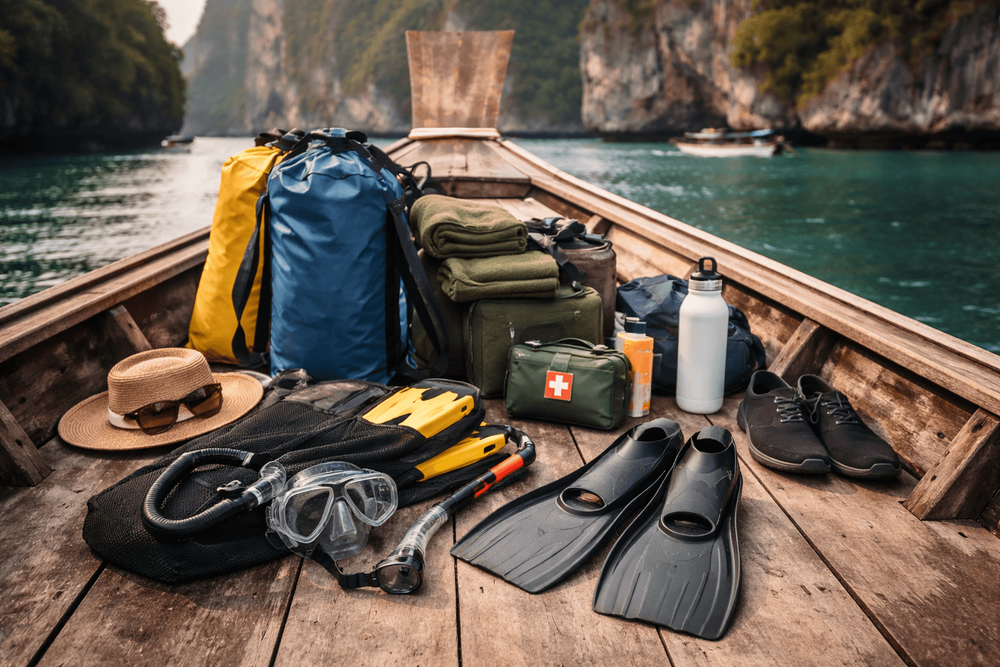
We’re skimming across emerald chop in a longtail off Chalong Pier, Racha Yai in sight, diesel hum underfoot and pineapple-sweet spray in our faces. That second fin strap you almost forgot? That’s the thing between sanuk and sitting topside. This Thailand diving packing list is the kit we actually throw in the bag for Phuket day boats, Koh Tao training dives, and Similan liveaboards—stay dry(ish) and happy on deck.
Data Freshness + Pricing:
- Prices are approximate and in THB.
- Last checked: July 2026.
- Happy hour and promo details change frequently—confirm locally.
Our Thailand diving packing list: what to bring vs. rent
You can rent almost everything from decent shops in Phuket, Koh Tao, Khao Lak, and Krabi. But a few personal-fit items make or break a day at sea.
Must-bring personal gear
- Mask that fits your face: Bring your own. A leaky rental turns every descent into a farang tear-duct workshop. Pack a backup strap and a small bottle of defog.
- Snorkel: Optional for many guided dives but handy in surface chop. A foldable snorkel tucks into a pocket.
- Dive computer: Strongly recommended to bring. Rentals exist (approx. 300–500 THB/day), but your own settings and familiarity are worth their weight when the current starts to move.
- Exposure protection: A 2–3 mm shorty or full suit covers you year-round; water temps are warm but sun, thermoclines, and long days add up. If you run cold, bring a 3 mm full and a thin hooded vest.
- Rash guard + leggings: For snorkel days, surface intervals, and jellyfish tendrils. Also doubles as temple-appropriate coverage back on shore.
- Booties: Open-heel fins + 3–5 mm booties save toes on metal ladders and rocky entries. Full-foot fins are fine for easy snorkel bays.
- Surface marker buoy (SMB) + spool: Non-negotiable in current and boat traffic. Most DMs carry, but carrying your own is smart (and often required). Add a whistle to your BCD.
- Cutting tool: Line cutter or shears. Skip knives that look like you’re heading to Soi Cowboy; a compact tool is enough.
- Torch/flashlight: For swim-throughs or night dives. Bring a backup if you’re planning proper night dives; chargeables are convenient, but carry spare O-rings and a small silicone grease sachet.
- Save-a-dive kit: Spare mouthpiece and zip ties, fin/mask straps, O-rings, boltsnaps, mini multi-tool, Aquaseal, and a few feet of bungee.
- Ear and skin care: Alcohol/vinegar swimmer’s ear drops for after dives, and a small tube of hydrocortisone for rashy jelly kisses. Pack seasickness tablets or ginger chews if you’re prone to wobble.
Easy to rent locally (and when to bring)
- BCD and regulators: Widely available and well-maintained at reputable shops (approx. 300–500 THB per piece/day; full kit often 800–1,200 THB/day). If you’re picky about hose routing or mouthpieces, bring your own reg.
- Wetsuits: 2–3 mm shorties or full suits are standard rentals. Bring your own if you chill easily or want guaranteed fit.
- Fins and weights: Rentals are fine. If you have awkward shoe sizes or bad ankles, pack your own open-heel fins and familiar booties.
- Tanks: Included with dives. Nitrox is common on boats that offer it (approx. 150–250 THB per tank). Bring your Nitrox card if you plan to use EANx.
Nice-to-have comfort items
- Reef-safe sunscreen and zinc stick: Apply before boarding; reapply between dives. Look for “non-nano” formulas.
- Microfiber towel and sarong: Towel for drying, sarong for shade or wind.
- Refillable bottle: Boats often have water jugs; stay hydrated between currents.
- dry bag and phone pouch: Keep wallet, phone, and camera dry during transfers.
For a broader, non-dive baseline, we cross-check with our general kit here: Backpacker Packing List for Thailand.
Clothing, footwear, and beachwear that work on Thai boats
Thailand does heat like a wok does sizzle. You’ll live in quick-dry fabrics and flip-flops, with the occasional blast of polar vortex AC when you duck into 7-Eleven.
- quick-dry tees and boardshorts: One to wear, one to dry. Salt air means cotton never truly dries.
- Long-sleeve UPF shirt: Worth its weight in aloe. We throw it on the moment the tank comes off.
- light rain shell: For monsoon squalls on the Andaman (May–Oct) and Gulf (Oct–Dec). It doubles as wind protection on the ride back.
- Deck-friendly footwear: Flip-flops for the pier; lightweight water shoes if you’ll be hopping in and out at rocky bays.
- Casual wear for shore: A breezy dress or linen shirt for post-dive pad thai on Soi Bangla or beach bars in Sairee.
- Temple kit: Light pants/sarong and a shoulder-covering top for the Golden Mount or Wat Chalong on your no-dive day.
- Laundry plan: Coin-ops or shops run approx. 30–60 THB/kg; express service is more. A mesh bag keeps wet stuff from perfuming your whole pack.
If you’re stringing dives with ferry hops, we also consult this island primer: What to Pack for Thailand for Island Hopping: Ferry, Beach, and Wet-Storage Essentials.
Documents, certifications, insurance, and health bits
Nothing kills a morning at the pier like realizing your Nitrox card is sitting on your fridge in Chiang Mai.
- Certification card(s): Open Water/Advanced, plus Nitrox if you’ll use it. Digital cards are widely accepted, but a physical backup is wise.
- Logbook: Handy for guiding and liveaboards; a photo of your last few pages works too.
- Dive insurance: DAN or equivalent is strongly recommended; hyperbaric chambers exist but you don’t want to DIY that bill. Keep policy numbers accessible.
- Medical: If you’ve had recent changes, bring a doctor’s clearance. Don’t dive with a cold or on heavy decongestants without medical advice.
- Travel insurance and passport: Photocopies in your dry bag; originals locked at your accommodation.
- Money: National Park fees are often cash. Similan/Surin run approx. 500 THB entry + 200 THB per diving day; Phi Phi approx. 400 THB entry + 200 THB per diving day. Prices shift—confirm with your shop.
- Comms: Thai eSIM or SIM for meeting points and last-minute updates. Grab/Bolt helps dodge tuk-tuk haggles after you dock.
- Health comforts: Oral rehydration salts (ORS; approx. 10–20 THB per sachet), electrolytes, blister plasters, and any prescription meds in original packaging.
For organizing your on-the-go essentials, this day-kit guide helps: Thailand Packing List for Backpackers: Day Bag Essentials for Flights, Temples, and Tours.
Weather, season, and destination tweaks
Thailand is two seas, two monsoons, and a dozen personalities. Pack to match your patch of blue.
Phuket, Racha, Phi Phi (Andaman Sea)
- Season: Year-round diving; seas are calmer Nov–Apr. May–Oct brings swell and squalls; some sites can be surgey.
- Water temps: Typically 27–30°C. A 2–3 mm shorty is enough for most. Pack a light hooded vest if you do three dives a day.
- Notes: Racha Noi/Racha Yai are great for visibility and training. Phi Phi offers drama above and below water but can be crowded—SMB is your friend.
- Fees: Phi Phi National Park fees are usually collected on the boat in cash (approx. 400 THB entry + 200 THB per diving day).
Similan & Surin Islands (liveaboards via Khao Lak)
- Season: Typically open Nov–May; closed the rest of the year. Boats depart Thap Lamu Pier.
- Water temps: 26–29°C, with occasional thermoclines. A 3 mm full keeps you comfy on multi-day runs.
- Notes: Bring a beanie or light fleece for breezy nights, plus a spare power bank. Richelieu Rock can have current—SMB, whistle, and good buoyancy are essential.
- Fees: Expect approx. 500 THB entry + 200 THB per diving day (foreign adult), paid via your boat/agent.
Koh Tao, Koh Phangan, Sail Rock (Gulf of Thailand)
- Season: Best Mar–Sep. Oct–Dec sees rain and reduced vis; Jan–Feb improves. Boats usually leave from Mae Haad.
- Water temps: 28–31°C. A rash guard often suffices; pack a 2 mm shorty if you dive dawn-to-dusk.
- Notes: Training central—great for tune-ups and advanced courses. Sail Rock is the showstopper; carry an SMB and mind the thermocline.
Koh Lanta, Hin Daeng/Hin Muang; Krabi/Ao Nang Beach
- Season: Similar to Phuket—best Nov–Apr. Sites can be deeper with blue-water rides; a computer and good gas planning pay off.
- Footwear tip: Ladder rungs can bite; booties earn their luggage space here.
Jellyfish, sun, and rain
- Jellyfish: Stingers show up seasonally; shops usually carry vinegar. Rash guards and leggings help.
- Sun: Bring UPF clothing and reapply reef-safe sunscreen after dives.
- Rain: Squalls pass fast—stash a rain shell and keep electronics in dry storage.
Practical extras for comfort, safety, and underwater protection
Beyond the core kit, these bits make Thai boat days smoother than a Chao Phraya Express glide down the khlong.
- Dry storage: 10–20 L roll-top dry bag for clothes and docs; small waterproof pouch for phone/cash. Add silica gel sachets for cameras.
- Carabiners and lanyards: Secure your DSMB, torch, and camera so they don’t clatter into the Gulf.
- Microfiber cloths and O-ring grease: Keep housings and torches happy.
- Snacks: Banana, peanuts, or a 7-Eleven onigiri for the ride home. Many boats feed you, but your appetite after three tanks is legendary.
- Rehydration: ORS and a 1 L bottle. You’ll sweat more than you think between sun and wetsuit.
- Seasickness plan: Non-drowsy tablets if they suit you; take them before the boat leaves. Sea bands and ginger help some folks.
- First aid mini: Plasters, antiseptic wipes, ibuprofen/acetaminophen, and a small roll of kinesio tape for that fin blister.
- Electronics: GoPro or compact camera, red filter, spare batteries, SD cards, and a simple tray/handle. A multi-USB charger or compact power strip is gold on liveaboards.
- Power and plugs: 220 V, 50 Hz. Most sockets accept flat (Type A) or round (Type C) two-prongs; a slim universal adapter covers you.
If your trip leans beachy between bubbles, this beach-minded list pairs nicely: What to Pack for Thailand for Beach Backpacking: Sand, Swim, and Easy-Dry Essentials.
Your boat-day grab-and-go checklist
We keep this in our day bag so we’re not rummaging like raccoons at the pier.
- C-card(s), cash for park fees (approx. 400–700 THB depending on site), and a copy of your passport
- Mask, defog, snorkel, booties, rash guard/shorty
- Computer, SMB + spool, whistle, cutting tool
- Torch + backup (if night dive planned), spare O-rings/straps
- Reef-safe sunscreen, zinc, lip balm with SPF
- Dry bag, phone pouch, microfiber towel, sarong
- Refillable bottle, ORS/electrolytes, quick snack
- Seasickness tablets/bands, ear drops
- Sunglasses with retainers, hat, light rain shell
Know before you go: rentals, baggage, and boat etiquette
- Booking and rentals: Reputable shops will size you the day before. Full rental kits run approx. 800–1,200 THB/day; computers and torches are usually extra. Ask about Nitrox availability (approx. 150–250 THB per tank) and National Park fees upfront.
- Baggage on domestic flights: Carry-ons are often limited to approx. 7 kg; pre-book checked or sports baggage for regs/BCDs on AirAsia, Thai VietJet, or Nok. We hand-carry regs and computers.
- Money on boats: Bring small bills. Some boats can take QR payments, but assume cash for park fees and tips.
- Tipping: Not mandatory. If you had a great day, approx. 100–200 THB per diver per dive guide on day trips is common; liveaboards sometimes suggest 5–10% of trip price—confirm what’s customary with the operator.
- Etiquette and safety: Do buddy checks, stow gear neatly, fins off at the ladder, and never touch coral or turtles. Gloves and reef hooks are generally discouraged; buoyancy wins hearts. Follow the DM—they know when Racha’s current turns or when Chumphon Pinnacle puffs thermocline.
- Getting to piers: Phuket day boats leave from Chalong; Similan trips from Thap Lamu near Khao Lak; Koh Tao boats from Mae Haad. Leave early—pier traffic jams happen, and tuk-tuks love a last-minute price surge.
Where we stay to make early boats easy
We keep it simple and sleep near the pier:
- Phuket: Around Chalong or Rawai keeps call times civilized for Racha and Phi Phi boats.
- Khao Lak: Near the main road north of town for fast runs to Thap Lamu and back—shower, snack, sleep, repeat.
- Koh Tao: Mae Haad for early check-ins; Sairee if you want to trade nitrogen for nightlife after sunset.
If you’re hopping islands before or after your dive days, layer this guide on top of your thailand diving packing list: What to Pack for Thailand for Island Hopping: Ferry, Beach, and Wet-Storage Essentials.
Final checks before you splash
- Message the shop the night before to confirm meet time, boat name, and any last-minute weather calls.
- Charge everything: computer, camera, torch. Pack spares.
- Lay out cash for park fees and snacks so you’re not fishing in your dry bag during the safety brief.
- Pack like it’ll rain on the ride out and blaze on the ride back—because it just might.
Cressi Gara Professional LD Freediving Mask
We’ll be the ones nursing iced coffee at dawn on Phra Athit Road before a taxi to the river express, grinning at the day ahead. Toss this thailand diving packing list in your notes, and we’ll see you on the swim step at Richelieu Rock when the first anthias catch the sun.
Related Hotels & Places
Recommended Products
More Khao San Road Guides
- What to Pack for Thailand for Beach, Boat, and Snorkel Days: Reef-Safe, Dry Storage, and Sun Protection
- Backpacker Packing List for Thailand’s Adventure Islands: Snorkeling, Boat Days, and Waterproof Tech Protection
- What to Pack for Thailand for Boat, Longtail, and Day Cruise Trips: Splash-Proof, Compact, and Easy-Clean Gear
- What to Pack for Thailand for Island and Beach Day Bags: Snorkel Gear, Waterproof Storage, and Sun Protection