
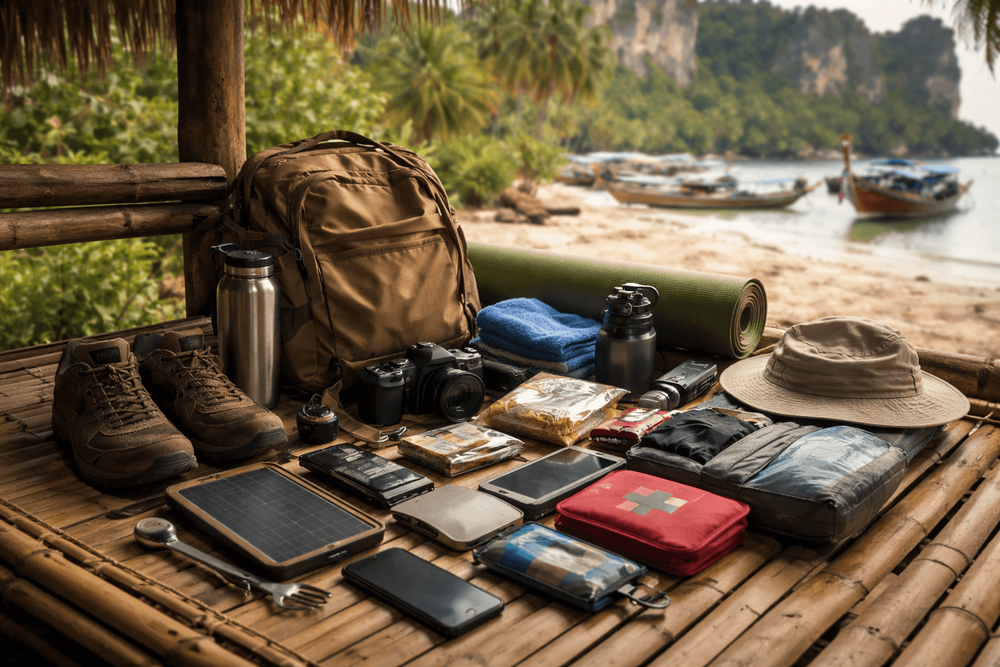
What to Pack for Thailand for Budget Backpackers: Gear That Saves Money on the Road
Pack light, stay cheap: our Thailand budget packing list of clothes, gear, and money-saving essentials so your baht go to mango sticky rice—not baggage fees.
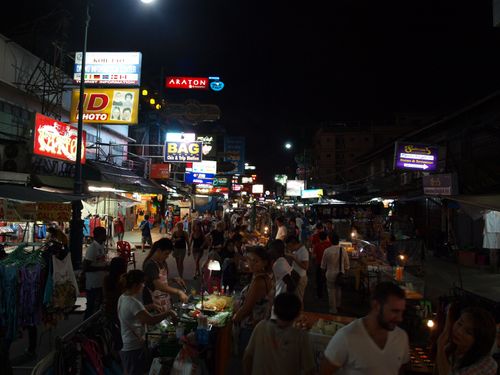
We’re shoulder to shoulder on Sampao Thong Market at dusk, the air thick with lemongrass smoke and frying garlic, a tuk-tuk idling like a big cat, bass thumping from a Khao San Road bar one alley over. Our packs feel light, not because we left everything behind, but because we nailed our Thailand budget packing list—gear that spares our baht and our backs. When the sky opens and the monsoon slaps the tin roofs, we’re dry under a 20-baht poncho, phone zipped in a cheap dry bag, sandals gripping slick pavement. This is how we travel Thailand on the cheap without living like a monk—smart kit, not more kit.
Thailand Budget Packing List: Essential Clothing for Heat, Humidity, and Sudden Rain
Thailand is hot and humid, even when Bangkok malls crank the AC hard enough to fog your glasses. Pack light, breathable layers that dry fast, and add one respectful set for temples—no need to haul a wardrobe across the khlongs.
- 3–4 breathable tops: Think quick-dry tees or loose cotton/linen. Synthetics dry fastest after those budget laundry drops (40–60 baht/kg around Khao San).
- 2 pairs of shorts: Athletic or linen for daily sanuk; avoid super short shorts for temple days.
- 1 pair lightweight trousers: Linen or thin trekking pants earn their keep on night buses and temple visits.
- 1 temple-ready top: Shoulders covered. A thin button-up works everywhere—from the Chao Phraya Express boat to a rooftop happy hour.
- 1 sarong or large scarf: Temple cover, beach blanket, bus pillow, emergency towel. Street stalls near Phra Athit Road sell them for 100–200 baht.
- Swimwear: One set is enough. Saltwater dries fast; your hostel balcony does the rest.
- Footwear:
- Strap sandals with grip for rain-slick sois and waterfall trails.
- Flip-flops for hostel showers and beach runs.
- Breathable sneakers if you plan big walking days (Golden Mount steps won’t climb themselves).
- Lightweight rain layer or poncho: Ponchos are 20–30 baht at 7-Eleven and pack down to nothing. A thin jacket helps when buses blast AC at arctic settings.
- Underwear and socks: 4–5 pairs each in quick-dry fabrics; hand-wash and they’re ready by morning.
- Sleepwear: A thin tee/shorts—hostel AC can be Siberian.
- Hat and sunglasses: The midday sun on Rattanakosin Island does not play.
Temple note: Most wats expect knees and shoulders covered; some have loaner sarongs for a small fee (20–100 baht deposit), but it’s easier—and cheaper—to bring your own scarf and long pants.
Tip: You can buy almost anything here. Markets around Khao San, MBK Center by National Stadium BTS, and weekend Chatuchak stalls will kit you out if you forgot something. But bring your preferred sunscreen (it’s pricier here and often whitening) and footwear you trust.
Budget-Friendly Travel Gear That Actually Saves You Money
We skip gimmicks and pack workhorse gear—the kind that keeps water cold, electronics charged, clothes dry, and souvenirs unbroken.
- Reusable water bottle (750 ml–1 L): Refills at hostels are often free; 1.5 L bottles are 14–20 baht if you must buy. Insulated bottles spare you from lukewarm misery after a sweaty Phra Athit stroll.
- Optional filter bottle: Handy on long bus rides. In cities, we mostly refill at accommodation to be safe.
- Quick-dry towel: Hostels may charge 20–40 baht to rent. A small microfiber towel pays for itself in two nights and dries on a balcony rail in an hour.
- Compact daypack (15–20 L): A foldable pack with chest strap and rain cover is clutch for day trips—Golden Mount climbs, river ferries, or market runs. Street-stall versions are 200–400 baht; Decathlon styles last longer.
- Dry bag (5–10 L): Songkran, longtails at Railay, surprise downpours in Banglamphu—phones and passports stay bone-dry. Expect 150–300 baht from stalls off Khao San.
- Packable tote: For 7-Eleven runs and night market snacks; saves plastic and doubles as laundry bag.
- Lightweight lock + cable: For hostel lockers and strapping your pack on night buses. Many lockers aren’t keyed.
- Universal adapter + short power strip: Thailand runs 220V/50Hz and sockets usually accept flat or round pins, but a universal adapter and a mini power strip (2–3 outlets) lets you charge phone, camera, and power bank from one wall plug.
- 10,000–20,000 mAh power bank: Keeps maps alive on temple mazes and night markets.
- Compression or packing cubes: Helps you live out of a backpack like a saint. We use one for clean, one for laundry, and never chase socks across hostel floors.
- Mini laundry kit: A few detergent sheets and a travel clothesline save those emergency washes.
- Earplugs + eye mask: Khao San bars don’t respect bedtime. Earplugs run ~30–50 baht at pharmacies; worth triple at 2 AM.
- Small first-aid kit: See Health section—but the pouch itself keeps chaos in check.
Where to buy if you land light: 7-Eleven for ponchos, snacks, chargers; MBK Center or neighborhood malls for adapters/power banks; outdoor shops near Khao San and Decathlon for towels, dry bags, and daypacks.
If you want a broader gear overview beyond this savings-focused take, check our deeper dive for first-timers: Thailand Packing List for First-Time Backpackers: What to Bring and What to Leave Behind.
Health, Hygiene, and Safety for Cheap—Without Cutting Corners
Bangkok and the islands are built for travelers, but heat, sun, and mozzies can sideswipe a budget fast if you’re not prepared.
- Sunscreen (reef-safe if you’re island-bound): Bring from home if you can. In Thailand, expect 300–600 baht, and many formulas include whitening agents. We carry SPF 30–50.
- Insect repellent (DEET or picaridin): 80–200 baht locally. Dengue’s the real concern; cover up at dusk near water and green spaces.
- Oral rehydration salts (ORS): Lifesavers after long, sweaty days or a dodgy papaya salad. A few sachets weigh nothing, and pharmacies sell them cheap.
- Basic meds:
- Pain/fever reducer (paracetamol).
- Antihistamine for bites or surprise allergies.
- Anti-diarrheal (loperamide) and a few charcoal tabs.
- Motion sickness tablets if boats/buses make you queasy.
- Mini first aid: A handful of plasters (Band-Aids), blister patches, antiseptic wipes, and a small tube of antibiotic ointment.
- Hand sanitizer + tissues: 7-Eleven has you, but keep a set for temple bathrooms or rural stops.
- Condoms: Widely available; if you have strong brand preferences, pack them.
- Small toiletries: Decant into 100 ml bottles; you can top up almost anywhere. Skip hauling family-size shampoo—7-Eleven sells everything.
- Lightweight mask: Not essential for most travelers now but useful in smoky season up north or dusty construction zones.
Most things are easy to buy, but pack a starter supply to avoid paying airport prices on arrival. If you like a more general checklist of hygiene items for long trips, cross-reference with this concise roundup: Backpacker Packing List for Thailand.
Documents, Money, and Electronics That Keep the Trip Smooth
The admin bits aren’t sexy, but they’ll save you fees, headaches, and half a day chasing printers.
- Passport + 6 months’ validity: Standard. Keep a photo copy and a digital scan in your email/cloud.
- Visa or visa-exempt entry: Rules shift; print or screenshot confirmations. Some entries no longer use the old TM6 card—if one’s issued, keep it safe.
- Travel insurance details: Screenshot the policy and claim number. Hospitals can ask for proof.
- Vaccination card if required by your route: Photos work for most checks.
- Cash and cards strategy:
- ATMs in Thailand typically charge a 220–250 baht withdrawal fee. Take larger, less frequent withdrawals to reduce hits.
- Bring at least two cards (one debit, one credit) with fee-free foreign transactions if possible.
- Always choose “charge in local currency (THB)” on card terminals to dodge bad conversion rates.
- Small notes (20–100 baht) are gold for street food, river boats (16–32 baht on the Chao Phraya Express), and market buys.
- SIM/eSIM:
- Tourist SIMs from AIS/DTAC/True are easy at the airport or 7-Eleven—typical starter packs run a couple hundred baht for a week or two of data.
- eSIMs are a breeze if your phone supports them; install before takeoff and land connected.
- Keep your passport handy; you’ll need it for registration.
- Phone setup:
- Download offline maps and a translation app. Mark your hostel, the river pier for your ferry, and the nearest 7-Eleven (you will need it at 3 AM).
- Pack a short cable for power banks and a longer one for awkward hostel outlets.
- A small pouch for electronics keeps your charging circus tidy.
- Extras that pull weight:
- Lightweight ebook reader or phone app—those 10-hour buses fly by.
- Spare camera battery or compact point-and-shoot if you’re serious about low-light markets.
Common Packing Mistakes (and How to Dodge Them)
A good thailand budget packing list is less about what to add and more about what to skip.
- Overpacking clothes: You’ll wear the same 2–3 outfits. Laundry is cheap; space is priceless.
- Heavy boots: Unless you’re trekking multi-day in the north, sandals and light sneakers win.
- Too many toiletries: Full-size bottles leak, and you’ll find everything locally, cheaper.
- Forgetting a temple outfit: Renting sarongs every time adds up; carry your own scarf and one long pant.
- Skipping sun and bug protection: Buying in a pinch costs more; pack a starter kit.
- No lock for hostels: Borrowing or buying at tourist prices is a waste. Bring a small lock and cable.
- Missing waterproofing: A 150–300 baht dry bag costs less than a soaked phone. Songkran (mid-April) is a citywide splash zone.
- Ignoring ATM fees: Plan withdrawals; bring backup cards. Choosing “THB” on card machines avoids costly conversion.
- Packing thick denim: Takes eons to dry in humid season. Quick-dry trousers and shorts earn their place.
- Skipping earplugs: The bass on Khao San runs late, and your dorm neighbor will snore.
Know Before You Go: Money-Saving Notes from the Road
- Seasons and rain: May–Oct sees afternoon downpours; Nov–Feb is cooler and drier. Always keep a poncho and dry bag in your daypack—even if the sky looks clear leaving your guesthouse on Phra Athit.
- Water: Hostels often refill bottles; if not, 1.5 L at 7-Eleven is cheap. Many cafes will top you up if you ask nicely—sawadee and a smile go far.
- Laundry: Self-service machines (30–40 baht a wash) and per-kilo services (40–60 baht/kg) are everywhere. No need for ten shirts.
- Transport: The river ferries are scenic and cheap; ride from Phra Arthit Pier down to Wat Arun for a few coins instead of splurging on taxis stuck on Ratchadamnoen.
- Accommodation: Around Soi Rambuttri and Khao San, budget rooms and dorms compete on price. We usually aim for places with free water refills, lockers, and decent fans or AC—saves on extras and sleep-deprivation costs the next day.
If you’re packing for guys specifically and want a trim list of breathable basics, this lean primer helps: Thailand Packing List for Male Travelers: Lightweight Clothing and Travel Essentials.
Sample One-Bag Packing List (Everything We’d Actually Carry)
- Tops: 3 quick-dry tees or linen shirts
- Bottoms: 2 shorts, 1 lightweight trousers
- Temple set: 1 covered-shoulder top + trousers/sarong
- Underwear/socks: 4–5 pairs each (quick-dry)
- Footwear: sandals with straps, flip-flops, breathable sneakers (optional)
- Swimwear: 1 set
- Rain: 1 poncho, 1 dry bag (5–10 L)
- Daypack: 15–20 L foldable with rain cover
- Towel: small microfiber
- Adapter + mini power strip; power bank (10,000–20,000 mAh)
- Lock + cable; packing cubes
- Toiletries: travel-size basics, sunscreen, sanitizer, tissues
- Health: ORS, bug spray, meds, small first-aid kit
- Docs/money: passport copies, two cards, a bit of USD/EUR as backup, offline maps, SIM/eSIM
Weight check: With this kit, we stay under airline cabin limits and move fast—from a dawn boat at Phra Arthit to sunset beers by the river without hunting for storage.
Where to Save vs. Where to Splurge (Just a Little)
- Save: Daypack, poncho, dry bag, extra tees, and basic meds—cheap and easy to buy locally.
- Splurge (lightly): Good sandals, sun-protective top, and a reliable power bank. You’ll use them daily.
- Bring from home if picky: Sunscreen, specific meds, and your favorite deodorant. Less hunting, more eating boat noodles.
We keep it simple because Bangkok rewards mobility. Drop your pack at a chilled guesthouse near Soi Rambuttri, grab a 10-baht grilled pork skewer, and hop the river boat. With a tight thailand budget packing list, your baht go to mango sticky rice, not excess baggage.

When you’re ready, let’s wander up Phra Athit for cheap beers and live music. Tomorrow, we’ll chase the breeze on the Chao Phraya, sarongs stuffed in our daypack, sanuk dialed in and wallets still smiling.
Related Hotels & Places
Recommended Products
More Khao San Road Guides
- What to Pack for Thailand for Budget Backpackers Buying Essentials After Arrival
- What to Pack for Thailand for Male Backpackers: Lightweight Clothes and Travel Essentials
- What to Pack for Thailand for Backpackers Who Buy Local: Starter Gear to Bring Before You Shop in Bangkok
- What to Pack for Thailand for Budget Backpacker Essentials: Cash, Documents, and Everyday Security