
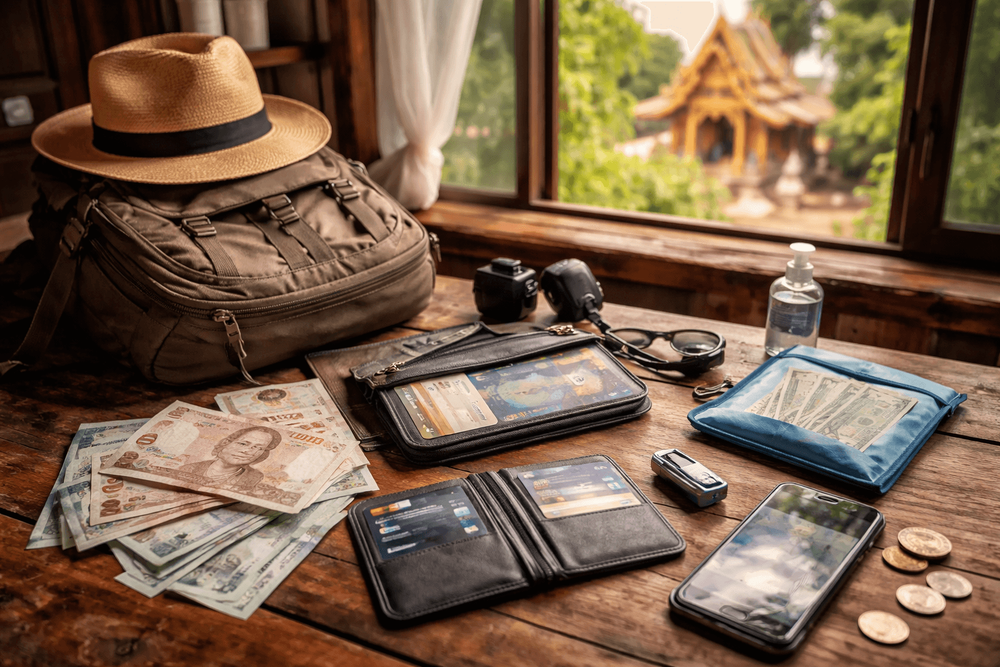
Thailand Backpacker Packing List for ATM-Scarce Trips: Cash Safety, Backup Cards, and Emergency Access
Build a Thailand ATM packing list that works: cards, PINs, cash stashes, fees, limits, and emergency access—so you always have baht when it counts.
We step off the red-eye into Suvarnabhumi’s cool blast of AC and the neon lineup of purple, green, and blue ATMs hums at us like sirens. You can almost hear the thump of Khao San Road bass from across town and smell the wok smoke from Soi Rambuttri. But first—baht. This is where a smart Thailand ATM packing list pays off: the right cards, the right PINs, a little starter cash, and a few low-tech tricks that keep your money moving even when the nearest cash machine is down, swallowed your card, or wants to skim you.
Data Freshness + Pricing:
- Prices are approximate and in THB.
- Last checked: June 2026
- Happy hour and promo details change frequently—confirm locally.
What “ATM travel packing” means for Thailand
Think of ATM travel packing as money logistics you prep before wheels-down. Thailand is gloriously convenient—7-Eleven on every corner, tuk-tuks buzzing, iced coffees materializing when the heat hits—but cash is still king for street food, market stalls, ferries, and mom-and-pop guesthouses. Our Thailand ATM packing list focuses on three layers:
- Primary access: A debit card that works reliably at Thai ATMs (Visa or Mastercard logo, 4-digit PIN), enabled for overseas withdrawals.
- Backup access: A second debit card from a different bank, plus a credit card for hotels, deposits, flights, and emergencies.
- Offline options: A sealed envelope of clean USD/EUR/GBP to exchange at a reputable changer when ATMs are being stubborn, plus a small stash of baht for arrival.
We’re not anti-tech—QR payments are everywhere in Bangkok—but if your foreign account can’t join PromptPay, or your app demands a one-time SMS you can’t receive, you want analog backups that work when the khlong floods, the power blips, or your SIM is acting up.
Your Thailand ATM packing list: what to bring
Here’s what we actually pack, pulled from years of sweating it out between Khao San and Phra Athit Road, sprinting for the Chao Phraya Express boat, and sweet-talking bank tellers when an ATM got peckish with our card.
- Two debit cards, different banks: One lives in your daily wallet, the other in a separate, hidden spot (money belt or zipped inner pocket). Make sure both are activated for international withdrawals and have 4-digit numeric PINs. If your bank uses 6 digits, set a secondary 4-digit PIN if possible.
- One credit card (Visa or Mastercard): For hotel deposits, flight changes, and bigger purchases. Many mid-range hotels accept card with a surcharge (approx. 2–3%). Street vendors? Cash.
- PIN prep: Confirm your withdrawal limits and daily caps with your bank before leaving. Make note of any per-withdrawal foreign fees your bank charges (approx. 0–200 THB equivalent), on top of Thai ATM fees (approx. 220–250 THB per withdrawal).
- Photo ID backup: Passport photos and a digital scan in your cloud drive. If an ATM swallows your card during banking hours, a passport makes retrieval smoother.
- Money belt or flat neck pouch: Not glamorous, but good for transit days and sleeper trains when you might doze off. We switch to a slim inner-pocket pouch once we’re set up at a guesthouse near Soi Rambuttri.
- Minimal daily wallet: One card, a few notes, and a decoy 100 THB to hand a pushy tuk-tuk if you need to disengage sanuk-free haggling.
- Ziplocs and rubber bands: Humidity is real. Keep notes flat and dry; band your small bills for the ferry guy who never has change.
- RFID sleeves or slim card case: Optional, but it keeps cards neat and harder to bend.
- Offline cash: Clean, unfolded high-denomination USD/EUR/GBP for exchange. We carry the equivalent of approx. 3,000–5,000 THB as a last-resort cushion.
- Emergency contact sheet: Bank phone numbers (international collect), last four digits of each card, and your insurer’s hotline.
- Phone with roaming or Thai SIM: Many banks need app confirmations. Grab a Thai SIM at the airport (approx. 150–299 THB for a short-term data pack) so your OTPs and banking apps behave.
- Day bag setup: A light sling or small backpack that zips fully, with a tiny carabiner or safety pin for the zipper. Bangkok’s safe by big-city standards, but markets can squeeze.
If you’re still building your bag, we’ve put together lightweight lists that pair well with this cash plan—especially the documents-and-money checklist: see Backpacker Packing List for Thailand: Documents, Cash, and Travel Admin Essentials (/articles/backpacker-packing-list-thailand-documents-cash-travel-admin) and the Day Bag essentials guide (/articles/thailand-day-bag-packing-list). If you’re flying budget and playing luggage Tetris, our weight-limit packing tips help you keep the “bank-in-a-bag” light (/articles/thailand-baggage-allowance-packing).
Using ATMs in Thailand without drama
Picture this: it’s 2 PM, the sun is frying Sukhumvit, and we duck into a 7-Eleven for that sweet AC. There’s an ATM glowing by the door. You can hear the sizzle of a wok outside, the sweet rot of durian wafting down the soi. Here’s how we make the machine work for us, not the other way round.
Fees and limits you’ll actually see
- Thai ATM operator fee: approx. 220–250 THB per withdrawal for foreign cards. It’s flat, so bigger pulls mean better value—balanced with how much cash you’re comfortable carrying in Bangkok heat and crowds.
- Per-transaction limits: Commonly 20,000 THB, sometimes 30,000 THB, depending on the bank and machine. If you need more, do multiple withdrawals—but that stacks the fee.
- Your home bank fees: Many banks add an international ATM fee and/or a foreign exchange markup (approx. 1–3%). Check the combo before you go.
- Dynamic Currency Conversion (DCC): Some ATMs and merchant terminals will “helpfully” show your home currency. Always choose to be charged in THB without conversion. DCC has a worse rate.
Smart withdrawal playbook
- Use ATMs attached to bank branches or inside malls when possible (MBK, Siam Paragon, CentralWorld) rather than a lonely machine on the street at 3 AM. On Khao San, we’ll often detour to a bank-lobby ATM on Ratchadamnoen for peace of mind.
- Cover your PIN and look for tampering: loose card slots, odd keypads, extra plastic frames. If it looks off, we bounce.
- Take the card first, then the cash: Some Thai ATMs spit the cash before the receipt but after the card. Don’t rush; the machine won’t time out instantly.
- Decline any on-screen conversion to your home currency. Local THB always.
- Keep your receipt if you want a paper trail for disputes, then bin it later back at the guesthouse.
If the ATM eats your card
- During banking hours: Stay put, note the ATM ID on the machine, and step into the attached branch with your passport. Staff can often open the machine later that day. Policies vary by bank.
- After hours: Call the number on the ATM. Cards are typically secured and handled the next business day. Meanwhile, switch to your backup card or exchange that emergency cash.
- If you suspect fraud: Freeze the card in your banking app and call your bank’s international number right away.
Timing and budgeting: how much cash to carry and when to pull it
We aim to land with enough baht to get to our neighborhood, eat, hydrate, and crash—without being forced into the first exchange booth we see.
- Arrival cash: approx. 2,000–3,000 THB covers a taxi from Suvarnabhumi to Banglamphu/Khao San with tolls and airport surcharge (approx. 300–450 THB), a SIM (approx. 150–299 THB), street food and drinks (approx. 150–300 THB per person), and a cushion.
- Airport vs. city ATMs: Airport ATMs work fine and charge similar operator fees. If you’re fee-sensitive, do one larger withdrawal at the airport to avoid hunting machines later when jet lag hits. If you prefer to wait, there are plenty of bank-branch ATMs in town.
- How much cash to carry day to day: We like approx. 1,000–2,000 THB on us—enough for ferries (approx. 16–33 THB), street eats (approx. 40–100 THB per plate), a couple of beers (approx. 60–120 THB each at casual spots), and tuk-tuks or motos in a pinch.
- Split your stash: One wallet for spending, one hidden pouch with a backup card and small notes (approx. 500–1,000 THB). Emergency USD/EUR lives in a sealed envelope stashed deep in your pack at the guesthouse.
- Withdraw early in the day: Machines in busy areas can run out of cash late at night or on holidays. We’ve been there—mid-Songkran, soaked, and cursing a blinking “out of service” light.
For broader packing balance—what fits where, and how to keep your bag under budget-airline limits—our guide can help you prioritize the money kit without sacrificing clean tees (/articles/thailand-baggage-allowance-packing).
Thailand-specific money tips that locals won’t laugh at
- Cash is still preferred in many places: Street vendors on Soi Rambuttri, longtail boats to the khlongs, temple donations near the Golden Mount, neighborhood massage shops, and night markets. Keep 20s and 50s for change; 1,000 THB notes can be hard to break.
- Card acceptance: Chain cafes and malls accept cards; some charge a small fee. Smaller guesthouses may prefer cash for the room. We often settle in Bangkok at a no-frills guesthouse near Phra Athit Road and pay cash; it keeps check-in quick and avoids card surcharges.
- Exchanging foreign cash: Reputable money changers often beat bank rates. Around Ratchaprasong near CentralWorld, you’ll find competitive booths; look for published rates and ID requirements. Bring crisp, unmarked notes.
- Wise/Revolut-style multi-currency cards: Handy for locking rates and keeping bank fees low. Still, pack a traditional debit as your fail-safe for Thai ATMs.
- Respect the baht: The King’s portrait is on notes. Don’t crumple or step on money; it’s not just rude, it can land you in trouble.
- DCC at shops: Same rule—always pay in THB, not your home currency.
- Keep an eye on festival schedules: Lunar New Year, Songkran, and royal holidays can mean crowded ATMs and closed bank counters. Pull cash a day early.
If things go sideways: lost, swallowed, or blocked cards
- Lost/stolen card: Freeze it in your banking app, call your bank’s international number, and file a local police report if required for claims. Most stations will issue a report; bring your passport.
- Card swallowed: Note the ATM ID, time, and bank name. If attached to a branch, ask inside with your passport; otherwise call the hotline on the machine.
- Card blocked due to “suspicious activity”: Many banks flag Thai ATM use. Tell your bank your travel dates before you go, and keep your phone reachable for verification calls/OTPs. A Thai SIM helps here.
- No working card, no cash: Use your backup foreign cash at a reputable exchanger, ask your hotel/guesthouse if they accept card for a partial prepay, and consider a money transfer service to yourself for pickup with your passport.
Safety, scams, and common-sense street smarts
- Shoulder surfers: Stand close to the ATM, cover the keypad, and don’t let “helpful strangers” guide you through the menu.
- Skimmers: Prefer indoor or bank-lobby ATMs. If the slot or keypad feels loose, walk away. Choose well-lit machines with CCTV.
- Taxi cash games: Keep small bills ready. Some drivers claim “no change” at 2 AM by Khao San when the bass is thumping; hand exact fare and keep the night sanuk.
- Room safe reality: Many budget rooms don’t have one. We split: small daily wallet on us, backup card and emergency baht under clothes in a zipped packing cube. Works as well on the night train to Chiang Mai as it does off Soi Cowboy.
Budgeting rhythms that make Thailand smoother
- Weekly withdrawal: One larger pull per week to minimize fixed ATM fees, then top up with exchanged cash if you trip into a fee-free booth with a stellar rate.
- Track without killing the vibe: Jot noodle-and-boat money in your notes app. Boat noodles by Victory Monument (approx. 20–40 THB a bowl) add up only if you let them—worth it though.
- Keep a micro-float: A dedicated coin-and-small-bill pouch for ferries, BTS top-ups, and iced Thai tea. Nothing slows a queue like fishing for a 1,000 THB note on the pier.
Know before you go: quick admin checklist
- Tell your bank your travel dates and enable overseas withdrawals.
- Confirm daily ATM and purchase limits; adjust if too low for a 20,000–30,000 THB pull.
- Set or confirm a 4-digit PIN for all cards you’ll use.
- Save bank hotlines in your phone and on a paper card.
- Set up your banking apps on the phone you’re traveling with. Test an OTP while you still have home service.
- Photograph the front/back of your cards, then blur the CVV in your photo editor and store in an encrypted cloud note.
- Pack a thin pouch for small bills and coins; markets and boats move fast.
If you’re traveling with a laptop or camera gear and need to balance money safety with carry weight, our digital-nomad-friendly list can help you streamline chargers and locks so your day bag stays nimble (/articles/thailand-packing-list-for-digital-nomad-backpackers).
Airport, city, and neighborhood specifics we actually use
- Suvarnabhumi (BKK): ATMs line Arrivals on both sides after you clear customs. We often do one larger withdrawal here to float the first few days and avoid fee stacking. SIM counters sit opposite; it’s a one-stop errand run in delicious AC.
- Don Mueang (DMK): Similar setup—ATMs landside by exits and along the corridor to the taxi queue. Cash first, then bus or taxi.
- Banglamphu/Khao San: Plenty of ATMs along Khao San Road and Soi Rambuttri; we prefer machines attached to bank kiosks on Ratchadamnoen for fewer late-night hiccups.
- Siam/Chit Lom: Pull cash at a bank-lobby ATM inside the malls, then dive into street eats without juggling giant notes.
- Riverside/Thonburi: ATMs cluster near BTS stations (Saphan Taksin, Krung Thonburi) and mall entrances; grab cash before you jump a longtail.
Where we sleep and how we pay
We usually crash at a simple guesthouse near Phra Athit when we want quiet steps from Khao San’s chaos, or pick a mid-range spot with a pool when we’re melting. Many budget places prefer cash on arrival (sometimes a small key deposit, approx. 200–500 THB), while mid-range hotels take card but may place a hold. We ask at booking how they handle payment and keep a fresh 1,000 THB note as an all-purpose deposit that’s easy to swap back out at checkout.
The short list you can copy right now
- 2 debit cards (different banks), 1 credit card, all with 4-digit PINs
- Arrival cash: approx. 2,000–3,000 THB in small notes
- Clean USD/EUR/GBP emergency stash (equiv. approx. 3,000–5,000 THB)
- Money belt/flat pouch + minimal daily wallet
- Ziplocs and rubber bands for notes
- Bank hotlines and policy notes saved offline
- Thai SIM or reliable roaming for banking apps/OTPs
- Day bag that zips fully and stays close in crowds
Lewis N. Clark RFID-Blocking Neck Stash Travel Pouch
When we’ve got this dialed, the rest is easy: we hop the Chao Phraya boat, wander the alleys behind Wat Saket, and eat our way down Soi Rambuttri without ever getting caught cashless in front of a perfect bowl of boat noodles. Pack the money kit once, and Bangkok will keep saying “sawadee” with change in hand, not IOUs.
Related Hotels & Places
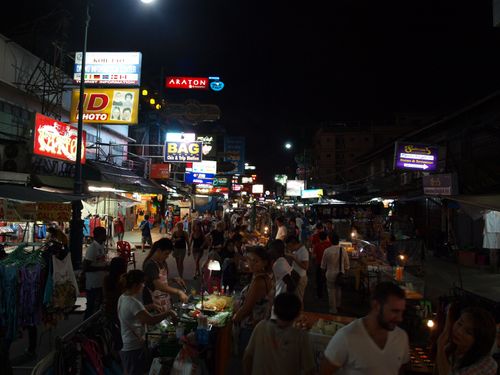
Khao San Road
Attractions
Bangkok’s backpacker carnival: curbside bars, live bands and DJs from 3pm–2am (midnight Sun). Street eats are cheap — pad thai 70–100 THB, mango sticky rice 60–100 THB. Come for wild people-watching; duck into Rambuttri for a calmer beer.
Rambuttri
Markets
Khao San’s calmer cousin: a tree‑shaded lane of VW van cocktail bars, open‑air foot massages, pad thai grills, and easygoing live bands. Best from sunset to 11pm; beers 80–120 THB, cocktails 150–220 THB. One block from the chaos, all the charm.
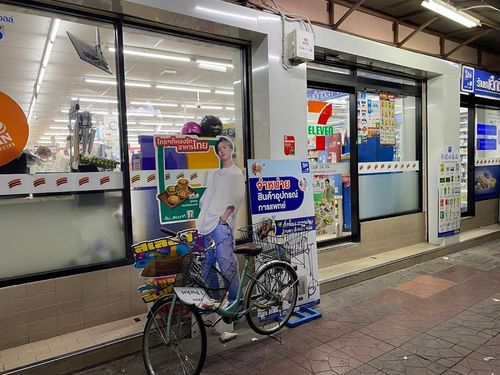
7-Eleven
Shops
Khao San’s 24/7 reset button: ice‑cold A/C, ham‑cheese toasties, All Café iced lattes, water for 7–14 THB, and late‑night supplies from snacks to sunscreen—right by Rikka Inn.
Recommended Products
More Khao San Road Guides
- Backpacker Packing List for Thailand’s Cash-and-Card Travel: Wallet Setup, ATM Safety, and Money-Handling Basics
- Backpacker Packing List for Thailand’s Cash-and-Card Travel: Wallet, Money Belt, and Backup Essentials
- Thailand Backpacker Packing List for Carrying Cash, Cards, and Travel Security
- Thailand Backpacker Packing List for Cashless-First Travel: eSIMs, Payment Apps, and Backup Access