Songkran in Bangkok: Complete Guide to Dates, Parties & Hotels
Your insider guide to Songkran in Bangkok: key dates, best party zones, what to pack, how to get around, where to stay, and smart tips to get soaked the right way.
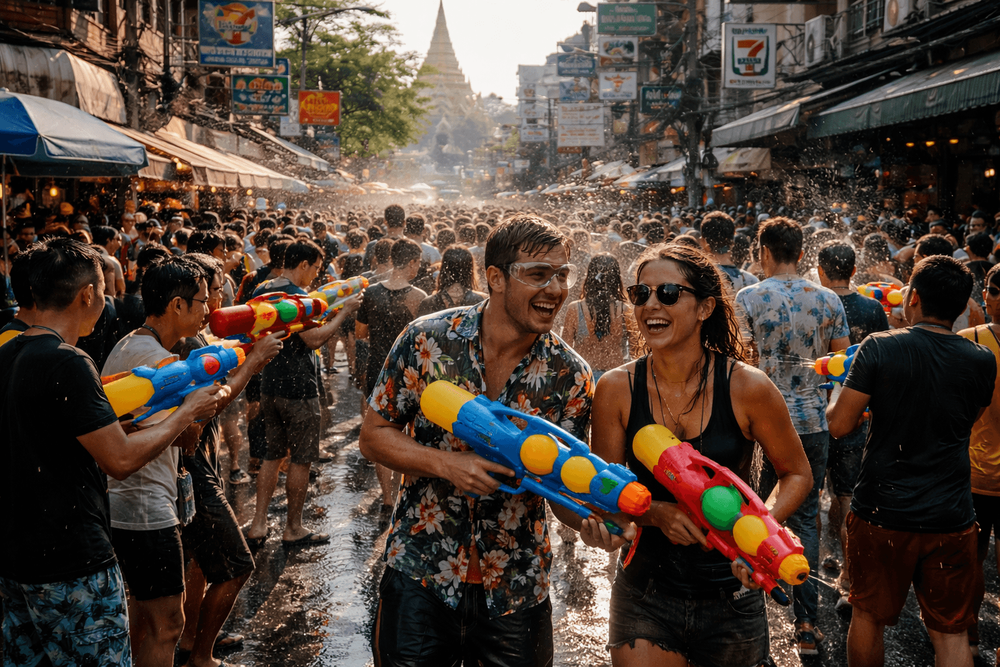
We’re shoulder to shoulder under the BTS at Sala Daeng when the first icy blast hits. A kid with a neon Super Soaker grins like he just won the lottery; talc paste streaks down our cheeks; the street smells like grilled moo ping, wet concrete, and a hint of jasmine. A vendor passes us a waterproof phone pouch for 40 baht; a DJ thumps bass from a truck bed; someone shouts “Sawadee pii mai!” — happy Thai New Year. If you’re searching “songkran bangkok,” this is what you came for: Bangkok turned into one giant water fight, equal parts chaos and charm.
What is Songkran and when is it celebrated in Bangkok?
Songkran is Thailand’s traditional New Year — a nationwide reset marked by water, merit-making, and a lot of sanuk (fun). Official public holidays are April 13–15 every year. In Bangkok, the main street parties usually run across those dates, with build-up on the 12th and lingering splashing on the 16th depending on the year and city rules.
A little context while we dry off: the water started as a gentle ritual — pouring scented water over Buddha images and the hands of elders for luck, washing away the old year. Bangkok keeps those traditions at temples, even as the streets go full farang-friendly water war. Expect two parallel worlds: quiet, respectful mornings at wats; outrageous soak zones by afternoon.
For a deeper dive into the festival’s roots and how it plays out across the city, we break it down here: Songkran: Inside the World’s Biggest Waterfight — Bangkok Festival Guide.
Key notes for the calendar:
- Public holidays: April 13–15 (government offices, banks, and many small businesses close; big malls stay open with holiday hours)
- Peak party days: April 13–15 (12:00–20:00 is the sweet spot for street action)
- Morning rituals: Best 08:00–11:00 (visit temples before the splash-fest begins)
Songkran Bangkok: Where to celebrate
You’ll find water guns citywide, but five zones define the capital’s style: Khao San Road, Silom, Siam/MBK, RCA, and the temple circuit. Each has its own soundtrack, crowd, and drenching technique.
Khao San Road & Old Town (Rattanakosin)
Khao San is Songkran’s backpacker battlefield: shoulder-to-shoulder farang and locals, foam cannons, street DJs, and enough talc paste to frost a wedding cake. The authorities typically close the road to traffic and set security checkpoints. Powder (din sor pong) and high-pressure water guns have been discouraged in recent years; staff may confiscate refills in glass bottles. It’s a frenzy — in the best way.
- Vibe: Wild, international, buckets and bass, all-day soak. Wander to Soi Rambuttri or Phra Athit Road for a slightly calmer drench.
- Hours: Usually ramps up 12:00–20:00; after dark it morphs into bar-hopping with less water.
- Getting there: Easiest is the Chao Phraya Express Boat (Orange Flag) to Phra Arthit Pier (N13), then 8–10 minutes on foot. Or hop a taxi to Sanam Luang and walk in. Avoid tuk-tuks at peak — quotes soar when you’re already wet.
If you want the KSR play-by-play — entrances, powder rules, and where to refill without a 30-minute queue — bookmark Songkran on Khao San Road: The Complete Guide.
Silom Road (Sala Daeng to Narathiwat)
Under the BTS Skytrain, Silom turns into a two-kilometer water corridor. Families, office workers, students — everyone lines up by the curb with garden hoses and 7-Eleven buckets of ice water. It’s Bangkok’s most organized soak: barricades, first-aid tents, and often designated “no alcohol” stretches.
- Vibe: Massive, local-heavy, extremely wet but orderly. Great for first-timers.
- Hours: Prime 13:00–19:30; crowd eases by 20:00 as clean-up crews move in.
- Getting there: BTS Sala Daeng or Chong Nonsi, or MRT Silom/Lumphini. Expect packed trains and wet floors — your sandals will thank you.
Not sure whether to pick Khao San or Silom for your main splash? We’ve compared the two (and tossed in Koh Phangan) here: Songkran in Thailand: Khao San Road vs Silom vs Koh Phangan — Where to Celebrate?
Siam Square & MBK
Right by BTS Siam and National Stadium, the Siam/MBK zone is more family-friendly and mall-adjacent — think teen crews with cartoon water pistols, pop-up stages, and easy bathroom/food court access. It’s splashy without the crush.
- Vibe: Playful, central, easy logistics for kids and multi-generational groups.
- Hours: 12:00–19:00, depending on mall events each year.
- Getting there: BTS Siam (exit 2 for Siam Square), or National Stadium for MBK.
RCA (Royal City Avenue) and Club Nights
RCA throws big-ticket concerts and foam parties most years; even when the street production scales, the clubs still go heavy on wet-and-wild themes. Elsewhere, Thonglor/Ekkamai’s nightclubs often host special Songkran sets — expect DJs, poncho-clad bouncers, and plastic-wrapped sound booths. If you like your New Year with sub-bass, this is the lane.
- Vibe: Nightlife-heavy, ticketed events, drenched dance floors.
- Getting there: For RCA, take MRT Phetchaburi, then a short taxi or motorbike (cover your phone). For Thonglor/Ekkamai, BTS Thong Lo or Ekkamai.
- Tip: Thonglor’s club scene includes spots like DEMO Bangkok, which often lean into high-energy Songkran programming. Check lineups a week out and buy early if there’s a cover.
Temple rituals (Wat Pho, Wat Saket, neighborhood wats)
If the street scene feels like a monsoon, step into the calm eye of the storm. Bangkok’s temples set out Buddha images for respectful water pouring; some host sand chedi (pagoda) building and merit-making.
- Where to go: Wat Pho (near Tha Tien Pier), Wat Saket/The Golden Mount (Old Town), and your local neighborhood wat.
- When: Mornings are best (08:00–11:00). Dress modestly (shoulders/knees covered), remove talc, and keep water outside prayer halls.
- How: Use the provided silver bowls to gently pour scented water over the Buddha statues’ shoulder — never on monks or inside ubosots (ordination halls).
What to expect: water fights, street parties, family rituals — and openings
- Water fights: Expect everything from discreet cup splashes to full-on barrel ambushes. Ice water is common (prepare for shrieks). High-pressure guns are often banned in official zones. Powder smearing comes and goes with regulations; assume it’s discouraged.
- Street parties: DJs on mobile trucks, food stalls selling moo ping, grilled squid, and satay, loudspeakers competing with the thump of bar playlists. You’ll walk through curtains of spray like a carwash with better snacks.
- Family rituals: May your morning be serene — offer flowers at a shrine, pour water for elders, wish friends “Sawadee pii mai.” By noon, swap temple whites for quick-dry gear and meet us back under the BTS.
- Opening hours: Government offices and banks close for the public holidays. Malls (Siam Paragon, MBK, CentralWorld) open with holiday hours. 7-Eleven never sleeps, praise be to fluorescent salvation. Many small restaurants close on the 13th; tourist strips mostly power through.
- Alcohol: Retail sales generally follow Thailand’s daily rules (usually allowed 11:00–14:00 and 17:00–midnight at shops). Official zones like Silom may be “no alcohol.” Bars and clubs operate per license — expect ID checks and bag checks.
Safety, etiquette, and packing tips
We love the chaos, but we play it smart. Here’s how we keep it fun and respectful.
- Waterproof like a pro: Grab a phone pouch (20–60 baht at 7-Eleven or street stalls), or double Ziploc if you must. Line your daypack with a trash bag. Keep a small microfiber towel handy.
- Valuables: Bring only what you need — small bills (200–500 baht), one bank card, copy of your passport. Leave the passport and heavy cameras at the hotel. If you must shoot, use a proper housing or action cam.
- Footwear: Grippy sandals with a heel strap. Flip-flops become lethal on wet tile. Closed-toe water shoes are great for all-day stomping.
- Clothing: Quick-dry shorts, dark tees, and swimwear underneath. White turns transparent; cotton stays soggy. A lightweight shirt for temple mornings; cover up out of respect.
- Health: Sunscreen first, then talc (if allowed). Rehydrate with electrolyte drinks; toss a small pack of rehydration salts into your pocket. Earplugs if you’re sensitive to bass.
- Etiquette:
- Ask before smearing powder; avoid faces and hair.
- Never splash monks, the elderly, or babies. If you want to wish elders well, use gentle water on the hand.
- Don’t splash riders on motorbikes or people with food, cameras, or inside shops marked “no water.”
- A smile goes far. “Mai ao nam” means “no water, please.” “Khob khun” is thank you.
- Gear rules: Skip high-pressure blasters in official zones — you’ll be turned away. Empty your gun before security checkpoints.
- Meet-up plan: Pick a landmark and time window. Phones die when wet; friends evaporate into crowds.
Getting around during Songkran
Bangkok’s transport keeps humming through the holiday, but routes and rides shift around the splash zones.
- BTS/MRT: Trains run on holiday schedules. For Silom, use BTS Sala Daeng/Chong Nonsi or MRT Silom/Lumphini. For Siam/MBK, BTS Siam/National Stadium. Expect slippery platforms and light delays from crowd control — give yourself buffer time.
- Chao Phraya Express Boat: Orange Flag boats run holiday service. Ride to Phra Arthit (N13) for Khao San or Tha Tien (N8) for Wat Pho/Wat Arun. Boats are your dry-ish shortcut when roads clog.
- Khlong boats: The Saen Saep boat to Phanfa Leelard drops you a 15-minute walk from Khao San via Ratchadamnoen. It’s swampy and splashy, but fast.
- Taxis & Grab/Bolt: They’re fine early morning and late evening. Midday gridlock around Silom and Khao San can trap you a kilometer out. Drivers may refuse wet passengers; toss a small towel on the seat and ask politely.
- Tuk-tuks & motorbikes: Fun, but you’re a moving target. Never splash riders; also assume others won’t be so kind to you.
- Best times to move: 08:00–11:30 or after 20:30. Between noon and sunset, commit to walking and trains.
Where to stay for Songkran: best areas and how to choose
No hotel name-drops here — Songkran fills up fast and options change every year — but we can steer you to the right soi.
- Khao San / Soi Rambuttri / Phra Athit: The heart of the action. You can stumble home soaked in five minutes, then cannonball into a pool. It’s loud April 12–15; bring earplugs. Rambuttri is the quieter twin; Phra Athit skews local and leafy.
- Silom / Sala Daeng: Walk to the Silom soak zone, then retreat to a proper shower and AC. Great Skytrain/MRT access for zipping to Siam or the river.
- Siam / National Stadium: Family-friendly, mall-adjacent, and less boozy. Easy BTS access everywhere.
- Riverside (Phra Nakhon/Thonburi side): Scenic, calmer nights, boat links to Old Town and temples. A good compromise if you want Songkran by day and peace by night.
Price ballparks (April peak):
- Hostels / guesthouses near KSR: ~300–1,200 baht per person/night
- Mid-range (Silom/Siam/Old Town): ~1,800–3,500 baht per room/night
- Riverside & upscale: 4,000+ baht per room/night
Booking tips:
- Reserve by late February for best rates. Many places sell out or require multi-night minimums.
- Prioritize pools, laundry service, and late check-out if you can swing it. A pool reset after Silom is bliss.
- Ask about Songkran-specific rules (towels for wet guests, lobby water-free zones) to avoid awkward check-ins.
Sample 1–3 day Songkran itineraries
Two ways to play it: keep it family-friendly and ritual-forward, or lean into the street parties and club nights. Mix and match.
Family-friendly plan
Day 1 (April 13)
- Morning: Wat Pho for merit-making (arrive by 08:30). Cross the river to Wat Arun if the sun’s tolerable.
- Lunch: Street noodles on Maha Rat Road or a quick food court stop at Tha Maharaj.
- Afternoon: Siam Square splash (light-hearted, easy bathrooms, plenty of shade). Wrap by 18:00.
- Evening: Dry off and stroll Phra Athit Road for dinner; listen to live acoustic sets.
Day 2 (April 14)
- Morning: Climb the Golden Mount (Wat Saket) before the heat; build a mini sand chedi if the temple’s set it up.
- Lunch: Boat to Ratchawong Pier for Yaowarat snacks, then back upriver.
- Afternoon: Pool time or a quick look at Khao San from the edges — stay on Rambuttri if the crush feels too much.
- Evening: Ice cream on Soi Rambuttri; early night.
Day 3 (April 15)
- Morning: Museum or chill — Bangkok can be sleepy on the 15th.
- Afternoon: Short, controlled splash back at Siam; call it by sunset.
- Evening: Street food crawl along Phra Sumen Road.
Party-focused plan
Day 1 (April 13)
- Late morning: Gear up on Khao San (pouch, gun, sunscreen).
- Afternoon: Full send from 13:00–19:30 at Khao San — refuel with moo ping and coconut ice cream.
- Evening: Back to the room to rinse, then buckets and bar-hop along Khao San/Rambuttri. If you’re new to buckets, read this first: Bangkok Bucket Drinks: Where to Find, Prices & Safety Tips.
Day 2 (April 14)
- Afternoon: Silom run 13:00–19:00 — faster flow and local vibes. Enter via BTS Sala Daeng, exit Chong Nonsi to avoid clog points.
- Night: Club night at RCA or Thonglor — check presales; venues like DEMO Bangkok often throw high-energy sets.
Day 3 (April 15)
- Morning: Temple reset at Wat Saket. You’ll thank yourself.
- Afternoon: Light splash at Siam or a lazy river run by boat to ICONSIAM for food.
- Night: If you’ve got one more in you, a mellow drink on Phra Athit or a sunset walk along the river.
FAQs: alcohol, weather, kids, photos, joining safely
- Is alcohol allowed? Shops typically sell 11:00–14:00 and 17:00–midnight. Official zones like Silom may be “no alcohol.” Bars and clubs serve per license. Don’t drink on temple grounds; don’t carry glass into crowds.
- How hot is it? April is Bangkok’s sauna season: 34–38°C with heavy humidity. Hydrate, shade, and reapply sunscreen. Afternoons can bring fast, glorious downpours — embrace them.
- Good for kids? Yes in the right zones. Siam Square is the easiest. Avoid the Khao San core mid-afternoon. Stick to daytime splashing; use a buddy system.
- Photos and phones? Totally fine — just waterproof them. Always ask before close-ups, and don’t aim a lens at anyone who clearly wants out. No photos during temple prayer.
- Safety in the crush? Pick a meet point, carry small cash, avoid valuables, and step out if you feel squeezed. Security is visible in main zones; first-aid tents are common.
- Can I splash anyone? Not monks, elders (unless invited), babies, or riders. Not inside shops or restaurants. Look for “no water” signs and respect them.
- What about powder? Rules shift. Many official zones now discourage or ban it. If allowed, avoid faces/hair; ask first.
- What time do things end? Street splashing generally winds down by 19:30–20:00 in official areas, then moves into bars/clubs with less water.
If you want to go deep on neighborhood choices and how party streets morph at night, skim this next: Bangkok Party Street: Complete Guide to the City's Best Nightlife
Know before you go
- Cash: ATMs can run dry near big zones by evening. Withdraw in the morning.
- Gear prices: Water guns run 100–500 baht depending on size; ice top-ups 10–20 baht; pouches 20–60 baht. Prices spike the closer you get to the action.
- Local lingo: “Sawadee pii mai” (happy New Year), “nam yen yen” (cold water!), “mai ao” (don’t want).
- Rules evolve: The city occasionally tweaks hours, alcohol rules, and powder bans. Check updates a week out and again the day before.
We’ll be the ones ducking into 7-Eleven for a brain-freeze soda, shaking talc from our eyelashes, and plotting the next soak. Meet us under the Skytrain — we’ll trade you a water refill for a bite of your grilled squid.