
Best Kanchanaburi Day Trips from Bangkok for Backpackers
Do a Kanchanaburi day trip from Bangkok: bridges, waterfalls, trains, costs, and our no-tour backpacker route with timings and tips.
We’re wedged into a wooden third-class seat, iced coffee sweating onto our knees, as the train lurches out of Thonburi. Diesel hum, open windows, a blast of hot air smelling like grilled pork skewers and river mud. If you’re craving a Kanchanaburi day trip from Bangkok, this is how we love to do it: slow, scenic, and stubbornly DIY—no glossy bus tour, no headset narration, just us, the khlongs, and a day that swings from wartime history to waterfall swims.
Why take a Kanchanaburi day trip from Bangkok
- The history hits different in person. Standing on the Bridge over the River Kwai, you feel the clatter of the sleepers under your feet and get why the Burma Railway is more than a line in a guidebook.
- The scenery sneaks up on you. Bangkok’s concrete melts into sugarcane fields, coconut palms, and the jade slopes of the Tenasserim Hills. Erawan’s turquoise pools are a world away from the thump of bass on Khao San Road.
- It’s easy and affordable. Trains, local buses, minivans—pick your poison. You can be tucking into boat noodles on Mae Nam Khwae Road by lunchtime, and back to sala rattanakosin Bangkok for a Chang by night.
- It’s got sanuk written all over it. One minute we’re ducking a selfie stick on the bridge; the next we’re slipping into a cool pool under a limestone ledge, fish nibbling our ankles.
If you’ve got more time, Kanchanaburi rewards an overnight. But if you’re tight on days, a single, well-planned blitz delivers a ton.
Must-see stops for one day in Kanchanaburi
You won’t see everything, so aim for a tight loop: a hit of WWII history, the iconic bridge, and either a short train ride or a waterfall fix.
Bridge over the River Kwai (Mae Nam Khwae Bridge)
It’s free to walk, and it’s as touristy as it is powerful. We like to hit it first or last—sunrise or golden hour—when the steel spans glow and the tour buses haven’t swarmed yet. Vendors sell coconuts and grilled pork; the farang markup shows up in souvenir stalls, but the views upriver toward jungle-cloaked bends are the real souvenir.
Practical:
- Cost: Free to walk. Small fee if you hop the mini tourist train that sometimes shuttles near the bridge.
- Time: 30–45 minutes for photos and a slow crossing.
- Tip: Trains still run—stand aside when you hear the horn.
Thailand–Burma Railway Centre and War Cemetery vs. JEATH War Museum
There are two main memory stops, and they serve different vibes:
Thailand–Burma Railway Centre (TBRC): A modern, air-conned museum across from the Kanchanaburi War Cemetery. Clear English exhibits, artifacts, maps, survivor voices—tight storytelling that puts the whole railway in context.
- Cost: Expect roughly 160–200 baht.
- Time: 60–90 minutes.
Kanchanaburi War Cemetery: Immaculate, humbling rows of headstones. Free, quiet, and worth a contemplative walk.
- Cost: Free.
- Time: 15–30 minutes.
JEATH War Museum: Older, rougher-around-the-edges exhibits near the river. Bamboo huts, personal effects—more atmospheric but less curated. We swing by if we’re on the bridge side of town and short on time.
- Cost: Usually under 100 baht.
- Time: 20–40 minutes.
Erawan Waterfall (or a closer nature alternative)
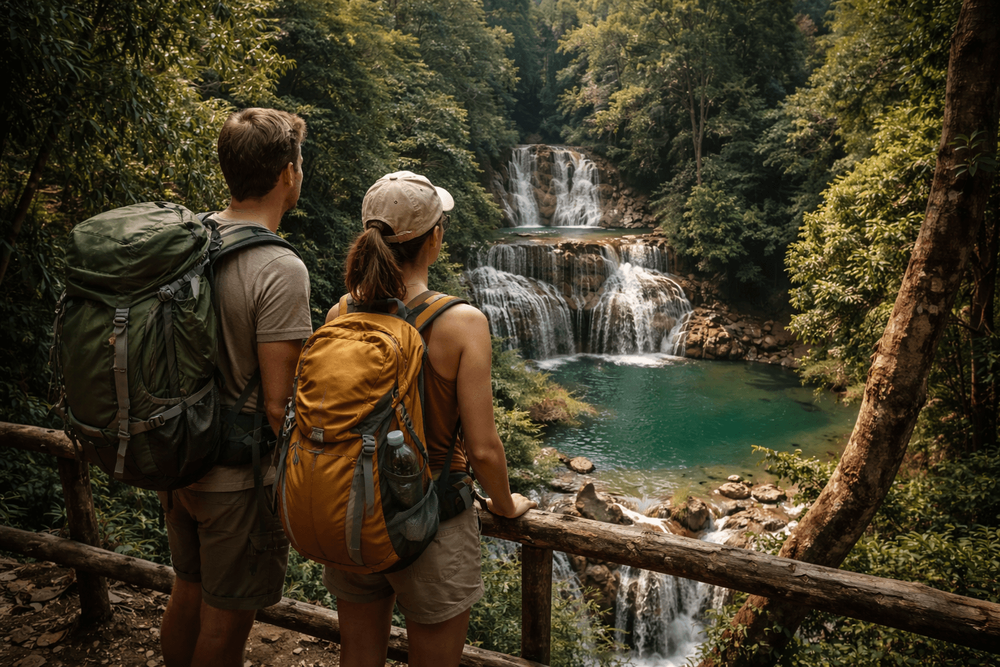
If you want jungle-blue water on a day trip, Erawan National Park is the headliner: seven tiers, limestone pools, tiny fish with a taste for toes. It’s 60–90 minutes past Kanchanaburi town by local bus, so going here means you’ll do less history and more nature.
- Cost: Foreign adult entry typically around 300 baht; locals pay less (dual pricing is normal). Local bus from Kanchanaburi Bus Terminal roughly 70–100 baht one-way.
- Time: 3–4 hours on site if you hike to upper tiers and swim.
- Tips: Start early to beat crowds and heat; wear grippy shoes; stow food (macaques love a snack raid). Last entry to upper tiers is mid-afternoon and rangers start shepherding folks down before closing.
Closer alternative: Sai Yok Noi (Nam Tok Sai Yok Noi) sits on the railway line near Nam Tok station. It’s a smaller falls right by the road—less wow than Erawan, more doable if you’re pairing it with a short scenic train ride.
River time on Mae Nam Khwae Road
Even if you skip the falls, give yourself an hour on the river. We grab pad kra pao or boat noodles from a no-frills shop on Mae Nam Khwae Road and watch long-tail boats carve V’s into the current. If you’re thinking about a future night here, the raft houses and riverfront guesthouses in Kanchanaburi Center are simple, cheap, and made for hammock time.
Getting from Bangkok to Kanchanaburi: trains, buses, and DIY
A Kanchanaburi day trip from Bangkok works best when you match your transport to your plan. Here’s the honest rundown.
Train (Thonburi/Bangkok Noi → Kanchanaburi → Nam Tok)
- Vibe: Breezy, photogenic, and slow in the best way. Windows open, snacks rolling down the aisle, station cats.
- Time: About 2.5–3 hours to Kanchanaburi; roughly 1 more hour to Nam Tok.
- Cost: Around 100–120 baht third class to Kanchanaburi; modestly more to Nam Tok.
- Pros: Sanuk factor sky-high; the Death Railway section between River Kwai Bridge and Tham Krasae is genuinely scenic.
- Cons: Fewer departures; timing can be tight if you want Erawan the same day.
Getting there: Thonburi Railway Station (Bangkok Noi) hides behind Siriraj Hospital on the west bank. From Khao San/Soi Rambuttri, the fun way is the Chao Phraya Express boat to Wang Lang Hostel (Siriraj) Pier, then a short walk. Grab a styrofoam coffee, queue with commuters, and you’re set.
Bus or Minivan (Bangkok → Kanchanaburi)
- Where: Southern Bus Terminal (Sai Tai Mai) on Borommaratchachonnani Road has frequent big buses and minivans. Some minivans also run from Mo Chit (Chatuchak) area terminals.
- Time: About 2.5–3 hours depending on traffic.
- Cost: Typically 120–200 baht one-way.
- Pros: Frequent, flexible, faster than the train door-to-door.
- Cons: You’ll miss the scenic bit unless you hop a local train ride once you arrive.
Local transport in Kanchanaburi
- To Erawan Waterfall: Buses leave from Kanchanaburi Bus Terminal roughly hourly in the morning. Expect 1.5–2 hours each way and around 70–100 baht. Confirm the last return at the station window (it’s often mid-late afternoon).
- Tuk-tuks and songthaews: Short hops around town (bus station ↔ bridge ↔ museum) are usually 60–120 baht. Haggle with a smile—“Lot noi dai mai?” goes a long way.
- Motorbike rental: 200–300 baht for a day in town if you’re licensed and confident. Helmet on, drive defensively.
One-day Kanchanaburi itineraries we actually do
Pick a lane—history-heavy or waterfall-forward—and you’ll avoid frantic clock-watching.
Route 1: History, bridge, and a short scenic train
- 06:30–07:30: Depart Bangkok. Train from Thonburi if you want the rails; minivan from Sai Tai Mai if you want time padding.
- Late morning: Start at the Kanchanaburi War Cemetery, then cross to the Thailand–Burma Railway Centre for the best context and blessed AC.
- Lunch: Mae Nam Khwae Road—boat noodles, khao man gai, or a sizzling pad thai from a wok that sounds like applause.
- Early afternoon: Walk the Bridge over the River Kwai. Photos, deep breaths, a minute leaning on the rail watching long-tails buzz.
- Optional scenic chaser: Hop a local train from River Kwai Bridge station toward Tham Krasae (the viaduct stretch is the star). Ride 45–60 minutes, hop off at Krasae Cave for cliffside views, then take the next return back toward Kanchanaburi—or continue to Nam Tok and bus back if timing is kind.
- Late afternoon/evening: Bus/minivan back to Bangkok. If you’ve trained all day, switching to a bus for the return keeps things efficient.
Why it works: Minimal transfers, lots of depth, and that cinematic clack-clack over the wooden trestles.
Approx costs per person: 300–600 baht in transport (depending on train/bus combo), 160–200 baht for TBRC, meals 60–150 baht each, tuk-tuks 60–120 baht per ride.
Route 2: Waterfalls first, bridge at golden hour
- 06:30–07:30: Minivan or bus to Kanchanaburi (faster than the train when you’re chasing Erawan).
- Mid-morning: Switch to the local Erawan bus at Kanchanaburi Bus Terminal. Window seat if you can—sugarcane fields, roadside fruit stalls, the odd water buffalo.
- Late morning to mid-afternoon: Erawan National Park. Pay the fee, stash snacks, and start climbing. We usually swim at tiers 2, 3, and 4, then push to tier 5 or 6 if the legs are feeling springy. Water shoes help on slick limestone; fish nibbling is free.
- Mid-afternoon: Bus back to town.
- Late afternoon: Tuk-tuk to the Bridge over the River Kwai for that golden light. Grab a cold drink and let the day exhale.
- Evening: Minivan/bus back to Bangkok. If we’re feeling lazy, we book the later departure and snack our way to Sai Tai Mai.
Why it works: Maximum nature, minimum faff, with just enough history to anchor the day.
Approx costs per person: Bangkok ↔ Kanchanaburi transport 240–400 baht; Erawan bus return 140–200 baht; park entry about 300 baht; meals 60–150 baht each; tuk-tuks 60–120 baht per ride.
Tips for a smooth Kanchanaburi day trip
- Start early. Heat and crowds build fast. If you want Erawan, catch one of the first buses; if you want museums, aim to hit TBRC before lunch.
- Pack smart. Swimwear, small towel, quick-dry shirt, grippy sandals or shoes, mosquito repellent, sunscreen, a dry bag, and 1–2 liters of water. The blast of AC at 7-Eleven feels like a hug—grab snacks in Bangkok or at Kanchanaburi Bus Terminal.
- Respect the sites. Cemeteries and museums deserve quiet and covered shoulders; the bridge is an active rail line—don’t be that person on the sleepers with earbuds in.
- Watch the clock at Erawan. Rangers start clearing upper tiers in the afternoon; last buses don’t wait. Miss it and you’re haggling for a pricey taxi.
- Mind the macaques. They look cute; they love stealing chips. Zip your bag.
- Cash beats cards. Museum tickets, park entry, local buses, tuk-tuks—bring small bills.
- Dual pricing is normal at national parks. Farang pay more than locals; it’s posted at the gate.
- Tuk-tuk math. Ask price before you hop in. Short rides are usually under 120 baht; a half-day hire to string together sights can run 600–1,000 baht depending on stops and smiles.
- Stay the night if you can. The river is magic after day-trippers leave. We usually crash at a simple raft room or a no-frills riverside guesthouse—cheap, fan-cooled, and all hammock. Scope options in Kanchanaburi for next time.
What it costs (quick reference)
- Bangkok ↔ Kanchanaburi train: ~100–120 baht one-way (third class)
- Bangkok ↔ Kanchanaburi bus/minivan: ~120–200 baht one-way
- Kanchanaburi ↔ Erawan local bus: ~70–100 baht one-way
- Erawan National Park entry (foreign adult): ~300 baht
- Thailand–Burma Railway Centre: ~160–200 baht
- JEATH War Museum: usually <100 baht
- In-town tuk-tuk: ~60–120 baht per ride
- Simple meal (street stall): 50–90 baht; sit-down local place: 80–150 baht
- Cold water: 10–15 baht at 7-Eleven; beer (large) at a riverside joint: 70–120 baht
Know before you go
- Weather: Nov–Feb is cooler and dry—best for hiking. Mar–May bakes; start earlier and swim more. Jun–Oct brings rain—falls are fuller, trails slicker; pack a poncho.
- Footwear: Limestone is treacherous in flip-flops; go grippy if you’re climbing tiers.
- Luggage: Travel light. If you must, some park offices and museums offer informal bag watch or small paid lockers—don’t bank on space at peak times.
- Connectivity: Town has decent coverage; buses past Sankhlaburi side can get patchy. Download a map offline.
- Food near Erawan: Stalls cluster near the park HQ; prices are a tad higher than town but still fair. Bring snacks if you’re picky.
Beyond the day trip
If this whets your appetite, pencil in a lazy two-day return for Hellfire Pass, raft houses upriver, and sunrise mist. For more inspiration—including beaches and mountain escapes when you’re back in Bangkok mode—check our roundups of easy escapes: Best Day Trips from Bangkok for Backpackers: Easy Train, Bus, and Boat Escapes.

When we slide back into the city—boat to Phra Athit, tuk-tuk humming past the fort, the sweet rot of durian mixing with incense—Bangkok feels bigger and somehow gentler. Tomorrow can be temples or rooftop bars; tonight is noodles on a plastic stool and that last river breeze still in our hair.
Related Hotels & Places
Khao San Road
Attractions
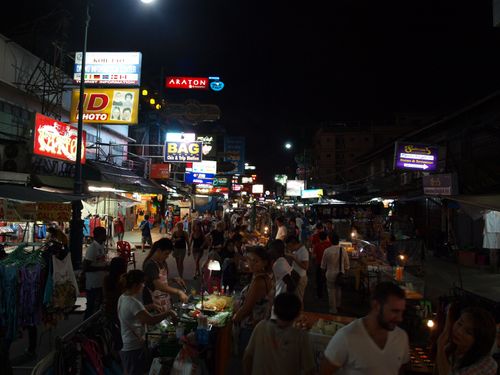
Bangkok’s backpacker carnival: curbside bars, live bands and DJs from 3pm–2am (midnight Sun). Street eats are cheap — pad thai 70–100 THB, mango sticky rice 60–100 THB. Come for wild people-watching; duck into Rambuttri for a calmer beer.
sala rattanakosin Bangkok
Hotels
A 4-star hotel in Bangkok.
Wang Lang Hostel
Hotels
A 0-star hotel in Bangkok.