
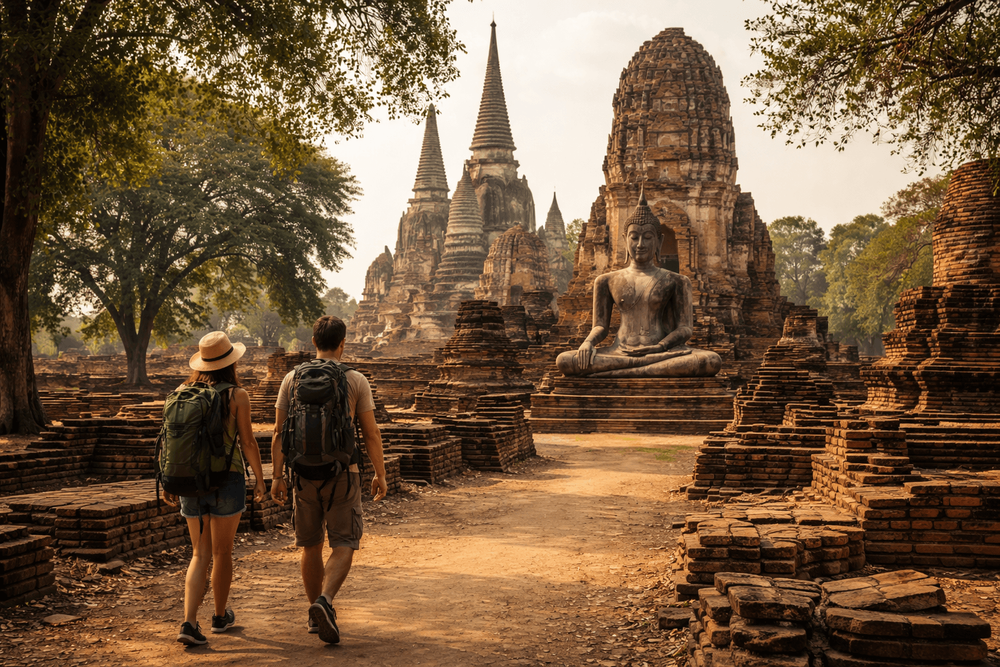
Best Day Trips from Bangkok for Backpackers: Ancient Cities and Ruins Beyond Ayutthaya and Kanchanaburi
Skip Ayutthaya and Kanchanaburi. Here’s where we chase moated cities, Khmer prangs, and Dvaravati ruins on easy day trips from Bangkok — trains, vans, tips, and routes.
We’re shoulder to shoulder on a third‑class train bench, fan blades chopping the hot air, a bag of grilled pork skewers perfuming the carriage. Today’s our Bangkok ancient ruins day trip by train — not Ayutthaya, not the famous bridge in Kanchanaburi, but the lesser‑sung moated cities and Khmer prangs that hide in plain sight a few hours from Khao San Road’s thump. We hop off where the asphalt surrenders to rice fields, tuk-tuks idle in the shade, and a line of old chedis doze under tamarind trees.
Bangkok Ancient Ruins Day Trip: Where to Go
These are the ruins and historic cities we keep coming back to — close enough for a day, rich enough to feel like time travel. Expect Dvaravati‑era moats, Ayutthaya-age prangs, and a few Khmer surprises.
Lopburi Old Town: Monkey Prangs and a Khmer‑Ayutthaya Mashup
- Why go: Phra Prang Sam Yot’s three Khmer towers are the headliners, patrolled by macaques who will eye your sunglasses like loot. Add San Phra Kan shrine (where monkeys double down) and King Narai’s Palace — an Ayutthaya‑era residence with cool galleries and a breeze that tastes like old stucco and mango.
- Getting there: Trains from Krung Thep Aphiwat (Bang Sue Grand Station) take ~2.5–3 hours; third‑class fares often under 100–150 baht. Vans also go from Mo Chit 2. From Lopburi station it’s a 10–15 minute walk to the ruins.
- Hours and fees: Most sites open roughly 8:30–16:30. Expect 50–150 baht per site for foreigners; combo tickets sometimes available. Prices change — bring small bills.
- Time needed: 4–5 hours to wander the prangs, palace, and grab kuay teow moo (pork noodles) near Narai Rachaniwet.
- Insider tip: Guard your snacks. Monkeys here are not shy; keep it sanuk, but keep your distance.
U Thong Ancient City (Suphan Buri): Dvaravati Earthworks and a Quiet Museum
- Why go: A moated city older than Ayutthaya, its grassy ramparts curve like sleeping serpents. The U Thong National Museum shows gold‑leaf Buddhas, Mon ceramics, and beads that once arrived by khlong from the sea.
- Getting there: Buses and vans from Mo Chit 2 or Sai Tai Mai (Southern Bus Terminal) to Suphan Buri (1.5–2 hours), then a songthaew or taxi ~45 minutes to U Thong. Self‑drive is the easiest.
- Hours and fees: Archaeological areas are generally open daytime; the museum typically 9:00–16:00 and closed Mon–Tue. Museum admission is modest (bring ~100 baht; subject to change).
- Time needed: 3–4 hours including the museum and a loop of the ramparts.
- Combine with: Sam Chuk 100-Year Market for old‑school coffee and khanom in teak shophouses.
Khu Bua Ancient City (Ratchaburi): Ruins in the Rice Fields
- Why go: Another Dvaravati moated city, with low brick chedis and foundations scattered across paddies and palms. The small site museum fills in the dots with stucco and stone fragments.
- Getting there: Vans from Sai Tai Mai to Ratchaburi town (1.5–2 hours), then a songthaew or motorbike taxi ~12 km south to Khu Bua.
- Hours and fees: Daylight access to the ruins; museum hours roughly 8:30–16:30. Usually free or a token fee.
- Time needed: 2–3 hours at an easy, barefoot pace.
- Food stop: Ratchaburi’s noodle shops near the river know their pork crackling. We grab a bowl before heading back.
Si Mahosot Ancient City (Prachinburi): Sacred Footprints and Ancient Ponds
- Why go: A Dvaravati city dotted with moats and brick mounds, including the famed Sacred Footprint site and Sa Morakot (the Emerald Pond) once used for rituals. It’s atmospheric and far from the tour bus grid.
- Getting there: Train from Krung Thep Aphiwat to Prachinburi (~2–3 hours), then a songthaew to the historical park areas; or van from Mo Chit 2 straight to Prachinburi city, then local transport.
- Hours and fees: Typically 8:30–16:30 for managed zones; expect small entry fees at certain sites.
- Time needed: 3–4 hours to hop between mounds, ponds, and the footprint shrine.
- Pair it with: A slow lunch by the Bang Pakong River; grilled river fish and icy nam manao hit the spot in the heat.
Phetchaburi Old City: Prangs, Caves, and a Hilltop Palace
- Why go: Wat Mahathat Worawihan’s five‑topped prang rises over a sleepy old town of sugar palms and Portuguese‑era sweets. Ride the cable car up to Phra Nakhon Khiri (Khao Wang), a hilltop royal palace with breezy verandas, then duck into Khao Luang Cave where sunlight spills over a cluster of Buddhas.
- Getting there: Vans from Sai Tai Mai to Phetchaburi (~2–2.5 hours). Trains from Thonburi station also roll in a little slower, a lot more scenic.
- Hours and fees: Palace complex generally 8:30–16:30; separate fee for the cable car and museum buildings. Caves have a nominal entrance charge.
- Time needed: 5–6 hours with snack breaks for khanom mo kaeng (custard cake) and iced coffee.
- Watch out: The monkeys on Khao Wang are nearly as crafty as Lopburi’s. Zip your bag.
Nakhon Pathom: The Oldest Chedi and Dvaravati Echoes
- Why go: Phra Pathom Chedi claims roots all the way back to Dvaravati days, now towering in a shimmering bell of ochre tiles. Circle the base with incense, then browse the evening market where the smell of grilled chicken and pandan sweets battles the incense smoke.
- Getting there: Frequent commuter trains from Thonburi station (about 1–1.5 hours) or vans from Sai Tai Mai. The chedi is a short walk from Nakhon Pathom station.
- Hours and fees: The grounds are open long hours; museum buildings keep typical daytime schedules with small entry fees.
- Time needed: 2–3 hours, more if you linger at the market near sunset.
- Combo idea: Add nearby Sanam Chandra Palace for a leafy cool‑down.
Ancient City (Mueang Boran), Samut Prakan: The Cheat Day That Still Teaches You Loads
- Why go: It’s not an archaeological site — it’s a sprawling open‑air museum of Thailand’s landmark historical architecture, lovingly recreated. But if you’re craving a bangkok ancient ruins day trip without a long ride, this delivers the visuals and context in one green sweep.
- Getting there: BTS to Kheha, then a short taxi or songthaew. Self‑drive works well.
- Hours and fees: Typically open daily; adult tickets are higher than most historical parks. Check the gate for current rates.
- Time needed: 4–5 unrushed hours by bicycle or tram.
- Tip: Start early to beat the heat and school groups; it’s massive.
Sdok Kok Thom (Sa Kaeo): A Khmer Jewel on the Cambodian Frontier
- Why go: Far fewer visitors, photogenic laterite and sandstone, and a processional walkway that hums with Angkor‑era geometry. If you’ve got stamina, it’s a stunning out‑and‑back.
- Getting there: Best by car; figure 3.5–4 hours one way from Bangkok. Public transport is patchy; expect multiple changes.
- Hours and fees: Standard historical park hours; small foreigner fee.
- Time needed: 2 hours on site, plus a full day of travel. Ambitious, but worth it if you’re Khmer‑ruin‑obsessed.
Si Thep Historical Park (Phetchabun): UNESCO Glory for the Ultra‑Early Start
- Why go: Thailand’s newest UNESCO World Heritage site (2023) spans moated mounds, brick prangs like Prang Si Thep and Prang Song Phi Nong, and the massive Khao Khlang Nok stupa ruin outside the main city. It’s the Dvaravati syllabus, live.
- Getting there: Real talk — it’s a long one. By self‑drive, 4–5 hours each way. By bus/van to Wichian Buri plus a local ride, longer. Consider overnighting, but if you must, leave before dawn and come back late.
- Hours and fees: Typical 8:30–16:30; foreigners pay a modest park fee, sometimes separate for the outlying monument.
- Time needed: 4 hours minimum; bicycles for rent on site when available.
If you want more ruin-rich ideas beyond the usual suspects, we’ve rounded up additional picks here Best Ruins and Ancient City Day Trips from Bangkok for Backpackers. For rail‑friendly options, this one helps you plan your train days: Best Day Trips from Bangkok for Backpackers Who Want Ancient Ruins, History, and Easy Train Travel. And if you like pairing ruins with food markets and mellow towns, we love this list: Best Day Trips from Bangkok for Backpackers to Ancient Ruins, Markets, and Small-Town Thailand.
How to Pull Off a Bangkok Ancient Ruins Day Trip
- Depart early: Trains before 7:00 mean cooler air, empty platforms, and more time among the bricks. Returning after sunset is normal.
- Transport snapshot:
- Trains: Krung Thep Aphiwat (Bang Sue Grand Station) handles most longer routes; Thonburi station runs handy commuter trains west to Nakhon Pathom and Phetchaburi. Third‑class fares are cheap (often 15–100 baht), windows open, fans whirring like old ceiling fans in a shophouse.
- Vans/buses: Major hubs are Mo Chit 2 (north), Ekkamai (east), and Sai Tai Mai (south). Buy at counters; fares usually 80–200 baht depending on distance.
- Local legs: Songthaews (shared pickups), motorbike taxis, and the occasional tuk-tuk connect you to ruins. Agree on prices before you hop in.
- Time on site: Most historical parks and museums run roughly 8:30–16:30. Plan 3–6 hours depending on site size and your photography habit.
- Costs: Expect 50–150 baht per site for foreigners at government‑run parks; small museums may be cheaper or free. Bring cash.
Smart Combos: Realistic Route Ideas
Lopburi Full Day by Train:
- 06:30 train from Krung Thep Aphiwat
- Walk to Phra Prang Sam Yot → San Phra Kan shrine → lunch near Narai Palace → King Narai National Museum → sunset train back
- Budget: ~300–500 baht plus meals
Suphan Buri + U Thong Loop (van + songthaew):
- Van to Suphan Buri → songthaew to U Thong Ancient City and museum → late lunch → detour to Sam Chuk 100‑Year Market → van back via Suphan Buri
- Best for: Dvaravati nerds who like quiet sites and old markets
Phetchaburi Trifecta (train or van):
- Wat Mahathat Worawihan’s prang → cable car up to Phra Nakhon Khiri (Khao Wang) → Khao Luang Cave → sweets run for khanom mo kaeng → back to Bangkok
- Watch the clock: Cable car and museum hours end late afternoon
Nakhon Pathom Easy Evening:
- Afternoon train → circle Phra Pathom Chedi → museum → eat everything at the night market → late train back
- Perfect when you want history without a dawn alarm
Ratchaburi Khu Bua + Canal Vibes (best by self‑drive):
- Khu Bua ruins and small museum → coffee in Ratchaburi old town → optional detour to a weekend floating market in the province
- Timing: Start early to dodge midday heat
Know Before You Go: Dress, Weather, Food, Photos
- Dress code: Ruins and temples are different beasts. For active wats and palace museums, cover shoulders and knees. A light scarf solves most problems.
- Heat management: Bangkok and central Thailand run hot and humid. Carry 1–2 liters of water, a hat, and reapply sunscreen. The blast of AC at 7‑Eleven becomes a spiritual practice.
- Footwear: You’ll step in and out of shoes at active shrines. Slip‑ons make life easier when the ground’s a wok.
- Food: Eat local and often. Train station grilled pork (10 baht sticks), iced coffee in enamel cups, and boat noodles when you can find them. Pack snacks if you’re heading to quieter Dvaravati sites with few vendors.
- Photography: Morning light flatters brick and stucco; late afternoon gives you warm tones and long shadows. Drones are usually not allowed in parks without permits. Always ask before photographing people.
- Seasons: Cool(er) season Nov–Feb is prime. Mar–May is a heat marathon. Rainy season (May–Oct) means cloud drama and greener moats — carry a poncho and put your phone in a zip bag.
- Scams and sanity: Prices are mostly posted at official sites. If someone “helps” you unasked, they’ll expect a tip. Smile, say mai ao krap/ka (no thanks), and keep moving.
Where We Base Ourselves in Bangkok
For day‑tripping, we like to sleep near the action:
- Banglamphu (Khao San Road, Soi Rambuttri, Phra Athit Road): Easy access to river boats, late‑night pad thai that somehow slaps at 2 AM, and vans that head out from the city’s bus terminals with a short taxi ride.
- Chinatown to Hua Lamphong: You’re close to old‑town eats and a straight shot to trains and the MRT. We usually crash somewhere with a pool — nothing beats coming back sunburnt and sliding into cool water as the city lights up.
If you’re building a bigger list, we’ve got more culture‑forward runs here: Best Cultural Day Trips from Bangkok for Backpackers: Temples, Ruins, and Historic Towns Worth the Ride.
Final Word from the Tracks
Bangkok rewards the curious. Hop a dawn train, let the fan clack and the sugar‑smoke drift by, and we’ll be standing together in a quiet field, staring at bricks older than our passports. Tomorrow we can chase rooftop views; today’s for moats, prangs, and the slow‑burn stories that make a bangkok ancient ruins day trip feel like time travel. Pack water, grab a scarf, and meet us on the platform.
Where to stay
Stays we list in Ayutthaya, Kanchanaburi, and Lopburi. Each place page includes the Agoda booking link.

Grandparent's Home
Ayutthaya · Ayutthaya Center

Phromsuk Hotel Ayutthaya
Ayutthaya · Ayutthaya Center

HOP INN Kanchanaburi Building A
Kanchanaburi · Kanchanaburi Center

Pong Phen Guesthouse
Kanchanaburi · Kanchanaburi Center
The Monkey Hotel and Residence
Lopburi · Lopburi Old Town

The charlotte smart hotel lopburi
Lopburi · Lopburi Old Town
Related places
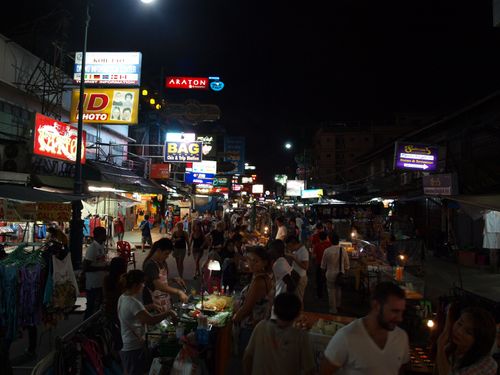
More Khao San Road Guides
- Best Day Trips from Bangkok for Backpackers Who Want Ancient Ruins, History, and Easy Train Travel
- Best Day Trips from Bangkok for Backpackers to Ancient Ruins, Markets, and Small-Town Thailand
- Best Ayutthaya Day Trips from Bangkok for Backpackers
- Best Kanchanaburi Day Trips from Bangkok for Backpackers