
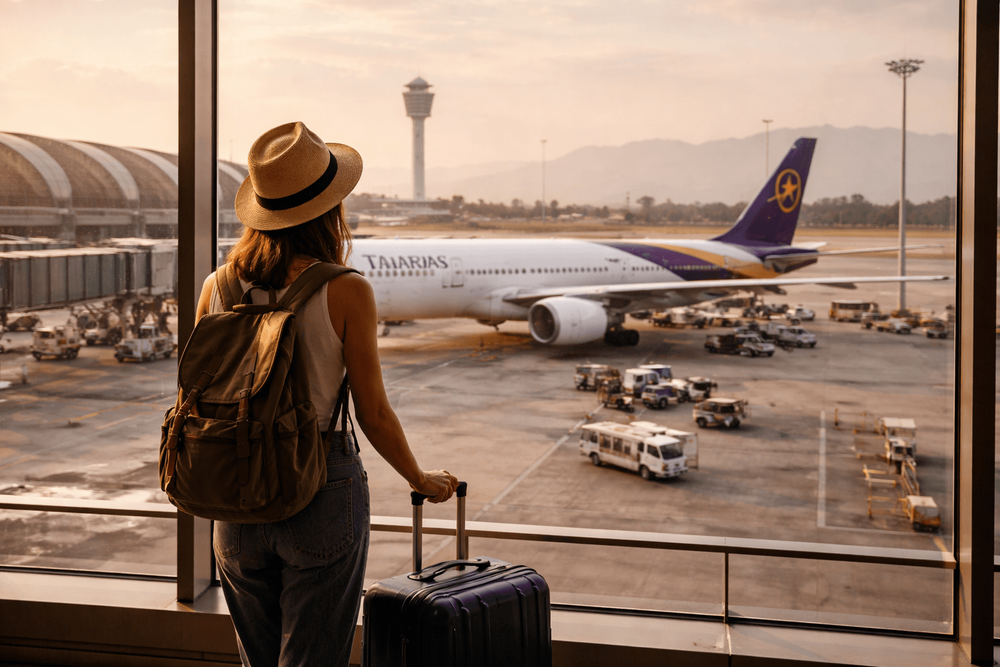
How to Fly to Thailand: Flights, Airports, and Arrival Tips
Real-world advice on how to fly to Thailand: best airports, smarter fares, entry basics, and the quickest ways from the runway into Bangkok and beyond.
We touch down and the cabin sighs. Window shades slide up to a watercolor of rice paddies and khlongs below, Bangkok sprawling all the way to the horizon. If you're wondering how to fly to Thailand without the drama — which airport to pick, when to book, what to expect at immigration, and the fastest way into the city — we’ve got you. We fly to Thailand often enough to know where the passport lines move, which baggage belts spit out surfboards last, and when to skip the taxi queue for the Airport Rail Link.
How to Fly to Thailand: Airports and Best Arrival Cities
Thailand has more gateways than a night market has skewers. Picking the right airport sets the tone for your trip.
- Bangkok (Suvarnabhumi, code BKK): The big international hub east of the city. Wide-body jets, long-haul arrivals, and jet bridges for days. If you’re a first-timer, landing at BKK keeps things simple for visas, SIMs, and onward flights. Airport Rail Link runs straight to Phaya Thai where you can hop a taxi to Khao San Road, Soi Rambuttri, or the river on Phra Athit Road.
- Bangkok (Don Mueang, code DMK): Older airport in the north of the city, the kingdom of low-cost carriers (think regional hops to Chiang Mai, Krabi, Phuket). If your itinerary zigzags, you might arrive at BKK and later depart from DMK — or vice versa. There’s a free inter-airport shuttle for ticketed passengers; confirm schedules on arrival.
- Phuket (HKT): For beach-first trips. Good for Patong, Kata, Karon, and ferries to Ko Phi Phi. Expect pricier ground transfers and traffic on the way to the west coast at sunset.
- Chiang Mai (CNX): The gentle landing. Small, fast immigration, and you’re in the Old City in ten minutes. Perfect for temples, cafes, and a slower northern pace.
- Samui (USM): The pretty boutique airport with frangipani and open-air trams. Great if you want Ko Samui, Ko Pha Ngan, and Ko Tao without a bus-ferry chain — but fares are usually higher. A budget alternative is flying into Surat Thani (URT) or Nakhon Si Thammarat (NST) and connecting by ferry; allow generous transfer time.
- Krabi (KBV): For Railay and Ao Nang. Often cheaper than Phuket and a bit calmer.
- U-Tapao (UTP): Handy for Pattaya/Rayong. Limited international service but growing.
Who should land where?
- First-time visitor: BKK, then base yourself near the river or in Sukhumvit for easy BTS/MRT access. We’ll go chase the thump of bass on Khao San later.
- Beach-head: HKT or KBV for Andaman; USM for Gulf-side luxury, or URT/NST + ferry for savings.
- Culture and cafes: CNX. We’ll be eating khao soi by the moat before your checked bag blinks onto the carousel.
- Bangkok stopover: BKK in, BKK out. Keep it simple and minimize cross-town transfers.
Finding the Best Flight Deals to Thailand
Fares breathe with the seasons and the school calendar. To find a cheap way to fly to Thailand, we play the long game.
- Seasons that drive price: Cool/dry high season (roughly Nov–Feb) draws crowds; December holidays and Lunar New Year spike fares. Songkran (Thai New Year, mid-April) can push prices up. Rainy season (May–Oct) often means cheaper seats, with the best deals on weekdays.
- When to book: For long-haul, aim 2–6 months out for shoulder and low season; longer if you must fly peak dates. If you can sleep on red-eyes and leave midweek, you’ll often save.
- Be flexible: Use fare calendars and alerts. A day earlier or later can shave thousands of baht. Consider nearby origin airports on your side and alternate arrival airports in Thailand (BKK vs DMK for regionals; HKT vs KBV for the Andaman coast).
- Smart layovers: Middle East (Doha, Dubai, Abu Dhabi), Northeast Asia (Seoul, Tokyo, Taipei), and Southeast Asia (Singapore, Kuala Lumpur, Ho Chi Minh City) are strong hubs. A long daytime layover can be a mini-trip — just check transit visa rules.
- Open-jaw and multi-city: Fly into BKK and out of HKT, or BKK→CNX→HKT→BKK, especially if you’re looping. Sometimes it’s cheaper than a return and saves you a backtrack.
- Mind the LCC trap: Separate tickets on low-cost carriers can be cheap, but riskier. If bags don’t interline, build a big buffer (we like 4–6 hours between separate tickets, more if you’re switching airports).
- Watch the extras: Seat selection, bags, and meals add up on budget airlines. Price the all-in fare before you celebrate.
Visa, Passport, and Entry Basics
Rules change, so treat this as a lay of the land, not gospel.
- Passport validity: Airlines commonly expect at least six months’ validity beyond your arrival. It’s the safest bet. If you’re close, renew.
- Visa status: Many nationalities can enter visa-exempt for short stays. Others may need an e-visa or visa on arrival. Always check the latest from your embassy and Thailand’s official channels before you fly to Thailand.
- Onward travel: Thai immigration or the airline may ask for proof of an onward or return ticket within your permitted stay. Have a plan you can show.
- Entry forms: Policies on arrival/departure cards have shifted in recent years. Crew will announce what’s needed on your flight; follow their lead and keep a pen in your bag.
- Vaccinations and insurance: Not always checked, but travel medical insurance is just sanuk insurance — it keeps small mishaps small. Carry digital and paper copies of your policy and passport ID page.
Long-Haul Flight Planning Like a Pro
We’ve done enough transoceanic hauls to know what makes them feel human.
- Baggage: Domestic Thai flights on low-cost carriers can have tighter cabin-bag limits and charge for checked luggage. If you’re interlining from long-haul to a budget domestic, double-check allowances and whether bags are through-checked.
- Connection times: BKK is big. For protected connections on one ticket, the minimum time is usually fine. On separate tickets, give yourself hours, not minutes — especially if switching BKK↔DMK by road.
- Seats: Aisle for movement, window for sleepers. On overnight eastbound routes into Bangkok, we like a window, eye mask, and a hoodie — cabin temps swing from beach to arctic.
- Hydrate and time your meals: We front-load water and skip heavy last-minute galley meals so jet lag hits softer. A walk up the aisle when the cabin lights dim buys you a better first night in Thailand.
- Tech and power: Thailand uses a mix of sockets; a universal adapter is easiest. Bring a power bank — not every seat has a USB-C yet, and your phone will be your boarding pass, hotel key, and Grab lifeline.
- Valuables and documents: Keep passport, printed itineraries, and a pen in the seat pocket during the last 30 minutes — you’ll need them as the captain flares over the rice fields.
Landing and Getting Into the City Fast
Step out of the jet bridge and the air smells like warm rain and jet fuel. Immigration can feel like a slow tide or a sprint, depending on the hour. After the stamp, the real game begins.
Suvarnabhumi (BKK)
- Airport Rail Link (ARL): Fast into town with connections to BTS/MRT. Trains run roughly early morning to around midnight; confirm locally for the day’s schedule. It’s the least sweaty way to Phaya Thai, where you can grab a meter taxi the last few kilometers to Khao San, Soi Rambuttri, or the river.
- Meter taxis: Follow the official signs to the taxi queue, take a printed slip, and insist on the meter. Expect an airport surcharge and optional tolls if you choose the expressway; confirm locally. Ignore touts in the arrivals hall.
- Rideshare: Grab and Bolt both work from designated pickup points. In rush hour, the expressway is worth the tolls.
- Buses and minibuses: Useful for budget runs to Pattaya or the Eastern Bus Terminal. Buy tickets at official counters only.
Don Mueang (DMK)
- SRT Red Line: A quick rail link to Bang Sue Grand Station, then MRT into the city. Clean, cool, and increasingly our go-to.
- Buses to BTS/MRT: Airport buses connect to Mo Chit and Chatuchak. They’re cheap and fine if you’re traveling light.
- Taxis and rideshare: Same rules — official queue, meter on, no nonsense.
Phuket (HKT), Chiang Mai (CNX), Krabi (KBV)
- Phuket: Airport bus to Old Town, shared minibuses to the beaches, or private transfers for late arrivals. Traffic to Patong at sunset crawls; plan around it.
- Chiang Mai: You’re 10–15 minutes from the moat. Red songthaews (shared pickup taxis) are part of the fun; pre-agree the fare. Grab works well here.
- Krabi: Shared vans are common to Ao Nang/Railay pier. If you’re heading to Railay, check the longtail schedule; after dark, boats can be limited.
SIMs, Cash, and Quick Wins
- SIM/eSIM: AIS, TrueMove H, and dtac all sell tourist SIMs at arrivals. eSIMs are even easier if your phone supports them. You’ll pay a small airport premium; top up later at 7-Eleven (the blast of AC is a bonus).
- ATMs and exchange: Airport ATMs are convenient but add a flat foreign card fee. Withdraw a larger amount once to minimize it. For better exchange rates, change only what you need at the airport and use reputable money changers in town.
- Food and water: Skip the sad sandwich. Grab a cold bottle, then aim for the street — boat noodles near Victory Monument, som tam on a corner soi, or a first bowl of tom yum by the Chao Phraya.
Where to Base Yourself After You Fly
- Old Town/Banglamphu: If you want temples by day and a little thump from Khao San by night. We like the calmer vibes of Soi Rambuttri and the river breeze along Phra Athit Road.
- Riverside: Sanam Chai to Sathorn — a great first-timer base with easy Chao Phraya Express boat rides to the Grand Palace, Wat Pho, and Chinatown.
- Sukhumvit: BTS lines, late-night eats, and AC malls. Soi 11 for buzz, Thonglor/Ekkamai for cafes and cocktail bars.
- Chiang Mai Old City: If you fly north, the square moat is your compass — everything’s walkable.
- Phuket: Patong for nightlife, Kata/Karon for a calmer beach scene, or head to the headlands if you value sleep.
We usually power-nap, shower, and hit the evening golden hour — up the Golden Mount for a breeze off the klong and a hazy view of the city, then pad thai on a street wok where the oil hisses and the auntie calls out sawadee as if she’s known us for years.
Common Pitfalls (and How We Dodge Them)
- Taxi touts: If someone whispers “taxi, taxi” inside the terminal, keep walking. Official queues only.
- Tight connections on separate tickets: Don’t do it unless you like adrenaline. Build buffers, especially if you need to cross town BKK↔DMK.
- Luggage allowances: Domestic legs on LCCs bite. Prepay bags online.
- Island transfers: For Samui on a budget via Surat Thani/Nakhon, leave daylight for the bus–ferry hop. Weather can kick schedules.
Quick Plan
A simple first-timer fly-in plan that keeps transfers light and the sanuk high.
- Day 1: Home → Bangkok (BKK). 30 km airport → Old Town, ~45–60 min by taxi/ARL+taxi. Key stops: Sunset at Golden Mount; dinner on Soi Rambuttri. Overnight: Banglamphu.
- Day 2: Bangkok → Temples & River. 8–12 km around the Old Town, mostly by foot/boat. Key stops: Grand Palace, Wat Pho, Tha Tien pier → ferry to Wat Arun. Overnight: Riverside or Banglamphu.
- Day 3: Bangkok → Chiang Mai (CNX) by morning flight. 4–6 km airport → Old City, ~10–20 min by taxi/songthaew. Key stops: Wat Phra Singh, Nimman coffee crawl. Overnight: Chiang Mai Old City.
- Day 4: Chiang Mai → Bangkok (DMK/BKK) → Phuket (HKT) or Krabi (KBV) by afternoon flight if you want beach time. HKT → Patong/Kata 30–45 km, ~45–90 min depending on beach/traffic. Key stops: Sunset toes-in-sand. Overnight: Phuket/Krabi.
- Day 5: Fly out from HKT/KBV or back to BKK for international departure.
ASCII route map:
Home → BKK → (Old Town) → DMK/BKK → CNX → BKK → HKT/KBV → Home
Costs at a Glance (THB)
- Fuel (Gasohol 95) per liter: ~35–50 (range; confirm locally). Useful if you’re renting a car for side trips.
- Estimated fuel cost per segment:
- BKK → Old Town (~30 km city driving): ~85–120
- DMK → Mo Chit/Bang Sue (~15 km): ~45–70
- HKT → Patong (~35 km hilly/coastal): ~100–150
- Tolls per segment (if using expressways):
- BKK corridor into town: ~0–120 depending on route (confirm locally)
- National park/attraction fees per person (typical ranges): ~100–600 (temples, viewpoints, marine parks vary; confirm locally)
- Parking per night (Bangkok hotels/malls): ~0–200 (property-dependent; confirm locally)
Last checked: Sep 2026
We’ll see you by the river — a cold drink in hand, the Chao Phraya Express boat nosing past as we plot the next bowl of boat noodles and your onward hop to the islands. When you fly to Thailand the right way, the city greets you like an old friend and the rest of the trip just flows.
Where to stay
Stays we list in Phuket, Chiang Mai, and Krabi. Each place page includes the Agoda booking link.


More Khao San Road Guides
- What to Pack for Thailand for Airport and Long-Haul Transit: Flight Comfort, Sleep Gear, and Arrival-Ready Essentials
- What to Pack for Thailand for Bangkok Arrival Day and First Night
- How to Get from LAX to Thailand
- What to Pack for Thailand for Airport Transit Days: Check-In, Luggage Storage, and Long Layover Comfort