A Half-Day Temple Run from Khao San Road: Sunrise, Midday, or Late Afternoon — Which Time Slot Works Best?
Beat heat, crowds, and closures from Khao San. A local’s guide to sunrise, midday, and late-afternoon temple runs—what opens when, and how to flow between wats.
We’re standing at the mouth of Soi Rambuttri with a plastic cup of iced Thai tea sweating in our hand, the air thick with incense and motorbike exhaust. It’s early, the saffron line of dawn just touching the rooftops near Phra Athit Road, and we can feel it already: in Bangkok, timing is everything. For temples, it’s the whole game. Nail your Bangkok temple timing and we’ll float past tour buses, beat the heat, and catch the kind of quiet that makes even the noisiest city feel sacred.
Bangkok Temple Timing: Sunrise, Midday, or Late Afternoon?
Bangkok’s big-hitter temples keep roughly similar hours, but each has its quirks. Most shrines and wats open around 8:00, with last entry by late afternoon. The exception is the Grand Palace (home to Wat Phra Kaew), which shuts earlier than you’d expect and also closes for royal ceremonies without much warning.
Here’s what we typically see on the ground:
Wat Pho (Temple of the Reclining Buddha)
- Typical hours: 8:00–18:00, with last admission around 17:00–17:30.
- Why timing matters: Tour buses swarm from about 9:30 to noon. It’s blissfully calm right at 8:00. The Reclining Buddha hall can bottleneck late morning.
- Notes: Shoulders and knees covered; quiet courtyards ideal for a breather if the main hall gets busy.
The Grand Palace & Wat Phra Kaew (Temple of the Emerald Buddha)
- Typical hours: 8:30–15:30, last entry usually by 15:30. Gates close hard—no late grace period.
- Why timing matters: This is the bottleneck of Bangkok sightseeing. Early is best (arrive by 8:00 to queue for 8:30 entry) or go after lunch if you can’t do morning, accepting it’ll be hotter and still crowded.
- Notes: Strict dress code (no shorts above the knee, no sleeveless tops, no torn clothes). Touts on Na Phra Lan Road may say it’s “closed for a ceremony”—smile, say mai pen rai, and keep walking to the main gate.
Wat Arun (Temple of Dawn)
- Typical hours: 8:00–18:00. The riverside grounds are breezy; the prang steps open and close with the temple hours.
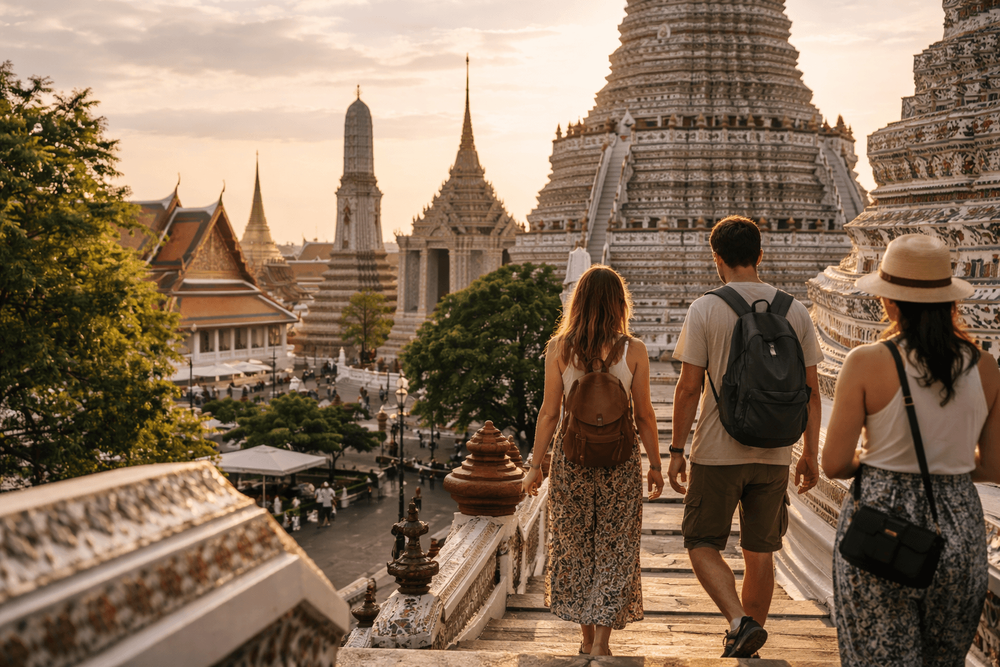
- Why timing matters: Mid-morning and late afternoon are gorgeous. Golden hour turns the porcelain mosaic into a lantern.
- Notes: Cross-river ferry from Tha Tien pier (opposite Wat Pho) takes 1–2 minutes and costs about 5 baht—easiest win of the day.
Wat Saket (The Golden Mount)
- Typical hours: roughly 7:30/8:00–19:00, sometimes later for festivals.
- Why timing matters: Climb in the cool of morning or chase sunset when the bells pick up a breeze and the Old City glows.
- Notes: About 300 gentle steps, shaded and punctuated by gongs; sandals make it sanuk (fun).
Wat Benchamabophit (Marble Temple)
- Typical hours: 8:00–17:00(ish); the ordination hall may close for ceremonies.
- Why timing matters: Fewer crowds than the big three; great mid-morning or late afternoon detour if you’ve got energy.
Temple hours flex for Buddhist holidays, royal events, and the odd maintenance day. The rule of thumb? Mornings win, midday is survivable with strategy, and late afternoon is magic light with a side of closing-time roulette.
If you’re choosing one half-day window from Khao San Road, we’ve run them all—sunrise, midday, and late afternoon—and each has a sweet spot.
Best Times to Dodge Heat, Crowds, and Tour Buses
Mornings (7:00–11:00): The Calm and the Cool
- Our move: Be on the street by 7:00. Grab a 7-Eleven water (10–14 baht) and head for Wat Pho to be at the gate right at 8:00. You’ll have the Reclining Buddha almost to yourself for a few precious minutes, hear the soft scrape of brooms in the courtyards, smell jasmine and old brick warming in the sun.
- Crowd pattern: Tour buses land 9:30–11:00.
- Heat: Manageable. Shade and fans help.
- If you want the Grand Palace: Aim to reach the outer gate by 8:00–8:15 for the 8:30 open. Budget 90–120 minutes; it’s dense with detail and photo stops.
For more minute-by-minute tactics, we like this playbook when starting from Khao San: Bangkok Temple Morning Guide from Khao San Road: Best Start Times, Dress Codes, and Queue-Saving Tips.
Midday (11:00–14:30): Survive and Thrive
- Our move: Flip the order—eat first in AC (pad krapao and an icy nam manao), then do Wat Arun across the river where breezes roll off the Chao Phraya. Leave the Grand Palace for earlier or another day; its courtyards turn into a skillet.
- Crowd pattern: Tour groups peak 10:00–14:00. Wat Pho’s main hall is shoulder-to-shoulder at noon.
- Heat: Brutal. Pack electrolytes, re-soak your scarf at every fountain, duck into shaded cloisters.
- Wins: Photos pop under high sun at Wat Arun; cross-river ferry is a micro break.
Late Afternoon (14:30–18:00): Golden Light, Tighter Deadlines
- Our move: Start at the Grand Palace no later than 13:30 if it’s on the docket—remember that early closing. Then glide to Wat Pho by 15:30–16:00 as the crowds taper. Cap with Wat Arun at golden hour and a ferry ride that looks staged by a cinematographer.
- Crowd pattern: Thins out after 15:00 at Wat Pho and Wat Arun.
- Heat: Still hot, but shade lengthens and the breeze strengthens.
- Bonus: If you’ve got another 45 minutes in you, take a tuk-tuk to the Golden Mount for sunset over the khlongs and the Old City rooftops.
We’ve tested morning vs afternoon combos a silly number of times. If you want a timing deep-dive comparing both, hit: Bangkok Temple Run in the Morning vs Afternoon: Best Timing for Wat Pho, the Grand Palace, and Golden Mount.
Prayer Hours, Festivals, and Quiet Moments You Can Actually Hear
Temples aren’t theme parks; they’re living places of worship. That’s part of the magic—and sometimes why a hall is roped off just when we’re ready to step in.
- Daily chanting and prayer: Late morning or early evening chanting can restrict access to ordination halls (ubosots) for 20–40 minutes. If you hear rhythmic voices and see locals sitting on mats, hang back and enjoy the soundscape.
- Alms rounds (tak bat): In the Old City, you’ll spot monks collecting alms just after sunrise. It’s not a spectator sport—be respectful, step aside, and if you join, keep it quiet and modest.
- Buddhist holidays: Makha Bucha, Visakha Bucha, and Asalha Bucha often mean candlelit processions (wiang thian) in the evening and heavier foot traffic all day. Some halls close intermittently for ceremonies.
- Royal events and state visits: The Grand Palace can close unexpectedly; security perimeters go up around Na Phra Lan and Sanam Luang.
- Weekend variations: Saturdays bring more domestic visitors. Sundays are calmer in the morning, tetchier late afternoon.
If you’re angling for reverence over reels, slot ten quiet minutes on a bench under a bodhi tree at Wat Pho around 8:30, or climb the Golden Mount at 17:30—bells, breeze, Bangkok exhaling.
How to Check Today’s Hours Without Getting Stung
- Official notices first: Major temples post hours and closure notes at their main gates and occasionally on official pages. If a guard or sign says closed, believe that, not the guy outside whispering “Temple closed, special tour?”
- Google Maps is helpful but imperfect: Hours can lag or be user-edited. Cross-reference recent reviews mentioning closures or late entries.
- Ask on the ground: The ticket booth at one temple often knows what the others are doing today. A quick “open til what time, khráp/kha?” goes far.
- Holidays and ceremonies: Expect earlier closures and tighter access at the Grand Palace on royal or Buddhist holy days. Assume flexibility is part of the plan.
For a tight, clock-focused plan (including queue-saving and opening-play tactics), we’ve bundled it here: Best Time of Day for a Bangkok Temple Run: Beat Heat, Crowds, and Closing Hours at Wat Pho, the Grand Palace, and Golden Mount.
Connecting Timing With Transport, Dress, and Realistic Durations
Bangkok moves fast and sideways. Tie your time slots to routes that make sense from Khao San.
Getting There From Khao San / Soi Rambuttri
- Walk: Khao San to the Grand Palace gate is about 20–25 minutes via Sanam Luang. To Wat Pho, call it 25–30 minutes—early morning is pleasant, midday is a meltdown.
- Chao Phraya Express boat: From Phra Arthit pier, orange-flag boats run frequently from early morning. Flat fare about 16 baht. Ride to Tha Tien for Wat Pho/Wat Arun, or Tha Chang for the Grand Palace. Boats are breezy sanity.
- Ferry: Tha Tien to Wat Arun is ~5 baht. It runs every few minutes until early evening.
- Tuk-tuk: Fun for short hops, but negotiate before you sit. Expect 80–150 baht within the Old City, more if traffic snarls. If they push a “gem shop stop,” we bounce.
- Taxi/Grab: With AC worth its weight at noon. Short rides around 60–120 baht depending on traffic.
Dress Code, Bags, and Footwear
- Cover shoulders and knees. A light sarong or scarf lives rent-free in our daypack; security may turn you around at the Grand Palace otherwise.
- Footwear: Slip-ons or sandals with a back strap—easy for on/off at chapels.
- Bags: Small backpacks are fine. Oversized tripods or drones? Don’t.
- Rentals and purchases: Some sites offer cover-ups for a small fee or deposit; selection and policies vary, so don’t bank on it.
Realistic Time Needed (without rushing)
- Wat Pho: 60–90 minutes (Reclining Buddha, massage school murals, stupas, cloisters).
- Grand Palace & Wat Phra Kaew: 90–120 minutes (Emerald Buddha hall, mural gallery, chedis, museum corners).
- Wat Arun: 45–60 minutes (prang climb, riverside photos, temple grounds).
- Golden Mount: 45–60 minutes including the climb and views.
Ticket prices change, but expect roughly:
- Grand Palace: around 500 baht for foreigners.
- Wat Pho: around 200 baht.
- Wat Arun: around 100 baht for prang access.
- Golden Mount: a small fee at the base. Bring cash or a card that works offline; some booths accept cards, others don’t.
If you want a ticket-and-entry deep dive (plus which window to buy first), bookmark: Bangkok Temple Run Essentials: Tickets, Opening Hours, and Entry Rules for Wat Pho, the Grand Palace, and Golden Mount.
Three Half-Day Templates You Can Actually Do
1) Sunrise Starter (our favorite for first-timers)
- 6:45–7:15: Roll out from your guesthouse near Soi Rambuttri. Grab water from 7-Eleven (blast of AC = life).
- 7:30–7:50: Chao Phraya Express from Phra Arthit to Tha Tien.
- 8:00–9:15: Wat Pho right at open. Stroll courtyards first, then the Reclining Buddha as it gets busier.
- 9:30–11:00: Grand Palace. Hit Emerald Buddha first, then the mural gallery when tour groups drift.
- 11:10–11:40: Ferry to Wat Arun for river breeze and photos. If it’s already blazing, keep this short.
- 12:00: Late lunch back around Tha Tien or in the lanes off Maharat Road; or retreat to your pool if your place near Phra Athit has one. We’re not above a midday swim to reset.
Why it works: You trade some sleep for silence and cooler air, prime bangkok temple timing. If your accommodation has a decent breakfast, stash a banana and go—eat properly after the Palace.
2) Midday Flip (for late risers and night owls)
- 11:00: Lunch near Phra Athit or Dinso Road—fuel before the furnace.
- 11:45: Orange-flag boat to Tha Tien, ferry to Wat Arun. Take it slow on the breezy side.
- 13:00: Wat Pho’s shady corners. Skip the main hall if it’s swamped and come back late afternoon, or duck in and accept the scrum.
- 14:30: If you’re feeling brave, taxi/Grab to the Grand Palace—check closing time first. Otherwise, pivot to the Golden Mount for a shaded climb and citywide views.
Why it works: You leverage airflow and shade, and you’re not fighting your body clock. You pay with sweat, but Bangkok rewards stubborn optimism.
3) Late-Afternoon Glow (golden light chaser)
- 13:15: If the Grand Palace is non-negotiable, go now—arrive by 13:30 to beat the hard close.
- 15:30: Wat Pho as the tour buses bail. Courtyards soften, photos mellow.
- 16:45–17:15: Ferry to Wat Arun for golden hour. Porcelain pops; the river goes cinematic.
- Optional 17:45–18:30: Tuk-tuk to the Golden Mount, ring a bell for luck, and watch the Old City lights flick on.
Why it works: You dodge the harshest sun, surf the softest light, and close out as the city exhales.
Know Before You Go (Read This on the Curb)
- Don’t take the “closed” bait: Outside the Grand Palace, ignore anyone saying it’s closed and sending you to a “special” temple or gem store.
- Hydration math: 1 bottle per hour in the heat. Electrolyte sachets cost pennies and save afternoons.
- Cash: Small bills for ferries and donations; ATMs dot Phra Athit and Khao San.
- Respect: It’s okay to take photos, but point your feet away from Buddha images; keep voices low in halls.
- Weather swing: After a downpour, surfaces get slick—great light follows rain, but watch your step on temple tiles.
Where We Crash Between Runs
If you’re basing yourself around Khao San, we like staying near Soi Rambuttri or along Phra Athit Road—quiet enough to sleep, close enough to sprint to Phra Arthit pier at dawn. A pool helps with midday slots; an in-house laundry saves you when you sweat through everything by Tuesday. If your guesthouse sits deep in a soi off Dinso Road, you’ll love the easy walk to the Golden Mount for sunset.
The Insider’s Pick
If it’s your first temple day from Khao San, take the sunrise starter. It’s the highest chance of quiet magic and the lowest chance of meltdowns—ours or anyone else’s. Lock your bangkok temple timing to the gates at 8:00, let the river carry you between wats, and leave one open slot for serendipity. Bangkok always fills it.
If you want a stripped-down, clockwork version for truly tight schedules, save this for later: Bangkok Temple Run with a Short Itinerary: A Clock-Focused Route for Travelers with Only a Few Hours from Khao San Road.
Related Hotels & Places
Khao San Road
Attractions
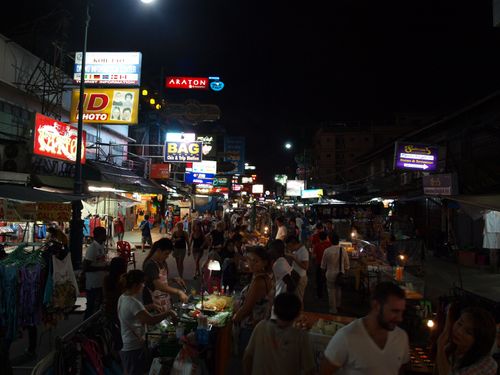
Bangkok’s backpacker carnival: curbside bars, live bands and DJs from 3pm–2am (midnight Sun). Street eats are cheap — pad thai 70–100 THB, mango sticky rice 60–100 THB. Come for wild people-watching; duck into Rambuttri for a calmer beer.
Wat Phra Kaew
Temples
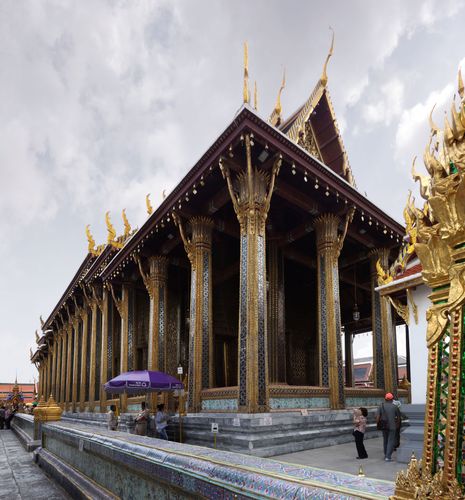
Bangkok’s holiest temple inside the Grand Palace. Go early (8:30am–3:30pm). Buy the 500 THB ticket at Na Phra Lan Rd gate. Dress code enforced. Marvel at Ramakien murals and the tiny Emerald Buddha whose robes change with the seasons. 10–15 minutes’ walk from Khao San.
More Khao San Road Guides
- Best Time for a Bangkok Temple Run: Sunrise, Midday Heat, and Sunset Visits from Khao San Road
- Bangkok Temple Run for Sunrise and Sunset: The Best Light, Heat, and Crowd Strategy from Khao San Road
- Bangkok Temple Run for Early Risers: Beat the Heat at Wat Pho, Grand Palace, and Golden Mount from Khao San Road
- Bangkok Temple Run in One Morning: An Early-Start Guide to Beating Heat and Crowds from Khao San Road