
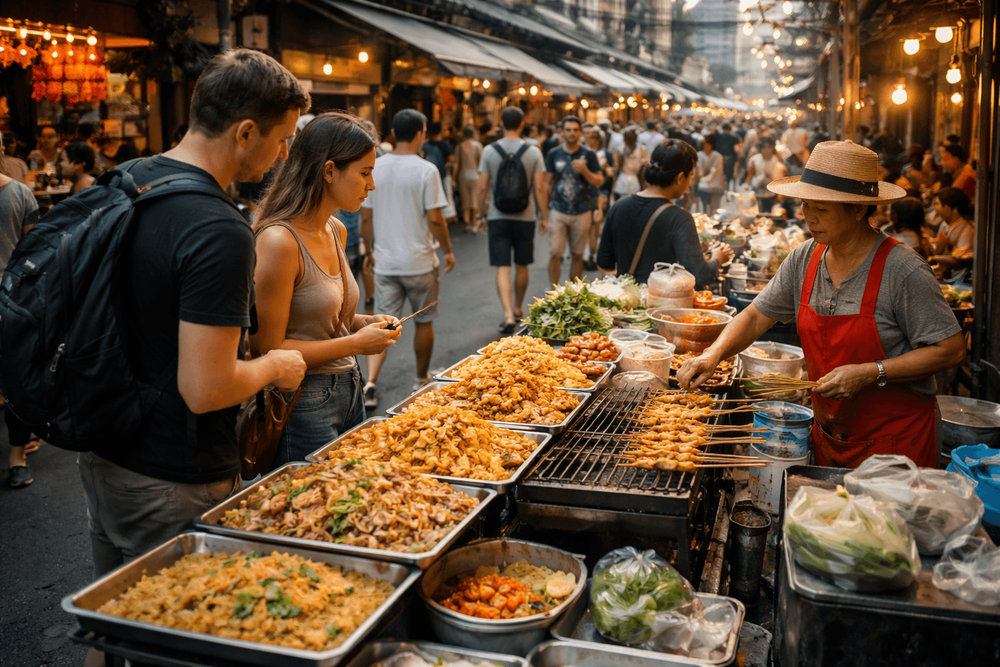
Bangkok Street Food for Travelers on a Budget Near Khao San Road: Cheap Dishes That Fill You Up
Eat like a local near Khao San Road. Our first-hand guide to cheap Bangkok street food: dishes, prices, flavors, hygiene tips, etiquette, and where to go.
We’re wedged onto a plastic stool on Soi Rambuttri, sweat beading on our necks, watching a wok toss flames as the vendor flicks fish sauce like confetti. The thump from a Khao San bar rolls down the soi, a tuk-tuk coughs past, and that unmistakable perfume of grilled pork and garlic says everything we love about cheap Bangkok street food: fast, loud, a little chaotic, and so, so satisfying.
Cheap Bangkok Street Food Near Khao San Road
Let’s eat our way from Khao San Road into the lanes where the prices drop and the flavor cranks up. Around Banglamphu—Soi Rambuttri, Tanao Road, Dinso Road, and Phra Athit—you’ll find the sweet spot of budget-friendly stalls that feed students, office workers, and us farang who know where to stand in line.
Here are wallet-happy staples we actually order, with realistic prices and portions you can count on.
Pad Kraphao
- What it is: Minced pork or chicken stir-fried with holy basil, chili, garlic—fragrant, punchy, a Bangkok lunch classic. Usually topped with a fried egg (kai dao).
- Price: 60–80 baht near Banglamphu. Add 10–15 baht for the egg.
- Portion: A heaping plate—about a mound of rice the size of your fist plus 150–200 g of stir-fry. One plate fills most appetites.
- Order tip: “Kraphao moo kai dao, mai ped/‘ped nit noi’” if you want no spice/a little spice.
Khao Man Gai
- What it is: Poached chicken, fragrant rice, broth, gingery-chili dipping sauce.
- Price: 60–80 baht for a normal plate; 80–100 for extra meat.
- Portion: Rice and protein are balanced; the free cup of broth helps it feel bigger.
- Where: Look for glass cases stacked with pale chicken and hanging carcasses along Dinso Road and Tanao Road.
Khao Kha Moo (Braised Pork Leg on Rice)
- What it is: Soy-braised pork leg with pickled mustard greens, a soft egg, garlicky gravy.
- Price: 60–80 baht standard; 80–100 baht for extra meat or egg.
- Portion: Heavy on rice and gravy—super filling for the price.
Kuay Tiew (Noodle Soup) and Boat Noodles
- What it is: Choose your noodle (sen lek = thin rice, sen yai = wide rice, ba mee = egg), your broth (clear, tom yum sour-spicy, or rich boat noodle).
- Price: Regular bowls run 50–70 baht; true boat-noodle-sized mini bowls can be 20–30 baht each, meant to stack two or three.
- Portion: One full bowl equals a light meal; two boat bowls equal a snack; three or four are dinner.
- Where: Victory Monument is boat-noodle central, but you’ll find budget noodle shops sprinkled around Banglamphu and on Tanao.
Moo Ping + Sticky Rice (Grilled Pork Skewers)
- What it is: Charcoal-grilled marinated pork skewers, caramelized fat, smoky edges.
- Price: 12–20 baht per skewer; sticky rice 10–15 baht.
- Portion: Three skewers plus rice is a legit meal for under 80 baht.
- Pro move: Grab them hot off the grill around dawn or late night when the grill is busiest.
Som Tam (Papaya Salad) and Isaan Grills
- What it is: Pounded green papaya salad with lime, chili, fish sauce, a little palm sugar. Often eaten with grilled chicken (gai yang) or pork neck and sticky rice.
- Price: Som tam 40–70 baht depending on add-ins; grilled chicken quarter 60–90 baht; sticky rice 10–15 baht.
- Portion: One som tam easily feeds two as a side.
- Order tip: “Som tam Thai, mai ped” (sweeter, less spicy) or go Isaan-bold with fermented fish sauce—“som tam pla ra”—if you want that funky kick.
Khao Rad Gaeng (Rice with Curry Toppings)
- What it is: Point-and-choose curry stall; you get rice plus two dishes.
- Price: 50–70 baht for two items; 70–90 for three.
- Portion: Huge value—perfect for mixing a mild coconut curry with a spicy stir-fry.
- Where: Morning markets near Banglamphu; look for big metal trays and a busy breakfast crowd.
Roti and Banana Pancakes
- What it is: Griddled roti, sweet with banana/condensed milk or savory with egg and curry.
- Price: 30–50 baht for sweet versions; 50–70 for egg or cheese.
- Portion: A great late-night filler that’s easy to split.
Mango Sticky Rice
- What it is: Ripe mango, sweet sticky rice, coconut cream.
- Price: 60–100 baht depending on mango size and season.
- Portion: Shareable; perfect closer for a street-food crawl.
Fried Chicken, Satay, and Odds-and-Ends
- Gai tod (fried chicken): 20–35 baht per piece. Crunchy, peppery, unstoppable.
- Pork satay: 80–120 baht for 10 sticks with peanut sauce and pickles.
- Pla pao (salt-crusted grilled fish): 150–220 baht whole fish—great value when split between two or three.
Beyond Khao San: Other Cheap Pockets Worth the Ride
- Wang Lang Market: Lunch paradise with 30–80 baht bites. Hop the ferry from Phra Athit for a quick cross-river snack raid.
- Yaowarat (Chinatown): Nighttime lanes of skewers, noodles, and desserts—prices creep up on the main drag, but step into side sois for 50–80 baht bowls.
- Silom/Convent at weekday lunch: Office-worker queues mean fresh food and local prices.
Hungry for deeper budget math? We broke down real menus by price in Bangkok neighborhoods here: Bangkok Street Food by Budget: What to Eat for 50, 100, and 200 Baht.
Price Ranges, Portions, and How to Spot Value
Prices shift with rent and foot traffic, but near Khao San Road and Phra Athit these buckets hold up:
- 10–30 baht: Skewers, grilled sausages (sai krok Isaan), fried snacks, bagged fruit.
- 40–70 baht: One-bowl noodles, som tam, single-plate rice dishes (kraphao, pad see ew), two-curry rice plates.
- 80–120 baht: Extra meat portions, seafood noodles, satay sets, mango sticky rice with big mango.
- 150–220 baht: Shareables like whole grilled fish or a pile of oysters-in-omelet (hoi tod) big enough for two.
Value clues we use when we’re deciding where to queue:
- Menus with prices posted in Thai and English tend to be fair. No price? Ask first—“tao rai krap/ka?”—before you order.
- Watch the wok line: five-plus people waiting means fast turnover and fresh ingredients. If it’s dead at peak meal hours, that’s telling.
- Protein-to-rice ratio: decent stalls don’t drown a spoon of meat in a mountain of rice. You should see real chunks, not mystery mince.
- Boat noodles by the bowl: If tiny bowls are under 30 baht, it’s legit to stack two or three. If they’re pushing 50+ per mini bowl on a touristy lane, keep walking.
- Free broth or self-serve water tins on tables are a nice bonus, but don’t count on them. We usually buy a cold bottle from the nearest 7-Eleven (10–15 baht) and enjoy the blast of AC for a minute.
If you’re planning a tight-budget night out around Banglamphu, we’ve sketched an easy playbook here: Bangkok Street Food for Cheap Meals: How to Eat Well on a Budget Around Khao San Road.
What Makes Bangkok Street Food So Addictive
It’s the balance. Sweet-salty-sour-spicy colliding in one bite. We love poking the condiment caddy—the quartet of chili flakes, sugar, vinegar with chilies, and fish sauce—until a bowl leans the way we want. Ingredients stay simple and bright: holy basil that slaps your nose, zingy makrut lime leaf, lemongrass and galangal humming under the surface, toasted garlic oil slicking the noodles just enough.
Cooking is theater as much as food. Woks roar with that smoky “breath” you can taste; mortars thud as som tam gets pounded to order; charcoal grills crackle while fat kisses fire and the smell drifts down the soi like a hand on your sleeve. Even the “quiet” braises—khao kha moo bubbling in a vat the size of a baby bathtub—tell you what’s coming the moment the lid lifts.
Hygiene, Food Safety, and Choosing Trustworthy Stalls
We’ve got strong stomachs, but we still follow a few rules:
- Follow the crowd. Busy stalls mean high turnover and food that hasn’t been sunbathing all day.
- Look for heat. We choose cooked-to-order woks, bubbling curries, or grills hot enough to sizzle. Lukewarm is a red flag.
- Covered ingredients. A tidy glass case, lids on pots, and raw stuff kept off the floor all score points.
- Time of day matters. Curry trays shine at breakfast and lunch; by mid-afternoon in direct sun, we pivot to noodle soup or grills.
- Fruit strategy. If you’re sensitive, pick fruit with peels (mango, pineapple) or buy whole and peel it yourself. Those pre-cut fruit bags are common and generally fine, but your gut—your rules.
- Water and ice. Tap water is a no from us; bottled is cheap and everywhere. Ice is often made from purified water, but if you’re cautious, ask for no ice—“mai ao nam khaeng.”
- Allergies and dietary needs. Fish sauce is in everything. If you must avoid it: “mai sai nam pla.” Shellfish? “Mai sai hoy/koong.” Vegetarian? “Jay” is your word—“kin jay” signals vegetarian Buddhist-style eating, but confirm no fish sauce or oyster sauce.
And yes, scams happen. If a tuk-tuk quotes you 20 baht for a tour of the city, they’re taking you to gem shops. For short hops in Banglamphu, we either walk, ride the river boat, or agree a price up front and keep it short and sweet.
Local Etiquette, Cash Basics, and Useful Thai
Most street vendors are cash-first. QR PromptPay is spreading, but don’t depend on it. We carry small bills—20s, 50s, and coins—so we’re not that person handing over a 1,000 for a 60-baht kraphao.
- Ordering flow: Point, say the dish and protein, mention spice level, then wait. You usually pay after you eat at a table stall, or on the spot at a cart.
- Share tables. Smile and slide over. It’s normal.
- Mind your feet. Don’t point them at people or Buddha images, even on wall altars.
- Return your tray or bowls if it’s obvious where they go—makes the auntie’s life easier and they’ll remember you.
- Don’t haggle over food. You can ask the price before ordering, but the posted price is the price.
Handy phrases we actually use:
- “Ao … krap/ka” = I’ll take …
- “Mai ped” = Not spicy; “ped nit noi” = a little spicy
- “Mai sai …” = Don’t put … (chili/prik, fish sauce/nam pla, MSG/pong chu rot)
- “Tao rai?” = How much?
- “Gep ngoen” or “check bin” = I’d like to pay
- “Aroy mak!” = So delicious!
Getting There and When to Go
Khao San Road doesn’t have direct BTS/MRT access, which is half the charm and half the sweat. Our favorite cheap approach is the Chao Phraya Express boat: ride the orange flag and hop off at Phra Athit Pier (N13). From there it’s a five- to ten-minute stroll past Phra Sumen Fort and onto Soi Rambuttri.
Local buses rumble in from Siam, Silom, and Chinatown—fares are cheap but routes can be a puzzle. Taxis are plentiful; insist on the meter or agree a price before you climb in. Tuk-tuks are fun for short hops; quote the destination and settle the fare up front.
- Breakfast (06:00–10:00): Markets around Banglamphu light up—khao man gai, jok (rice porridge), curry-and-rice trays. Cheapest time to eat big.
- Lunch (11:00–14:00): Office crowds guarantee fresh stir-fries and noodles.
- Dinner (17:00–22:00): Prime time for grills, roti, and noodles.
- Late night (23:00–03:00): Skewers, noodles, and banana pancakes keep Khao San and Rambuttri fueled.
If you’re switching train lines or skirting the river on a food mission, bookmark this too: Bangkok Street Food Around Transit Hubs: Easy Eats Near MRT, BTS, and River Ferry Stops. And when you just need something you can eat with one hand on the ferry: Bangkok Grab-and-Go Street Food Guide for Transit Days: Snacks, Packable Meals, and Quick Bites.
Where We Crash (and Why It Matters for Food)
We usually base ourselves within flip-flop distance of Soi Rambuttri or Phra Athit. Not because we love the noise (earplugs are a Bangkok essential), but because waking up near the morning markets and closing the night next to the best grills saves you both baht and time. If you’re picking a place, scan for: walkable access to Tanao and Dinso, a lobby fan or pool for post-lunch heat coma, and a quiet room tucked off the main soi so you actually sleep.
Our Go-To Cheap Eat Crawl Around Khao San
- Start at Phra Athit around 17:30 with moo ping and sticky rice (three skewers + rice ~70 baht). Eat them leaning against a tree watching the river glow.
- Wander into Soi Rambuttri for a pad kraphao with kai dao (70–90 baht). Listen for the staccato clack of a wok spatula; that’s your beacon.
- Grab a bowl of tom yum noodles on Tanao (60–80 baht), then hit a som tam cart for balance (50–70 baht). Ask for “ped nit noi” unless you like pain.
- If you’re a seafood-for-value person, split a salt-crusted pla pao (150–220 baht) with friends—stuff the flaky fish into lettuce with herbs, dunk in chili lime sauce.
- Finish with mango sticky rice (70–100 baht) or a banana pancake (40–60 baht) as you angle back toward your bed.
Yeah, it’s hot. Yeah, you’ll sweat. But that first bite of holy basil, the charcoal smoke in your hair, and a 70-baht plate that eats like a feast—that’s Bangkok. Text us when you find your favorite stall; we’ll be somewhere on Phra Athit with a bag of skewers and a cold bottle from 7-Eleven, grinning like we just stole dinner.
Related Hotels & Places
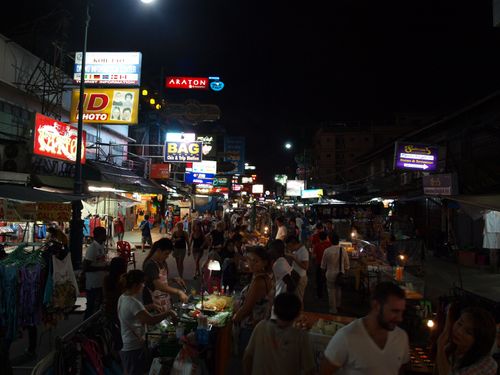
Khao San Road
Attractions
Bangkok’s backpacker carnival: curbside bars, live bands and DJs from 3pm–2am (midnight Sun). Street eats are cheap — pad thai 70–100 THB, mango sticky rice 60–100 THB. Come for wild people-watching; duck into Rambuttri for a calmer beer.
Rambuttri
Markets
Khao San’s calmer cousin: a tree‑shaded lane of VW van cocktail bars, open‑air foot massages, pad thai grills, and easygoing live bands. Best from sunset to 11pm; beers 80–120 THB, cocktails 150–220 THB. One block from the chaos, all the charm.
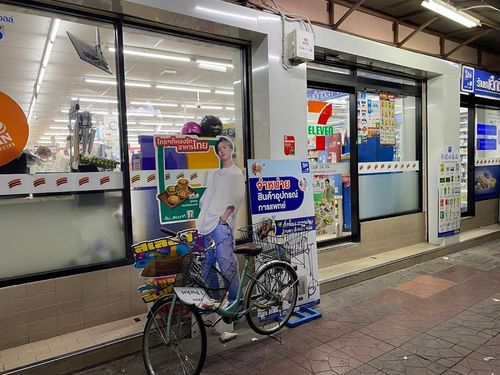
7-Eleven
Shops
Khao San’s 24/7 reset button: ice‑cold A/C, ham‑cheese toasties, All Café iced lattes, water for 7–14 THB, and late‑night supplies from snacks to sunscreen—right by Rikka Inn.
More Khao San Road Guides
- Bangkok Street Food for Budget Travelers: Filling Meals Under 100 Baht Near Khao San Road and Beyond
- Bangkok Street Food for Budget Travelers: Cheap Meals Near Khao San Road That Still Feel Local
- Bangkok Street Food for Cheap Meals: How to Eat Well on a Budget Around Khao San Road
- Bangkok Street Food with Seating: Where to Find Easy Sit-Down Stalls and Quick Meals Around Khao San Road