
Best Day Trips from Bangkok for Backpackers Who Want Wildlife, Caves, and Easy Train Access
Our favorite Bangkok wildlife day trips—elephants, caves, gulls, bats, and fireflies—with train routes, costs, and insider tips for ethical, easy escapes.
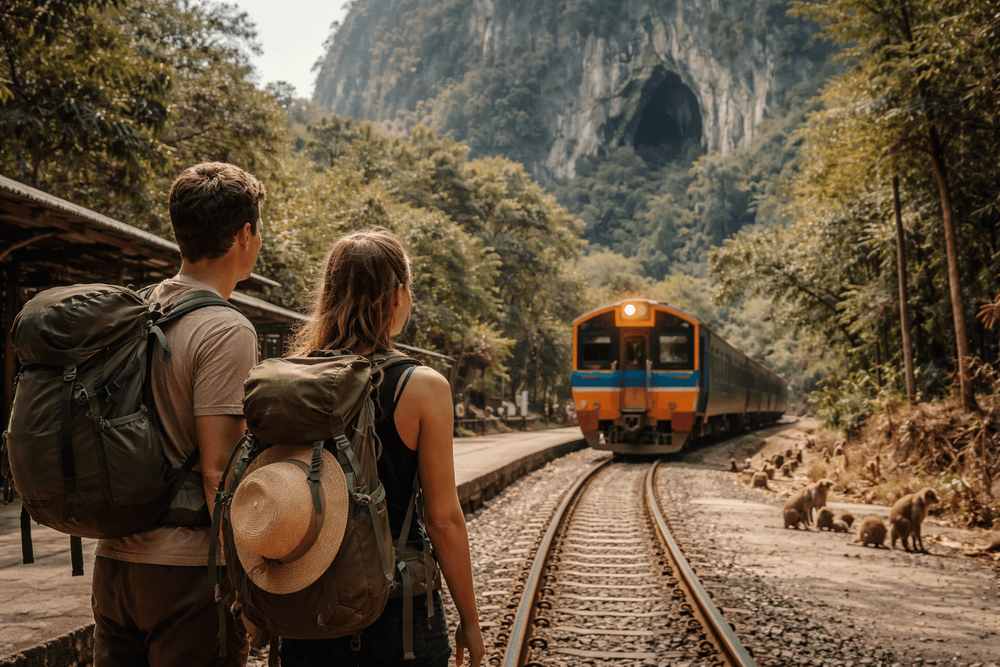
We step off a rattling third-class train into warm air that smells like grilled gai yang and wet leaves, the kind of heat that makes cicadas buzz louder. This is why we love Bangkok day trips by train, bus, and ferry: one minute we’re dodging tuk-tuks on Phra Athit Road, the next we’re staring at a hornbill gliding over jungle canopy or a river full of flickering fireflies. It’s sanuk and sweaty and just the right kind of wild.
Best Bangkok Wildlife Day Trips (By Train, Van, and Boat)
Kanchanaburi: Waterfalls, Cave Bats, and River Jungle Vibes
If you want nature with a side of history, Kanchanaburi hits the sweet spot. Erawan National Park’s seven-tiered waterfalls are turquoise perfection, and Sai Yok’s jungle valleys hide Lawa Cave with glittering stalactites and a whispery bat colony. Wildlife is shy here—think macaques on the riverbank, hornbills in the morning, kingfishers arrowing over khlongs—but the setting is pure postcard.
- Getting there: Ordinary trains from Thonburi Station to Kanchanaburi take about 2.5–3 hours and cost roughly 100–120 baht. From Kanchanaburi bus station, local buses or songthaews to Erawan take 1.5 hours. Lawa Cave is in Sai Yok National Park—rent a scooter (200–300 baht/day) or negotiate a songthaew.
- Hours & fees: Erawan NP is typically open 8:00–16:30; foreign adult entry around 300 baht. Sai Yok NP similar pricing. Lawa Cave requires a guide at the entrance; budget a couple hundred baht per group.
- Need a guide? Not required for the main trails and falls. For caves, you’ll be escorted.
- Insider gripe: Erawan gets packed on weekends. Hit the trail early and swim at tiers 5–7 before the farang crowd and Bangkok families arrive.
If this tilts you toward jungle treks and railside cliffs, we rounded up more ideas in Best Day Trips from Bangkok for Backpackers: 12 Easy Escapes by Train, Bus, and Minivan (/articles/bangkok-adventure-day-trips-backpackers).
Khao Yai National Park via Pak Chong: Gibbons, Hornbills, and the Evening Bat Exodus
Thailand’s oldest national park is where the forest soundtrack switches to gibbon whoops at dawn. Hornbills flap like prehistoric kites, and if luck loves us, we’ll spot sambar deer yards from the road. After sunset near Pak Chong, millions of wrinkle-lipped bats pour out of limestone—an ink-black river against an orange sky.
- Getting there: Northern/Northeastern line trains to Pak Chong take 3.5–4.5 hours depending on service; fares range widely (think 40–300+ baht). From Pak Chong, rent a scooter (300–500 baht/day) or arrange a songthaew/tour to the gate (30–45 minutes). Check the State Railway of Thailand app or counters day-before.
- Hours & fees: Gate hours usually 6:00–18:00. Foreign adult entry about 400 baht. Night spotlight drives are run by the park—book at the visitor center; prices change, but budget a few hundred baht.
- Need a guide? Not for the main roads and short trails, but for deeper treks and animal tracking, hire a licensed guide at HQ.
- Pro tip: Arrive the afternoon before, catch the bat exodus near Khao Luk Chang, then do a dawn gibbon run inside the park.
Craving more fresh-air fixes? See Best Day Trips from Bangkok for Backpackers by Train, Bus, and Ferry (/articles/bangkok-nature-day-trips-waterfalls-parks-fresh-air).
Kui Buri National Park: Your Best Shot at Wild Elephants
Kui Buri, south of Hua Hin, is the place in Thailand where “we might see elephants” becomes “we probably will.” Local rangers manage grasslands for herds that often wander out near viewing hides in late afternoon.
- Getting there: Southern line trains stop at Kui Buri town (3.5–5 hours depending on service). From there it’s roughly 45 minutes to the park entrance by pickup or chartered songthaew. Easiest is a van or driver from Hua Hin/Pranburi.
- Hours & fees: Wildlife watching opens around 14:00 and wraps by sunset. Foreign adult entry about 200 baht. Safari pickup with ranger/driver runs roughly 850–1,000 baht per truck (seats 6–8)—split the cost with new friends.
- Need a guide? Yes; you ride with rangers by rule.
- Reality check: It’s dust, sun, and bumpy tracks. Worth every jolt when a matriarch steps out of the trees.
Khao Sam Roi Yot National Park: Phraya Nakhon Cave and Wetland Birds
Limestone peaks, glassy marshes, and the most photogenic cave in the country. We hike or boat to Laem Sala Beach, then climb to Phraya Nakhon Cave, where a royal pavilion sits in a sunbeam like a set piece. Out at Bueng Bua wetlands, spot jacanas and herons tiptoeing lily pads while the mountains throw long shadows.
- Getting there: Southern line train to Pranburi or Wang Phong (3.5–4.5 hours), then local taxi/songthaew or a rented scooter to the park (30–45 minutes). Vans from Bangkok’s southern terminals are faster but less romantic than the train.
- Hours & fees: Park entry around 200 baht for foreign adults. Boat to Laem Sala Beach is extra (roughly 400–500 baht per boat round-trip; share to save). The wetland boardwalk is included in the park fee.
- Need a guide? Not required for the cave or wetlands. Bring a headlamp and good shoes for the cave climb.
Pranburi Forest Park: Mangrove Boardwalk, Mudskippers, and Fiddler Crabs
If you want a calm, family-friendly ramble, this shaded mangrove loop is all breeze and birdsong. Watch mudskippers plop like tiny lizards with delusions of grandeur and fiddler crabs wave oversize claws like traffic police on a busy soi.
- Getting there: Train to Pranburi, then tuk-tuk or scooter 15–20 minutes. Easy add-on to Khao Sam Roi Yot.
- Fees & hours: Usually free or a small donation; daylight hours are best.
- Need a guide? No. Pack bug spray.
Wat Pho Bang Khla (Chachoengsao): Flying Foxes at a Riverside Temple
Hundreds—sometimes thousands—of huge fruit bats dangle like umbrellas in the temple trees by day, then take to the sky near dusk. The screeching and the ripe-fruit smell? We’re into it. This is a chill, close-to-town wildlife hit.
- Getting there: Eastern line commuter trains from Bangkok to Chachoengsao Junction take about 1–1.5 hours and cost small change. From the station, grab a songthaew or taxi toward Bang Khla (30–40 minutes). The temple is on the Bang Pakong River.
- Fees & hours: Free to enter; donate to the wat if you can. Late afternoon is prime time for bat action.
- Need a guide? Nope.
Bang Pu Recreation Center (Samut Prakan): Winter Gull Swarms by the Sea
When the wind cools and the city breathes again (November to March), thousands of gulls mob the pier at sunset. It’s a white-noise kind of wildlife—squawks, wings, fried squid on sticks, and teenagers taking selfies.
- Getting there: BTS to Kheha station, then the 36 songthaew straight to Bang Pu (about 20 minutes). Easy half-day escape.
- Fees & hours: Free. Best light from 16:30 onward. Birds thin out in the hot months.
- Need a guide? Your snack instincts will guide you.
Lopburi: Monkey Town Mayhem
Urban wildlife at its cheekiest. Crab-eating macaques patrol around Phra Prang Sam Yot like they own it (they kind of do). Expect grabby fingers, stolen sunglasses, and a lot of laughs.
- Getting there: Northern line trains to Lopburi take 2–3 hours. Walkable from the station to the old Khmer prang.
- Fees & hours: The prang has a small entry fee; streets are free. Late afternoon is cooler.
- Need a guide? No. Keep zips closed and don’t feed the troops.
Laem Pak Bia and Pak Thale (Phetchaburi): Shorebirds and, If You’re Lucky, a Spoon-billed Sandpiper
Salt pans shimmer, wind hums over the flats, and a telescope turns anonymous specks into migratory rockstars. In winter, this is one of Southeast Asia’s great birding circuits.
- Getting there: Southern line train to Phetchaburi (2.5–3.5 hours), then hire a taxi or driver (45–60 minutes) to Laem Pak Bia pier and Pak Thale salt pans. A boat to the sandspit can be arranged at the pier—budget 1,000+ baht per boat; share the ride.
- Fees & hours: No park fee; you’re paying for transport and possibly a local guide.
- Need a guide? Not required, but bird guides are worth it if you want that spoon-billed sandpiper tick.
Amphawa and the Mae Klong: Fireflies and Mangrove Monkeys
Come late, leave late. Hit the Amphawa Floating Market for noodles and grilled river prawns, then a night boat along the Mae Klong where fireflies blink on mangrove branches like fairy lights.
- Getting there: You can do the classic railway hop—train from Wongwian Yai to Mahachai, cross the river ferry, then train from Ban Laem to Mae Klong—sanuk but slow. Faster by van from the Victory Monument area or Bangkok bus terminals.
- Fees & hours: Firefly boats usually run 18:30–20:30; expect 60–100 baht per person on shared boats. Some local long-tails also visit mangrove areas where macaques play.
- Need a guide? No, but ask your boatman to cut the engine near the brightest trees and keep lights off.
If canals and slow-village vibes are calling, we pulled together more rail-and-boat escapes in Best Day Trips from Bangkok for Backpackers: Cheap, Easy Escapes by Train, Bus, and Boat (/articles/bangkok-canal-day-trips).
What Wildlife You Can Realistically See Near Bangkok
We’re not on safari in the Serengeti, so set expectations and you’ll have a blast.
- Elephants: High chance at Kui Buri on the afternoon drives; a rare roadside cameo in Khao Yai.
- Gibbons: Best heard (and sometimes seen) at dawn in Khao Yai. Watch the canopy gaps along short trails near visitor centers.
- Macaques and langurs: Macaques everywhere from Lopburi to riverside mangroves; dusky langurs are possible around Khao Sam Roi Yot’s quieter cliffs.
- Birds: Seasonal gulls at Bang Pu (Nov–Mar), shorebirds at Pak Thale/Laem Pak Bia (Nov–Mar), hornbills and barbets in Khao Yai year-round, wetland birds at Bueng Bua.
- Reptiles: Water monitors are common in city parks and mangroves. Snakes exist—leave them in peace.
- Bats: Lawa Cave in Sai Yok and the epic dusk bat exodus near Pak Chong/Khao Yai.
- Marine life: Mudskippers and fiddler crabs in mangroves; occasional Irrawaddy dolphin trips run seasonally around Bang Tabun/Laem Pak Bia.
- Nocturnal sparkle: Fireflies along the Mae Klong and some khlongs near coconut groves.
Practical Planning: Time, Distance, Fees, and When to Book a Guide
- Distances and time: Most spots sit 60–250 km from Bangkok. Trains to Chachoengsao and Lopburi are easy 1–3 hours. Southern line runs to Pranburi/Kui Buri/Phetchaburi take 3–5 hours. Kanchanaburi is a breezy 2.5–3 hours by rail.
- Costs (rough): National park foreign adult fees range 200–400 baht. Local trains 15–300 baht depending on distance and class. Songthaew hops 20–60 baht in-town; charters 300–1,000 baht depending on distance and haggling prowess.
- Opening hours: Parks usually 6:00–18:00; waterfalls often gate the upper tiers from mid-afternoon. Night activities (fireflies, spotlight drives) start after dusk.
- Guides: Required on Kui Buri elephant drives and some caves. Optional but helpful for wildlife spot-and-identify in Khao Yai and for shorebird days around Pak Thale.
- Seasonality: Cool/dry months (Nov–Feb) are easiest for hiking and birds. Rainy season (May–Oct) brings leeches, swollen streams, and lush forest—pack for it.
Want more inspiration beyond wildlife? Browse Best Scenic Day Trips from Bangkok for Backpackers Who Want Nature, Views, and Easy Exploring (/articles/bangkok-scenic-day-trips).
Family-, Budget-, and Eco-Friendly Picks
- Family-friendly: Pranburi Forest Park’s mangrove boardwalk, Bang Pu gull feeding at sunset, Amphawa firefly cruises. Flat paths, bathrooms, snacks—zero drama.
- Budget moves: Chachoengsao’s flying foxes (free temple, cheap train), Lopburi monkey town (small site fee), Bang Pu (BTS + street snacks). Save the baht for boat noodles back on Soi Rambuttri.
- Eco wins: Kui Buri’s ranger-managed elephant viewing keeps people at a safe, non-stressful distance. Khao Yai’s guided walks with licensed local guides support conservation and better sightings.
Responsible Wildlife Travel: Do’s, Don’ts, and What to Pack
We love a good selfie, but not at an animal’s expense. A few sanity checks so our fun is also fair.
- Look, don’t touch: No riding elephants, no selfies with drugged animals, no feeding macaques. Keep 30–50 meters from elephants—always.
- Keep it quiet: Dawn gibbon calls are magic; don’t blast music from your phone on the trail.
- Lights out: No flash for bats or fireflies. Red headlamp mode if you have it.
- Stay on trail: Thai parks are biodiverse—and full of things with fangs or spines. Rangers know why paths exist.
- Pack it in: Rubbish goes back to Bangkok with us. Single-use plastic? We can do better.
What to pack for a wildlife day trip:
- Refillable water bottle (freeze it overnight for that 7-Eleven-AC feeling on the go)
- Lightweight long sleeves and pants (sun, bugs, temple visits)
- Hat, sunscreen, and insect repellent (DEET or picaridin)
- Grippy shoes or sandals you don’t cry over when they get muddy
- Compact binoculars or a zoomy phone camera
- Headlamp for caves (red mode if available)
- Poncho or dry bag in rainy season; leech socks if you’re trail-happy
- Small bills for songthaews, boats, and park kiosks
Where We Crash Between Trains
For early departures, we like staying within a quick tuk-tuk of Hua Lamphong or the Thonburi railway side—cheap eats, easy rides, and fewer 5 a.m. panics. around Khao San Road and Soi Rambuttri, there are plenty of budget guesthouses with pools for that post-hike dunk. Near the BTS Sukhumvit line, it’s a straight shot to Kheha for Bang Pu sunsets. Keep it simple: stash bags, nap, hit the next train.
Know Before You Go
- Cash is king in small towns and park gates; ATMs exist but can be spaced out.
- Weekends mean crowds. We aim for early trains, weekday hikes, and sunset returns when possible.
- Weather swings happen fast. A clear Bangkok morning can turn into jungle thunder by 3 p.m. Bring a light layer and a dry bag for phones.
- Respect wats and locals: shoulders covered inside temples, shoes off, a quick sawadee and a smile go a long way.
We’ll be the ones on the platform with iced o-liang and a bag of grilled moo ping, pointing at the car with the best breeze. Text us when you spot your first hornbill—and if the bats pour out on time tonight, we might just ride that last train back grinning like fools. This is why we do bangkok wildlife day trips.
Related Hotels & Places
ไขปริศนๅ พระเครื่อง Kanchanaburi.
Attractions
Khao San Road
Attractions
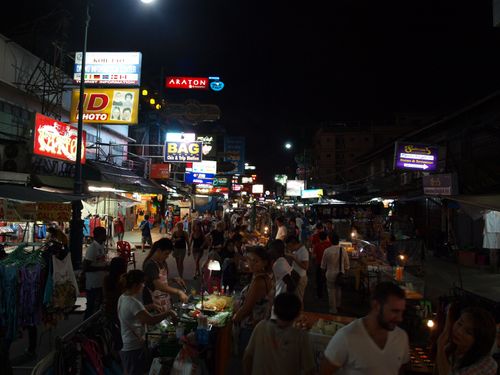
Bangkok’s backpacker carnival: curbside bars, live bands and DJs from 3pm–2am (midnight Sun). Street eats are cheap — pad thai 70–100 THB, mango sticky rice 60–100 THB. Come for wild people-watching; duck into Rambuttri for a calmer beer.
More Khao San Road Guides
- Best Day Trips from Bangkok for Backpackers: 12 Easy Escapes by Train, Bus, and Minivan
- Best Day Trips from Bangkok for Backpackers: Cheap, Easy Escapes by Train, Bus, and Boat
- Best Offbeat Day Trips from Bangkok for Backpackers: Small Towns, Hills, and Under-the-Radar Stops
- Best Cheap Day Trips from Bangkok by Train for Backpackers