
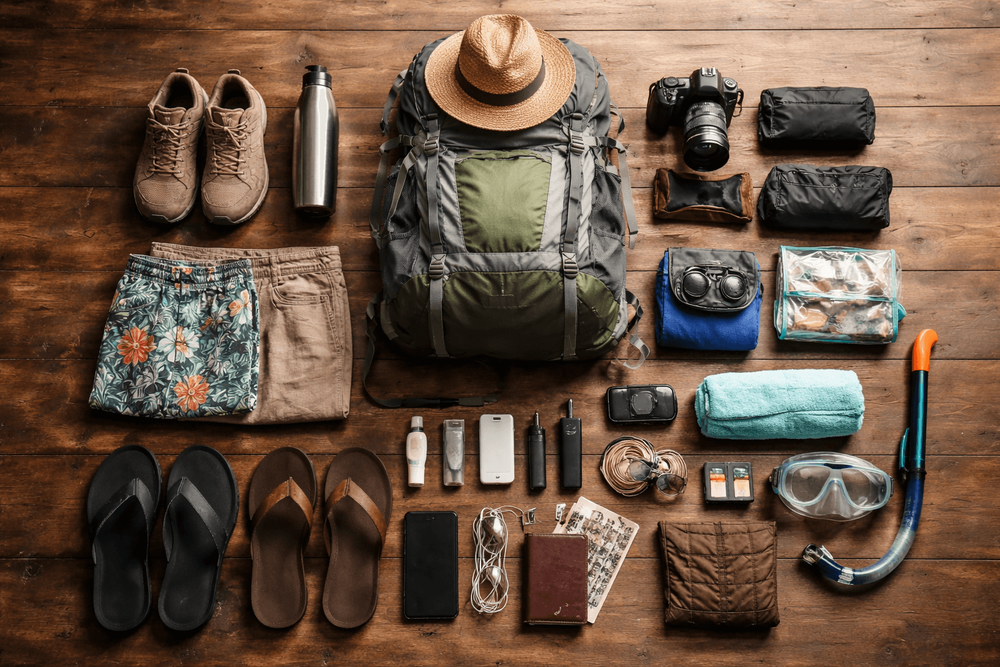
Backpacker Packing List for Thailand
Backpacker Packing List for Thailand — your insider guide to the best of Khao San Road.
Backpacker Packing List for Thailand Date: 2026-06-06
Overview Thailand is hot, humid, and easy to travel with a light pack. Aim for breathable clothing, quick-dry fabrics, modest options for temples, and a few waterproofing tricks for monsoon bursts and boat hops. Keep your daypack nimble for city walks, island transfers, and {{place:night markets:text}}.
TL;DR Minimalist Packing List (carry-on friendly)
- Backpack: 35–45L main pack + 15–20L daypack
- Clothes: 4–5 tops, 2–3 shorts, 1–2 lightweight pants, 1 dress/skirt or sarong, 5–7 underwear, 3–4 socks, sleepwear
- Footwear: breathable walking shoes, sandals/flip-flops, optional reef shoes
- Outer layers: ultralight rain jacket or poncho, packable sun hat/cap
- Swim: 1–2 swimsuits; rash guard if snorkeling
- Essentials: passport, cards, a bit of cash, travel insurance details, unlocked phone with eSIM/SIM plan
- Health: sunscreen (reef-safe), mosquito repellent, personal meds, basic first-aid, hand sanitizer, rehydration salts
- Gear: universal adapter, power bank (10,000–20,000 mAh), cable lock, dry bag (5–10L), packing cubes, microfiber towel
- Temple-ready: shoulders/knees-covering outfit or sarong, closed shoes preferred
- Documents: copies of passport/ID, visas/entry requirements, onward travel proof where required
Climate and seasonal notes
- Cool/dry (Nov–Feb): Most comfortable. Nights can be cooler in the north (Chiang Mai/Pai); bring a light layer.
- Hot (Mar–May): Prioritize airy fabrics, sun protection, and hydration aids.
- Rains/monsoon: West/Andaman coast (Phuket, Krabi, Koh Lanta) gets more rain May–Oct; Gulf islands (Koh Samui, Phangan, Tao) see heavier rain Oct–Jan. Pack a rain layer, dry bag, and quick-dry footwear year-round.
Documents and money
- Passport valid for at least 6 months after entry; keep digital and paper copies.
- Visas/entry rules change—check your nearest Thai embassy/consulate and your airline before booking.
- Travel insurance details and emergency contacts saved offline.
- Payment mix: 1–2 debit/credit cards + small amount of cash. ATMs are common; enable travel notices and PINs.
- Onward/return ticket proof is sometimes requested at check-in; keep confirmations handy.
Bags and organization
- Main pack: 35–45L is ample for 1–3 months if you rewash often.
- Daypack: 15–20L with a chest/waist strap is ideal for day trips and flights.
- Organization: packing cubes or compression sacks; small ditty bag for cables.
- Security: light cable lock for hostel lockers; pacsafe-style mesh is optional.
- Weatherproofing: rain cover for your pack; 5–10L roll-top dry bag for boats, scooters, and downpours.
- Laundry: quick-dry items and a small clothesline; sachets of detergent or soap sheets. Coin/self-service laundries and wash-and-fold shops are common.
Clothing (mix-and-match, quick-dry)
- Tops: 4–5 lightweight tees/tanks; 1–2 long-sleeve sun/bug layers or a linen shirt.
- Bottoms: 2–3 shorts; 1–2 breathable long pants (linen, synthetics, or light trekking pants).
- Dresses/skirts: 1 casual, knee-length or longer for temples.
- Swim: 1–2 swimsuits; rash guard for sun and jellyfish protection.
- Layers: ultralight rain jacket or compact poncho; thin sweater or shawl for A/C buses and planes.
- Underwear/socks: 5–7 pairs; include quick-dry.
- Sleepwear: lightweight set doubles as lounge wear.
- Headwear: sun hat/cap; buff or bandana.
- Sarong/scarf: temple cover-up, beach blanket, or bus blanket.
Footwear
- Breathable walking shoes or trail runners for city days and light hikes.
- Sandals/flip-flops for beaches and showers; hiking sandals if you prefer one-shoe travel.
- Optional reef shoes for rocky entries and low-tide coral.
Toiletries and health kit
- Sunscreen (reef-safe; broad spectrum). Some marine parks restrict certain sunscreen chemicals—Verify on official site before travel.
- Mosquito repellent (DEET or picaridin), after-bite, and a small itch-relief cream.
- Personal meds + copies of prescriptions; basic first-aid (plasters, blister care, antiseptic wipes).
- Rehydration salts/electrolyte tabs; diarrhea relief; motion-sickness tablets if ferries are in your plans.
- Hand sanitizer, tissues/wet wipes; small soap or body wash sheets.
- Toothbrush, toothpaste, deodorant, razor, nail clippers, small hairbrush.
- Menstruation: preferred products (cups/tampons/pads); carry spares.
- Contact lenses/solution or spare glasses.
- Optional: earplugs and eye mask, compact microfiber towel, lightweight sleep sack for warm-budget stays.
Electronics
- Unlocked smartphone; consider eSIM or local SIM from major Thai carriers (AIS, True, DTAC). Plan options change—Verify on official site before travel.
- Power bank (10,000–20,000 mAh), charging cables, and a fast charger.
- Universal travel adapter; Thailand uses 220V, 50Hz, and sockets commonly accept flat (Type A/B) and round (Type C) pins.
- Headphones/earbuds; e-reader or tablet if you like.
- Camera and spare SD cards if photography is a priority.
- Optional for workation: lightweight laptop, compact mouse/keyboard, USB-C hub.
Beach, boats, and day trips
- Dry bag and phone waterproof pouch.
- Microfiber towel; quick-dry clothesline.
- Rash guard/long-sleeve swim top; reef-safe sunscreen; wide-brim hat.
- Lightweight tote or foldable market bag for groceries and laundry.
- Outfit that covers shoulders and knees (or a sarong to wrap).
- Closed-toe or sturdy sandals you can remove easily at entrances.
- Small bag for shoes if you want to carry them between buildings.
Safety and documents backup
- Cloud copies of passport, insurance, and cards; offline access on your phone.
- Two-factor authentication backup codes printed or stored securely.
- Minimal jewelry; money belt or hidden pouch for travel days if you prefer.
- Small flashlight/headlamp for night markets, dorms, and early buses.
Sustainable swaps
- Refillable water bottle; many hostels and cafes have refill stations.
- Reef-safe sunscreen and leave-in conditioner to protect marine life.
- Compact reusable utensils and a foldable tote to cut single-use plastic.
What you can buy easily in Thailand
- Toiletries, sunscreen, basic meds, flip-flops, T-shirts, sarongs, mosquito repellent, phone accessories, and simple rain ponchos. Buy bulky or replaceable items locally to keep your pack small.
- Heavy jeans and thick towels (slow to dry).
- Excessive makeup or hair tools in the tropics.
- Full-size bottles of liquids; decant or buy on arrival.
- Multiple “just in case” outfits—laundry is easy and fast.
Sample 1–2 week pack (fits in 35–40L)
- 4 tees/tanks, 1 long-sleeve shirt
- 2 shorts, 1 lightweight pants, 1 casual dress/skirt or sarong
- 5–7 underwear, 3 socks
- 1 swimsuit, 1 rash guard
- Ultralight rain jacket, sun hat
- Walking shoes, sandals
- Microfiber towel, dry bag
- Toiletries + small first-aid kit
- Unlocked phone, universal adapter, power bank, cables
- Cable lock, packing cubes, laundry line and detergent sheets
- Passport, insurance, cards, small cash stash
Health and vaccine notes
- Routine vaccines should be up to date. Depending on itinerary (rural trekking, border regions, long stays), a travel clinic may recommend additional shots or malaria prophylaxis. Consult a qualified clinician 6–8 weeks before travel for personalized advice.
- Insect avoidance: repellent, long sleeves at dusk, and light sleeping layers help.
- Hydration and heat: electrolytes, sun protection, and regular shade breaks.
Final packing tips
- Try everything on once as a full kit; walk a kilometer with your pack to test fit and hotspots.
- Keep a “go bag” in your daypack with water, snacks, wipes, tissues, sanitizer, mini first-aid, and a photocopy of your passport.
- Pack to 80–85% capacity so you have space for markets and souvenirs.
- Expect to do laundry every 3–5 days; plan clothing counts accordingly.
Osprey Farpoint 40 Travel Backpack
With this list you’ll stay comfortable from Bangkok’s street food runs to island boat hops and northern temple circuits—without lugging more than you need. Safe travels and sabai sabai packing.