
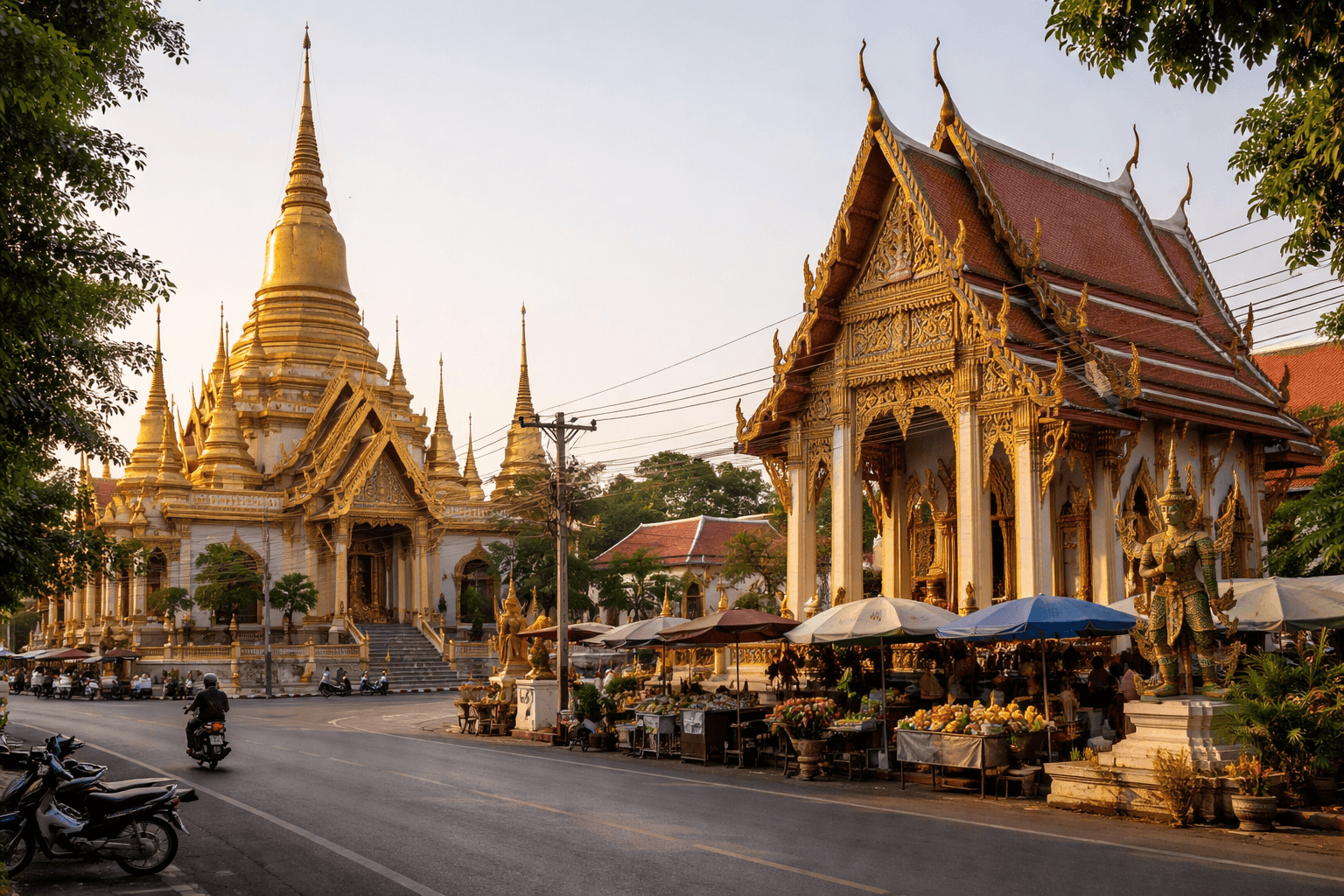
Temples in Sing Buri Center
Slow-paced temple-hopping by the Chao Phraya, morning markets, and zero tourist hassle. Sing Buri center is where we swap Bangkok buzz for small-town sanuk.
3 places within 3km matching filters

Open
MAX TATTOO Studio at Khaosan Road , Bangkok , Thailand
Tattoo $$$
Open
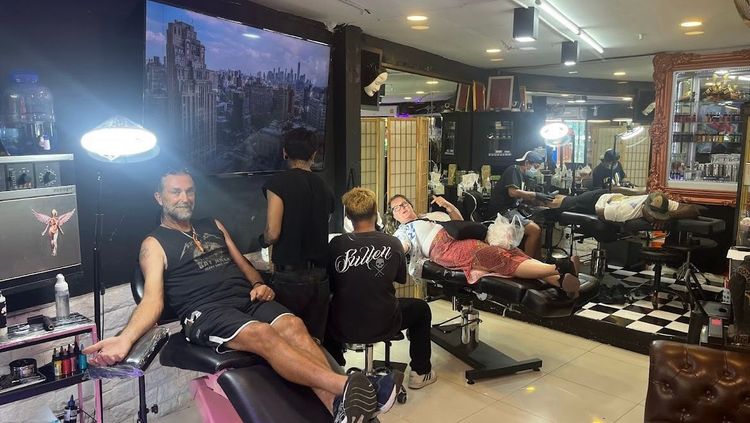
ink Addict Tattoo
Tattoo $$$
Open
BKK INK Tattoo Studio
Tattoo $$$
About Temples in Sing Buri Center
We duck out of the sun and into a cool viharn, fans clacking, incense curling, a drum thudding somewhere behind the bot. This is where the “temples in Sing Buri center” shine: low-key, lived-in, and blissfully short on selfie sticks. We’re not here for spectacle; we’re here for rhythm — monks on bicycles, aunties selling marigolds, the river moving like a lazy khlong at nap time.
## Why the Temples in Sing Buri Center Are Worth Your Time
Sing Buri’s town core hugs the Chao Phraya, a compact grid of sois and market lanes with a handful of wats you can wander between on foot or by a quick tuk-tuk hop. Compared to Ayutthaya’s blockbuster ruins, the temples in Sing Buri center feel intimate and working—more sawadee from locals, fewer farang tour groups. Expect gold-leaf Buddhas, creaky teak sermon halls, shady bodhi trees, and donation tables stacked with lotus buds and incense (20–40 baht gets you a set).
Two heavy-hitters sit just beyond the center but fold perfectly into a day’s loop: Wat Phra Non Chakkrasi Worawihan with its serene reclining Buddha (a short ride west) and Wat Phikun Thong with a huge seated image and amulet devotees (south toward Phrom Buri). Inside town, you’ll find smaller riverside wats and the City Pillar Shrine anchoring the spiritual compass — easy to thread together with snack stops and a river breeze.
### The Vibe
- Slow, friendly, a little sleepy after lunch. Shops nap; dogs do too.
- Monks offer gentle nods; temple cats act like they own the place (they do).
- Bells and gongs punctuate the afternoon. By dusk, the river catches gold.
## Key Spots and How to Do Them
- City Pillar Shrine (San Lak Mueang): Tiny but potent; locals pop in to light incense before markets. Quick, photogenic stop.
- In-town Wats: Follow the river road and slip into any open gate — you’ll find murals, drum towers, and quiet courtyards. If in doubt, ask a vendor for “wat nai mueang” and they’ll point you right.
- Wat Phra Non Chakkrasi Worawihan: A few kilometers out; think reclining Buddha, cool tiles underfoot, and old-school merit-making. Donation-based; open dawn to dusk.
- Wat Phikun Thong: Bigger complex with a towering image; popular with amulet hunters. Also donation-based; open daylight hours.
Tip: Go early for soft light and cooler air; circle back late afternoon when shadows stretch and the brass gongs glow.
## Eating and Drinking Between Wats
We graze like pros. Morning means jok (rice porridge), khao kha moo (braised pork leg), and patongo from the municipal market near the river — 40–60 baht and you’re set. Midday, we chase shade and soup: boat noodles or tom yum, 50–70 baht a bowl. Sing Buri leans riverine, so look for grilled pla chon (snakehead fish) or deep-fried river prawns at simple riverside shacks — 180–350 baht for shareable plates. Need a reset? Duck into any 7-Eleven for that blessed AC blast and a 14–20 baht water.
Nightlife’s mellow. A few cafes stay open for iced lattes and kanom, and there are beer-at-sunset joints overlooking the water. If you’re hunting Khao San–level thump, this isn’t it — and that’s exactly the charm.
## Where to Stay
Base yourself in the center if temple-hopping is your mission. You’ll find simple guesthouses, midrange river-view hotels, and Thai-style resorts with lots of parking. Weeknight walk-ins are usually fine; weekends and holidays see more domestic travelers. Expect 500–900 baht for basic fan/AC rooms, 1,200–1,800 baht for midrange with breakfast. No need to overthink it — pick something central so we can stroll to dinner and catch sunrise bells without a commute.
## Getting There
- From Bangkok: Vans and buses leave Mochit 2 (Northern Bus Terminal) frequently for Sing Buri. Figure 2–3 hours depending on traffic, 120–180 baht. Ask to be dropped near the town center or bus terminal; from there it’s a 5–10 minute tuk-tuk to most wats.
- From Ayutthaya or Lopburi: Regional buses and vans run 60–90 minutes. Easy day trip if you’re temple-surfing the Chao Phraya basin.
- Getting Around Town: Tuk-tuks and motorbike taxis handle short hops (60–120 baht in-town). Songthaews cover set routes for 10–20 baht; confirm direction with a smile and a “bpai nai?” before hopping on. Many sights are walkable in the cool hours.
## Practicalities and Temple Etiquette
- Dress code: Knees and shoulders covered for everyone. Sarongs are your friend.
- Shoes off before entering buildings; avoid stepping on thresholds.
- Photos: Generally fine outside; ask or look for signs inside ordination halls.
- Donations: Most temples are free; a small donation goes a long way. Buy flowers/incense sets on-site.
- Heat and timing: Midday is brutal. Plan a market breakfast, temple loop 8–11 am, siesta, then a golden-hour stroll 4–6 pm.
- Dogs and mozzies: Strays are usually chilled; don’t pet while they’re napping. Bring repellent for dusk.
- Scams: Minimal here. The only “gotcha” is the occasional tuk-tuk over-quote — smile, counter politely, or walk two sois and flag another.
## Is This Neighborhood for You?
Choose the temples in Sing Buri center if you want small-town Thailand without the performance — real merit-making, kind greetings, and enough river breeze to keep you lingering on a bench. Skip it if you need rooftop cocktails and neon; we’ll save that for Bangkok.
We’ll be back at dawn for the bell’s first note and a steaming bowl of jok by the pier — come hungry and curious, and we’ll temple-hop the day away.