Temples in Krabi-Center, Sing Buri
A quiet cluster of riverside wats, incense haze, and slow-lane Sing Buri life. We wat-hop, slurp boat noodles, and dodge the heat like locals do.
467 places within 3km matching filters
8.3
Hotel
Casa Picasso Near Chabad House
See prices

8.3
Hotel
Full House Khaosan
See prices

7.8
Hotel
BC guesthouse Banglumphu
See prices

7.5
Hotel
Amarin Inn
See prices

8.1
Hotel
New Siam Riverside
See prices

8.2
Hotel
The Lodge BKK Hostel
See prices

9.6
Hotel
Rooms@No.60
See prices

9.4
Hotel
Bedspread Hostel
See prices
8.9
Hotel
KS HOUSE
See prices

8.9
Hotel
Nina Guesthouse
See prices

8.0
Hotel
Mitr Inn Khaosan
See prices

9.2
Hotel
The StandardX Bangkok Phra Arthit
See prices

8.4
Hotel
Khaosan Station
See prices

9.1
Hotel
Riva Surya Bangkok
See prices

9.4
Hotel
Jam Hostel Bangkok
See prices

8.7
Hotel
CASA VIMAYA RIVERSIDE
See prices

8.9
Hotel
Alley & Pier
See prices
9.1
Hotel
Riva Surya Bangkok Hotel
See prices

7.6
Hotel
Bhiman Inn Hotel
See prices
9.6
Hotel
Wiengket Heritage 1964
See prices

8.8
Hotel
Suraya Bangkok
See prices

8.9
Hotel
Siri Heritage
See prices

7.7
Hotel
Collection O Diamond House Khaosan
See prices

9.4
Hotel
UPSTAIRS AT TON TON
See prices
About Temples in Krabi-Center, Sing Buri
We step off the bus into the Sing Buri sun and it hits like a hot wok—then the breeze off the Chao Phraya brushes our face and someone’s ringing a temple bell. If you came hunting for “temples in krabi-center,” you’ve landed in the right kind of wrong place: not Krabi down south, but a mellow pocket of central Thailand where wats sit shoulder to shoulder with noodle shophouses, and the only thump of bass you’ll hear is a long-tail boat thudding past.
## What this area is really about
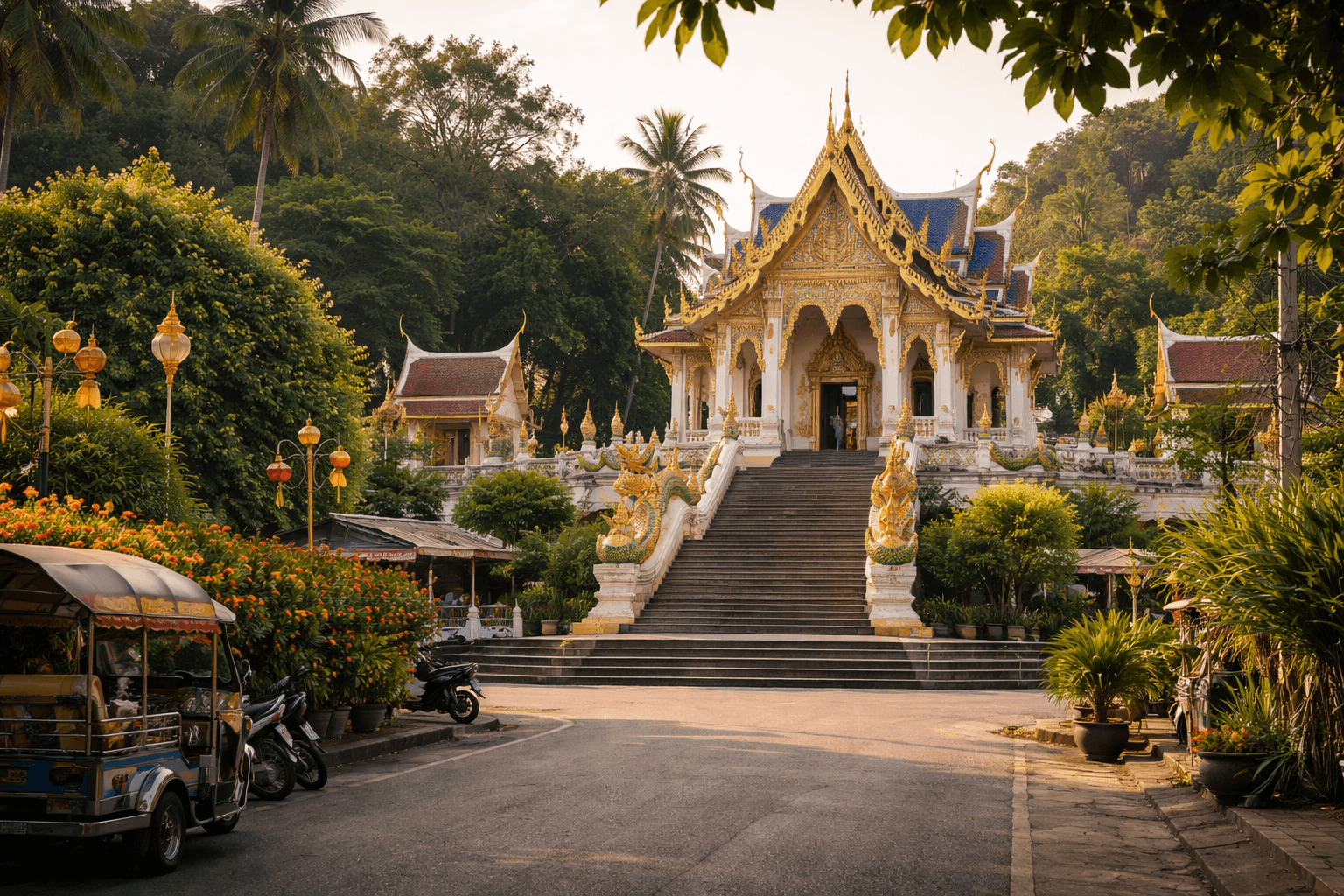
This little swath of Sing Buri is all about wat-hopping without the tour-bus scrum. The vibe is incense-hazed mornings, slow afternoons under bodhi trees, and golden Buddhas catching the 4 p.m. sun. We’re talking a compact orbit around town that puts us within easy tuk-tuk range of two headline temples—Wat Phra Non Chaksi Worawihan and Wat Pikun Thong—plus a handful of smaller riverside wats where the abbot might actually pause to say sawadee.
Yes, the phrase “temples in krabi-center” is confusing. Think of it as shorthand travelers use for a central, walkable temple circuit—here, that circuit lives in Sing Buri. Different river, same sanuk of wandering from shrine to noodle stall to shaded sala.
## Temples in krabi-center: what and where
- Wat Phra Non Chaksi Worawihan: The showstopper is the massive reclining Buddha—one of Thailand’s longest—stretched across the main hall like a sleeping golden river. The air inside is thick with candle smoke and murmured prayers; outside, vendors hawk lotus buds and incense (20–40 baht for a set). Morning light makes the gold glow; late afternoon is cooler for photos.
- Wat Pikun Thong: A few kilometers away stands a towering seated Buddha, visible above the treeline like a guardian watching the rice fields. The grounds feel more open—families feeding fish in the pond, the occasional school group, and a steady breeze if we hug the shade.
Between and around these two, we drift along the Chao Phraya’s banks to smaller, workaday wats—quiet ordination halls, weathered chedis, and monks padding across sun-warmed tiles. No turnstiles, no megaphones, just the low chatter of aunties selling amulets, the sweet rot of overripe bananas in a merit basket, and the soft click of prayer beads.
## The vibe: slow, golden, and friendly to farang
We won’t find rooftop bars or neon soi chaos here. Instead, think temple drums at dawn, egrets lifting off the khlongs that thread the paddies, and market aunties who insist we sit and sip nam manao before we faint. It’s unhurried, local, and kind—more smiles than sales pitches, and if someone quotes us a tuk-tuk price that’s a bit high, it’s fixable with a grin and a gentle, “Lot dai mai, khrap/ka?”
## Highlights you shouldn’t miss
### Wat Phra Non Chaksi Worawihan
Slip off your shoes and let your eyes adjust. The reclining Buddha fills the hall, a sweep of gold leaf and serene features that pull us into silence. We circle slowly, listening to the tap-tap of devotees pressing fresh gold leaf onto tiny worn patches. Dress shoulders-to-knees here; there’s usually a sarong loan rack by the entrance. Donations are optional—20–100 baht keeps the candles lit.
### Wat Pikun Thong
We approach across a wide courtyard, the seated Buddha stacked against the sky. Golden mosaics catch every bit of sun. Around the back, shady corners hide small shrines and a fish-filled pond where kids squeal as carp erupt for pellets (10 baht a bag). It’s a good place to linger and let the heat roll by.
### Riverside rambles and low-key markets
Swing by the river around sunset when the light turns honey-thick and the breeze finally shows up. We pick a bench, peel a bag of iced guava, and watch saffron robes flutter on a line. In the evenings, a small market materializes near the center with skewers, fried bananas, and plastic stools scraped across the pavement. No Insta theatrics—just dinner.
### A nearby detour: Khai Bang Rachan spirit
If we’ve got wheels, a short hop out of town brings us to the Khai Bang Rachan area—famous in Thai lore for villagers who stood their ground centuries ago. Not a temple tick, but the park and memorials offer context for the province’s pride, and it pairs well with a day of wats.
## Eating and drinking: calm your hunger between wats
- Boat noodles: Look for the cauldron steaming by the street and the chopped morning glory pile. A bowl of kuai tiao ruea runs 40–60 baht; we order two and pretend it’s still a snack.
- Grilled things on sticks: Moo ping (pork skewers) crackle on the grill at dawn and again at dusk. Ten to fifteen baht a stick, sticky rice another 10. We eat standing up like everyone else.
- River fish: Sing Buri leans into freshwater—grilled snakehead with herbs or spicy pla som (fermented fish) if we’re feeling brave. Expect 120–200 baht for a modest plate at a family shop.
- Cafés with mercy-level AC: When the sun torches the asphalt, we duck into a café for an iced oliang or latte (35–70 baht). The first breath of air-con is a religious experience of its own—7‑Eleven doors hiss open like salvation too.
Nightlife is a soft murmur—tea, karaoke murmurs drifting over the water, and the odd beer Chang on a plastic table. If we want thump-thump, we’ll bus back to Bangkok. Here, the soundtrack is crickets and temple bells.
## Sleeping here: who it suits and what to expect
Accommodation skews simple. Expect clean, no-fuss rooms with working AC and a fridge, sometimes with river views. Budget doubles run roughly 400–800 baht; midrange, 900–1,500. A few places near the river toss in bicycles or can call a songthaew for temple rounds. Nights are quiet, occasionally interrupted by a rooster or a distant drum—part of the charm. If we’re ultra light sleepers, pack earplugs.
Temple stays aren’t the norm; if we’re curious, we ask very politely at the wat office and accept a no with a wai. Either way, modest sleepwear and morning manners go a long way—monks walk early for alms.
## Getting there and around
- From Bangkok: Buses and vans leave Mo Chit (Northern Bus Terminal) frequently for Sing Buri. Figure 2–3 hours depending on traffic, 100–140 baht one way. Driving via Route 32 (Asia Highway) is the quickest—1.5–2.5 hours when the gods of Don Mueang traffic smile.
- From Ayutthaya or Lopburi: Vans and local buses connect in 1–2 hours. Trains don’t run into Sing Buri town, so we skip the rails for this one.
- Local moves: There’s no BTS, no MRT—just the old reliables. We flag a tuk-tuk or motorbike taxi near the market; short hops are 60–120 baht, and a half-day charter to hit the main temples runs 300–600 baht depending on our negotiating charm. Songthaews (shared pickup trucks) do circuits; if one rumbles by, we hop on and cough up a coin or two.
Pro tip: Group temples on one side of the river and loop back after lunch. The midday sun here doesn’t play nice. We aim for mornings and the golden hour before dusk.
## Know before you go
- Dress code: Shoulders and knees covered inside temple buildings; remove shoes at thresholds. A light scarf and airy pants beat the heat and the side-eye.
- Etiquette: No pointing feet at Buddha images, and women should avoid physical contact with monks (place offerings on a tray if needed). Keep voices soft; phones on silent.
- Heat strategy: Temple hop early, café siesta at noon, sunset stroll after 4 p.m. Hydrate like it’s your job; bottled water is 10–15 baht at any shop.
- Bugs and sun: Mosquito repellent for sunset near the river; a hat will save our scalp. Sunscreen melts—reapply.
- Donations and amulets: There’s zero hard sell. If an amulet calls to us, prices start around 100 baht and can climb fast—buy for meaning, not as a speculative investment.
## Is this neighborhood right for us?
Choose this pocket—call it “temples in krabi-center” if your map insists—when we want:
- A mellow, no-drama wat circuit with big-wow Buddhas and very few tour groups
- Easy eats, easy transport, and prices that still make Bangkok feel expensive
- Golden-hour photos without elbows in our frame
- A taste of central Thai life where farang are guests, not a market segment
Skip it if we crave bar crawls, boutique shopping, or late-night sanuk. This is a place to slow down, listen to the bell ring, and let the incense do its thing. Tomorrow morning, we’ll be on the temple steps right as the light turns the Buddha’s cheek to molten gold—meet us there.