Why Is Khao San Road Famous? History, Nightlife & Travel Tips
Why is Khao San Road famous? Dive into its history, backpacker culture, wild nightlife, street food, and practical tips on safety, location, and getting there.
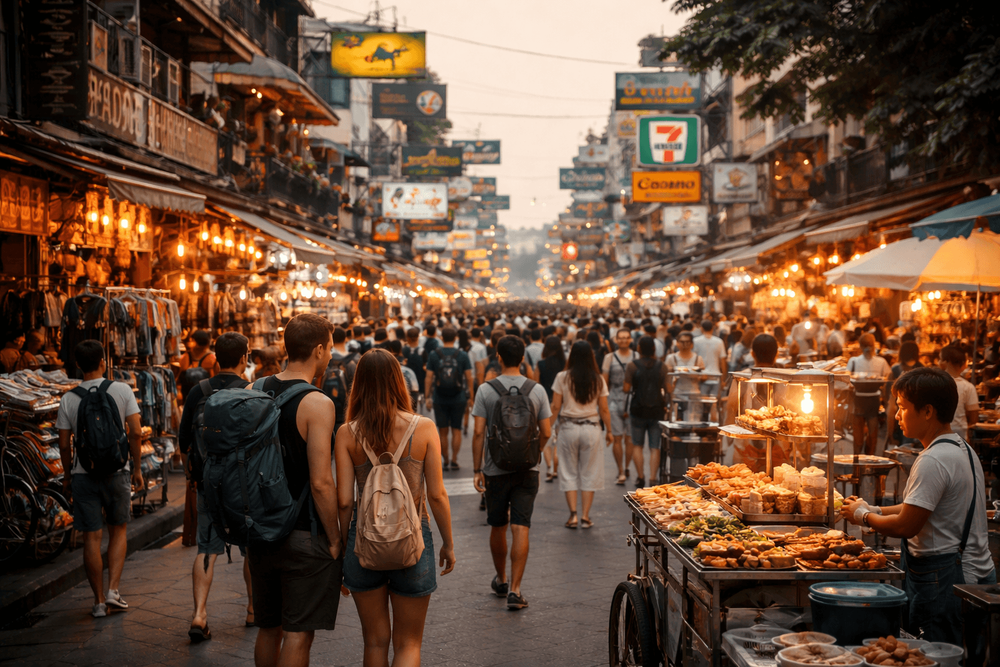
We slip off Phra Athit Road and into the glow like moths to a neon flame. Bass thumps from open-front bars, a wok spits a hiss of chili and fish sauce, someone yells sawadee over the sizzle, and a tuk-tuk coughs by with blue smoke and bravado. This is Khao San — and if you’ve ever wondered why is Khao San Road famous, all you need is five minutes with your senses wide open.
Why Is Khao San Road Famous? The Quick Answer
Khao San Road is famous because it became the world’s most notorious backpacker strip: a one-kilometer carnival of cheap rooms, late-night bars, street food, travel agents, massage chairs, and human traffic from every corner of the globe. It’s a launch pad for Southeast Asian adventures, a party that rarely sleeps, and a cultural crossroads that’s as loud and messy as it is magnetic. Budget travelers made it legend; nightlife, sanuk (fun), and sheer convenience keep it in the conversation decades on.
If you want the deep dive on what to do when you’re here, we’ve got it covered in our main hub: Khao San Road.
From Rice Market to Backpacker Hub: A Brief History
Khao San literally means “milled rice,” and the name fits — this stretch was once a sleepy market serving Bangkok’s rice trade. The road itself dates back to the late 19th century, when Rattanakosin (the Old City) expanded under King Rama V. For most of the 20th century, Khao San and neighboring Banglamphu were about wholesalers and old shophouses, not farang (foreigners) clutching backpacks.
Then the tides turned. In the late 1970s and early 1980s, a few savvy locals converted shophouses into simple guesthouses to catch overflow from riverside travelers and temple-hoppers bound for the Grand Palace. Word-of-mouth — and later, backpacker bibles — spread fast. By 1982, Bangkok’s bicentennial celebrations drew even more visitors to the Old City. Through the 1990s, Khao San matured into the traveler’s crossroads: book exchanges, bus tickets to everywhere (Koh Tao night boats, Chiang Mai sleepers, border runs to Cambodia), banana pancakes, reggae bars.
Pop culture poured gasoline on the fire. The 2000 film “The Beach” opened with scenes on Khao San, stamping it into the global imagination as the chaotic, seductive gateway to paradise. By the 2010s, the road was undergoing cycles of cleanup and crackdowns; in 2019, the city upgraded paving and utilities and reorganized street vending. After the pandemic lull, the lights came back on. Today, Khao San hums with a slightly more polished face — still unmistakably itself, just with better paving stones under your flip-flops.
Backpacker Culture on Khao San Road: Budget, Hostels, and the Global Scene
Khao San earned its fame on price and community. We’re talking dorm beds for the cost of two pad thais, fan rooms with shared bathrooms, and that one guesthouse where you’re sure to bump into someone who just did the same loop you’re planning.
What anchors the culture here:
- Shoestring logistics: Travel agencies line the street and nearby sois selling bus, boat, and minivan combos to every Thai island and border point you can name. The value varies, so we ask for timetables in writing and confirm which pier or station we’ll actually end up at.
- Peer intel: Over a Chang beer and a bowl of som tam on Soi Rambuttri, you’ll gather tips about sleeper trains, khlong (canal) markets, or which border is moving fast this month. Khao San is where Southeast Asia itineraries get rewritten on napkins.
- Come-as-you-are vibe: Tattoo studios, hair braiding, thrift racks, and more bootleg band tees than you can count. It’s equal parts staging ground and souvenir of the road itself.
Prices shift with season, but a realistic 2026 snapshot:
- Dorm beds: 250–600 baht
- Basic doubles (fan/AC): 700–1,400 baht
- Midrange rooms with a pool: 1,500–3,000 baht
Tip: If sleep matters, choose a spot off the main drag — the back alleys of Soi Rambuttri, Phra Athit Road near Phra Sumen Fort, or the Samsen area are clutch. Ask for a room at the rear and confirm there’s actual glazing on the window, not just a decorative frame.
Nightlife and Entertainment: The Late-Night Engine
By sundown, Khao San flips the switch. Cocktail carts rattle out, LEDs ignite, and every ten meters a new soundtrack fights for your feet. One bar pumps EDM, the next slings ‘90s singalongs, across the street a Thai band belts out Luk Thung with stadium-level heart. Street performers juggle fire, and buckets — those infamous plastic pails brimming with ice, spirits, and soda — make their rounds. They’re cheap, potent, and sneaky. Hydrate, pace yourself, and don’t leave drinks unattended.
You’ve got choices:
- The main drag: Loud, bright, and addictive. Expect drinks from 120–250 baht and happy hours that bend time.
- Soi Rambuttri: A cozier twin loop with fairy lights, shisha, and buskers. Quieter, but still very much alive.
- Phra Athit Road: Live music pubs and river breezes — great for a more local-leaning night with students and creatives.
For bar-by-bar picks, we break it down here: Khao San Road Nightlife Guide 2026 — Where to Go, Drink & Stay.
Street Food, Markets, and Sensory Highlights
If nightlife is the engine, street food is the soul. We float from stall to stall, noses leading the way. Tamarind-slicked pad thai thrown in a breath of flame; mango sticky rice perfumed with coconut; skewers lacquered with sweet chili; banana roti folded crisp and drenched in condensed milk; papaya salad pounded to order with lime and fish sauce that will wake you better than espresso.
What to try on and around Khao San:
- Pad thai or pad see ew: 50–90 baht from cart to café
- Mango sticky rice: 60–120 baht depending on season
- Fried chicken and grilled pork skewers: 15–30 baht each
- Fruit smoothies: 50–80 baht (ask for less sugar if you like it bright and tangy)
- Late-night spring rolls and samosas: 20–40 baht
You’ll also see novelty snacks — deep-fried insects and the like. They’re more photo op than daily Thai diet, but hey, your story to tell. For a fuller eating game plan, bookmark our Khao San Road Food Guide: Best Street Eats, Where to Go & What to Try.
Beyond the bites, the market vibe brings a flood of sights and sounds: rows of sunglasses and elephant pants, racks of football jerseys, incense smoke curling from a shrine, the sweet rot of durian haunting a fruit cart, and that blast of arctic AC when we duck into 7-Eleven for a water top-up.
Location Benefits: Temples, River, and Easy Exploring
Part of why Khao San Road is famous is location, location, location. You’re parked in Rattanakosin — the historic heart of Bangkok — within walking distance or a short ride of heavy hitters:
- Grand Palace & Wat Phra Kaew: 20–25 minutes on foot, or a quick tuk-tuk
- Wat Pho (Reclining Buddha) and Thai massage school: a bit farther south; combine with the Grand Palace
- Golden Mount (Wat Saket): a lovely wander east; climb at sunset for cinnamon skies
- Phra Sumen Fort and Santi Chai Prakan Park: just off Phra Athit, where locals picnic by the river
For getting around:
- Chao Phraya Express Boat: Walk to Phra Arthit Pier (N13) and ride the Orange Flag boats up or downriver for 15–20 baht. It’s scenic, breezy, and dodges traffic.
- MRT/BTS: No direct station yet, but Sam Yot (MRT Blue Line) is about 1.5–2 km away; from there, it’s a short taxi or tuk-tuk. Or ride the BTS to Saphan Taksin, hop the river boat to Phra Arthit, and stroll in.
- Taxis & ride-hailing: Metered taxis are plentiful; Grab works well. At night, expect some drivers to quote flat fares — negotiate or walk a block off the main road and try again.
We detail all the options step-by-step here: How to Get to Khao San Road: From Airports, BTS/MRT, Boat & Taxi.
Is Khao San Road Worth Visiting Today? Crowds, Authenticity, and Safety Tips
Short answer: yes — with eyes open. It’s crowded, it’s loud, and it’s part theater. You’ll spot more farang in one block than in some whole neighborhoods. But the energy is real, and the convenience is unbeatable if you’re launching a Thai trip. Go for the spectacle, the eats, the river access, and a night that will write itself.
Downsides worth embracing (or dodging):
- Noise: Bring earplugs if you’re sleeping anywhere within a few hundred meters. Ask for a room on a higher floor or at the back.
- Scams and touts: Common ones include “Grand Palace is closed” near Sanam Luang, overpriced tuk-tuks, and pushy ping-pong show invites. Smile, say “mai ao khrap/ka” (no thanks), and keep walking.
- Party pitfalls: Buckets are stronger than they look; keep your wits and your bag close. If balloons appear, skip them — not worth the legal or health risk.
- Heat and hydration: Bangkok’s humidity is no joke. Alternate beers with water; electrolytes are your friend.
Want the full lowdown? Read our no-nonsense guide: Is Khao San Road Safe? Honest Guide for Travelers (2026).
Where to Stay Near Khao San Road (No-Nonsense Tips)
We keep it simple: decide how close you want to be to the chaos.
- On Khao San itself: Maximum convenience, minimum sleep. Great if you’re here to party and don’t mind bass as your lullaby.
- Soi Rambuttri: The sanuk stays, but the volume drops. Cafés, trees, and a hint of old Banglamphu charm.
- Phra Athit & Samsen: Riverside breezes, live-music pubs, and guesthouses that feel more neighborhood than neon.
What we look for when booking:
- Rooms at the back, top floors, or with proper soundproofing
- AC that actually chills and a window that opens when you want it to
- A small pool if you’ll be sightseeing in the midday heat
- 24-hour reception if you’re landing late
- Realistic reviews about noise (filter for “nightclub” mentions)
Budget ballpark for 2026:
- Dorms: 250–600 baht
- Doubles (fan/AC): 700–1,400 baht
- Midrange with pool: 1,500–3,000 baht
If you’re arriving on a weekend or during peak season (Nov–Feb), book ahead. Otherwise, you can still land at midday, wander with your pack, and comparison-shop — just expect a little sweat equity.
Know Before You Go: Practical Tips
- Cash & ATMs: Plenty of ATMs, currency exchanges, and a few banks along Chakrabongse and at the edges of Khao San. Exchange rates are better at official counters than tiny kiosks.
- Dress code for temples: Shoulders and knees covered, no exceptions at the Grand Palace. Keep a light scarf or sarong in your day bag.
- Respect and vibes: Have your fun, but remember you’re in a historic neighborhood with shrines and family homes a few sois away. A small wai (Thai greeting) and a smile go a long way.
- Massages: Foot or Thai massage chairs line the street — 200–400 baht. Tip 20–50 baht if you’re happy.
- Police & ID: Carry a copy of your passport. There’s usually a tourist police presence; helpful if you need a hand.
So, Why Is Khao San Road Still Famous?
Because it’s the backpacker myth made flesh — part launchpad, part late-night circus, part living postcard of travel culture. It’s where your first Bangkok bowl of boat noodles might happen at 3 a.m., where you’ll buy your first too-bright singlet, where you’ll hear three languages in the line for mango sticky rice and swap route notes with someone you’ll improbably meet again in Pai.
We’ll meet you at sunset under the fairy lights on Soi Rambuttri. First round’s a lime soda — then we’ll see where the night pulls us.