
What to Pack for Thailand for Rainy-Day Backpacking: Waterproof Layers, Quick-Dry Shoes, and Dry-Bag Basics
Pack light, stay dry: our Thailand rainy season backpacking packing guide to waterproof layers, quick-dry shoes, and dry-bag basics for monsoon-ready travel.
We step off the Chao Phraya Express boat at Phra Athit and the sky does that Bangkok thing—blue one minute, slate the next. The smell of grilled pork skewers mixes with wet pavement; thunder rolls over the Golden Mount. We’re shoulder-to-shoulder under a shop awning on Rambuttri while a tuk-tuk hisses past, rooster-tailing street water onto flip-flops that weren’t ready. Thailand rainy season backpacking packing isn’t about bringing everything—it’s about choosing the few pieces that keep us dry, mobile, and smiling when the skies dump.
Data Freshness + Pricing:
- Prices are approximate and in THB.
- Last checked: July 2026.
- Happy hour and promo details change frequently—confirm locally.
Why Thailand’s rainy season matters for backpackers
“Rainy season” in Thailand doesn’t mean wall-to-wall storms. Most days it’s blue all morning, then a dramatic late-afternoon downpour that cools the air, floods a few sois, and vanishes. But when we’re carrying everything on our back, 30 minutes of tropical rain can wreck socks, soak a passport, and turn a bus ride into a humid odyssey.
Here’s how it plays out by region:
- Bangkok & Central Thailand (roughly May–October, peak in September): Expect hot, heavy humidity and fast storms that can flood intersections around Ratchadamnoen and Khao San Road. Sidewalk tiles float; khlong boats splash high. We plan indoor breaks between 2–6 pm when thunderheads stack up.
- Northern Thailand (Chiang Mai, Pai): Similar May–October arc, with greener mountains and slick trails. Afternoon showers are common; mornings are usually clear—great for temple-hopping and coffee runs in Nimmanhaemin.
- Andaman Coast (Phuket, Krabi, Koh Phi Phi): Southwest monsoon May–October. Seas can get rough, and some island transfers pause if storm lines park offshore. Beaches are moody—romantic gray skies one day, red-flag surf the next.
- Gulf of Thailand (Koh Samui, Koh Phangan, Koh Tao): Different rhythm. The heavier rains swing in later—often October–January—so May–September can be sunnier here when the Andaman is stormy.
- Isaan (Northeast): Green season from June–September turns paddies neon and roads slick. Showers come hard and fast; rural bus stops are our friend.
The takeaway: it’s rarely a week-long washout. We build our days around windows—temples in the morning, a bowl of boat noodles under a tin roof during the dump, then markets once streets drain. The right kit turns that Plan B into part of the sanuk (fun).
Thailand rainy season backpacking packing: the essentials
We pack light, but we don’t gamble on water. Here’s the wet-weather core that earns its place in the backpack.
Rain protection that actually works
- Ultralight rain jacket: A breathable shell with a real hood and pit zips beats a sweaty sauna bag. Something packable (180–300 g) with sealed seams. If you need to buy in Bangkok, we’ve grabbed decent shells around MBK and Decathlon for approx. 900–1,800 THB.
- Compact poncho: The 7-Eleven poncho (approx. 30–50 THB) is great for emergency squalls and covering a daypack, especially when we’re hopping tuk-tuks in Banglamphu. We keep one stashed in the side pocket.
- Travel umbrella: Sounds fussy until you’re pacing Soi Cowboy or Sukhumvit’s skywalk. A sturdy compact umbrella runs approx. 100–250 THB from street stalls. It’s clutch for vertical rain when sidewalks are rivers.
Quick-dry clothing (no cotton, ever)
- 2–3 quick-dry tees or tanks: Synthetic or merino blends that don’t sponge up sweat. Cotton guarantees soggy regret.
- 2 pairs of quick-dry shorts + 1 lightweight long pant: We like zip-off or tech chinos for temple days and bus AC. Linen is comfy but slow-drying; go woven synthetics when possible.
- 1 breezy long-sleeve shirt: Sun and mossie defense on boats and jungle tracks. Roll-tab sleeves win.
- Packable sun hat or cap: Rain one minute, UV the next. Brims keep run-off out of eyes.
- Sarong or light scarf: Multi-use—temple modesty layer, towel backup, seat cover on damp ferry benches.
For a bigger-picture checklist beyond rain gear, cross-check with our broader Backpacker Packing List for Thailand at /articles/backpacker-packing-list-for-thailand-2026-05-15.
Footwear that survives floods and slick tiles
- Quick-dry trail runners: Mesh uppers, grippy soles. Heavy boots are misery on wet BTS stairs. If we need to buy local, budget approx. 1,200–2,500 THB for mid-range pairs at major malls.
- Strap-on sandals with tread: Think secure heel strap and siped sole for algae-slick ferry ramps. Street markets offer knockarounds for approx. 250–600 THB.
- Flip-flops: For hostel showers and flooded alleys when we’d rather soak rubber than socks. 7-Eleven pairs start around approx. 79–150 THB.
- Socks: Quick-dry synthetics or thin merino. We rotate 3–4 pairs and dry them high on bunk rails under the fan.
- Anti-chafe balm and foot powder: Snake Brand Prickly Heat (approx. 45–70 THB) keeps swamp feet in check.
Bags, covers, and true waterproofing
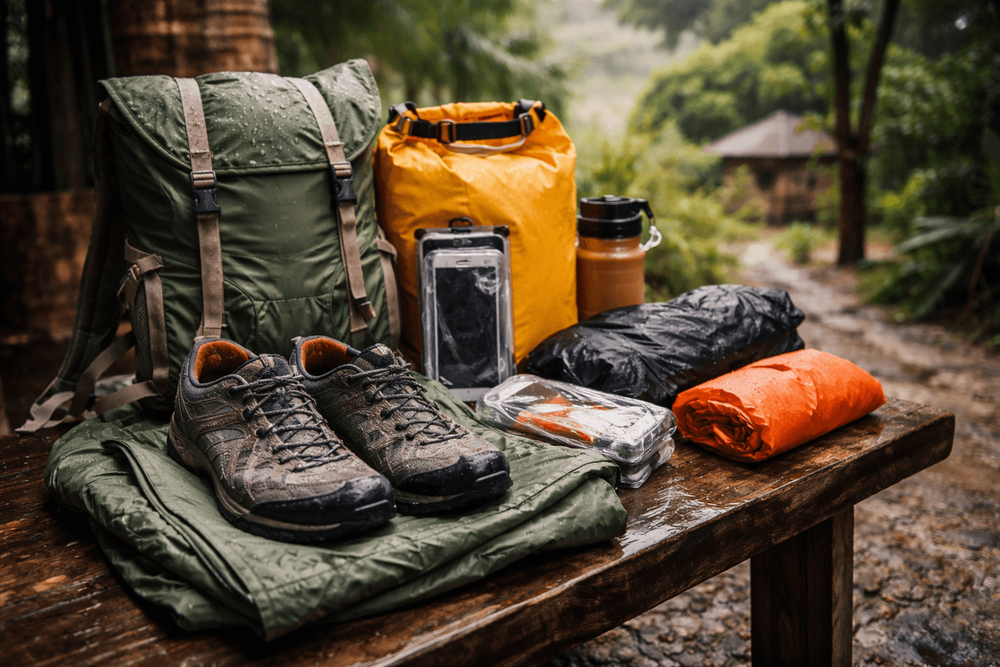
- Pack cover: Even a water-resistant backpack fails in a Bangkok squall. A fitted cover is cheap insurance—approx. 150–350 THB.
- Dry bags: One 5L for phone/wallet/passport and one 10–20L for clothes or camera. Decent local options run approx. 150–350 THB (5–10L) at outdoor shops and night markets.
- Waterproof phone pouch: Clear, neck-lanyard style for boat rides and moto taxis—approx. 60–150 THB. We’ve haggled them at Chatuchak and MBK.
- Zip-top bags + trash liners: Double-bag chargers and SIM ejector pins; line the inside of the backpack on big travel days.
- Silica gel packs: Toss into your electronics pouch to fight the perpetual Bangkok damp.
Power and plugs
- Power bank: 10,000–20,000 mAh so we can navigate detours when we duck into a new soi. Expect approx. 400–900 THB for reliable brands.
- Multi-port USB charger + spare cables: Outlets are scarce in some guesthouses. Keep one cable sacrificial for rain days.
- Plug types: Thailand uses 220V with Type A/B/C sockets. Most modern plugs fit; still, a slim universal adapter helps when you roll in from other regions.
Health and hygiene that hold up in humidity
- Insect repellent: DEET (20–30%) or picaridin (10–20%). Drugstores stock both—approx. 120–250 THB per bottle. Reapply after rain; mosquitoes love cool, wet evenings.
- Compact first aid: Antiseptic wipes, blister plasters, and a small bandage roll. Wet feet = soft skin = hot spots.
- Electrolyte packets: We keep a few for post-downpour slogs. Pharmacies sell sachets for approx. 10–25 THB each.
- Quick-dry towel: Microfiber beats hotel cotton that never dries under a ceiling fan.
- Travel soap sheets or mini gel: Some laundromats are soap-only; we bring our own for sink washes.
- Hand sanitizer: Khlong spray and street food deserve a little backup.
For a deep dive on stormproof picks, our Wet Season packing rundown at /articles/thailand-wet-season-packing-list pairs well with this rainy-day focus.
Laundry kit
- Travel clothesline + a couple of clip hooks: Hang stuff high under the AC or in front of the fan.
- A few lightweight pegs: Hostel bunk rails are fair game—just be a good neighbor.
- Sink stopper: When city washers are full, we suds up in-room.
Documents and small valuables
- Laminated or plastic-sleeved passport photocopy + digital backup: If a scooter splash gets you, you won’t panic.
- Card sleeve and small cash stash: Wet bills still spend, but we keep a dry backup zippered inside the pack.
If you want a compact, rain-first checklist to save on your phone, this Rainy-Day Packing List at /articles/thailand-rainy-day-packing-list covers the essentials.
Smart packing choices for comfort, safety, and mobility
Monsoon months turn the city into a mirror—Sathorn towers reflected in street-lakes, motorbikes weaving islands of dry. We move lighter and think modular.
- Go 40L-ish, not expedition: We target a carry-on-size backpack with room for a compressible day bag. Less bulk means we can slip onto crowded BTS trains and into songthaews without clobbering fellow farang.
- Two-shoe strategy: We rotate sandals for wet walks and trail runners for dry miles. When one pair soaks, the other keeps us exploring Yaowarat’s food stalls or Chiang Mai’s Old City.
- Breathable rain protection: A jacket we can wear while moving in 30°C humidity beats a cheap plastic poncho sauna. We still keep the poncho for a top-layer shield on ferries or back-of-truck rides.
- Temple-ready, rain-ready: We stash a lightweight long pant and shawl. When the sky rips open at Wat Arun Ratchawararam Ratchawaramahawihan, we dry quick, cover shoulders/knees, and still look respectful.
- Bus and mall AC is arctic: A thin layer (light fleece or merino tee) saves us on overnight buses and in cinema-level AC at Siam Paragon.
For broader seasonal strategy—what changes between dry and wet months—bookmark our Rainy Season Packing Guide at /articles/thailand-rainy-season-packing-guide.
Common mistakes backpackers make (and how we fix them)
- Packing cotton and jeans: They drink rain, cling, and never dry. We swap to synthetics and thin merino.
- Only bringing an umbrella: Works until the wind shifts sideways. We pair umbrella + real rain shell or poncho.
- Skipping dry bags: A ziplock is not a river plan. We keep a 5L dry bag inside the daypack for phone, cash, passport.
- Heavy hiking boots: Great in the Alps, terrible on wet Bangkok tiles. Trail runners and strapped sandals have grip and dry overnight.
- One pair of shoes: When it floods around Khao San, it floods. The second pair is freedom.
- Thick hotel towel: It hogs pack space and stays damp. We carry microfiber.
- No foot care: Rain + heat = chafe. Powder, spare socks, and airing feet at lunch breaks keep us moving.
- Overpacking "just in case": Thailand sells nearly everything. We buy ponchos, repellent, and extra T-shirts locally when needed.
Rainy-season tips: laundry, electronics, and plan-B days
Laundry that actually dries
- Self-service machines: Coin washers are everywhere in Bangkok backstreets and Chiang Mai neighborhoods—usually approx. 30–60 THB per wash and 10–20 THB per 10 minutes of drying. We still expect a little damp and finish-dry under the hostel fan.
- Laundry services: Drop-off wash and fold runs approx. 40–70 THB per kg. During storms, we ask for next-day pickup and avoid the 5 pm rush.
- Drying hacks: Wring towels hard, roll in a dry T-shirt to squeeze more water, then hang under the AC. Clotheslines strung high by the window catch the evening breeze off the khlong.
Keep electronics alive
- Double-bag the essentials: Phone in a waterproof pouch, then into the 5L dry bag. Power bank and cords in a separate waterproof stuff sack.
- Carry the dry bag inside your daypack: We don’t trust zippers in horizontal rain on the back of a motorbike.
- Camera rain covers: A shower cap or cut-up dry bag makes an emergency lens hood. Silica gel lives in the camera pouch.
- Charge early: Power flickers in storms—top up at breakfast.
Adapting when storms hit
- Watch the daily pattern: We go for big outdoor moves early—Grand Palace at rope-drop, canal rides before lunch—then plan café work, massages, or malls during the 3–5 pm deluge.
- Boats beat traffic: When streets around Sanam Luang back up, we ride the Chao Phraya Express; spray is easier to manage than gridlock.
- Ferries and island hops: Give buffer days. When Andaman storms sit down, transfers pause. The Gulf can be better in those months; we pivot rather than push.
- Motorbike caution: Wet diesel rainbows on Thai cement are ice rinks. If we absolutely must ride, we slow down, avoid painted lines, and stop when lightning gets chatty.
- Keep it playful: We eat shelter noodles, watch the soi turn to a river, and start again when the frogs announce the all-clear. That’s the rhythm.
For a storm-focused checklist to screenshot before you go, the Monsoon-Ready list at /articles/monsoon-season-thailand-packing-list pairs with this guide.
Know before you go: small things that matter big in the rain
- Cash flow: ATMs keep working in storms, but outdoor ones can be splash zones. We carry a small dry stash for ferries and markets where QR stalls glitch.
- SIM/eSIM: Local data helps us dodge storm cells. We download offline maps for when cell towers hiccup.
- Health odds and ends: We keep tetanus up to date and carry antiseptic for scrapes. Jungle leeches? A dab of sanitizer or salt pops them off.
- Respect the water: Floods hide potholes and open drains. We watch locals—if sandals come off to cross, we follow suit and rinse after.
- Mind the smell: Wet shoes get ripe. Newspaper or scrap cardboard stuffed overnight helps; failing that, a dash of Prickly Heat.
Sea to Summit Big River Dry Bag
When the clouds crack and the bass from a Khao San bar thumps back to life, we’re already rolling—dry bag over shoulder, trail runners squeaking, a hot pad thai waiting under a dripping awning. Pack smart for the rain, and the city turns from obstacle course to playground.
Related Hotels & Places
Rambuttri
Markets
Khao San’s calmer cousin: a tree‑shaded lane of VW van cocktail bars, open‑air foot massages, pad thai grills, and easygoing live bands. Best from sunset to 11pm; beers 80–120 THB, cocktails 150–220 THB. One block from the chaos, all the charm.
Khao San Road
Attractions
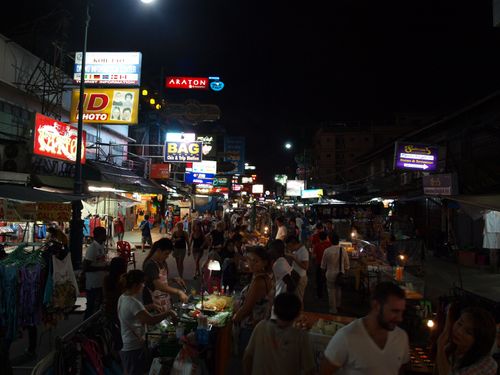
Bangkok’s backpacker carnival: curbside bars, live bands and DJs from 3pm–2am (midnight Sun). Street eats are cheap — pad thai 70–100 THB, mango sticky rice 60–100 THB. Come for wild people-watching; duck into Rambuttri for a calmer beer.
Wat Arun Ratchawararam Ratchawaramahawihan
Temples
Sanam Luang
Attractions
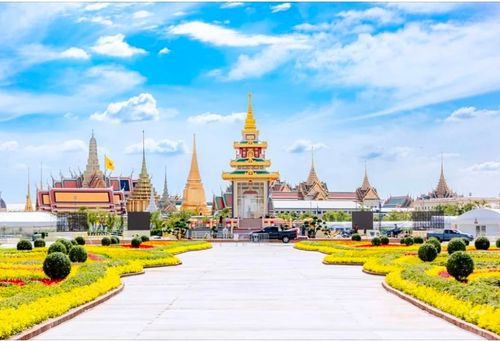
Bangkok’s royal lawn facing the Grand Palace. Free to wander, ringed by tamarind trees, popular for kite flying (Feb–Apr) and lazy green‑space hangs. A 10‑minute walk from Khao San; come early for soft light and street snacks along Na Phra That Rd.
Recommended Products
More Khao San Road Guides
- What to Pack for Thailand for Rainy City Days: Compact Umbrella, Footwear, and Dry-Bag Basics
- What to Pack for Thailand for Rainy-Day Backpacking: Waterproof Layers, Dry Bags, and Backup Footwear
- What to Pack for Thailand for Rainy-Day Bangkok Backpacking: Wet Shoes, Quick-Dry Clothes, and Urban Storm Protection
- What to Pack for Thailand Backpacking in Monsoon Season: Dry-Weather, Wet-Weather, and Backup Gear