
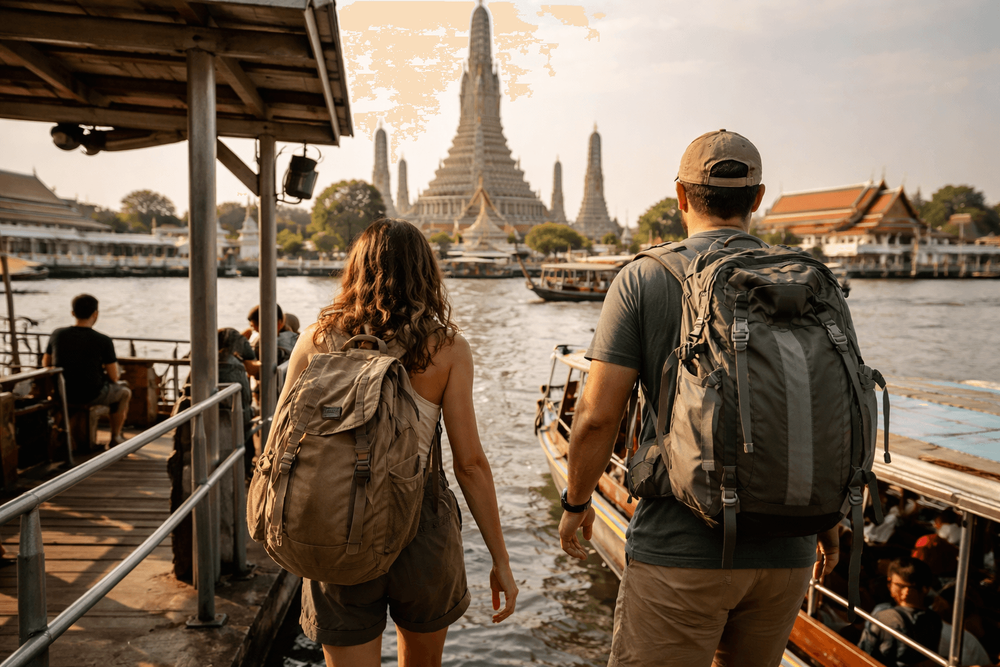
How to Add Wat Arun to a Khao San Road Temple Day Without Slowing Down the Route
Add Wat Arun to your Khao San temple day without losing time: ferries, fees, dress code, photo spots, and the best moments to cross the Chao Phraya.
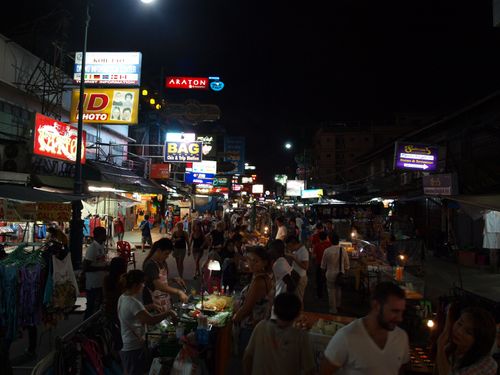
We’re shoulder to shoulder on Thanon Ram Buttri Night Market, dodging a tuk-tuk with a wink from the driver and a blast of incense from a curbside shrine. A 7-Eleven door sighs cool air at us; the Chao Phraya is two blocks of banyan shade away. If you’re building a Wat Arun temple day from Khao San Road, we can fold it into your route without blowing up your timing—just a quick ferry hop, a few steep steps, and that porcelain-spangled prang will do the rest.
Pro move before we wade in: if you want turn-by-turn ferry specifics and where to stand for the best skyline snap, we’ve got a deeper walkthrough here: Wat Arun from Khao San Road: Riverside Temple Visit Guide, Ferries, Tickets, and Best Time to Go.
Why Wat Arun belongs on your Khao San temple day
Wat Arun—Temple of Dawn—looks like it was assembled from a thousand shattered tea sets and a handful of moonlight. The central prang lances into the Bangkok haze, dressed in floral porcelain and seashells that catch the sun like disco mirrors. From Khao San, it’s the one temple you can add with almost no friction: a straight shot to the river, an orange-flag boat to Tha Tien, a five-minute cross-river ferry, and we’re standing in its shadow. That efficiency is why a Wat Arun temple day from Khao San Road makes sense even if you’re short on hours or patience.
Plus, the views—across to Wat Pho’s rooftops and the The Grand Palace’s spires—set up your whole Old Town circuit. It’s the skyline on your postcard, minus the markup.
Getting from Khao San Road to Wat Arun (fast and painless)
The walk + river boat combo (our usual)
- Route: Khao San/Soi Rambuttri → Chao Phraya Tourist Boat N13 Phra Arthit Pier → Chao Phraya Express (orange flag) to Tha Tien (N8) → cross-river ferry to Wat Arun
- Time: 35–50 minutes door to prang
- Cost: 16–20 baht (Express boat) + 5–10 baht (crossing ferry)
How: From Khao San Road, cut to Soi Rambuttri and aim for Phra Athit Road. Phra Athit Pier is a 10–15 minute walk under big riverside trees. Buy a ticket on the pier or pay on board; we want the orange-flag boat (frequent, cheap). Hop off at Tha Tien (N8), follow the ferry signs through the market smells—grilled squid, incense, sweet rot of durian—and pay coins for the tiny boat across. We’ll step out at Wat Arun’s pier with the prang towering right above us.
Sanuk factor: high. Breeze off the river beats a cab in traffic.
Taxi or Grab (when your feet are done)
- Time: 15–30 minutes depending on traffic
- Cost: 120–200 baht metered, more if jammed
Tell the driver “Wat Arun, Arun Amarin Road.” Ask for meter (“bai meter, khap/ka?”). If they say “Grand Palace? Tailor? Ping-Pong?”—smile, decline. Cabs can drop you right at the temple gate on the west bank; we skip the ferry entirely.
Tuk-tuk (because sometimes you want wind in your face)
- Time: similar to taxi, often pricier for farang
- Cost: negotiate 150–250 baht; confirm “no stops”
It’s a vibe—thump of bass fading behind us on Khao San, city air in our hair—but agree a flat fare and avoid “special tour” detours.
Longtail khlong ride (if you’re turning the transfer into a mini-trip)
- Time: 60–90 minutes with canal detours, ending at Wat Arun
- Cost: 800–1,500 baht per boat (fits 4–6)
Fun with a small group. Make sure the driver actually finishes at Wat Arun and not a random souvenir pier.
MRT detour (if you’re chaining to Chinatown)
- Route: Short taxi to Sanam Chai MRT → walk to Tha Tien → cross to Wat Arun
- Good when: you’re planning to hit Yaowarat Chinatown Heritage Center after, or boats have just stopped
It’s not the most direct from Khao San, but handy for big-day itineraries.
For door-opening times and how to beat the queues across the whole Old Town run, keep this handy: Temple Morning Logistics from Khao San Road: Opening Hours, Queues, Outfit Rules, and Taxi vs Boat vs Walk.
Wat Arun basics: hours, fees, dress, etiquette
- Opening hours: 08:00–18:00 (last entry around 17:30). Gates for the riverside grounds often open right at 8 too. If you roll up earlier, you can shoot exteriors from the riverfront but likely can’t climb.
- Entrance fee: Typically 100 baht for foreigners. Fees can change; bring small bills.
- Tickets: Buy at the booth just inside the main gate on the river side. Cash is simplest.
- Dress code: Cover shoulders and knees. No see-through or ripped shorts. Sarongs are usually available to rent near the entrance (20–50 baht). Hats off in sacred halls.
- Etiquette:
- Shoes off in the ordination hall (ubosot); keep feet pointed away from Buddha images.
- Keep voices low; this is an active temple.
- Drones and tripods are generally not allowed without permission.
- No smoking on temple grounds.
Highlights to hunt down once we’re inside
The central prang (and those famously steep steps)
This is the shot you came for. The central tower is clad in broken Chinese porcelain—lotus blossoms, mythical creatures, delicate pastel petals. When the lower-terrace steps are open, we can climb for a sweep of the Chao Phraya, Wat Pho’s rooftops, and the Grand Palace spires. The stairs are ladder-steep; hold the railings and think small steps on the way down. If cordoned off, don’t push it—the angles from the base are still magic.
Porcelain up close
Look for the floral medallions—shards of bowls and plates from centuries of trade, repurposed into garden-bloom patterns. It’s tactile history: trade junk turned to temple jewels.
Ubosot and the giants
The ordination hall is calmer than the riverfront, with murals and a gilded Buddha that glow even under Bangkok’s grey skies. Outside, the yaksha guardians—towering green-and-white giants—watch over the entrance. They’re photogenic, but give them space and keep the vibe respectful.
Riverside views and breezes
Follow the walkway along the water for cross-river eye candy: longtail boats bucking the wake, the orange tiles and white chedis of Wat Pho, palace roofs flashing gold. Late afternoon light turns the river pewter and the prang champagne.
Photo tips without the elbow wars
- Best light: Golden hour before sunset gives soft, flattering tones on the porcelain. Early morning is quieter but often backlit.
- Compositions: Step back toward the smaller corner prangs to frame the central tower. For reflections, check puddles after a rain squall.
- Across-the-river shot: From Tha Tien or the public promenade near the ferry, Wat Arun’s silhouette is iconic at dusk when the lights click on.
How to slot Wat Arun into a Khao San temple day—without slowing down
We’re not reinventing the wheel here—just shaving minutes at every handoff so your Wat Arun temple day from Khao San Road stays tight. Three plug-and-play options:
Option A: Classic clockwise (crowd-dodging)
- 08:15–10:00 Grand Palace first, while it’s coolest and before the tour buses back up
- 10:15–11:30 Wat Pho for reclining Buddha and shady cloisters
- 11:30–12:30 Lunch around Tha Tien—pier-side stalls or quick bites on Maharat Road
- 12:30–13:00 Cross-ferry to Wat Arun
- 13:00–14:00 Wat Arun highlights, climb if open, river breeze break
- 14:00–14:30 Cross back to Tha Tien and boat to Phra Athit, stroll home via Phra Athit Road
Why it works: We burn energy early on the palace, then use the river breeze to carry us through the hottest hour. If you want food stops that won’t derail the clock, we’ve mapped dependable bowls and snacks here: A Food-and-Temple Day from Khao San Road: Where to Eat Between Wat Pho, the Grand Palace, and Golden Mount.
Option B: Temple-of-Dawn at dusk (most photogenic)
- 08:00–09:30 Wat Pho first (quiet, serene)
- 09:45–11:30 Grand Palace
- 11:30–14:30 Siesta, lunch, or Golden Mount if you’re feeling spry
- 16:00 Boat to Tha Tien, cross for Wat Arun golden hour
- 17:30 Watch the prang light up as the sky fades; cross back before the last ferry
Why it works: The light at Wat Arun is the show. We front-load the heavy hitters, recharge midday, then score those pastel tones without melting.
Option C: Quick dip add-on (if you’re short on time)
- Hit either Wat Pho or the Grand Palace, then pop across to Wat Arun for a focused 45-minute walk-through.
- Use the river boat both ways; budget 90 minutes total from Khao San and back.
Why it works: Boats run every few minutes, crossings are seconds long, and Wat Arun’s layout is compact.
For a bigger-picture playbook on doing Wat Pho, Wat Arun, and the Grand Palace in one efficient sweep, this route planner stays honest about clocks and crowds: How to Visit Bangkok’s Grand Temple Triangle from Khao San Road: Wat Pho, Wat Arun, and the Grand Palace in One Day.
Boat crossing intel (save your small coins)
- Tha Tien ↔ Wat Arun ferries run every few minutes all day, typically until around 20:00–21:00. Don’t cut it too fine after dark—boats thin out.
- Fares are coins-on-the-counter cheap (5–10 baht). Keep small change handy.
- Watch your step boarding; the river can rock the pontoons.
Timing, shade, and crowd hacks
- Heat: Midday on the prang is full sun. A hat and 1–2 liters of water each are not optional. 7-Eleven on Maharat Road is your AC lifeline.
- Shade bands shift: The base of the prang gets decent shade early afternoon; mornings are brighter but cooler.
- Budget: 45–60 minutes at Wat Arun is realistic for highlights without lingering.
Where to base near Khao San so the ferry is a stroll
If we’re sleeping near Soi Rambuttri, Phra Athit Road, or Phra Sumen Fort, we can be on the river in 10–15 minutes. A spot with a pool is worth the baht in hot season—cool down after the prang climb, then drift to dinner on Phra Athit or Phra Athit’s side sois. If you’re more nightlife-forward, Khao San-adjacent stays keep the stumble-home short while still close to the boats in the morning. (We’ll name names when we’ve got a current deal we’d actually book.)
Know before you go (micro-answers we wish someone told us)
- How long do we need at Wat Arun? 45–60 minutes is plenty for the core sights and photos. Add 15 if you’re climbing or lingering by the river.
- Is climbing always allowed? Access to the lower terraces can close for maintenance or rain; obey signs and staff.
- Restrooms? Yes, usually near the entrance; keep a 5–10 baht coin for cleaning staff boxes.
- Footwear strategy? Easy-on, easy-off if you plan to step inside the ubosot. Avoid slick soles for the prang steps.
- Accessibility? Paths are flat around the base, but the prang steps are extremely steep and not accessible. The riverside walkways have some thresholds.
- Food and water nearby? Plenty around Tha Tien and along Arun Amarin Road. Bring a bottle; refill where you can.
- Best photo window? Late afternoon into blue hour for soft light on the porcelain and illuminated spires after sunset.
Planning your Wat Arun temple day from Khao San Road
If you’re the spreadsheet type, lock your times with 10-minute buffers for ferries and a water stop every hour. If you’re more go-with-the-flow, aim for two anchor points (Grand Palace opening and Wat Arun golden hour) and let the river carry the rest. Either way, Wat Arun is the easiest big payoff you can add to your Khao San day without bloating the route—or your budget.
For nitty-gritty options, ferries, and ticket quirks specific to this temple, keep this handy companion open on your phone: Wat Arun from Khao San Road: Riverside Temple Visit Guide, Ferries, Tickets, and Best Time to Go.
Getting there map
Here’s precisely where we’re going—the spires don’t lie:
When the last ferry hums off and the prang’s lights glitter on the river like spilled baht, we’ll drift back toward Phra Athit for a cold beer or a bowl of boat noodles on Dinso. Tomorrow, maybe the Golden Mount. Tonight, we earned the breeze.
Related Hotels & Places
Wat Arun Ratchawararam Ratchawaramahawihan
Temples
Khao San Road
Attractions
Bangkok’s backpacker carnival: curbside bars, live bands and DJs from 3pm–2am (midnight Sun). Street eats are cheap — pad thai 70–100 THB, mango sticky rice 60–100 THB. Come for wild people-watching; duck into Rambuttri for a calmer beer.
Thanon Ram Buttri Night Market
Markets
Laid‑back Rambuttri after dark: sizzling street food (50–80 THB), cold beers (80–120 THB), neon cocktail vans, live acoustic bars, and stalls of travel gear and hippie pants — a calmer pregame spot a minute from Khao San, best from sunset till late.
7-Eleven
Shops
Chao Phraya Tourist Boat N13 Phra Arthit Pier
Services
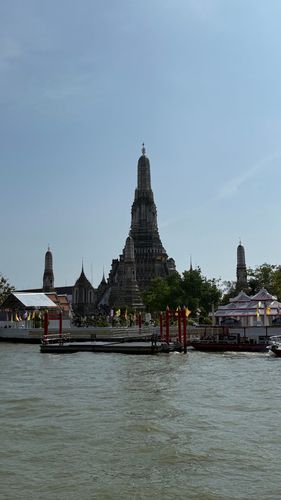
Khao San's river gateway. N13 Phra Arthit is the Chao Phraya Tourist Boat stop: grab a day pass and hop to Wat Arun, the Grand Palace and Sathorn. Boats every ~30 mins; last around 7:15pm. The scenic, no-traffic way to get around.
The Grand Palace
Attractions
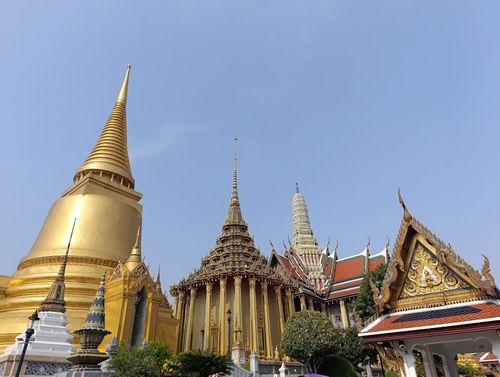
Bangkok’s royal showpiece a short hop from Khao San: glittering Wat Phra Kaew, Ramakien murals, and gold-on-gold rooftops. Go 8:30am to dodge the heat, dress modestly, and boat to Tha Chang for the prettiest arrival.
Yaowarat Chinatown Heritage Center
Attractions
Inside Wat Traimit by Chinatown Gate, this tidy museum charts Yaowarat’s Chinese roots with bilingual displays, period photos and short films. Open Tue–Sun 8:30am–4:30pm; closed Mon. Pair it with the Golden Buddha upstairs.
Phra Sumen Fort
Attractions
1783 riverfront fort on Phra Athit with white battlements, park breezes, and killer sunset views over Rama VIII Bridge. Free entry; best from 5–7pm before the gates close at 9pm.
More Khao San Road Guides
- How to Visit Wat Arun, Wat Pho, Grand Palace, and Golden Mount in One Full Bangkok Temple Day from Khao San Road
- Wat Phra Kaew vs Wat Pho vs Wat Saket: Which Bangkok Temple Is Best for Your Khao San Road Day Trip?
- How to Get to Wat Pho, the Grand Palace, and Golden Mount from Khao San Road Without Wasting Time
- Bangkok Temple Run Without Tuk-Tuks: The Best Public-Transport and Walk Route from Khao San Road