
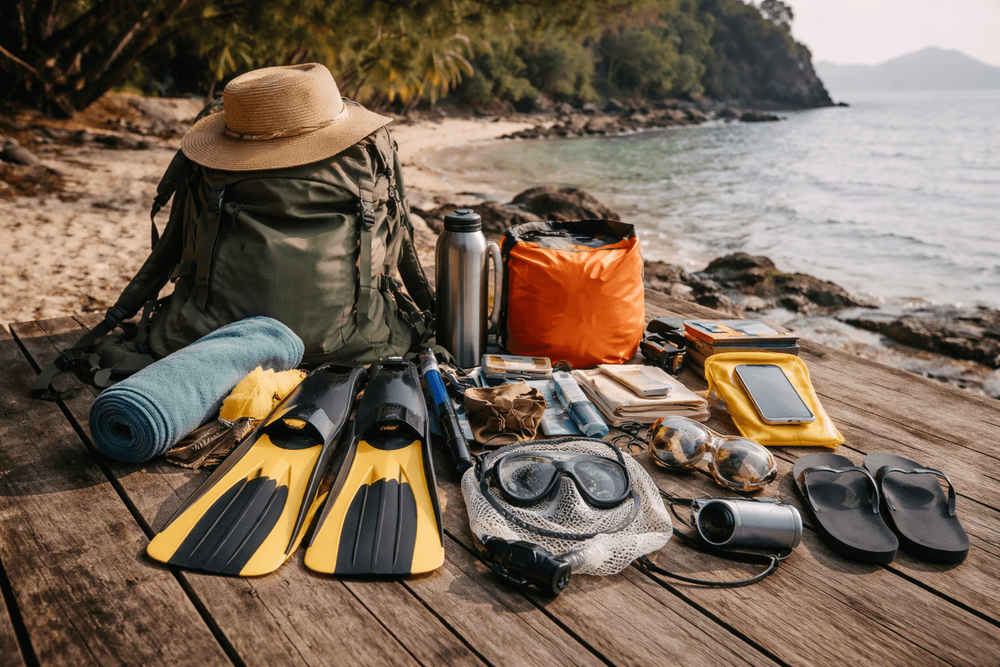
Backpacker Packing List for Thailand’s Adventure Islands: Snorkeling, Boat Days, and Waterproof Tech Protection
Your Thailand snorkeling packing list, dialed: reef-safe essentials, dry-bag smarts, sun armor, and saltproof tech for longtail days and island nights.
We’re shuffling down a creaking pier at dawn, flip-flops slapping, diesel mist in the air and a mesh bag of fins knocking our calves. The Railey Full Moon Tour grins, we toss in our dry bag, and that first slap of warm, teal Gulf water hits our ankles. This is why we came—and this thailand snorkeling packing list is how we keep it light, safe, and ready for every reef, from Koh Tao’s Japanese Gardens to the coral shallows off Koh Lipe.
Data Freshness + Pricing:
- Prices are approximate and in THB.
- Last checked: July 2026
- Happy hour and promo details change frequently—confirm locally.
Before we even leave our alley off Soi Rambuttri, we’ve got our gear dialed for salt, sun, and the chaos of boat days. We’ll tell you what’s worth hauling from home, what to buy cheap near Khao San Road or in island shops, and the small waterproofing tricks that save your phone when a cheeky wave decides it’s snack time.
Thailand Snorkeling Packing List: Essential Water Gear
Let’s start with the core kit. You can rent on most islands (approx. 100–200 THB per day for mask/snorkel, fins extra 50–100 THB), but a well-fitting mask from home spares you leaky-eye rage.
- Mask you trust + case: A low-volume mask with tempered glass that seals to your face is gold. Bring the hard case to keep lenses scratch-free in tuk-tuk shuffles.
- Snorkel with purge valve: Simple, reliable. Dry-top helps in chop. Mouthpieces are cheap on the islands (approx. 80–150 THB) if you want a fresh one.
- Short travel fins: Easier on small boats and beaches. Open-heel with booties if you’ll be rock-hopping; full-foot if you’re all sand and calm bays.
- Anti-fog: A small bottle of anti-fog (or a travel-size baby shampoo) saves you from the spit-and-hope method. Island shops stock it (approx. 80–120 THB).
- Rash guard (UPF 50+): Long-sleeve beats slathering sunscreen. We wear one even on cloudy days—the UV here doesn’t play.
- Reef-safe sunscreen: Go mineral-based (zinc or titanium). Small tubes on islands run approx. 300–550 THB, cheaper in Bangkok.
- Mesh gear bag: Toss wet fins, let them drip. A shoulder strap keeps hands free when boarding with wobble legs.
- Dry bag (10–20L): Non-negotiable for boat runs. Bright colors double as a visual marker on crowded longtails. In Bangkok markets, decent dry bags start around 250–450 THB; on islands, approx. 350–600 THB.
- Waterproof phone pouch with lanyard: Test it in a sink before trusting it. Many add a float strap (approx. 100–180 THB) so your phone doesn’t vanish to the khlongs of the Andaman.
- Water shoes or reef booties: For rocky beaches and sneaky urchins. Not for stepping on coral—just for safe entries/exits.
- Compact towel: Quick-dry microfiber that won’t smell swampy after one use.
- Optional but smart: Inflatable snorkel vest (approx. 400–800 THB), a lightweight whistle, and a tiny SMB/marker buoy if you’re in areas with boat traffic.
Tip from the pier: Label your gear with a paint pen. On a crowded longtail, every black fin looks the same.
Clothing and Sun Armor for Real Tropical Days
Between the white-hot sand and mirror-bright water, Thailand’s sun is a full-court press. We dress like we’re moving between sauna and splash.
- Long-sleeve UPF rash guard + leggings: Zero reapplication hassle, zero burn. If leggings feel extra, go with boardshorts over swimwear.
- Wide-brim hat with chin strap: Wind + engine wake will snatch a cap in a heartbeat.
- Polarized sunglasses + retainer: Cuts glare, helps spot fish. Strap them; the Gulf has a sunglasses collection already.
- Lightweight, loose shirts: Linen or thin cotton for evenings when the breeze smells like grilled squid and frangipani.
- Quick-dry shorts and 1–2 swimsuits: Rotate so one is always dry for the next boat call.
- Sarong: Shade, cover-up, beach blanket, temple wrap. The MVP of island life (approx. 120–250 THB at markets).
- Slides/flip-flops + strap-on sandals: Flip-flops for sand; sandals with tread for slippery piers.
- Packable rain jacket or poncho: Monsoon squalls hit fast, especially on the Andaman side (May–Oct). Cheap ponchos are everywhere (approx. 20–50 THB).
- After-sun aloe or cooling gel: Your future self will thank you.
Laundry note: Quick-rinse in the sink works. Most guesthouses can do a wash-and-dry overnight (approx. 40–60 THB per kg). The blast of AC when you duck into 7-Eleven to grab detergent? Chef’s kiss.
Health, Safety, and Waterproofing: Boat-Day Smarts
We love sanuk (fun), but we also love our skin, guts, and gadgets.
- First-aid mini-kit: Waterproof pouch with plasters, antiseptic, blister pads, tweezers, painkillers, and antihistamines. Add motion-sickness tabs (dimens/dimenhydrinate in Thai shops, approx. 15–30 THB per strip) for choppy crossings.
- ORS packets: Oral rehydration salts (approx. 10–20 THB each) are magic after a sun-blasted day.
- Jellyfish protocol: Many Thai beaches post guidance and offer vinegar stations. For suspected box jellyfish stings, vinegar to deactivate nematocysts is commonly advised; for other stings, hot-water immersion (40–45°C) helps pain. Read local signs and follow lifeguard instructions.
- Insect repellent: DEET or picaridin for dawn/dusk. Sandflies can be vicious on some beaches.
- Water bottle (insulated): Boat days dehydrate fast. Refill at your guesthouse; tap water isn’t for drinking.
- Zip-top bags + silica gel: Keep phones, cards, and camera bits dry; toss a few desiccants in your electronics pouch.
- Carabiners and short cords: Clip dry bags to boat rails, tie down hats in the wind, hang towels to dry.
- Small cable lock: Useful if you’re leaving a daypack on a pier or with staff while snorkeling.
- Headlamp or tiny torch: Sunset swims slide into night quicker than you think.
Waterproofing your camera:
- Action cam housing: Confirm seals are clean, hair-free, and lubed with proper O-rings.
- Floaty handle: Saves both your footage and your day.
- Spare batteries + dry case: Humidity nukes battery life. Keep spares in a small, sealed box with desiccant.
Travel Docs, Money, and Stash Strategy for Island-Hopping
You don’t need a vault—just redundancy and waterproof layers.
- Passport in a slim waterproof sleeve: Keep one laminated copy separate. Store the original in a guesthouse safe if possible.
- Digital copies: Email yourself scans of passport, insurance, and tickets. Screenshots help when signal is spotty mid-channel.
- Cards + cash split: ATMs charge a foreign card fee (approx. 220–250 THB per withdrawal). Bring two debit cards, one hidden. Keep small bills for ferries, longtails, and beach snacks.
- Dry bag as day bag: 10–20L with an inner zip pouch for cash/cards. Add a second mini pouch for sand-free phone storage.
- Phone eSIM or local SIM: AIS/DTAC/True booths at airports; island shops can swap you in minutes. Top-ups at 7-Eleven.
- Travel insurance that covers water sports: Screenshot your policy and emergency numbers.
- Ferry tickets: Some operators still love paper; keep a zip bag for stubs that get you on the next leg.
We’ve watched more than one farang lose a wallet between a wet pier and a bouncy longtail. Before boarding, do a pocket check: phone tethered, zips closed, hat strapped.
Optional Extras: Comfort, Photos, and Salt-Safe Tech
Not essential, but each earns its keep.
- Snorkel belt or roll-top pouch: For a key and a folded 100 THB when you wander off down the beach.
- Compact power bank (10,000–20,000 mAh): Sun and salt eat battery. Island electricity can be flickery; charge while you sleep.
- Multi-port USB charger + short cables: Thai sockets are 220V; most hotels take multiple plug types. A short extension cord is gold when the only outlet is behind the bed.
- GoPro red/ magenta filters: Color-correct your reef footage depending on depth and water type.
- Dome port for half-underwater shots: Bulky, but if you’re chasing that “turtle and sky” frame, you’ll grin.
- Travel pillow or sarong bolster: For those hard wooden benches on longtail rides.
- Earplugs: Longtail engines thump like a Khao San bassline.
- Lightweight microfleece or thin hoodie: AC on overnight buses can be arctic.
Where to Buy: Bangkok vs. the Islands
- Bangkok (Khao San / Phra Athit / MBK): Best prices and selection for dry bags, rash guards, and accessories. Chatuchak Market on weekends has stalls stacked with beach gear. Bargain politely.
- Islands (Koh Tao, Phuket, Koh Lanta, Koh Samui): You’ll find everything, just at island markups. Shop staff know the conditions—ask what works locally this week.
- 7-Eleven: The unsung hero. Waterproof phone pouches, ORS, plasters, mozzie repellent, snacks, and that glorious AC blast.
If you’re bouncing between ferries, our deep-dive guides can help you dial in specifics: we break down wet-storage, ferry tricks, and beach-day kits in these pieces:
- For multi-island hops: What to Pack for Thailand for Island Hopping: Ferry, Beach, and Wet-Storage Essentials
- For boat days and longtails: What to Pack for Thailand for Boat, Longtail, and Day Cruise Trips: Splash-Proof, Compact, and Easy-Clean Gear
- For beach-town days: What to Pack for Thailand for Beach Towns and Swimming Pools: Dry Bags, Cover-Ups, and Daily Swaps
- For a broad beach kit: What to Pack for Thailand Beaches and Islands: Sand, Sun, and Boat Travel Essentials
Know Before You Go: Seas, Seasons, and Reef Respect
- Seasons matter: Andaman (Phuket, Lanta, Lipe, Phi Phi) is driest Nov–Apr; Gulf (Samui, Phangan, Tao) shines more Jan–Aug. Monsoon brings swell and reduced visibility.
- National park fees: Expect approx. 200–500 THB per person for foreign visitors at marine parks like Surin or Similan. Bring cash; tour prices usually exclude this.
- Safety on boats: Step carefully; decks get slippery. Hand gear down, then board. Clip your dry bag. Sit where the captain points—weight balance is a thing.
- Reef rules: Don’t stand on coral, don’t touch turtles, don’t collect shells. Fins up, floaty kicks, and keep your hands off the reef. You’re a guest, not Godzilla.
- Nets and flags: Some beaches have jellyfish nets in stinger season. Observe flags and local advice.
- Hydration and shade: A wide-brim hat and ORS will outlast any beach bar brag.
Sample Day Pack for a Two-Snorkel Boat Trip
We keep this by the door so we can hit the pier before the longtail horn.
- 15L dry bag with inner zip pouch
- Mask/snorkel in hard case, short fins, rash guard
- Compact towel, sarong, hat, sunglasses + strap
- 1.5L water, ORS sachet, light snacks
- Sunscreen (reef-safe), after-sun sachet, lip balm SPF
- Phone in waterproof pouch + float strap, small power bank
- First-aid mini-kit, motion-sickness tabs, repellent
- Cash (small bills), card, laminated passport copy
- Lightweight rain shell, spare swimsuit or top
What to Skip or Buy Here
- Heavy beach umbrellas or bulky floaties: Rent on the beach (approx. 50–150 THB) or go without.
- Full-foot long fins for backpackers: Great power, annoying to pack. Short travel fins do the job for most reefs.
- Giant toiletry bottles: Humidity + salty showers make us use less than we think. Minis are fine; restock at 7-Eleven.
Quick Bangkok-to-Islands Flow We Love
We grab a last bowl of boat noodles on Phra Athit Road, snag a dry bag from a shop off Khao San, and hop a sleeper bus south. By sunrise, we’re tumbling onto a ferry with coffee in hand, gear sorted, and zero panic. That’s the quiet magic of having your thailand snorkeling packing list dialed.
Sea to Summit Lightweight Dry Sack
If you’re packing tonight, leave a little space in your bag—you’ll find a sarong you love, a mask that fits just right, and maybe a salty habit you’ll bring back to Bangkok with your tan.
Related Hotels & Places
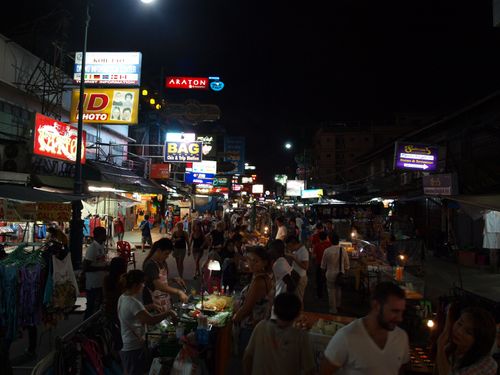
Khao San Road
Attractions
Bangkok’s backpacker carnival: curbside bars, live bands and DJs from 3pm–2am (midnight Sun). Street eats are cheap — pad thai 70–100 THB, mango sticky rice 60–100 THB. Come for wild people-watching; duck into Rambuttri for a calmer beer.
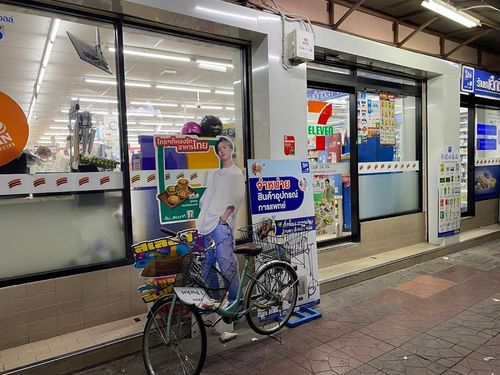
7-Eleven
Shops
Khao San’s 24/7 reset button: ice‑cold A/C, ham‑cheese toasties, All Café iced lattes, water for 7–14 THB, and late‑night supplies from snacks to sunscreen—right by Rikka Inn.
Railey Full Moon Tour
Services
Local tour desk on Railay East booking 4 Islands, Hong Islands, sunset cruises and private longtail charters—plus easy boat tickets to Ao Nang, Tonsai and Phi Phi. Handy location by the East Railay pier; go for a late-afternoon run and catch golden hour.
Recommended Products
More Khao San Road Guides
- Backpacker Packing List for Thailand’s Island and Boat Days: Dry Bag Setup, Slip-On Shoes, and Water-Ready Carry
- Backpacker Packing List for Thailand: Beach and Island Day Bag Essentials for Ferries, Snorkeling, and Sun
- What to Pack for Thailand for a Backpacker Island Hopping Trip: Ferry Days, Wet Landings, and Fast-Dry Essentials
- Backpacker Packing List for Thailand’s Islands: What to Bring for Ferries, Beaches, and Boat Days