
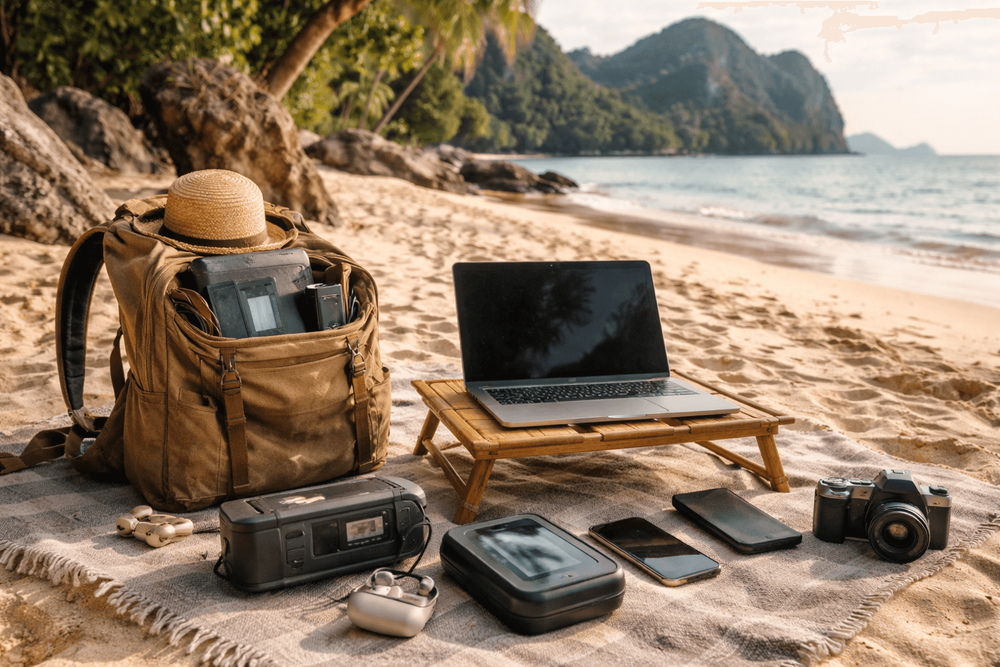
What to Pack for Thailand for Remote Beach Work Stays: Hotspot Setup, Sand Protection, and Power Backup
Pack smarter for remote work on Thai beaches: heat-proof clothing, sand-safe tech, power backups, and health essentials—our real-world beach work kit.
We’re balancing a laptop on a shaded bamboo table, sea breeze carrying the smell of grilled squid and sunscreen, while a longtail boat coughs across turquoise water. A Slack ping lands, a coconut thunks on the counter, and a curious soi dog noses our flip-flops. This is exactly why we built a Thailand remote work beach packing list—so we can take calls from Railay at noon and swim by four without frying our gear, our skin, or our data plan.
Data Freshness + Pricing:
- Prices are approximate and in THB.
- Last checked: June 2026.
- Happy hour and promo details change frequently—confirm locally.
If you want a fuller urban-to-island setup, pair this guide with our broader remote-work checklist here: What to Pack for Thailand for Digital Nomads and Remote Work Trips (/articles/thailand-remote-work-packing-list). But for sand, salt, and sudden squalls, this is the kit we actually carry.
Your Thailand Remote Work Beach Packing List: Clothing That Beats Heat, Salt, and Zoom
Breathable tops and light layers
- 3–4 quick-dry tees or tanks (poly blends or merino for anti-stink). Cotton soaks and sulks in the humidity.
- 1 UPF long-sleeve sun shirt for mid-day scooter runs and boat rides—saves sunscreen and skin.
- 1 crisp, airy button-up (linen or a linen-cotton blend) that says “sawadee” on camera and breathes in 35°C heat.
- 1 ultralight packable wind/rain shell—monsoon squalls roll in fast.
Bottoms that move from beach to cafe
- 1–2 pairs quick-dry shorts (5–7 inch inseam for comfort on scooters and stools).
- 1 pair lightweight trousers for temples, AC-blasted cafes, and mozzie hour.
- Optional: a sarong/pa kao ma. It’s a beach towel, privacy screen, sunshade, and emergency meeting background.
Swim and sun gear
- 2 swimsuits so one can dry while the other works.
- Rash guard for long snorkel days or if you burn easy.
- Reef-safe sunscreen (SPF 50+). Island shops stock it, but expect approx. 280–500 THB per tube.
Footwear that won’t make you curse in sand
- Flip-flops or slides for the beach-to-bungalow shuffle.
- Lightweight sandals with decent tread for wet docks and island hikes.
- Optional knit sneakers for flights and town days; they dry faster than leather.
Rain, sweat, and laundry realities
- Compact umbrella or poncho (street stalls: approx. 60–120 THB).
- Microfiber towel (dries during a single iced coffee—approx. 120–250 THB).
- Travel clothesline and a few pegs. Laundry services run approx. 40–80 THB/kg; “express” doubles that in touristy pockets.
Pro tip: Neutrals + one pop color = capsule wardrobe that doesn’t look like the same tee on every Zoom. And yes, you will sweat. Everyone does. That’s part of the sanuk.
Tech and Work Essentials: Power, Shade, Signal
Laptop protection and sand-proofing
- Padded sleeve plus a second barrier (dry bag or roll-top pouch). Sand is sneaky; it finds zippers and USB ports like a Bangkok soi cat finds fish bones.
- Clip-on webcam cover for sun-glare positioning when you face a window.
- Matte screen protector helps with reflections under palapa shade.
Power: Thailand plugs and backup juice
- Thailand runs 220V/50Hz with sockets that typically accept Type A/B/C plugs. A compact universal adapter with 2–3 USB ports covers most stays. Consider a small surge-protecting strip (approx. 250–600 THB) for old bungalows where wiring is… optimistic.
- Power bank 10,000–20,000 mAh (approx. 500–1,200 THB). Big enough to recharge a phone 2–4 times and give a laptop a lifesaving bump.
- Spare USB-C and Lightning cables—buy an extra at 7-Eleven (approx. 120–250 THB) and stash it.
Connectivity that survives a squall
- Thai eSIM or physical SIM: AIS, True, and DTAC all offer tourist and standard packages. Expect approx. 299–899 THB for 15–30 days with generous data. Tether from phone to laptop for beach bars without Wi‑Fi.
- Pocket hotspot is handy if you’re two people or juggling devices. Day passes on islands: approx. 35–50 THB for a strong iced americano, free Wi‑Fi included—but assume it’s shared and spiky by noon.
- Optional travel router to rebroadcast shaky guesthouse Wi‑Fi to your gear.
Focus and call quality
- Noise-canceling earbuds or headphones. A longtail roaring past your beachfront cafe doesn’t care about your 1:1.
- USB or Bluetooth mic if you present often; otherwise your earbuds do fine.
- Simple clip-on ring light or LED cube for twilight calls.
Ergonomics you won’t hate
- Folding laptop stand (aluminum, fan built-in optional).
- Flat, roll-up keyboard and a tiny mouse—better posture than hunching like a farang shrimp.
- Lightweight lap desk if you love those low bamboo tables.
Backup and security
- 1–2TB SSD for Time Machine/Windows backups. Sync to cloud when you hit a strong connection.
- Password manager + 2FA. Cafes share Wi‑Fi passwords like gossip; use a VPN for sensitive work.
- Slim cable lock for rooms with balcony doors that slide open to the beach.
If you’re balancing code commits with island-hopping, our broader digital nomad packing rundown goes deeper on work rigs: Thailand Packing List for Digital Nomad Backpackers (/articles/thailand-packing-list-for-digital-nomad-backpackers).
Health, Safety, and Beach-Specific Bits
Sun and skin
- Reef-safe sunscreen SPF 50+ (reapply every swim). Zinc sticks for nose/cheeks.
- Aloe vera gel or after-sun lotion (approx. 120–220 THB). Even careful people get crispy.
- SPF lip balm. The equatorial sun roasts lips faster than a Khao San Road kebab.
Bugs and bites
- Insect repellent with DEET (20–30%) or picaridin, especially at sunset and near mangroves.
- Anti-itch cream or antihistamine tablets for the inevitable sand-flea or mozzie nibble.
Hydration and heat
- Insulated bottle (Thailand tap water isn’t for drinking; refill from jugs at cafes or machines, approx. 1 THB/liter). Electrolyte packets (ORS) save lives after sweaty scooter runs and full-moon dance floors.
First aid and comfort kit
- Plasters, blister patches, ibuprofen/paracetamol, motion-sickness tabs for choppy Gulf crossings.
- Hand sanitizer and wet wipes—great after street fruit and before keyboards.
- Anti-chafe balm if you jog the sand at sunrise.
Sand, rain, and everything in between
- 5–10L dry bag (approx. 150–300 THB at beach shops). Toss laptop sleeve inside, then the dry bag—belt and suspenders.
- Waterproof phone pouch (approx. 80–180 THB). Test it with tissue first.
- Microfiber towel and a lightweight beach mat that won’t take half of Phra Ae Beach home in its weave.
For pure shoreline sanity—from boat transfers to reef-safe sunscreen—this beach-first list pairs nicely: What to Pack for Thailand Beaches and Islands: Sand, Sun, and Boat Travel Essentials (/articles/thailand-beach-packing-list).
Practical Packing for Thailand: Baggage, Weather, Ferry Life
Baggage limits and island transfers
- Domestic low-cost carriers (DMK/Don Mueang and BKK/Suvarnabhumi to Phuket, Krabi, Surat Thani, Samui) usually allow 7 kg carry-on. Pre-book checked bags (15–20 kg) to save baht—airport counters charge more.
- Ferries and speedboats don’t obsess over weight, but you’ll be lifting bags onto piers and sandy beaches. Pack so you can carry it yourself while stepping from a longtail into calf-deep water.
Expect approx. 350–700 THB for standard ferries; speedboats and high-season routes push to approx. 600–1,200 THB. Combine tickets (bus+ferry) from Khao San travel desks if you like one-and-done logistics, but read the timings—“Thai time” is real.
Laundry access
- Every beach town has a laundry: per-kilo wash and fold approx. 40–80 THB; same-day or express costs more. Sink-washing underwear with a travel soap sheet keeps your load small.
Weather swings across coasts
- Andaman (Phuket, Krabi, Koh Lanta): Dry/high season roughly Nov–April; monsoon May–Oct with rougher seas.
- Gulf (Koh Samui, Phangan, Tao): Often sunnier mid-year; heaviest rains roll Oct–Dec.
- Shoulder months are a gamble but cheaper. Pack that shell even in “dry” months—storms pop like tuk-tuk taxis on Soi Rambuttri.
Island vs. mainland beach bases
- Islands: Slower, pricier basics, power hiccups happen. Dry bags and power banks matter more. SIM/tether beats sketchy beach bar Wi‑Fi.
- Mainland towns (Hua Hin, Ao Nang, Rayong): Bigger supermarkets, more coworking choices, steadier power. Still bring a surge strip—some guesthouses plug like it’s 1999.
Money, payments, and small stuff
- ATMs charge foreign cards; withdraw in bigger chunks to save fees. Many cafes accept QR PromptPay from Thai apps; as a visitor, cash is king for mom-and-pop spots.
- Keep a tiny pouch with: passport copy, a few 20s and 100s, and your SIM ejector. You’ll thank yourself at a ferry window flapping in sea wind.
For a one-bag baseline to build from, check our Backpacker Packing List for Thailand (/articles/backpacker-packing-list-for-thailand-2026-05-01). Layer the work gear from this page on top.
Minimalist Packing Tips for Remote Beach Workers
The three-kit method we swear by
- Work kit: Laptop + sleeve, stand, earbuds, mic, power bank, adapter, SSD, cables, hotspot plan, surge strip. Lives together; unpacks in 60 seconds.
- Beach kit: Dry bag, microfiber towel, sunscreen, rash guard, waterproof phone pouch, sarong, flip-flops.
- Transit kit: Passport, cash, snacks, motion tabs, hoodie, pen, wipes, eye mask, compression cube with one clean outfit. This rides under your seat when the overheads fill with beach hats.
Weight targets and cubes
- Aim for 7–9 kg carry-on if you’re island-hopping by air; add a small personal bag for the tech. Use compression cubes for clothes, one cable pouch, and a flat toiletry kit. If something doesn’t fit, it probably isn’t essential.
Buy here, not there (or vice versa)
- Buy in Thailand: sarongs (approx. 120–250 THB), flip-flops (approx. 120–220 THB), sun hats (approx. 150–300 THB), dry bags (approx. 150–300 THB), cheap cables (approx. 120–250 THB), umbrellas (approx. 60–120 THB).
- Bring from home: reef-safe sunscreen you trust, quality power bank, laptop stand, specific meds, and your favorite lightweight clothes. Island markups are real.
Keep it safe, keep it simple
- Don’t flaunt gear. Use that cable lock and keep laptops in sleeves even in-room. Balcony doors are romantic, also easy.
- Back up nightly when Wi‑Fi is strongest (early morning or late night). Cloud sync on Bangkok hotel fiber before you ferry out is our move.
Reality check we love anyway
- Downsides? Heat that melts gelato at 10 a.m., sand in places sand shouldn’t be, scooters that spray you in a passing squall, a bar next door that still thumps at 2 a.m. Upsides? Perfect boat noodles after a swim, sunsets that stop conversations, and a morning sea that resets your brain before stand-up.
Know Before You Go
- SIM/eSIM: Activate at the airport or any carrier shop; they’ll set APN for you in two minutes. Tourist bundles: approx. 299–899 THB.
- Co-working: Island day passes hover around approx. 250–600 THB; cafes often just ask you buy a drink (iced americano approx. 35–50 THB at 7-Eleven, 60–120 THB at cafes).
- Transport: Songthaews (shared trucks) are cheap; taxis on islands can be spicier-priced. Ask the rate first, and smile—mai pen rai helps.
- Respect: Temples require shoulders/knees covered; stash that light pant or sarong.
If you’re hopping from Khao San’s bass-thump to Koh Lanta’s gentle hush, this is the loadout we trust. Spot us under a coconut palm near Phra Ae—laptop on a stand, cold coconut sweating beside it, spare sunscreen in the dry bag. Pull up a chair; we’ll share our hotspot.
Related Hotels & Places
More Khao San Road Guides
- What to Pack for Thailand for Remote Islands: Low-Backup Gear, Power Planning, and Small-Island Basics
- What to Pack for Thailand for Workations and Coworking Stays: Tech Gear, Power Backup, and Laptop Protection
- What to Pack for Thailand for Beaches, Islands, and Boat Transfers: Sun, Sand, and Ferry Essentials
- What to Pack for Thailand for Beach Bars and Sunset Boat Days: Sandproof, Splashproof, and Late-Night Gear