
Where to Find the Best Khao Tom and Jok in Bangkok After a Night Out
Late-night or dawn, here’s where to find soothing khao tom and silky jok near Khao San and beyond—what to order, prices, and how to get there without fuss.
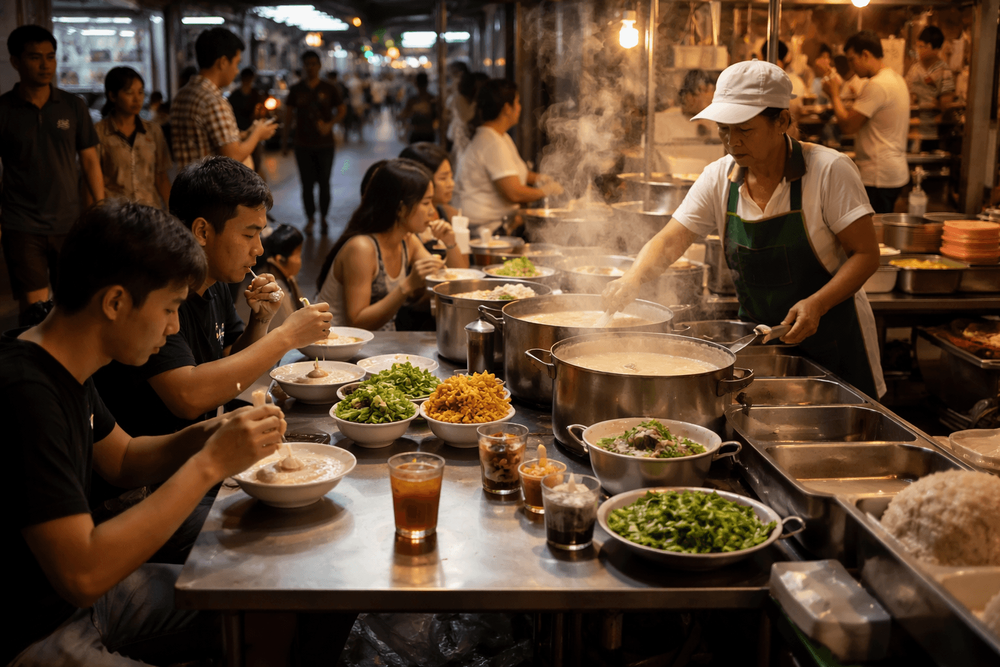
We step off Soi Rambuttri, ears still buzzing from the thump of bass and tuk-tuk horns, and follow our noses toward the steam. This is the hour Bangkok softens—when the wok’s roar gives way to the gentle burble of rice porridge, ginger’s perfume cuts through the last of the cigarettes, and someone’s cracking an egg straight into our bowl. If you’re hunting for bangkok khao tom jok after midnight—or first thing at dawn—pull up a red stool. This is the city’s warmest handshake.
Khao Tom vs. Jok: Same Family, Different Personalities
Khao tom and jok are Bangkok’s comfort-twin soups, both built on rice but with very different vibes.
- Khao tom: a clear, savory rice soup where the grains stay mostly intact, floating in a light broth. Think of it as rice taking a swim. It’s often Teochew-influenced, clean and sippable, with pork, fish, or seafood. You season it at the table with fish sauce, white pepper, and fresh chilies in vinegar.
- Jok: thicker and silkier—the Thai take on congee. Grains are cooked until they break down (sometimes with ground rice added) into a smooth porridge. It hugs the spoon and holds toppings like pork meatballs, liver, or a just-cracked egg that turns luxuriously soft in the heat.
In Bangkok, both are classic breakfast and late-night fuel. They go easy on a tired stomach after a Khao San crawl, or before a sunrise climb up the Golden Mount. Locals call them ahan chao (breakfast food), but you’ll see plenty of bleary-eyed farang and office workers slurping them at 2 AM. The ritual is part medicine, part memory, and pure sanuk when you customize each spoonful.
Bangkok Khao Tom Jok: Where to Eat Near Khao San (and Beyond)
We stick to places you can actually find when your phone battery is wheezing. Hours drift with the tides of Bangkok life, but these neighborhoods and shops are reliable bets for a restorative bowl.
Old Town orbit: Khao San, Soi Rambuttri, Phra Athit
- Street carts on Soi Rambuttri: Around midnight and again at dawn, watch for rolling carts with stockpots billowing like minor volcanoes. Plastic stools, metal tables, and a line of taxi drivers are your cues. Order jok moo (pork congee) and ask for kai (egg) on top if you need a hug in a bowl.
- Phra Athit Road: Near the river breeze, open-air shophouses keep khao tom simmering late. The vibe is slow—students and musicians hunched over bowls, a fan clacking overhead, the Chao Phraya huffing somewhere in the dark.
- If someone in your crew needs spice over solace, nudge them to the late-night stalwart Tom Yum Kung Banglamphu a couple of sois away—proof that soup therapy comes in many colors.
A dedicated rice-soup fix
- When we want a focused rice-soup specialist rather than a roving cart, we look to Khao Tom Bowon. It’s the kind of straightforward spot Bangkokians trust for a clean, balanced broth and no-fuss bowls—perfect when you want khao tom to taste like khao tom, not a science project.
Chinatown and Sampheng: Night-owl heaven
- Yaowarat (Chinatown): After the grills go quiet, congee stands glow on side sois off Yaowarat Road. Expect fast service, snappy ginger, and patongo (fried doughstick) clipped into your bowl like crunchy punctuation. From Khao San, grab the Chao Phraya Express boat from Phra Athit Pier to Ratchawong, then wander uphill into the neon tangle.
Bang Rak and Silom: The old-school masters
- Bang Rak’s backstreets hold old Chinese-Thai congee institutions where the recipe hasn’t changed since your tuk-tuk driver’s first date. Follow the scent of toasted garlic and the sight of careful aunties forming peppery pork balls by hand. Reach this area from Khao San by boat to Sathorn (Central) Pier, then it’s a short hop inland.
Victory Monument and the university belt
- Around Victory Monument and near Chulalongkorn University, dawn means queues of students for jok with century egg (kai yeow ma) and ginger piles that look like haystacks. It’s no-frills and fast—exactly what you want before a commuter crush on the BTS.
For a broader primer on the city’s neighborhoods and how food tracks along the river and khlongs, skim our main guide to Bangkok before you set off. It’ll help you connect the dots between piers, sois, and late-night cravings.
What You’ll Taste: Flavors, Textures, and Toppings
Khao tom and jok are both about balance. The base is intentionally gentle so you can dial in heat, salt, and acid.
- Broth and body: Khao tom’s broth is light, often chicken- or pork-based with a whisper of garlic oil. Jok is creamy without dairy—rice starch creates that velvet.
- Pork meatballs (luk chin moo or moo sab): Hand-formed, peppery, sometimes with soy and a hint of sesame. They should be tender, not bouncy.
- Offal, if you’re brave: Liver (tab), kidney (grai), and occasionally intestine (kuang nai). Offal lovers swear the pepper and ginger keep everything bright, not funky.
- Eggs: Choose poached (kai luak) cracked right in the bowl, or preserved “century” egg (kai yeow ma) for that custardy, savory wobble.
- Aromatics: A blizzard of julienned ginger, coriander, and spring onion. A good grind of white pepper is traditional—yes, it’ll make you sneeze.
- Fried garlic and oil: This is the aroma you smell from half a block away, the edible perfume that makes your stomach sit up.
- Patongo (fried doughstick): Tear it and dunk; half-crisp, half-saturated happiness. You can also get an extra plate for dipping into sweetened soy milk on the side.
- Seasoning station: Fish sauce, soy sauce, chili flakes, and chilies in vinegar (prik nam som). Taste first, season in small dabs, and let each spoonful evolve.
Expect jok to feel like a soft blanket and khao tom like a warm breeze. Both taste clean but never boring, assisted by the ritual of toppings—your bowl, your rules.
How to Order Without Fuss
Pointing works, but a little Thai gets smiles (and the good ginger).
- Jok moo sai kai: congee with pork and egg
- Khao tom pla: rice soup with fish
- Jok ped: congee with duck (less common, fantastic if you find it)
- Mai ped: not spicy
- Phet nit noi: a little spicy
- Mai ao kai: no egg
- Khor patongo noi: a little patongo, please
If you want the egg barely set, ask for kai luak; for fully cooked, say sukh. Most places will understand “extra ginger” with a cheerful nod if you mimic sprinkle-sprinkle. Don’t be shy—Bangkok food stalls are built on hand gestures and laughter.
Know Before You Go: Times, Prices, and the Scene
- Best time to go: Late-night waves run from about 10 PM to 3 AM (give or take), and dawn service from 5 AM to 9 AM. Bangkok is a living thing—stalls move, days off happen. If a spot looks closed, take it as a nudge to try the cart two doors down.
- Prices: Street bowls usually land around 40–80 baht depending on size and toppings. Patongo is often 5–15 baht per stick. Sit-down shophouses might nudge up to 90–150 baht, especially in busy areas or with seafood.
- Cash and pacing: Most carts are cash-first; many now accept PromptPay QR. Order at the pot, pay after, and don’t hover with your elbows on the tray—give the auntie room to ladle.
- Heat and seating: You’re in Bangkok—expect fans, not AC, and metal tables that rock a little. Wipe your chopsticks and spoon with the table tissue, add your seasonings, and slurp. The breeze on Phra Athit Road is your air-con; 7-Eleven is your emergency blast.
- Getting there from Khao San: For Chinatown and Bang Rak, the Chao Phraya Express boat from Phra Athit Pier is your friend—cheap, scenic, and faster than a cab in gridlock. Hop off at Ratchawong for Yaowarat, or Sathorn (Central) Pier for Silom/Bang Rak. Tuk-tuks are fine for short hops; agree on the fare up front and keep the sanuk.
- Safety and scams: Rice porridge stalls aren’t where scams live. The main hazard is your own eagerness—hot porridge burns. Let the first spoon cool and keep napkins handy.
- Where to sleep nearby: If you crash within walking distance of Khao San or Phra Athit, you can shuffle out at dawn in flip-flops and be fed in five minutes. Pools are nice; proximity to a pier is better.
The Rhythm of a Bowl: Why Khao Tom and Jok Belong on Your Bangkok Hit List
Bangkok street food isn’t just pad thai and mango sticky rice; it’s the quiet dishes too—the ones you crave when the music dies down and the heat breaks. Khao tom and jok are the city’s reset buttons. You feel it when the ginger clears your head and white pepper wakes your sinuses; when the auntie flicks fried garlic over your bowl with a magician’s wrist; when the first spoon is bland on purpose, then perfect after a kiss of fish sauce and vinegar.
Eating bangkok khao tom jok is also a front-row seat to local routine. You’ll see taxi uncles on break, students swapping lecture notes, and monks in saffron padding by at first light. No one is performing for Instagram here—the charm is in the steam, the clink of porcelain spoons, and the slow exhale after a long night.
A Few Easy Routes We Use (So You Don’t Overthink It)
- Khao San to Chinatown jok: Boat from Phra Athit to Ratchawong, walk uphill to Yaowarat Road, follow your nose to ginger and fried garlic. Eat, then stroll the alleys while the neon dims.
- Khao San to Bang Rak khao tom: Boat from Phra Athit to Sathorn (Central) Pier, cut inland toward Silom/Bang Rak. Look for shophouses with steaming pots and stacks of shallow bowls. Your palate will thank you.
- Staying near the river: If you’ve got a bed near Phra Athit or Samsen, you can graze the late-night carts around Soi Chana Songkhram and circle back to the pier at dawn. We often do exactly that.
If you want a no-guesswork, rice-soup-first detour, add Khao Tom Bowon to your map. And if your crew divides between soothing and spicy, steer the chili-chasers to Tom Yum Kung Banglamphu while you chase the perfect soft egg in your jok.
Final Slurp: Our Move
When the night finally exhales on Khao San, we drift toward Phra Athit, watch the river shrug past under a pale sky, and find the cart with the biggest pot. We order jok moo sai kai, snap a patongo in half, and let ginger and pepper do their quiet magic. If there’s a better way to end—or begin—a Bangkok day, we haven’t tasted it yet. And tomorrow, we’re doing it again.
Related Hotels & Places
Tom Yum Kung Banglamphu
Restaurants
Big seafood restaurant near Khao San Road with neon lights, massive plates, and the signature tom yum kung.
Khao Tom Bowon
Restaurants
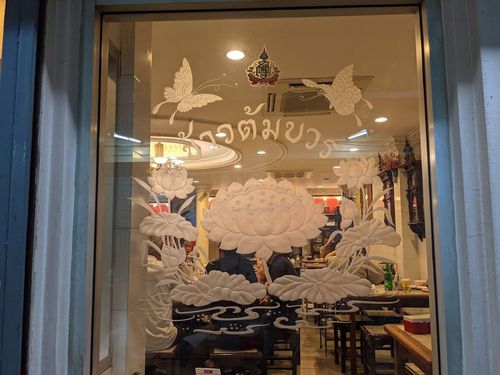
Classic khao tom on Phra Sumen Rd near Wat Bowonniwet. Bowls of rice soup with your choice of toppings. Handy for a late dinner—open daily 3:30pm–11pm. Local, no-frills, and consistent.
More Khao San Road Guides
- Banglamphu Nightlife Guide: Best Bars, Live Music, and Late-Night Hangouts Beyond Khao San Road
- Late-Night Bangkok Street Food Near Khao San Road: Best After-Hours Eats, Stalls, and Timing Tips
- Late-Night Food and Drink Guide in Banglamphu: Where to Keep the Night Going After Bar Close
- Bangkok Late-Night Street Food Guide: Where to Eat After Midnight Near Khao San Road and Beyond